mirror of
https://github.com/microsoft/terminal.git
synced 2026-04-27 00:21:30 +00:00
Compare commits
19 Commits
release-1.
...
release-0.
| Author | SHA1 | Date | |
|---|---|---|---|

|
73cca7b7ca | ||
|
|
6e2e27d993 | ||
|
|
a14cfa77e0 | ||
|
|
34af66e1ed | ||

|
a6a8937af7 | ||

|
53c98610b4 | ||

|
962716eeab | ||
|
|
58876dcc94 | ||
|
|
6cc6ee34f5 | ||

|
4b4a006130 | ||
|
|
b05f4e4114 | ||
|
|
99a591b4e8 | ||

|
6582a4a2c5 | ||

|
a802c379bf | ||
|
|
3c26b2a66f | ||
|
|
03613dcdfd | ||
|
|
e75c8f8336 | ||
|
|
008d1baf3d | ||

|
e752a58754 |
@@ -1,19 +1,17 @@
|
||||
|
||||
AccessModifierOffset: -4
|
||||
AlignAfterOpenBracket: Align
|
||||
AllowAllArgumentsOnNextLine: true
|
||||
AlignConsecutiveMacros: false
|
||||
#AllowAllArgumentsOnNextLine: false
|
||||
AlignConsecutiveAssignments: false
|
||||
AlignConsecutiveDeclarations: false
|
||||
AllowAllConstructorInitializersOnNextLine: true
|
||||
#AllowAllConstructorInitializersOnNextLine: false
|
||||
AlignEscapedNewlines: Left
|
||||
AlignOperands: true
|
||||
AlignTrailingComments: false
|
||||
AllowAllParametersOfDeclarationOnNextLine: false
|
||||
AllowShortBlocksOnASingleLine: Never
|
||||
AllowShortFunctionsOnASingleLine: Inline
|
||||
AllowShortCaseLabelsOnASingleLine: false
|
||||
AllowShortIfStatementsOnASingleLine: Never
|
||||
AllowShortIfStatementsOnASingleLine: false
|
||||
#AllowShortLambdasOnASingleLine: Inline
|
||||
AllowShortLoopsOnASingleLine: false
|
||||
AlwaysBreakAfterReturnType: None
|
||||
@@ -22,7 +20,6 @@ AlwaysBreakTemplateDeclarations: Yes
|
||||
BinPackArguments: false
|
||||
BinPackParameters: false
|
||||
BraceWrapping:
|
||||
AfterCaseLabel: true
|
||||
AfterClass: true
|
||||
AfterControlStatement: true
|
||||
AfterEnum: true
|
||||
@@ -50,7 +47,6 @@ ConstructorInitializerAllOnOneLineOrOnePerLine: true
|
||||
ConstructorInitializerIndentWidth: 4
|
||||
ContinuationIndentWidth: 4
|
||||
Cpp11BracedListStyle: false
|
||||
DeriveLineEnding: true
|
||||
DerivePointerAlignment: false
|
||||
FixNamespaceComments: false
|
||||
IncludeBlocks: Regroup
|
||||
@@ -77,7 +73,7 @@ ReflowComments: false
|
||||
SortIncludes: false
|
||||
SortUsingDeclarations: true
|
||||
SpaceAfterCStyleCast: false
|
||||
SpaceAfterLogicalNot: false
|
||||
#SpaceAfterLogicalNot: false
|
||||
SpaceAfterTemplateKeyword: false
|
||||
SpaceBeforeAssignmentOperators: true
|
||||
SpaceBeforeCpp11BracedList: false
|
||||
@@ -92,6 +88,6 @@ SpacesInCStyleCastParentheses: false
|
||||
SpacesInContainerLiterals: false
|
||||
SpacesInParentheses: false
|
||||
SpacesInSquareBrackets: false
|
||||
Standard: Latest
|
||||
Standard: Cpp11
|
||||
TabWidth: 4
|
||||
UseTab: Never
|
||||
|
||||
3
.github/PULL_REQUEST_TEMPLATE.md
vendored
3
.github/PULL_REQUEST_TEMPLATE.md
vendored
@@ -9,8 +9,7 @@
|
||||
* [ ] Closes #xxx
|
||||
* [ ] CLA signed. If not, go over [here](https://cla.opensource.microsoft.com/microsoft/Terminal) and sign the CLA
|
||||
* [ ] Tests added/passed
|
||||
* [ ] Documentation updated. If checked, please file a pull request on [our docs repo](https://github.com/MicrosoftDocs/terminal) and link it here: #xxx
|
||||
* [ ] Schema updated.
|
||||
* [ ] Requires documentation to be updated
|
||||
* [ ] I've discussed this with core contributors already. If not checked, I'm ready to accept this work might be rejected in favor of a different grand plan. Issue number where discussion took place: #xxx
|
||||
|
||||
<!-- Provide a more detailed description of the PR, other things fixed or any additional comments/features here -->
|
||||
|
||||
1
.gitignore
vendored
1
.gitignore
vendored
@@ -48,7 +48,6 @@ dlldata.c
|
||||
project.lock.json
|
||||
artifacts/
|
||||
|
||||
*_h.h
|
||||
*_i.c
|
||||
*_p.c
|
||||
*_i.h
|
||||
|
||||
@@ -125,7 +125,7 @@ Team members will be happy to help review specs and guide them to completion.
|
||||
|
||||
### Help Wanted
|
||||
|
||||
Once the team have approved an issue/spec, development can proceed. If no developers are immediately available, the spec can be parked ready for a developer to get started. Parked specs' issues will be labeled "Help Wanted". To find a list of development opportunities waiting for developer involvement, visit the Issues and filter on [the Help-Wanted label](https://github.com/microsoft/terminal/labels/Help%20Wanted).
|
||||
Once the team have approved an issue/spec, development can proceed. If no developers are immediately available, the spec can be parked ready for a developer to get started. Parked specs' issues will be labeled "Help Wanted". To find a list of development opportunities waiting for developer involvement, visit the Issues and filter on [the Help-Wanted label](https://github.com/microsoft/terminal/labels/Help-Wanted).
|
||||
|
||||
---
|
||||
|
||||
@@ -155,4 +155,4 @@ Once your code has been reviewed and approved by the requisite number of team me
|
||||
|
||||
## Thank you
|
||||
|
||||
Thank you in advance for your contribution! Now, [what's next on the list](https://github.com/microsoft/terminal/labels/Help%20Wanted)? 😜
|
||||
Thank you in advance for your contribution! Now, [what's next on the list](https://github.com/microsoft/terminal/labels/Help-Wanted)? 😜
|
||||
|
||||
@@ -181,7 +181,7 @@ SOFTWARE.
|
||||
|
||||
```
|
||||
|
||||
## {fmt}
|
||||
## {fmt}
|
||||
|
||||
**Source**: https://github.com/fmtlib/fmt
|
||||
|
||||
|
||||
@@ -8,12 +8,7 @@
|
||||
<!--<add key="Static Package Dependencies" value="dep\packages" />-->
|
||||
|
||||
<!-- Use our own NuGet Feed -->
|
||||
<add key="TerminalDependencies" value="https://pkgs.dev.azure.com/ms/terminal/_packaging/TerminalDependencies/nuget/v3/index.json" />
|
||||
|
||||
<!-- Temporarily? use the feeds from our friends in MUX for Helix test stuff -->
|
||||
<add key="dotnetfeed" value="https://dotnetfeed.blob.core.windows.net/dotnet-core/index.json" />
|
||||
<add key="dnceng" value="https://pkgs.dev.azure.com/dnceng/public/_packaging/dotnet-eng/nuget/v3/index.json" />
|
||||
<add key="MUX-Dependencies" value="https://pkgs.dev.azure.com/ms/microsoft-ui-xaml/_packaging/MUX-Dependencies/nuget/v3/index.json" />
|
||||
<add key="Windows Terminal NuGet Feed" value="https://terminalnuget.blob.core.windows.net/feed/index.json" />
|
||||
|
||||
<!-- Internal NuGet feeds that may not be accessible outside Microsoft corporate network -->
|
||||
<!--<add key="TAEF - internal" value="https://microsoft.pkgs.visualstudio.com/DefaultCollection/_packaging/Taef/nuget/v3/index.json" />
|
||||
|
||||
540
OpenConsole.sln
540
OpenConsole.sln
File diff suppressed because it is too large
Load Diff
45
README.md
45
README.md
@@ -2,8 +2,7 @@
|
||||
|
||||
This repository contains the source code for:
|
||||
|
||||
* [Windows Terminal](https://aka.ms/terminal)
|
||||
* [Windows Terminal Preview](https://aka.ms/terminal-preview)
|
||||
* [Windows Terminal](https://www.microsoft.com/en-us/p/windows-terminal-preview/9n0dx20hk701)
|
||||
* The Windows console host (`conhost.exe`)
|
||||
* Components shared between the two projects
|
||||
* [ColorTool](https://github.com/Microsoft/Terminal/tree/master/src/tools/ColorTool)
|
||||
@@ -11,7 +10,6 @@ This repository contains the source code for:
|
||||
|
||||
Related repositories include:
|
||||
|
||||
* [Windows Terminal Documentation](https://docs.microsoft.com/windows/terminal) ([Repo: Contribute to the docs](https://github.com/MicrosoftDocs/terminal))
|
||||
* [Console API Documentation](https://github.com/MicrosoftDocs/Console-Docs)
|
||||
* [Cascadia Code Font](https://github.com/Microsoft/Cascadia-Code)
|
||||
|
||||
@@ -21,7 +19,7 @@ Related repositories include:
|
||||
|
||||
### Microsoft Store [Recommended]
|
||||
|
||||
Install the [Windows Terminal from the Microsoft Store][store-install-link]. This allows you to always be on the latest version when we release new builds with automatic upgrades.
|
||||
Install the [Windows Terminal from the Microsoft Store][store-install-link]. This allows you to always be on the latest version when we release new builds with automatic upgrades.
|
||||
|
||||
This is our preferred method.
|
||||
|
||||
@@ -36,14 +34,6 @@ For users who are unable to install Terminal from the Microsoft Store, Terminal
|
||||
> * Be sure to install the [Desktop Bridge VC++ v14 Redistributable Package](https://www.microsoft.com/en-us/download/details.aspx?id=53175) otherwise Terminal may not install and/or run and may crash at startup
|
||||
> * Terminal will not auto-update when new builds are released so you will need to regularly install the latest Terminal release to receive all the latest fixes and improvements!
|
||||
|
||||
#### Via Windows Package Manager CLI (aka winget)
|
||||
|
||||
[winget](https://github.com/microsoft/winget-cli) users can download and install the latest Terminal release by installing the `Microsoft.WindowsTerminal` package:
|
||||
|
||||
```powershell
|
||||
winget install --id=Microsoft.WindowsTerminal -e
|
||||
```
|
||||
|
||||
#### Via Chocolatey (unofficial)
|
||||
|
||||
[Chocolatey](https://chocolatey.org) users can download and install the latest Terminal release by installing the `microsoft-windows-terminal` package:
|
||||
@@ -60,28 +50,8 @@ choco upgrade microsoft-windows-terminal
|
||||
|
||||
If you have any issues when installing/upgrading the package please go to the [Windows Terminal package page](https://chocolatey.org/packages/microsoft-windows-terminal) and follow the [Chocolatey triage process](https://chocolatey.org/docs/package-triage-process)
|
||||
|
||||
#### Via Scoop (unofficial)
|
||||
|
||||
[Scoop](https://scoop.sh) users can download and install the latest Terminal release by installing the `windows-terminal` package:
|
||||
|
||||
```powershell
|
||||
scoop install windows-terminal
|
||||
```
|
||||
|
||||
To update Windows Terminal using Scoop, run the following:
|
||||
|
||||
```powershell
|
||||
scoop update windows-terminal
|
||||
```
|
||||
|
||||
If you have any issues when installing/updating the package, please search for or report the same on the [issues page](https://github.com/lukesampson/scoop-extras/issues) of Scoop Extras bucket repository.
|
||||
|
||||
---
|
||||
|
||||
## Windows Terminal 2.0 Roadmap
|
||||
|
||||
The plan for delivering Windows Terminal 2.0 [is described here](/doc/terminal-v2-roadmap.md) and will be updated as the project proceeds.
|
||||
|
||||
## Project Build Status
|
||||
|
||||
Project|Build Status
|
||||
@@ -91,6 +61,12 @@ ColorTool|, and will be updated as the project proceeds.
|
||||
|
||||
---
|
||||
|
||||
## Terminal & Console Overview
|
||||
|
||||
Please take a few minutes to review the overview below before diving into the code:
|
||||
@@ -155,7 +131,7 @@ Solution: Make sure you're building & deploying the `CascadiaPackage` project in
|
||||
|
||||
## Documentation
|
||||
|
||||
All project documentation is located at aka.ms/terminal-docs. If you would like to contribute to the documentation, please submit a pull request on the [Windows Terminal Documentation repo](https://github.com/MicrosoftDocs/terminal).
|
||||
All project documentation is located in the `./doc` folder. If you would like to contribute to the documentation, please submit a pull request.
|
||||
|
||||
---
|
||||
|
||||
@@ -179,7 +155,6 @@ If you would like to ask a question that you feel doesn't warrant an issue (yet)
|
||||
* Mike Griese, Developer: [@zadjii](https://twitter.com/zadjii)
|
||||
* Carlos Zamora, Developer: [@cazamor_msft](https://twitter.com/cazamor_msft)
|
||||
* Leon Liang, Developer: [@leonmsft](https://twitter.com/leonmsft)
|
||||
* Pankaj Bhojwani, Developer
|
||||
|
||||
## Developer Guidance
|
||||
|
||||
@@ -251,4 +226,4 @@ For more information see the [Code of Conduct FAQ][conduct-FAQ] or contact [open
|
||||
[conduct-code]: https://opensource.microsoft.com/codeofconduct/
|
||||
[conduct-FAQ]: https://opensource.microsoft.com/codeofconduct/faq/
|
||||
[conduct-email]: mailto:opencode@microsoft.com
|
||||
[store-install-link]: https://aka.ms/terminal
|
||||
[store-install-link]: https://aka.ms/windowsterminal
|
||||
|
||||
@@ -1,32 +0,0 @@
|
||||
function GetAzureDevOpsBaseUri
|
||||
{
|
||||
Param(
|
||||
[string]$CollectionUri,
|
||||
[string]$TeamProject
|
||||
)
|
||||
|
||||
return $CollectionUri + $TeamProject
|
||||
}
|
||||
|
||||
function GetQueryTestRunsUri
|
||||
{
|
||||
Param(
|
||||
[string]$CollectionUri,
|
||||
[string]$TeamProject,
|
||||
[string]$BuildUri,
|
||||
[switch]$IncludeRunDetails
|
||||
)
|
||||
|
||||
if ($IncludeRunDetails)
|
||||
{
|
||||
$includeRunDetailsParameter = "&includeRunDetails=true"
|
||||
}
|
||||
else
|
||||
{
|
||||
$includeRunDetailsParameter = ""
|
||||
}
|
||||
|
||||
$baseUri = GetAzureDevOpsBaseUri -CollectionUri $CollectionUri -TeamProject $TeamProject
|
||||
$queryUri = "$baseUri/_apis/test/runs?buildUri=$BuildUri$includeRunDetailsParameter&api-version=5.0"
|
||||
return $queryUri
|
||||
}
|
||||
@@ -1,28 +0,0 @@
|
||||
Param(
|
||||
[Parameter(Mandatory = $true)]
|
||||
[string]$WttInputPath,
|
||||
|
||||
[Parameter(Mandatory = $true)]
|
||||
[string]$WttSingleRerunInputPath,
|
||||
|
||||
[Parameter(Mandatory = $true)]
|
||||
[string]$WttMultipleRerunInputPath,
|
||||
|
||||
[Parameter(Mandatory = $true)]
|
||||
[string]$XUnitOutputPath,
|
||||
|
||||
[Parameter(Mandatory = $true)]
|
||||
[string]$TestNamePrefix
|
||||
)
|
||||
|
||||
# Ideally these would be passed as parameters to the script. However ps makes it difficult to deal with string literals containing '&', so we just
|
||||
# read the values directly from the environment variables
|
||||
$helixResultsContainerUri = $Env:HELIX_RESULTS_CONTAINER_URI
|
||||
$helixResultsContainerRsas = $Env:HELIX_RESULTS_CONTAINER_RSAS
|
||||
|
||||
$rerunPassesRequiredToAvoidFailure = $env:rerunPassesRequiredToAvoidFailure
|
||||
|
||||
Add-Type -Language CSharp -ReferencedAssemblies System.Xml,System.Xml.Linq,System.Runtime.Serialization,System.Runtime.Serialization.Json (Get-Content $PSScriptRoot\HelixTestHelpers.cs -Raw)
|
||||
|
||||
$testResultParser = [HelixTestHelpers.TestResultParser]::new($TestNamePrefix, $helixResultsContainerUri, $helixResultsContainerRsas)
|
||||
$testResultParser.ConvertWttLogToXUnitLog($WttInputPath, $WttSingleRerunInputPath, $WttMultipleRerunInputPath, $XUnitOutputPath, $rerunPassesRequiredToAvoidFailure)
|
||||
@@ -1,112 +0,0 @@
|
||||
$scriptDirectory = $script:MyInvocation.MyCommand.Path | Split-Path -Parent
|
||||
|
||||
# List all processes to aid debugging:
|
||||
Write-Host "All processes running:"
|
||||
Get-Process
|
||||
|
||||
tasklist /svc
|
||||
|
||||
# Add this test directory as an exclusion for Windows Defender
|
||||
Write-Host "Add $scriptDirectory as Exclusion Path"
|
||||
Add-MpPreference -ExclusionPath $scriptDirectory
|
||||
Write-Host "Add $($env:HELIX_CORRELATION_PAYLOAD) as Exclusion Path"
|
||||
Add-MpPreference -ExclusionPath $env:HELIX_CORRELATION_PAYLOAD
|
||||
Get-MpPreference
|
||||
Get-MpComputerStatus
|
||||
|
||||
|
||||
# Minimize all windows:
|
||||
$shell = New-Object -ComObject "Shell.Application"
|
||||
$shell.minimizeall()
|
||||
|
||||
# Kill any instances of Windows Security Alert:
|
||||
$windowTitleToMatch = "*Windows Security Alert*"
|
||||
$procs = Get-Process | Where {$_.MainWindowTitle -like "*Windows Security Alert*"}
|
||||
foreach ($proc in $procs)
|
||||
{
|
||||
Write-Host "Found process with '$windowTitleToMatch' title: $proc"
|
||||
$proc.Kill();
|
||||
}
|
||||
|
||||
# Kill processes by name that are known to interfere with our tests:
|
||||
$processNamesToStop = @("Microsoft.Photos", "WinStore.App", "SkypeApp", "SkypeBackgroundHost", "OneDriveSetup", "OneDrive")
|
||||
foreach($procName in $processNamesToStop)
|
||||
{
|
||||
Write-Host "Attempting to kill $procName if it is running"
|
||||
Stop-Process -ProcessName $procName -Verbose -ErrorAction Ignore
|
||||
}
|
||||
Write-Host "All processes running after attempting to kill unwanted processes:"
|
||||
Get-Process
|
||||
|
||||
tasklist /svc
|
||||
|
||||
$platform = $env:testbuildplatform
|
||||
if(!$platform)
|
||||
{
|
||||
$platform = "x86"
|
||||
}
|
||||
|
||||
function UninstallApps {
|
||||
Param([string[]]$appsToUninstall)
|
||||
|
||||
foreach($pkgName in $appsToUninstall)
|
||||
{
|
||||
foreach($pkg in (Get-AppxPackage $pkgName).PackageFullName)
|
||||
{
|
||||
Write-Output "Removing: $pkg"
|
||||
Remove-AppxPackage $pkg
|
||||
}
|
||||
}
|
||||
}
|
||||
|
||||
function UninstallTestApps {
|
||||
Param([string[]]$appsToUninstall)
|
||||
|
||||
foreach($pkgName in $appsToUninstall)
|
||||
{
|
||||
foreach($pkg in (Get-AppxPackage $pkgName).PackageFullName)
|
||||
{
|
||||
Write-Output "Removing: $pkg"
|
||||
Remove-AppxPackage $pkg
|
||||
}
|
||||
|
||||
# Sometimes an app can get into a state where it is no longer returned by Get-AppxPackage, but it is still present
|
||||
# which prevents other versions of the app from being installed.
|
||||
# To handle this, we can directly call Remove-AppxPackage against the full name of the package. However, without
|
||||
# Get-AppxPackage to find the PackageFullName, we just have to manually construct the name.
|
||||
$packageFullName = "$($pkgName)_1.0.0.0_$($platform)__8wekyb3d8bbwe"
|
||||
Write-Host "Removing $packageFullName if installed"
|
||||
Remove-AppPackage $packageFullName -ErrorVariable appxerror -ErrorAction SilentlyContinue
|
||||
if($appxerror)
|
||||
{
|
||||
foreach($error in $appxerror)
|
||||
{
|
||||
# In most cases, Remove-AppPackage will fail due to the package not being found. Don't treat this as an error.
|
||||
if(!($error.Exception.Message -match "0x80073CF1"))
|
||||
{
|
||||
Write-Error $error
|
||||
}
|
||||
}
|
||||
}
|
||||
else
|
||||
{
|
||||
Write-Host "Successfully removed $packageFullName"
|
||||
}
|
||||
}
|
||||
}
|
||||
|
||||
Write-Host "Uninstall AppX packages that are known to cause issues with our tests"
|
||||
UninstallApps("*Skype*", "*Windows.Photos*")
|
||||
|
||||
Write-Host "Uninstall any of our test apps that may have been left over from previous test runs"
|
||||
UninstallTestApps("NugetPackageTestApp", "NugetPackageTestAppCX", "IXMPTestApp", "MUXControlsTestApp")
|
||||
|
||||
Write-Host "Uninstall MUX Framework package that may have been left over from previous test runs"
|
||||
# We don't want to uninstall all versions of the MUX Framework package, as there may be other apps preinstalled on the system
|
||||
# that depend on it. We only uninstall the Framework package that corresponds to the version of MUX that we are testing.
|
||||
[xml]$versionData = (Get-Content "version.props")
|
||||
$versionMajor = $versionData.GetElementsByTagName("MUXVersionMajor").'#text'
|
||||
$versionMinor = $versionData.GetElementsByTagName("MUXVersionMinor").'#text'
|
||||
UninstallApps("Microsoft.UI.Xaml.$versionMajor.$versionMinor")
|
||||
|
||||
Get-Process
|
||||
@@ -1,336 +0,0 @@
|
||||
[CmdLetBinding()]
|
||||
Param(
|
||||
[Parameter(Mandatory = $true)]
|
||||
[string]$TestFile,
|
||||
|
||||
[Parameter(Mandatory = $true)]
|
||||
[string]$OutputProjFile,
|
||||
|
||||
[Parameter(Mandatory = $true)]
|
||||
[string]$JobTestSuiteName,
|
||||
|
||||
[Parameter(Mandatory = $true)]
|
||||
[string]$TaefPath,
|
||||
|
||||
[string]$TaefQuery
|
||||
)
|
||||
|
||||
Class TestCollection
|
||||
{
|
||||
[string]$Name
|
||||
[string]$SetupMethodName
|
||||
[string]$TeardownMethodName
|
||||
[System.Collections.Generic.Dictionary[string, string]]$Properties
|
||||
|
||||
TestCollection()
|
||||
{
|
||||
if ($this.GetType() -eq [TestCollection])
|
||||
{
|
||||
throw "This class should never be instantiated directly; it should only be derived from."
|
||||
}
|
||||
}
|
||||
|
||||
TestCollection([string]$name)
|
||||
{
|
||||
$this.Init($name)
|
||||
}
|
||||
|
||||
hidden Init([string]$name)
|
||||
{
|
||||
$this.Name = $name
|
||||
$this.Properties = @{}
|
||||
}
|
||||
}
|
||||
|
||||
Class Test : TestCollection
|
||||
{
|
||||
Test([string]$name)
|
||||
{
|
||||
$this.Init($name)
|
||||
}
|
||||
}
|
||||
|
||||
Class TestClass : TestCollection
|
||||
{
|
||||
[System.Collections.Generic.List[Test]]$Tests
|
||||
|
||||
TestClass([string]$name)
|
||||
{
|
||||
$this.Init($name)
|
||||
$this.Tests = @{}
|
||||
}
|
||||
}
|
||||
|
||||
Class TestModule : TestCollection
|
||||
{
|
||||
[System.Collections.Generic.List[TestClass]]$TestClasses
|
||||
|
||||
TestModule([string]$name)
|
||||
{
|
||||
$this.Init($name)
|
||||
$this.TestClasses = @{}
|
||||
}
|
||||
}
|
||||
|
||||
function Parse-TestInfo([string]$taefOutput)
|
||||
{
|
||||
enum LineType
|
||||
{
|
||||
None
|
||||
TestModule
|
||||
TestClass
|
||||
Test
|
||||
Setup
|
||||
Teardown
|
||||
Property
|
||||
}
|
||||
|
||||
[string]$testModuleIndentation = " "
|
||||
[string]$testClassIndentation = " "
|
||||
[string]$testIndentation = " "
|
||||
[string]$setupBeginning = "Setup: "
|
||||
[string]$teardownBeginning = "Teardown: "
|
||||
[string]$propertyBeginning = "Property["
|
||||
|
||||
function Get-LineType([string]$line)
|
||||
{
|
||||
if ($line.Contains($setupBeginning))
|
||||
{
|
||||
return [LineType]::Setup;
|
||||
}
|
||||
elseif ($line.Contains($teardownBeginning))
|
||||
{
|
||||
return [LineType]::Teardown;
|
||||
}
|
||||
elseif ($line.Contains($propertyBeginning))
|
||||
{
|
||||
return [LineType]::Property;
|
||||
}
|
||||
elseif ($line.StartsWith($testModuleIndentation) -and -not $line.StartsWith("$testModuleIndentation "))
|
||||
{
|
||||
return [LineType]::TestModule;
|
||||
}
|
||||
elseif ($line.StartsWith($testClassIndentation) -and -not $line.StartsWith("$testClassIndentation "))
|
||||
{
|
||||
return [LineType]::TestClass;
|
||||
}
|
||||
elseif ($line.StartsWith($testIndentation) -and -not $line.StartsWith("$testIndentation "))
|
||||
{
|
||||
return [LineType]::Test;
|
||||
}
|
||||
else
|
||||
{
|
||||
return [LineType]::None;
|
||||
}
|
||||
}
|
||||
|
||||
[string[]]$lines = $taefOutput.Split(@([Environment]::NewLine, "`n"), [StringSplitOptions]::RemoveEmptyEntries)
|
||||
[System.Collections.Generic.List[TestModule]]$testModules = @()
|
||||
|
||||
[TestModule]$currentTestModule = $null
|
||||
[TestClass]$currentTestClass = $null
|
||||
[Test]$currentTest = $null
|
||||
|
||||
[TestCollection]$lastTestCollection = $null
|
||||
|
||||
foreach ($rawLine in $lines)
|
||||
{
|
||||
[LineType]$lineType = (Get-LineType $rawLine)
|
||||
|
||||
# We don't need the whitespace around the line anymore, so we'll discard it to make things easier.
|
||||
[string]$line = $rawLine.Trim()
|
||||
|
||||
if ($lineType -eq [LineType]::TestModule)
|
||||
{
|
||||
if ($currentTest -ne $null -and $currentTestClass -ne $null)
|
||||
{
|
||||
$currentTestClass.Tests.Add($currentTest)
|
||||
}
|
||||
|
||||
if ($currentTestClass -ne $null -and $currentTestModule -ne $null)
|
||||
{
|
||||
$currentTestModule.TestClasses.Add($currentTestClass)
|
||||
}
|
||||
|
||||
if ($currentTestModule -ne $null)
|
||||
{
|
||||
$testModules.Add($currentTestModule)
|
||||
}
|
||||
|
||||
$currentTestModule = [TestModule]::new($line)
|
||||
$currentTestClass = $null
|
||||
$currentTest = $null
|
||||
$lastTestCollection = $currentTestModule
|
||||
}
|
||||
elseif ($lineType -eq [LineType]::TestClass)
|
||||
{
|
||||
if ($currentTest -ne $null -and $currentTestClass -ne $null)
|
||||
{
|
||||
$currentTestClass.Tests.Add($currentTest)
|
||||
}
|
||||
|
||||
if ($currentTestClass -ne $null -and $currentTestModule -ne $null)
|
||||
{
|
||||
$currentTestModule.TestClasses.Add($currentTestClass)
|
||||
}
|
||||
|
||||
$currentTestClass = [TestClass]::new($line)
|
||||
$currentTest = $null
|
||||
$lastTestCollection = $currentTestClass
|
||||
}
|
||||
elseif ($lineType -eq [LineType]::Test)
|
||||
{
|
||||
if ($currentTest -ne $null -and $currentTestClass -ne $null)
|
||||
{
|
||||
$currentTestClass.Tests.Add($currentTest)
|
||||
}
|
||||
|
||||
$currentTest = [Test]::new($line)
|
||||
$lastTestCollection = $currentTest
|
||||
}
|
||||
elseif ($lineType -eq [LineType]::Setup)
|
||||
{
|
||||
if ($lastTestCollection -ne $null)
|
||||
{
|
||||
$lastTestCollection.SetupMethodName = $line.Replace($setupBeginning, "")
|
||||
}
|
||||
}
|
||||
elseif ($lineType -eq [LineType]::Teardown)
|
||||
{
|
||||
if ($lastTestCollection -ne $null)
|
||||
{
|
||||
$lastTestCollection.TeardownMethodName = $line.Replace($teardownBeginning, "")
|
||||
}
|
||||
}
|
||||
elseif ($lineType -eq [LineType]::Property)
|
||||
{
|
||||
if ($lastTestCollection -ne $null)
|
||||
{
|
||||
foreach ($match in [Regex]::Matches($line, "Property\[(.*)\]\s+=\s+(.*)"))
|
||||
{
|
||||
[string]$propertyKey = $match.Groups[1].Value;
|
||||
[string]$propertyValue = $match.Groups[2].Value;
|
||||
$lastTestCollection.Properties.Add($propertyKey, $propertyValue);
|
||||
}
|
||||
}
|
||||
}
|
||||
}
|
||||
|
||||
if ($currentTest -ne $null -and $currentTestClass -ne $null)
|
||||
{
|
||||
$currentTestClass.Tests.Add($currentTest)
|
||||
}
|
||||
|
||||
if ($currentTestClass -ne $null -and $currentTestModule -ne $null)
|
||||
{
|
||||
$currentTestModule.TestClasses.Add($currentTestClass)
|
||||
}
|
||||
|
||||
if ($currentTestModule -ne $null)
|
||||
{
|
||||
$testModules.Add($currentTestModule)
|
||||
}
|
||||
|
||||
return $testModules
|
||||
}
|
||||
|
||||
Write-Verbose "TaefQuery = $TaefQuery"
|
||||
|
||||
$TaefSelectQuery = ""
|
||||
$TaefQueryToAppend = ""
|
||||
if($TaefQuery)
|
||||
{
|
||||
$TaefSelectQuery = "/select:`"$TaefQuery`""
|
||||
$TaefQueryToAppend = " and $TaefQuery"
|
||||
}
|
||||
Write-Verbose "TaefSelectQuery = $TaefSelectQuery"
|
||||
|
||||
|
||||
$taefExe = "$TaefPath\te.exe"
|
||||
[string]$taefOutput = & "$taefExe" /listproperties $TaefSelectQuery $TestFile | Out-String
|
||||
|
||||
[System.Collections.Generic.List[TestModule]]$testModules = (Parse-TestInfo $taefOutput)
|
||||
|
||||
$projFileContent = @"
|
||||
<Project>
|
||||
<ItemGroup>
|
||||
"@
|
||||
|
||||
foreach ($testModule in $testModules)
|
||||
{
|
||||
foreach ($testClass in $testModules.TestClasses)
|
||||
{
|
||||
Write-Host "Generating Helix work item for test class $($testClass.Name)..."
|
||||
[System.Collections.Generic.List[string]]$testSuiteNames = @()
|
||||
|
||||
$testSuiteExists = $false
|
||||
$suitelessTestExists = $false
|
||||
|
||||
foreach ($test in $testClass.Tests)
|
||||
{
|
||||
# A test method inherits its 'TestSuite' property from its TestClass
|
||||
if (!$test.Properties.ContainsKey("TestSuite") -and $testClass.Properties.ContainsKey("TestSuite"))
|
||||
{
|
||||
$test.Properties["TestSuite"] = $testClass.Properties["TestSuite"]
|
||||
}
|
||||
|
||||
if ($test.Properties.ContainsKey("TestSuite"))
|
||||
{
|
||||
[string]$testSuite = $test.Properties["TestSuite"]
|
||||
|
||||
if (-not $testSuiteNames.Contains($testSuite))
|
||||
{
|
||||
Write-Host " Found test suite $testSuite. Generating Helix work item for it as well."
|
||||
$testSuiteNames.Add($testSuite)
|
||||
}
|
||||
|
||||
$testSuiteExists = $true
|
||||
}
|
||||
else
|
||||
{
|
||||
$suitelessTestExists = $true
|
||||
}
|
||||
}
|
||||
|
||||
$testClassSelectPattern = "$($testClass.Name).*"
|
||||
if($testClass.Name.Contains("::"))
|
||||
{
|
||||
$testClassSelectPattern = "$($testClass.Name)::*"
|
||||
}
|
||||
$testNameQuery= "(@Name='$testClassSelectPattern')"
|
||||
|
||||
$workItemName = $testClass.Name
|
||||
# Native tests use '::' as a separator, which is not valid for workItem names.
|
||||
$workItemName = $workItemName -replace "::", "-"
|
||||
|
||||
if ($suitelessTestExists)
|
||||
{
|
||||
$projFileContent += @"
|
||||
|
||||
<HelixWorkItem Include="$($workItemName)" Condition="'`$(TestSuite)'=='$($JobTestSuiteName)'">
|
||||
<Timeout>00:30:00</Timeout>
|
||||
<Command>call %HELIX_CORRELATION_PAYLOAD%\runtests.cmd /select:"(@Name='$($testClass.Name)*'$(if ($testSuiteExists) { "and not @TestSuite='*'" }))$($TaefQueryToAppend)"</Command>
|
||||
</HelixWorkItem>
|
||||
"@
|
||||
}
|
||||
|
||||
foreach ($testSuiteName in $testSuiteNames)
|
||||
{
|
||||
$projFileContent += @"
|
||||
|
||||
<HelixWorkItem Include="$($workItemName)-$testSuiteName" Condition="'`$(TestSuite)'=='$($JobTestSuiteName)'">
|
||||
<Timeout>00:30:00</Timeout>
|
||||
<Command>call %HELIX_CORRELATION_PAYLOAD%\runtests.cmd /select:"(@Name='$($testClass.Name)*' and @TestSuite='$testSuiteName')$($TaefQueryToAppend)"</Command>
|
||||
</HelixWorkItem>
|
||||
"@
|
||||
}
|
||||
}
|
||||
}
|
||||
|
||||
$projFileContent += @"
|
||||
|
||||
</ItemGroup>
|
||||
</Project>
|
||||
"@
|
||||
|
||||
Set-Content $OutputProjFile $projFileContent -NoNewline -Encoding UTF8
|
||||
@@ -1,669 +0,0 @@
|
||||
using System;
|
||||
using System.Collections.Generic;
|
||||
using System.IO;
|
||||
using System.Linq;
|
||||
using System.Runtime.Serialization;
|
||||
using System.Runtime.Serialization.Json;
|
||||
using System.Text;
|
||||
using System.Xml.Linq;
|
||||
|
||||
namespace HelixTestHelpers
|
||||
{
|
||||
public class TestResult
|
||||
{
|
||||
public TestResult()
|
||||
{
|
||||
Screenshots = new List<string>();
|
||||
RerunResults = new List<TestResult>();
|
||||
}
|
||||
|
||||
public string Name { get; set; }
|
||||
public string SourceWttFile { get; set; }
|
||||
public bool Passed { get; set; }
|
||||
public bool CleanupPassed { get; set; }
|
||||
public TimeSpan ExecutionTime { get; set; }
|
||||
public string Details { get; set; }
|
||||
|
||||
public List<string> Screenshots { get; private set; }
|
||||
public List<TestResult> RerunResults { get; private set; }
|
||||
|
||||
// Returns true if the test pass rate is sufficient to avoid being counted as a failure.
|
||||
public bool PassedOrUnreliable(int requiredNumberOfPasses)
|
||||
{
|
||||
if(Passed)
|
||||
{
|
||||
return true;
|
||||
}
|
||||
else
|
||||
{
|
||||
if(RerunResults.Count == 1)
|
||||
{
|
||||
return RerunResults[0].Passed;
|
||||
}
|
||||
else
|
||||
{
|
||||
return RerunResults.Where(r => r.Passed).Count() >= requiredNumberOfPasses;
|
||||
}
|
||||
}
|
||||
}
|
||||
}
|
||||
|
||||
//
|
||||
// Azure DevOps doesn't currently provide a way to directly report sub-results for tests that failed at least once
|
||||
// that were run multiple times. To get around that limitation, we'll mark the test as "Skip" since
|
||||
// that's the only non-pass/fail result we can return, and will then report the information about the
|
||||
// runs in the "reason" category for the skipped test. In order to save space, we'll make the following
|
||||
// optimizations for size:
|
||||
//
|
||||
// 1. Serialize as JSON, which is more compact than XML;
|
||||
// 2. Don't serialize values that we don't need;
|
||||
// 3. Store the URL prefix and suffix for the blob storage URL only once instead of
|
||||
// storing every log and screenshot URL in its entirety; and
|
||||
// 4. Store a list of unique error messages and then index into that instead of
|
||||
// storing every error message in its entirety.
|
||||
//
|
||||
// #4 is motivated by the fact that if a test fails multiple times, it probably failed for the same reason
|
||||
// each time, in which case we'd just be repeating ourselves if we stored every error message each time.
|
||||
//
|
||||
// TODO (https://github.com/dotnet/arcade/issues/2773): Once we're able to directly report things in a
|
||||
// more granular fashion than just a binary pass/fail result, we should do that.
|
||||
//
|
||||
[DataContract]
|
||||
internal class JsonSerializableTestResults
|
||||
{
|
||||
[DataMember]
|
||||
internal string blobPrefix;
|
||||
|
||||
[DataMember]
|
||||
internal string blobSuffix;
|
||||
|
||||
[DataMember]
|
||||
internal string[] errors;
|
||||
|
||||
[DataMember]
|
||||
internal JsonSerializableTestResult[] results;
|
||||
}
|
||||
|
||||
[DataContract]
|
||||
internal class JsonSerializableTestResult
|
||||
{
|
||||
[DataMember]
|
||||
internal string outcome;
|
||||
|
||||
[DataMember]
|
||||
internal int duration;
|
||||
|
||||
[DataMember(EmitDefaultValue = false)]
|
||||
internal string log;
|
||||
|
||||
[DataMember(EmitDefaultValue = false)]
|
||||
internal string[] screenshots;
|
||||
|
||||
[DataMember(EmitDefaultValue = false)]
|
||||
internal int errorIndex;
|
||||
}
|
||||
|
||||
public class TestPass
|
||||
{
|
||||
public TimeSpan TestPassExecutionTime { get; set; }
|
||||
public List<TestResult> TestResults { get; set; }
|
||||
|
||||
public static TestPass ParseTestWttFile(string fileName, bool cleanupFailuresAreRegressions, bool truncateTestNames)
|
||||
{
|
||||
using (var stream = File.OpenRead(fileName))
|
||||
{
|
||||
var doc = XDocument.Load(stream);
|
||||
var testResults = new List<TestResult>();
|
||||
var testExecutionTimeMap = new Dictionary<string, List<double>>();
|
||||
|
||||
TestResult currentResult = null;
|
||||
long frequency = 0;
|
||||
long startTime = 0;
|
||||
long stopTime = 0;
|
||||
bool inTestCleanup = false;
|
||||
|
||||
bool shouldLogToTestDetails = false;
|
||||
|
||||
long testPassStartTime = 0;
|
||||
long testPassStopTime = 0;
|
||||
|
||||
Func<XElement, bool> isScopeData = (elt) =>
|
||||
{
|
||||
return
|
||||
elt.Element("Data") != null &&
|
||||
elt.Element("Data").Element("WexContext") != null &&
|
||||
(
|
||||
elt.Element("Data").Element("WexContext").Value == "Cleanup" ||
|
||||
elt.Element("Data").Element("WexContext").Value == "TestScope" ||
|
||||
elt.Element("Data").Element("WexContext").Value == "TestScope" ||
|
||||
elt.Element("Data").Element("WexContext").Value == "ClassScope" ||
|
||||
elt.Element("Data").Element("WexContext").Value == "ModuleScope"
|
||||
);
|
||||
};
|
||||
|
||||
Func<XElement, bool> isModuleOrClassScopeStart = (elt) =>
|
||||
{
|
||||
return
|
||||
elt.Name == "Msg" &&
|
||||
elt.Element("Data") != null &&
|
||||
elt.Element("Data").Element("StartGroup") != null &&
|
||||
elt.Element("Data").Element("WexContext") != null &&
|
||||
(elt.Element("Data").Element("WexContext").Value == "ClassScope" ||
|
||||
elt.Element("Data").Element("WexContext").Value == "ModuleScope");
|
||||
};
|
||||
|
||||
Func<XElement, bool> isModuleScopeEnd = (elt) =>
|
||||
{
|
||||
return
|
||||
elt.Name == "Msg" &&
|
||||
elt.Element("Data") != null &&
|
||||
elt.Element("Data").Element("EndGroup") != null &&
|
||||
elt.Element("Data").Element("WexContext") != null &&
|
||||
elt.Element("Data").Element("WexContext").Value == "ModuleScope";
|
||||
};
|
||||
|
||||
Func<XElement, bool> isClassScopeEnd = (elt) =>
|
||||
{
|
||||
return
|
||||
elt.Name == "Msg" &&
|
||||
elt.Element("Data") != null &&
|
||||
elt.Element("Data").Element("EndGroup") != null &&
|
||||
elt.Element("Data").Element("WexContext") != null &&
|
||||
elt.Element("Data").Element("WexContext").Value == "ClassScope";
|
||||
};
|
||||
|
||||
int testsExecuting = 0;
|
||||
foreach (XElement element in doc.Root.Elements())
|
||||
{
|
||||
// Capturing the frequency data to record accurate
|
||||
// timing data.
|
||||
if (element.Name == "RTI")
|
||||
{
|
||||
frequency = Int64.Parse(element.Attribute("Frequency").Value);
|
||||
}
|
||||
|
||||
// It's possible for a test to launch another test. If that happens, we won't modify the
|
||||
// current result. Instead, we'll continue operating like normal and expect that we get two
|
||||
// EndTests nodes before our next StartTests. We'll check that we've actually got a stop time
|
||||
// before creating a new result. This will result in the two results being squashed
|
||||
// into one result of the outer test that ran the inner one.
|
||||
if (element.Name == "StartTest")
|
||||
{
|
||||
testsExecuting++;
|
||||
if (testsExecuting == 1)
|
||||
{
|
||||
string testName = element.Attribute("Title").Value;
|
||||
|
||||
if (truncateTestNames)
|
||||
{
|
||||
const string xamlNativePrefix = "Windows::UI::Xaml::Tests::";
|
||||
const string xamlManagedPrefix = "Windows.UI.Xaml.Tests.";
|
||||
if (testName.StartsWith(xamlNativePrefix))
|
||||
{
|
||||
testName = testName.Substring(xamlNativePrefix.Length);
|
||||
}
|
||||
else if (testName.StartsWith(xamlManagedPrefix))
|
||||
{
|
||||
testName = testName.Substring(xamlManagedPrefix.Length);
|
||||
}
|
||||
}
|
||||
|
||||
currentResult = new TestResult() { Name = testName, SourceWttFile = fileName, Passed = true, CleanupPassed = true };
|
||||
testResults.Add(currentResult);
|
||||
startTime = Int64.Parse(element.Descendants("WexTraceInfo").First().Attribute("TimeStamp").Value);
|
||||
inTestCleanup = false;
|
||||
shouldLogToTestDetails = true;
|
||||
stopTime = 0;
|
||||
}
|
||||
}
|
||||
else if (currentResult != null && element.Name == "EndTest")
|
||||
{
|
||||
testsExecuting--;
|
||||
|
||||
// If any inner test fails, we'll still fail the outer
|
||||
currentResult.Passed &= element.Attribute("Result").Value == "Pass";
|
||||
|
||||
// Only gather execution data if this is the outer test we ran initially
|
||||
if (testsExecuting == 0)
|
||||
{
|
||||
stopTime = Int64.Parse(element.Descendants("WexTraceInfo").First().Attribute("TimeStamp").Value);
|
||||
if (!testExecutionTimeMap.Keys.Contains(currentResult.Name))
|
||||
testExecutionTimeMap[currentResult.Name] = new List<double>();
|
||||
testExecutionTimeMap[currentResult.Name].Add((double)(stopTime - startTime) / frequency);
|
||||
currentResult.ExecutionTime = TimeSpan.FromSeconds(testExecutionTimeMap[currentResult.Name].Average());
|
||||
|
||||
startTime = 0;
|
||||
inTestCleanup = true;
|
||||
}
|
||||
}
|
||||
else if (currentResult != null &&
|
||||
(isModuleOrClassScopeStart(element) || isModuleScopeEnd(element) || isClassScopeEnd(element)))
|
||||
{
|
||||
shouldLogToTestDetails = false;
|
||||
inTestCleanup = false;
|
||||
}
|
||||
|
||||
// Log-appending methods.
|
||||
if (currentResult != null && element.Name == "Error")
|
||||
{
|
||||
if (shouldLogToTestDetails)
|
||||
{
|
||||
currentResult.Details += "\r\n[Error]: " + element.Attribute("UserText").Value;
|
||||
if (element.Attribute("File") != null && element.Attribute("File").Value != "")
|
||||
{
|
||||
currentResult.Details += (" [File " + element.Attribute("File").Value);
|
||||
if (element.Attribute("Line") != null)
|
||||
currentResult.Details += " Line: " + element.Attribute("Line").Value;
|
||||
currentResult.Details += "]";
|
||||
}
|
||||
}
|
||||
|
||||
|
||||
// The test cleanup errors will often come after the test claimed to have
|
||||
// 'passed'. We treat them as errors as well.
|
||||
if (inTestCleanup)
|
||||
{
|
||||
currentResult.CleanupPassed = false;
|
||||
currentResult.Passed = false;
|
||||
// In stress mode runs, this test will run n times before cleanup is run. If the cleanup
|
||||
// fails, we want to fail every test.
|
||||
if (cleanupFailuresAreRegressions)
|
||||
{
|
||||
foreach (var result in testResults.Where(res => res.Name == currentResult.Name))
|
||||
{
|
||||
result.Passed = false;
|
||||
result.CleanupPassed = false;
|
||||
}
|
||||
}
|
||||
}
|
||||
}
|
||||
|
||||
if (currentResult != null && element.Name == "Warn")
|
||||
{
|
||||
if (shouldLogToTestDetails)
|
||||
{
|
||||
currentResult.Details += "\r\n[Warn]: " + element.Attribute("UserText").Value;
|
||||
}
|
||||
|
||||
if (element.Attribute("File") != null && element.Attribute("File").Value != "")
|
||||
{
|
||||
currentResult.Details += (" [File " + element.Attribute("File").Value);
|
||||
if (element.Attribute("Line") != null)
|
||||
currentResult.Details += " Line: " + element.Attribute("Line").Value;
|
||||
currentResult.Details += "]";
|
||||
}
|
||||
}
|
||||
|
||||
if (currentResult != null && element.Name == "Msg")
|
||||
{
|
||||
var dataElement = element.Element("Data");
|
||||
if (dataElement != null)
|
||||
{
|
||||
var supportingInfo = dataElement.Element("SupportingInfo");
|
||||
if (supportingInfo != null)
|
||||
{
|
||||
var screenshots = supportingInfo.Elements("Item")
|
||||
.Where(item => GetAttributeValue(item, "Name") == "Screenshot")
|
||||
.Select(item => GetAttributeValue(item, "Value"));
|
||||
|
||||
foreach(var screenshot in screenshots)
|
||||
{
|
||||
string fileNameSuffix = string.Empty;
|
||||
|
||||
if (fileName.Contains("_rerun_multiple"))
|
||||
{
|
||||
fileNameSuffix = "_rerun_multiple";
|
||||
}
|
||||
else if (fileName.Contains("_rerun"))
|
||||
{
|
||||
fileNameSuffix = "_rerun";
|
||||
}
|
||||
|
||||
currentResult.Screenshots.Add(screenshot.Replace(".jpg", fileNameSuffix + ".jpg"));
|
||||
}
|
||||
}
|
||||
}
|
||||
}
|
||||
}
|
||||
|
||||
testPassStartTime = Int64.Parse(doc.Root.Descendants("WexTraceInfo").First().Attribute("TimeStamp").Value);
|
||||
testPassStopTime = Int64.Parse(doc.Root.Descendants("WexTraceInfo").Last().Attribute("TimeStamp").Value);
|
||||
|
||||
var testPassTime = TimeSpan.FromSeconds((double)(testPassStopTime - testPassStartTime) / frequency);
|
||||
|
||||
foreach (TestResult testResult in testResults)
|
||||
{
|
||||
if (testResult.Details != null)
|
||||
{
|
||||
testResult.Details = testResult.Details.Trim();
|
||||
}
|
||||
}
|
||||
|
||||
var testpass = new TestPass
|
||||
{
|
||||
TestPassExecutionTime = testPassTime,
|
||||
TestResults = testResults
|
||||
};
|
||||
|
||||
return testpass;
|
||||
}
|
||||
}
|
||||
|
||||
public static TestPass ParseTestWttFileWithReruns(string fileName, string singleRerunFileName, string multipleRerunFileName, bool cleanupFailuresAreRegressions, bool truncateTestNames)
|
||||
{
|
||||
TestPass testPass = ParseTestWttFile(fileName, cleanupFailuresAreRegressions, truncateTestNames);
|
||||
TestPass singleRerunTestPass = File.Exists(singleRerunFileName) ? ParseTestWttFile(singleRerunFileName, cleanupFailuresAreRegressions, truncateTestNames) : null;
|
||||
TestPass multipleRerunTestPass = File.Exists(multipleRerunFileName) ? ParseTestWttFile(multipleRerunFileName, cleanupFailuresAreRegressions, truncateTestNames) : null;
|
||||
|
||||
List<TestResult> rerunTestResults = new List<TestResult>();
|
||||
|
||||
if (singleRerunTestPass != null)
|
||||
{
|
||||
rerunTestResults.AddRange(singleRerunTestPass.TestResults);
|
||||
}
|
||||
|
||||
if (multipleRerunTestPass != null)
|
||||
{
|
||||
rerunTestResults.AddRange(multipleRerunTestPass.TestResults);
|
||||
}
|
||||
|
||||
// For each failed test result, we'll check to see whether the test passed at least once upon rerun.
|
||||
// If so, we'll set PassedOnRerun to true to flag the fact that this is an unreliable test
|
||||
// rather than a genuine test failure.
|
||||
foreach (TestResult failedTestResult in testPass.TestResults.Where(r => !r.Passed))
|
||||
{
|
||||
failedTestResult.RerunResults.AddRange(rerunTestResults.Where(r => r.Name == failedTestResult.Name));
|
||||
}
|
||||
|
||||
return testPass;
|
||||
}
|
||||
|
||||
private static string GetAttributeValue(XElement element, string attributeName)
|
||||
{
|
||||
if(element.Attribute(attributeName) != null)
|
||||
{
|
||||
return element.Attribute(attributeName).Value;
|
||||
}
|
||||
|
||||
return null;
|
||||
}
|
||||
}
|
||||
|
||||
public static class FailedTestDetector
|
||||
{
|
||||
public static void OutputFailedTestQuery(string wttInputPath)
|
||||
{
|
||||
var testPass = TestPass.ParseTestWttFile(wttInputPath, cleanupFailuresAreRegressions: true, truncateTestNames: false);
|
||||
|
||||
List<string> failedTestNames = new List<string>();
|
||||
|
||||
foreach (var result in testPass.TestResults)
|
||||
{
|
||||
if (!result.Passed)
|
||||
{
|
||||
failedTestNames.Add(result.Name);
|
||||
}
|
||||
}
|
||||
|
||||
if (failedTestNames.Count > 0)
|
||||
{
|
||||
string failedTestSelectQuery = "(@Name='";
|
||||
|
||||
for (int i = 0; i < failedTestNames.Count; i++)
|
||||
{
|
||||
failedTestSelectQuery += failedTestNames[i];
|
||||
|
||||
if (i < failedTestNames.Count - 1)
|
||||
{
|
||||
failedTestSelectQuery += "' or @Name='";
|
||||
}
|
||||
}
|
||||
|
||||
failedTestSelectQuery += "')";
|
||||
|
||||
Console.WriteLine(failedTestSelectQuery);
|
||||
}
|
||||
else
|
||||
{
|
||||
Console.WriteLine("");
|
||||
}
|
||||
}
|
||||
}
|
||||
|
||||
public class TestResultParser
|
||||
{
|
||||
private string testNamePrefix;
|
||||
private string helixResultsContainerUri;
|
||||
private string helixResultsContainerRsas;
|
||||
|
||||
public TestResultParser(string testNamePrefix, string helixResultsContainerUri, string helixResultsContainerRsas)
|
||||
{
|
||||
this.testNamePrefix = testNamePrefix;
|
||||
this.helixResultsContainerUri = helixResultsContainerUri;
|
||||
this.helixResultsContainerRsas = helixResultsContainerRsas;
|
||||
}
|
||||
|
||||
public Dictionary<string, string> GetSubResultsJsonByMethodName(string wttInputPath, string wttSingleRerunInputPath, string wttMultipleRerunInputPath)
|
||||
{
|
||||
Dictionary<string, string> subResultsJsonByMethod = new Dictionary<string, string>();
|
||||
TestPass testPass = TestPass.ParseTestWttFileWithReruns(wttInputPath, wttSingleRerunInputPath, wttMultipleRerunInputPath, cleanupFailuresAreRegressions: true, truncateTestNames: false);
|
||||
|
||||
foreach (var result in testPass.TestResults)
|
||||
{
|
||||
var methodName = result.Name.Substring(result.Name.LastIndexOf('.') + 1);
|
||||
|
||||
if (!result.Passed)
|
||||
{
|
||||
// If a test failed, we'll have rerun it multiple times. We'll record the results of each run
|
||||
// formatted as JSON.
|
||||
JsonSerializableTestResults serializableResults = new JsonSerializableTestResults();
|
||||
serializableResults.blobPrefix = helixResultsContainerUri;
|
||||
serializableResults.blobSuffix = helixResultsContainerRsas;
|
||||
|
||||
List<string> errorList = new List<string>();
|
||||
errorList.Add(result.Details);
|
||||
|
||||
foreach (TestResult rerunResult in result.RerunResults)
|
||||
{
|
||||
errorList.Add(rerunResult.Details);
|
||||
}
|
||||
|
||||
serializableResults.errors = errorList.Distinct().Where(s => s != null).ToArray();
|
||||
|
||||
var reason = new XElement("reason");
|
||||
List<JsonSerializableTestResult> serializableResultList = new List<JsonSerializableTestResult>();
|
||||
serializableResultList.Add(ConvertToSerializableResult(result, serializableResults.errors));
|
||||
|
||||
foreach (TestResult rerunResult in result.RerunResults)
|
||||
{
|
||||
serializableResultList.Add(ConvertToSerializableResult(rerunResult, serializableResults.errors));
|
||||
}
|
||||
|
||||
serializableResults.results = serializableResultList.ToArray();
|
||||
|
||||
using (MemoryStream stream = new MemoryStream())
|
||||
{
|
||||
DataContractJsonSerializer serializer = new DataContractJsonSerializer(typeof(JsonSerializableTestResults));
|
||||
serializer.WriteObject(stream, serializableResults);
|
||||
stream.Position = 0;
|
||||
|
||||
using (StreamReader streamReader = new StreamReader(stream))
|
||||
{
|
||||
subResultsJsonByMethod.Add(methodName, streamReader.ReadToEnd());
|
||||
}
|
||||
}
|
||||
}
|
||||
}
|
||||
|
||||
return subResultsJsonByMethod;
|
||||
}
|
||||
|
||||
public void ConvertWttLogToXUnitLog(string wttInputPath, string wttSingleRerunInputPath, string wttMultipleRerunInputPath, string xunitOutputPath, int requiredPassRateThreshold)
|
||||
{
|
||||
TestPass testPass = TestPass.ParseTestWttFileWithReruns(wttInputPath, wttSingleRerunInputPath, wttMultipleRerunInputPath, cleanupFailuresAreRegressions: true, truncateTestNames: false);
|
||||
var results = testPass.TestResults;
|
||||
|
||||
int resultCount = results.Count;
|
||||
int passedCount = results.Where(r => r.Passed).Count();
|
||||
|
||||
// Since we re-run tests on failure, we'll mark every test that failed at least once as "skipped" rather than "failed".
|
||||
// If the test failed sufficiently often enough for it to count as a failed test (determined by a property on the
|
||||
// Azure DevOps job), we'll later mark it as failed during test results processing.
|
||||
|
||||
int failedCount = results.Where(r => !r.PassedOrUnreliable(requiredPassRateThreshold)).Count();
|
||||
int skippedCount = results.Where(r => !r.Passed && r.PassedOrUnreliable(requiredPassRateThreshold)).Count();
|
||||
|
||||
var root = new XElement("assemblies");
|
||||
|
||||
var assembly = new XElement("assembly");
|
||||
assembly.SetAttributeValue("name", "MUXControls.Test.dll");
|
||||
assembly.SetAttributeValue("test-framework", "TAEF");
|
||||
assembly.SetAttributeValue("run-date", DateTime.Now.ToString("yyyy-MM-dd"));
|
||||
|
||||
// This doesn't need to be completely accurate since it's not exposed anywhere.
|
||||
// If we need accurate an start time we can probably calculate it from the te.wtl file, but for
|
||||
// now this is fine.
|
||||
assembly.SetAttributeValue("run-time", (DateTime.Now - testPass.TestPassExecutionTime).ToString("hh:mm:ss"));
|
||||
|
||||
assembly.SetAttributeValue("total", resultCount);
|
||||
assembly.SetAttributeValue("passed", passedCount);
|
||||
assembly.SetAttributeValue("failed", failedCount);
|
||||
assembly.SetAttributeValue("skipped", skippedCount);
|
||||
|
||||
assembly.SetAttributeValue("time", (int)testPass.TestPassExecutionTime.TotalSeconds);
|
||||
assembly.SetAttributeValue("errors", 0);
|
||||
root.Add(assembly);
|
||||
|
||||
var collection = new XElement("collection");
|
||||
collection.SetAttributeValue("total", resultCount);
|
||||
collection.SetAttributeValue("passed", passedCount);
|
||||
collection.SetAttributeValue("failed", failedCount);
|
||||
collection.SetAttributeValue("skipped", skippedCount);
|
||||
collection.SetAttributeValue("name", "Test collection");
|
||||
collection.SetAttributeValue("time", (int)testPass.TestPassExecutionTime.TotalSeconds);
|
||||
assembly.Add(collection);
|
||||
|
||||
foreach (var result in results)
|
||||
{
|
||||
var test = new XElement("test");
|
||||
test.SetAttributeValue("name", testNamePrefix + "." + result.Name);
|
||||
|
||||
var className = GetTestClassName(result.Name);
|
||||
var methodName = GetTestMethodName(result.Name);
|
||||
test.SetAttributeValue("type", className);
|
||||
test.SetAttributeValue("method", methodName);
|
||||
|
||||
test.SetAttributeValue("time", result.ExecutionTime.TotalSeconds);
|
||||
|
||||
string resultString = string.Empty;
|
||||
|
||||
if (result.Passed)
|
||||
{
|
||||
resultString = "Pass";
|
||||
}
|
||||
else if(result.PassedOrUnreliable(requiredPassRateThreshold))
|
||||
{
|
||||
resultString = "Skip";
|
||||
}
|
||||
else
|
||||
{
|
||||
resultString = "Fail";
|
||||
}
|
||||
|
||||
|
||||
test.SetAttributeValue("result", resultString);
|
||||
|
||||
if (!result.Passed)
|
||||
{
|
||||
// If a test failed, we'll have rerun it multiple times.
|
||||
// We'll save the subresults to a JSON text file that we'll upload to the helix results container -
|
||||
// this allows it to be as long as we want, whereas the reason field in Azure DevOps has a 4000 character limit.
|
||||
string subResultsFileName = methodName + "_subresults.json";
|
||||
string subResultsFilePath = Path.Combine(Path.GetDirectoryName(wttInputPath), subResultsFileName);
|
||||
|
||||
if (result.PassedOrUnreliable(requiredPassRateThreshold))
|
||||
{
|
||||
var reason = new XElement("reason");
|
||||
reason.Add(new XCData(GetUploadedFileUrl(subResultsFileName, helixResultsContainerUri, helixResultsContainerRsas)));
|
||||
test.Add(reason);
|
||||
}
|
||||
else
|
||||
{
|
||||
var failure = new XElement("failure");
|
||||
var message = new XElement("message");
|
||||
message.Add(new XCData(GetUploadedFileUrl(subResultsFileName, helixResultsContainerUri, helixResultsContainerRsas)));
|
||||
failure.Add(message);
|
||||
test.Add(failure);
|
||||
}
|
||||
}
|
||||
collection.Add(test);
|
||||
}
|
||||
|
||||
File.WriteAllText(xunitOutputPath, root.ToString());
|
||||
}
|
||||
|
||||
private JsonSerializableTestResult ConvertToSerializableResult(TestResult rerunResult, string[] uniqueErrors)
|
||||
{
|
||||
var serializableResult = new JsonSerializableTestResult();
|
||||
|
||||
serializableResult.outcome = rerunResult.Passed ? "Passed" : "Failed";
|
||||
serializableResult.duration = (int)Math.Round(rerunResult.ExecutionTime.TotalMilliseconds);
|
||||
|
||||
if (!rerunResult.Passed)
|
||||
{
|
||||
serializableResult.log = Path.GetFileName(rerunResult.SourceWttFile);
|
||||
|
||||
if (rerunResult.Screenshots.Any())
|
||||
{
|
||||
List<string> screenshots = new List<string>();
|
||||
|
||||
foreach (var screenshot in rerunResult.Screenshots)
|
||||
{
|
||||
screenshots.Add(Path.GetFileName(screenshot));
|
||||
}
|
||||
|
||||
serializableResult.screenshots = screenshots.ToArray();
|
||||
}
|
||||
|
||||
// To conserve space, we'll log the index of the error to index in a list of unique errors rather than
|
||||
// jotting down every single error in its entirety. We'll add one to the result so we can avoid
|
||||
// serializing this property when it has the default value of 0.
|
||||
serializableResult.errorIndex = Array.IndexOf(uniqueErrors, rerunResult.Details) + 1;
|
||||
}
|
||||
|
||||
return serializableResult;
|
||||
}
|
||||
|
||||
private string GetUploadedFileUrl(string filePath, string helixResultsContainerUri, string helixResultsContainerRsas)
|
||||
{
|
||||
var filename = Path.GetFileName(filePath);
|
||||
return string.Format("{0}/{1}{2}", helixResultsContainerUri, filename, helixResultsContainerRsas);
|
||||
}
|
||||
|
||||
private string GetTestNameSeparator(string testname)
|
||||
{
|
||||
var separatorString = ".";
|
||||
if (!testname.Contains(separatorString))
|
||||
{
|
||||
separatorString = "::";
|
||||
}
|
||||
return separatorString;
|
||||
}
|
||||
|
||||
private string GetTestMethodName(string fullyQualifiedName)
|
||||
{
|
||||
var separatorString = GetTestNameSeparator(fullyQualifiedName);
|
||||
var methodName = fullyQualifiedName.Substring(fullyQualifiedName.LastIndexOf(separatorString) + separatorString.Length);
|
||||
|
||||
return methodName;
|
||||
}
|
||||
|
||||
private string GetTestClassName(string fullyQualifiedName)
|
||||
{
|
||||
var separatorString = GetTestNameSeparator(fullyQualifiedName);
|
||||
var className = fullyQualifiedName.Substring(0, fullyQualifiedName.LastIndexOf(separatorString));
|
||||
|
||||
return className;
|
||||
}
|
||||
}
|
||||
}
|
||||
@@ -1,12 +0,0 @@
|
||||
# Displaying progress is unnecessary and is just distracting.
|
||||
$ProgressPreference = "SilentlyContinue"
|
||||
|
||||
$dependencyFiles = Get-ChildItem -Filter "*Microsoft.VCLibs.*.appx"
|
||||
|
||||
foreach ($file in $dependencyFiles)
|
||||
{
|
||||
Write-Host "Adding dependency $($file)..."
|
||||
|
||||
Add-AppxPackage $file
|
||||
|
||||
}
|
||||
@@ -1,8 +0,0 @@
|
||||
Param(
|
||||
[Parameter(Mandatory = $true)]
|
||||
[string]$WttInputPath
|
||||
)
|
||||
|
||||
Add-Type -Language CSharp -ReferencedAssemblies System.Xml,System.Xml.Linq,System.Runtime.Serialization,System.Runtime.Serialization.Json (Get-Content $PSScriptRoot\HelixTestHelpers.cs -Raw)
|
||||
|
||||
[HelixTestHelpers.FailedTestDetector]::OutputFailedTestQuery($WttInputPath)
|
||||
@@ -1,32 +0,0 @@
|
||||
Param(
|
||||
[Parameter(Mandatory = $true)]
|
||||
[string]$WttInputPath,
|
||||
|
||||
[Parameter(Mandatory = $true)]
|
||||
[string]$WttSingleRerunInputPath,
|
||||
|
||||
[Parameter(Mandatory = $true)]
|
||||
[string]$WttMultipleRerunInputPath,
|
||||
|
||||
[Parameter(Mandatory = $true)]
|
||||
[string]$TestNamePrefix
|
||||
)
|
||||
|
||||
# Ideally these would be passed as parameters to the script. However ps makes it difficult to deal with string literals containing '&', so we just
|
||||
# read the values directly from the environment variables
|
||||
$helixResultsContainerUri = $Env:HELIX_RESULTS_CONTAINER_URI
|
||||
$helixResultsContainerRsas = $Env:HELIX_RESULTS_CONTAINER_RSAS
|
||||
|
||||
Add-Type -Language CSharp -ReferencedAssemblies System.Xml,System.Xml.Linq,System.Runtime.Serialization,System.Runtime.Serialization.Json (Get-Content $PSScriptRoot\HelixTestHelpers.cs -Raw)
|
||||
|
||||
$testResultParser = [HelixTestHelpers.TestResultParser]::new($TestNamePrefix, $helixResultsContainerUri, $helixResultsContainerRsas)
|
||||
[System.Collections.Generic.Dictionary[string, string]]$subResultsJsonByMethodName = $testResultParser.GetSubResultsJsonByMethodName($WttInputPath, $WttSingleRerunInputPath, $WttMultipleRerunInputPath)
|
||||
|
||||
$subResultsJsonDirectory = [System.IO.Path]::GetDirectoryName($WttInputPath)
|
||||
|
||||
foreach ($methodName in $subResultsJsonByMethodName.Keys)
|
||||
{
|
||||
$subResultsJson = $subResultsJsonByMethodName[$methodName]
|
||||
$subResultsJsonPath = [System.IO.Path]::Combine($subResultsJsonDirectory, $methodName + "_subresults.json")
|
||||
Out-File $subResultsJsonPath -Encoding utf8 -InputObject $subResultsJson
|
||||
}
|
||||
@@ -1,131 +0,0 @@
|
||||
Param(
|
||||
[Parameter(Mandatory = $true)]
|
||||
[int]$MinimumExpectedTestsExecutedCount,
|
||||
|
||||
[string]$AccessToken = $env:SYSTEM_ACCESSTOKEN,
|
||||
[string]$CollectionUri = $env:SYSTEM_COLLECTIONURI,
|
||||
[string]$TeamProject = $env:SYSTEM_TEAMPROJECT,
|
||||
[string]$BuildUri = $env:BUILD_BUILDURI,
|
||||
[bool]$CheckJobAttempt
|
||||
)
|
||||
|
||||
$azureDevOpsRestApiHeaders = @{
|
||||
"Accept"="application/json"
|
||||
"Authorization"="Basic $([System.Convert]::ToBase64String([System.Text.ASCIIEncoding]::ASCII.GetBytes(":$AccessToken")))"
|
||||
}
|
||||
|
||||
. "$PSScriptRoot/AzurePipelinesHelperScripts.ps1"
|
||||
|
||||
Write-Host "Checking test results..."
|
||||
|
||||
$queryUri = GetQueryTestRunsUri -CollectionUri $CollectionUri -TeamProject $TeamProject -BuildUri $BuildUri -IncludeRunDetails
|
||||
Write-Host "queryUri = $queryUri"
|
||||
|
||||
$testRuns = Invoke-RestMethod -Uri $queryUri -Method Get -Headers $azureDevOpsRestApiHeaders
|
||||
[System.Collections.Generic.List[string]]$failingTests = @()
|
||||
[System.Collections.Generic.List[string]]$unreliableTests = @()
|
||||
[System.Collections.Generic.List[string]]$unexpectedResultTest = @()
|
||||
|
||||
[System.Collections.Generic.List[string]]$namesOfProcessedTestRuns = @()
|
||||
$totalTestsExecutedCount = 0
|
||||
|
||||
# We assume that we only have one testRun with a given name that we care about
|
||||
# We only process the last testRun with a given name (based on completedDate)
|
||||
# The name of a testRun is set to the Helix queue that it was run on (e.g. windows.10.amd64.client19h1.xaml)
|
||||
# If we have multiple test runs on the same queue that we care about, we will need to re-visit this logic
|
||||
foreach ($testRun in ($testRuns.value | Sort-Object -Property "completedDate" -Descending))
|
||||
{
|
||||
if ($CheckJobAttempt)
|
||||
{
|
||||
if ($namesOfProcessedTestRuns -contains $testRun.name)
|
||||
{
|
||||
Write-Host "Skipping test run '$($testRun.name)', since we have already processed a test run of that name."
|
||||
continue
|
||||
}
|
||||
}
|
||||
|
||||
Write-Host "Processing results from test run '$($testRun.name)'"
|
||||
$namesOfProcessedTestRuns.Add($testRun.name)
|
||||
|
||||
$totalTestsExecutedCount += $testRun.totalTests
|
||||
|
||||
$testRunResultsUri = "$($testRun.url)/results?api-version=5.0"
|
||||
$testResults = Invoke-RestMethod -Uri "$($testRun.url)/results?api-version=5.0" -Method Get -Headers $azureDevOpsRestApiHeaders
|
||||
|
||||
foreach ($testResult in $testResults.value)
|
||||
{
|
||||
$shortTestCaseTitle = $testResult.testCaseTitle -replace "[a-zA-Z0-9]+.[a-zA-Z0-9]+.Windows.UI.Xaml.Tests.MUXControls.",""
|
||||
|
||||
if ($testResult.outcome -eq "Failed")
|
||||
{
|
||||
if (-not $failingTests.Contains($shortTestCaseTitle))
|
||||
{
|
||||
$failingTests.Add($shortTestCaseTitle)
|
||||
}
|
||||
}
|
||||
elseif ($testResult.outcome -eq "Warning")
|
||||
{
|
||||
if (-not $unreliableTests.Contains($shortTestCaseTitle))
|
||||
{
|
||||
$unreliableTests.Add($shortTestCaseTitle)
|
||||
}
|
||||
}
|
||||
elseif ($testResult.outcome -ne "Passed")
|
||||
{
|
||||
# We should only see tests with result "Passed", "Failed" or "Warning"
|
||||
if (-not $unexpectedResultTest.Contains($shortTestCaseTitle))
|
||||
{
|
||||
$unexpectedResultTest.Add($shortTestCaseTitle)
|
||||
}
|
||||
}
|
||||
}
|
||||
}
|
||||
|
||||
if ($unreliableTests.Count -gt 0)
|
||||
{
|
||||
Write-Host @"
|
||||
##vso[task.logissue type=warning;]Unreliable tests:
|
||||
##vso[task.logissue type=warning;]$($unreliableTests -join "$([Environment]::NewLine)##vso[task.logissue type=warning;]")
|
||||
|
||||
"@
|
||||
}
|
||||
|
||||
if ($failingTests.Count -gt 0)
|
||||
{
|
||||
Write-Host @"
|
||||
##vso[task.logissue type=error;]Failing tests:
|
||||
##vso[task.logissue type=error;]$($failingTests -join "$([Environment]::NewLine)##vso[task.logissue type=error;]")
|
||||
|
||||
"@
|
||||
}
|
||||
|
||||
if ($unexpectedResultTest.Count -gt 0)
|
||||
{
|
||||
Write-Host @"
|
||||
##vso[task.logissue type=error;]Tests with unexpected results:
|
||||
##vso[task.logissue type=error;]$($unexpectedResultTest -join "$([Environment]::NewLine)##vso[task.logissue type=error;]")
|
||||
|
||||
"@
|
||||
}
|
||||
|
||||
if($totalTestsExecutedCount -lt $MinimumExpectedTestsExecutedCount)
|
||||
{
|
||||
Write-Host "Expected at least $MinimumExpectedTestsExecutedCount tests to be executed."
|
||||
Write-Host "Actual executed test count is: $totalTestsExecutedCount"
|
||||
Write-Host "##vso[task.complete result=Failed;]"
|
||||
}
|
||||
elseif ($failingTests.Count -gt 0)
|
||||
{
|
||||
Write-Host "At least one test failed."
|
||||
Write-Host "##vso[task.complete result=Failed;]"
|
||||
}
|
||||
elseif ($unreliableTests.Count -gt 0)
|
||||
{
|
||||
Write-Host "All tests eventually passed, but some initially failed."
|
||||
Write-Host "##vso[task.complete result=Succeeded;]"
|
||||
}
|
||||
else
|
||||
{
|
||||
Write-Host "All tests passed."
|
||||
Write-Host "##vso[task.complete result=Succeeded;]"
|
||||
}
|
||||
@@ -1,54 +0,0 @@
|
||||
[CmdLetBinding()]
|
||||
Param(
|
||||
[string]$Platform,
|
||||
[string]$Configuration,
|
||||
[string]$ArtifactName='drop'
|
||||
)
|
||||
|
||||
$payloadDir = "HelixPayload\$Configuration\$Platform"
|
||||
|
||||
$repoDirectory = Join-Path (Split-Path -Parent $script:MyInvocation.MyCommand.Path) "..\..\"
|
||||
$nugetPackagesDir = Join-Path (Split-Path -Parent $script:MyInvocation.MyCommand.Path) "packages"
|
||||
|
||||
# Create the payload directory. Remove it if it already exists.
|
||||
If(test-path $payloadDir)
|
||||
{
|
||||
Remove-Item $payloadDir -Recurse
|
||||
}
|
||||
New-Item -ItemType Directory -Force -Path $payloadDir
|
||||
|
||||
# Copy files from nuget packages
|
||||
Copy-Item "$nugetPackagesDir\microsoft.windows.apps.test.1.0.181203002\lib\netcoreapp2.1\*.dll" $payloadDir
|
||||
Copy-Item "$nugetPackagesDir\taef.redist.wlk.10.57.200731005-develop\build\Binaries\$Platform\*" $payloadDir
|
||||
Copy-Item "$nugetPackagesDir\taef.redist.wlk.10.57.200731005-develop\build\Binaries\$Platform\CoreClr\*" $payloadDir
|
||||
New-Item -ItemType Directory -Force -Path "$payloadDir\.NETCoreApp2.1\"
|
||||
Copy-Item "$nugetPackagesDir\runtime.win-$Platform.microsoft.netcore.app.2.1.0\runtimes\win-$Platform\lib\netcoreapp2.1\*" "$payloadDir\.NETCoreApp2.1\"
|
||||
Copy-Item "$nugetPackagesDir\runtime.win-$Platform.microsoft.netcore.app.2.1.0\runtimes\win-$Platform\native\*" "$payloadDir\.NETCoreApp2.1\"
|
||||
|
||||
function Copy-If-Exists
|
||||
{
|
||||
Param($source, $destinationDir)
|
||||
|
||||
if (Test-Path $source)
|
||||
{
|
||||
Write-Host "Copy from '$source' to '$destinationDir'"
|
||||
Copy-Item -Force $source $destinationDir
|
||||
}
|
||||
else
|
||||
{
|
||||
Write-Host "'$source' does not exist."
|
||||
}
|
||||
}
|
||||
|
||||
# Copy files from the 'drop' artifact dir
|
||||
Copy-Item "$repoDirectory\Artifacts\$ArtifactName\$Configuration\$Platform\Test\*" $payloadDir -Recurse
|
||||
|
||||
# Copy files from the repo
|
||||
New-Item -ItemType Directory -Force -Path "$payloadDir"
|
||||
Copy-Item "build\helix\ConvertWttLogToXUnit.ps1" "$payloadDir"
|
||||
Copy-Item "build\helix\OutputFailedTestQuery.ps1" "$payloadDir"
|
||||
Copy-Item "build\helix\OutputSubResultsJsonFiles.ps1" "$payloadDir"
|
||||
Copy-Item "build\helix\HelixTestHelpers.cs" "$payloadDir"
|
||||
Copy-Item "build\helix\runtests.cmd" $payloadDir
|
||||
Copy-Item "build\helix\InstallTestAppDependencies.ps1" "$payloadDir"
|
||||
Copy-Item "build\Helix\EnsureMachineState.ps1" "$payloadDir"
|
||||
@@ -1,112 +0,0 @@
|
||||
Param(
|
||||
[string]$AccessToken = $env:SYSTEM_ACCESSTOKEN,
|
||||
[string]$HelixAccessToken = $env:HelixAccessToken,
|
||||
[string]$CollectionUri = $env:SYSTEM_COLLECTIONURI,
|
||||
[string]$TeamProject = $env:SYSTEM_TEAMPROJECT,
|
||||
[string]$BuildUri = $env:BUILD_BUILDURI,
|
||||
[string]$OutputFolder = "HelixOutput"
|
||||
)
|
||||
|
||||
$helixLinkFile = "$OutputFolder\LinksToHelixTestFiles.html"
|
||||
|
||||
$accessTokenParam = ""
|
||||
if($HelixAccessToken)
|
||||
{
|
||||
$accessTokenParam = "?access_token=$HelixAccessToken"
|
||||
}
|
||||
|
||||
function Generate-File-Links
|
||||
{
|
||||
Param ([Array[]]$files,[string]$sectionName)
|
||||
if($files.Count -gt 0)
|
||||
{
|
||||
Out-File -FilePath $helixLinkFile -Append -InputObject "<div class=$sectionName>"
|
||||
Out-File -FilePath $helixLinkFile -Append -InputObject "<h4>$sectionName</h4>"
|
||||
Out-File -FilePath $helixLinkFile -Append -InputObject "<ul>"
|
||||
foreach($file in $files)
|
||||
{
|
||||
Out-File -FilePath $helixLinkFile -Append -InputObject "<li><a href=$($file.Link)>$($file.Name)</a></li>"
|
||||
}
|
||||
Out-File -FilePath $helixLinkFile -Append -InputObject "</ul>"
|
||||
Out-File -FilePath $helixLinkFile -Append -InputObject "</div>"
|
||||
}
|
||||
}
|
||||
|
||||
#Create output directory
|
||||
New-Item $OutputFolder -ItemType Directory
|
||||
|
||||
$azureDevOpsRestApiHeaders = @{
|
||||
"Accept"="application/json"
|
||||
"Authorization"="Basic $([System.Convert]::ToBase64String([System.Text.ASCIIEncoding]::ASCII.GetBytes(":$AccessToken")))"
|
||||
}
|
||||
|
||||
. "$PSScriptRoot/AzurePipelinesHelperScripts.ps1"
|
||||
|
||||
$queryUri = GetQueryTestRunsUri -CollectionUri $CollectionUri -TeamProject $TeamProject -BuildUri $BuildUri -IncludeRunDetails
|
||||
Write-Host "queryUri = $queryUri"
|
||||
|
||||
$testRuns = Invoke-RestMethod -Uri $queryUri -Method Get -Headers $azureDevOpsRestApiHeaders
|
||||
$webClient = New-Object System.Net.WebClient
|
||||
[System.Collections.Generic.List[string]]$workItems = @()
|
||||
|
||||
foreach ($testRun in $testRuns.value)
|
||||
{
|
||||
$testResults = Invoke-RestMethod -Uri "$($testRun.url)/results?api-version=5.0" -Method Get -Headers $azureDevOpsRestApiHeaders
|
||||
$isTestRunNameShown = $false
|
||||
|
||||
foreach ($testResult in $testResults.value)
|
||||
{
|
||||
if ("comment" -in $testResult)
|
||||
{
|
||||
$info = ConvertFrom-Json $testResult.comment
|
||||
$helixJobId = $info.HelixJobId
|
||||
$helixWorkItemName = $info.HelixWorkItemName
|
||||
|
||||
$workItem = "$helixJobId-$helixWorkItemName"
|
||||
|
||||
if (-not $workItems.Contains($workItem))
|
||||
{
|
||||
$workItems.Add($workItem)
|
||||
$filesQueryUri = "https://helix.dot.net/api/2019-06-17/jobs/$helixJobId/workitems/$helixWorkItemName/files$accessTokenParam"
|
||||
$files = Invoke-RestMethod -Uri $filesQueryUri -Method Get
|
||||
|
||||
$screenShots = $files | where { $_.Name.EndsWith(".jpg") }
|
||||
$dumps = $files | where { $_.Name.EndsWith(".dmp") }
|
||||
$pgcFiles = $files | where { $_.Name.EndsWith(".pgc") }
|
||||
if ($screenShots.Count + $dumps.Count + $pgcFiles.Count -gt 0)
|
||||
{
|
||||
if(-Not $isTestRunNameShown)
|
||||
{
|
||||
Out-File -FilePath $helixLinkFile -Append -InputObject "<h2>$($testRun.name)</h2>"
|
||||
$isTestRunNameShown = $true
|
||||
}
|
||||
Out-File -FilePath $helixLinkFile -Append -InputObject "<h3>$helixWorkItemName</h3>"
|
||||
Generate-File-Links $screenShots "Screenshots"
|
||||
Generate-File-Links $dumps "CrashDumps"
|
||||
Generate-File-Links $pgcFiles "PGC files"
|
||||
$misc = $files | where { ($screenShots -NotContains $_) -And ($dumps -NotContains $_) -And ($visualTreeVerificationFiles -NotContains $_) -And ($pgcFiles -NotContains $_) }
|
||||
Generate-File-Links $misc "Misc"
|
||||
|
||||
foreach($pgcFile in $pgcFiles)
|
||||
{
|
||||
$flavorPath = $pgcFile.Name.Split('.')[0]
|
||||
$archPath = $pgcFile.Name.Split('.')[1]
|
||||
$fileName = $pgcFile.Name.Remove(0, $flavorPath.length + $archPath.length + 2)
|
||||
$fullPath = "$OutputFolder\PGO\$flavorPath\$archPath"
|
||||
$destination = "$fullPath\$fileName"
|
||||
|
||||
Write-Host "Copying $($pgcFile.Name) to $destination"
|
||||
|
||||
if (-Not (Test-Path $fullPath))
|
||||
{
|
||||
New-Item $fullPath -ItemType Directory
|
||||
}
|
||||
|
||||
$link = "$($pgcFile.Link)$accessTokenParam"
|
||||
$webClient.DownloadFile($link, $destination)
|
||||
}
|
||||
}
|
||||
}
|
||||
}
|
||||
}
|
||||
}
|
||||
@@ -1,18 +0,0 @@
|
||||
<Project Sdk="Microsoft.DotNet.Helix.Sdk" DefaultTargets="Test">
|
||||
<PropertyGroup>
|
||||
<HelixSource>pr/terminal/$(BUILD_SOURCEBRANCH)/</HelixSource>
|
||||
<EnableXUnitReporter>true</EnableXUnitReporter>
|
||||
<EnableAzurePipelinesReporter>true</EnableAzurePipelinesReporter>
|
||||
<FailOnMissionControlTestFailure>true</FailOnMissionControlTestFailure>
|
||||
<HelixPreCommands>$(HelixPreCommands);set testnameprefix=$(Configuration).$(Platform);set testbuildplatform=$(Platform);set rerunPassesRequiredToAvoidFailure=$(rerunPassesRequiredToAvoidFailure)</HelixPreCommands>
|
||||
<OutputPath>..\..\bin\$(Platform)\$(Configuration)\</OutputPath>
|
||||
</PropertyGroup>
|
||||
|
||||
<ItemGroup>
|
||||
<HelixCorrelationPayload Include="..\..\HelixPayload\$(Configuration)\$(Platform)" />
|
||||
</ItemGroup>
|
||||
|
||||
<!-- These .proj files are generated by the build machine prior to running tests via GenerateTestProjFile.ps1. -->
|
||||
<Import Project="$(ProjFilesPath)\RunTestsInHelix-TerminalAppLocalTests.proj" Condition=" '$(TestSuite)'=='DevTestSuite' " />
|
||||
<Import Project="$(ProjFilesPath)\RunTestsInHelix-HostTestsUIA.proj" Condition=" '$(TestSuite)'=='DevTestSuite' " />
|
||||
</Project>
|
||||
@@ -1,135 +0,0 @@
|
||||
[CmdLetBinding()]
|
||||
Param(
|
||||
[Parameter(Mandatory = $true)]
|
||||
[int]$RerunPassesRequiredToAvoidFailure,
|
||||
|
||||
[string]$AccessToken = $env:SYSTEM_ACCESSTOKEN,
|
||||
[string]$CollectionUri = $env:SYSTEM_COLLECTIONURI,
|
||||
[string]$TeamProject = $env:SYSTEM_TEAMPROJECT,
|
||||
[string]$BuildUri = $env:BUILD_BUILDURI
|
||||
)
|
||||
|
||||
. "$PSScriptRoot/AzurePipelinesHelperScripts.ps1"
|
||||
|
||||
|
||||
$azureDevOpsRestApiHeaders = @{
|
||||
"Accept"="application/json"
|
||||
"Authorization"="Basic $([System.Convert]::ToBase64String([System.Text.ASCIIEncoding]::ASCII.GetBytes(":$AccessToken")))"
|
||||
}
|
||||
|
||||
$queryUri = GetQueryTestRunsUri -CollectionUri $CollectionUri -TeamProject $TeamProject -BuildUri $BuildUri
|
||||
Write-Host "queryUri = $queryUri"
|
||||
|
||||
# To account for unreliable tests, we'll iterate through all of the tests associated with this build, check to see any tests that were unreliable
|
||||
# (denoted by being marked as "skipped"), and if so, we'll instead mark those tests with a warning and enumerate all of the attempted runs
|
||||
# with their pass/fail states as well as any relevant error messages for failed attempts.
|
||||
$testRuns = Invoke-RestMethod -Uri $queryUri -Method Get -Headers $azureDevOpsRestApiHeaders
|
||||
|
||||
$timesSeenByRunName = @{}
|
||||
|
||||
foreach ($testRun in $testRuns.value)
|
||||
{
|
||||
$testRunResultsUri = "$($testRun.url)/results?api-version=5.0"
|
||||
|
||||
Write-Host "Marking test run `"$($testRun.name)`" as in progress so we can change its results to account for unreliable tests."
|
||||
Invoke-RestMethod -Uri "$($testRun.url)?api-version=5.0" -Method Patch -Body (ConvertTo-Json @{ "state" = "InProgress" }) -Headers $azureDevOpsRestApiHeaders -ContentType "application/json" | Out-Null
|
||||
|
||||
Write-Host "Retrieving test results..."
|
||||
$testResults = Invoke-RestMethod -Uri $testRunResultsUri -Method Get -Headers $azureDevOpsRestApiHeaders
|
||||
|
||||
foreach ($testResult in $testResults.value)
|
||||
{
|
||||
$testNeedsSubResultProcessing = $false
|
||||
if ($testResult.outcome -eq "NotExecuted")
|
||||
{
|
||||
$testNeedsSubResultProcessing = $true
|
||||
}
|
||||
elseif($testResult.outcome -eq "Failed")
|
||||
{
|
||||
$testNeedsSubResultProcessing = $testResult.errorMessage -like "*_subresults.json*"
|
||||
}
|
||||
|
||||
if ($testNeedsSubResultProcessing)
|
||||
{
|
||||
Write-Host " Test $($testResult.testCaseTitle) was detected as unreliable. Updating..."
|
||||
|
||||
# The errorMessage field contains a link to the JSON-encoded rerun result data.
|
||||
$rerunResults = ConvertFrom-Json (New-Object System.Net.WebClient).DownloadString($testResult.errorMessage)
|
||||
[System.Collections.Generic.List[System.Collections.Hashtable]]$rerunDataList = @()
|
||||
$attemptCount = 0
|
||||
$passCount = 0
|
||||
$totalDuration = 0
|
||||
|
||||
foreach ($rerun in $rerunResults.results)
|
||||
{
|
||||
$rerunData = @{
|
||||
"displayName" = "Attempt #$($attemptCount + 1) - $($testResult.testCaseTitle)";
|
||||
"durationInMs" = $rerun.duration;
|
||||
"outcome" = $rerun.outcome;
|
||||
}
|
||||
|
||||
if ($rerun.outcome -eq "Passed")
|
||||
{
|
||||
$passCount++
|
||||
}
|
||||
|
||||
if ($attemptCount -gt 0)
|
||||
{
|
||||
$rerunData["sequenceId"] = $attemptCount
|
||||
}
|
||||
|
||||
Write-Host " Attempt #$($attemptCount + 1): $($rerun.outcome)"
|
||||
|
||||
if ($rerun.outcome -ne "Passed")
|
||||
{
|
||||
$screenshots = "$($rerunResults.blobPrefix)/$($rerun.screenshots -join @"
|
||||
$($rerunResults.blobSuffix)
|
||||
$($rerunResults.blobPrefix)
|
||||
"@)$($rerunResults.blobSuffix)"
|
||||
|
||||
# We subtract 1 from the error index because we added 1 so we could use 0
|
||||
# as a default value not injected into the JSON in order to keep its size down.
|
||||
# We did this because there's a maximum size enforced for the errorMessage parameter
|
||||
# in the Azure DevOps REST API.
|
||||
$fullErrorMessage = @"
|
||||
Log: $($rerunResults.blobPrefix)/$($rerun.log)$($rerunResults.blobSuffix)
|
||||
|
||||
Screenshots:
|
||||
$screenshots
|
||||
|
||||
Error log:
|
||||
$($rerunResults.errors[$rerun.errorIndex - 1])
|
||||
"@
|
||||
|
||||
$rerunData["errorMessage"] = $fullErrorMessage
|
||||
}
|
||||
|
||||
$attemptCount++
|
||||
$totalDuration += $rerun.duration
|
||||
$rerunDataList.Add($rerunData)
|
||||
}
|
||||
|
||||
$overallOutcome = "Warning"
|
||||
|
||||
if ($attemptCount -eq 2)
|
||||
{
|
||||
Write-Host " Test $($testResult.testCaseTitle) passed on the immediate rerun, so we'll mark it as unreliable."
|
||||
}
|
||||
elseif ($passCount -gt $RerunPassesRequiredToAvoidFailure)
|
||||
{
|
||||
Write-Host " Test $($testResult.testCaseTitle) passed on $passCount of $attemptCount attempts, which is greater than or equal to the $RerunPassesRequiredToAvoidFailure passes required to avoid being marked as failed. Marking as unreliable."
|
||||
}
|
||||
else
|
||||
{
|
||||
Write-Host " Test $($testResult.testCaseTitle) passed on only $passCount of $attemptCount attempts, which is less than the $RerunPassesRequiredToAvoidFailure passes required to avoid being marked as failed. Marking as failed."
|
||||
$overallOutcome = "Failed"
|
||||
}
|
||||
|
||||
$updateBody = ConvertTo-Json @(@{ "id" = $testResult.id; "outcome" = $overallOutcome; "errorMessage" = " "; "durationInMs" = $totalDuration; "subResults" = $rerunDataList; "resultGroupType" = "rerun" }) -Depth 5
|
||||
Invoke-RestMethod -Uri $testRunResultsUri -Method Patch -Headers $azureDevOpsRestApiHeaders -Body $updateBody -ContentType "application/json" | Out-Null
|
||||
}
|
||||
}
|
||||
|
||||
Write-Host "Finished updates. Re-marking test run `"$($testRun.name)`" as completed."
|
||||
Invoke-RestMethod -Uri "$($testRun.url)?api-version=5.0" -Method Patch -Body (ConvertTo-Json @{ "state" = "Completed" }) -Headers $azureDevOpsRestApiHeaders -ContentType "application/json" | Out-Null
|
||||
}
|
||||
@@ -1,5 +0,0 @@
|
||||
{
|
||||
"msbuild-sdks": {
|
||||
"Microsoft.DotNet.Helix.Sdk": "5.0.0-beta.20277.5"
|
||||
}
|
||||
}
|
||||
@@ -1,8 +0,0 @@
|
||||
<?xml version="1.0" encoding="utf-8"?>
|
||||
<packages>
|
||||
<package id="MUXCustomBuildTasks" version="1.0.48" targetFramework="native" />
|
||||
<package id="TAEF.Redist.Wlk" version="10.57.200731005-develop" targetFramework="native" />
|
||||
<package id="microsoft.windows.apps.test" version="1.0.181203002" targetFramework="native" />
|
||||
<package id="runtime.win-x86.microsoft.netcore.app" version="2.1.0" targetFramework="native" />
|
||||
<package id="runtime.win-x64.microsoft.netcore.app" version="2.1.0" targetFramework="native" />
|
||||
</packages>
|
||||
@@ -1,32 +0,0 @@
|
||||
This directory contains code and configuration files to run WinUI tests in Helix.
|
||||
|
||||
Helix is a cloud hosted test execution environment which is accessed via the Arcade SDK.
|
||||
More details:
|
||||
* [Arcade](https://github.com/dotnet/arcade)
|
||||
* [Helix](https://github.com/dotnet/arcade/tree/master/src/Microsoft.DotNet.Helix/Sdk)
|
||||
|
||||
WinUI tests are scheduled in Helix by the Azure DevOps Pipeline: [RunHelixTests.yml](../RunHelixTests.yml).
|
||||
|
||||
The workflow is as follows:
|
||||
1. NuGet Restore is called on the packages.config in this directory. This downloads any runtime dependencies
|
||||
that are needed to run tests.
|
||||
2. PrepareHelixPayload.ps1 is called. This copies the necessary files from various locations into a Helix
|
||||
payload directory. This directory is what will get sent to the Helix machines.
|
||||
3. RunTestsInHelix.proj is executed. This proj has a dependency on
|
||||
[Microsoft.DotNet.Helix.Sdk](https://github.com/dotnet/arcade/tree/master/src/Microsoft.DotNet.Helix/Sdk)
|
||||
which it uses to publish the Helix payload directory and to schedule the Helix Work Items. The WinUI tests
|
||||
are parallelized into multiple Helix Work Items.
|
||||
4. Each Helix Work Item calls [runtests.cmd](runtests.cmd) with a specific query to pass to
|
||||
[TAEF](https://docs.microsoft.com/en-us/windows-hardware/drivers/taef/) which runs the tests.
|
||||
5. If a test is detected to have failed, we run it again, first once, then eight more times if it fails again.
|
||||
If it fails all ten times, we report the test as failed; otherwise, we report it as unreliable,
|
||||
which will show up as a warning, but which will not fail the build. When a test is reported as unreliable,
|
||||
we include the results for each individual run via a JSON string in the original test's errorMessage field.
|
||||
6. TAEF produces logs in WTT format. Helix is able to process logs in XUnit format. We run
|
||||
[ConvertWttLogToXUnit.ps1](ConvertWttLogToXUnit.ps1) to convert the logs into the necessary format.
|
||||
7. RunTestsInHelix.proj has EnableAzurePipelinesReporter set to true. This allows the XUnit formatted test
|
||||
results to be reported back to the Azure DevOps Pipeline.
|
||||
8. We process unreliable tests once all tests have been reported by reading the JSON string from the
|
||||
errorMessage field and calling the Azure DevOps REST API to modify the unreliable tests to have sub-results
|
||||
added to the test and to mark the test as "warning", which will enable people to see exactly how the test
|
||||
failed in runs where it did.
|
||||
@@ -1,106 +0,0 @@
|
||||
setlocal ENABLEDELAYEDEXPANSION
|
||||
|
||||
echo %TIME%
|
||||
|
||||
robocopy %HELIX_CORRELATION_PAYLOAD% . /s /NP > NUL
|
||||
|
||||
echo %TIME%
|
||||
|
||||
reg add HKLM\Software\Policies\Microsoft\Windows\Appx /v AllowAllTrustedApps /t REG_DWORD /d 1 /f
|
||||
|
||||
rem enable dump collection for our test apps:
|
||||
rem note, this script is run from a 32-bit cmd, but we need to set the native reg-key
|
||||
FOR %%A IN (TestHostApp.exe,te.exe,te.processhost.exe,conhost.exe,OpenConsole.exe,WindowsTerminal.exe) DO (
|
||||
%systemroot%\sysnative\cmd.exe /c reg add "HKLM\Software\Microsoft\Windows\Windows Error Reporting\LocalDumps\%%A" /v DumpFolder /t REG_EXPAND_SZ /d %HELIX_DUMP_FOLDER% /f
|
||||
%systemroot%\sysnative\cmd.exe /c reg add "HKLM\Software\Microsoft\Windows\Windows Error Reporting\LocalDumps\%%A" /v DumpType /t REG_DWORD /d 2 /f
|
||||
%systemroot%\sysnative\cmd.exe /c reg add "HKLM\Software\Microsoft\Windows\Windows Error Reporting\LocalDumps\%%A" /v DumpCount /t REG_DWORD /d 10 /f
|
||||
)
|
||||
|
||||
echo %TIME%
|
||||
|
||||
:: kill dhandler, which is a tool designed to handle unexpected windows appearing. But since our tests are
|
||||
:: expected to show UI we don't want it running.
|
||||
taskkill -f -im dhandler.exe
|
||||
|
||||
echo %TIME%
|
||||
powershell -ExecutionPolicy Bypass .\EnsureMachineState.ps1
|
||||
echo %TIME%
|
||||
powershell -ExecutionPolicy Bypass .\InstallTestAppDependencies.ps1
|
||||
echo %TIME%
|
||||
|
||||
set testBinaryCandidates=TerminalApp.LocalTests.dll Conhost.UIA.Tests.dll
|
||||
set testBinaries=
|
||||
for %%B in (%testBinaryCandidates%) do (
|
||||
if exist %%B (
|
||||
set "testBinaries=!testBinaries! %%B"
|
||||
)
|
||||
)
|
||||
|
||||
echo %TIME%
|
||||
te.exe %testBinaries% /enablewttlogging /unicodeOutput:false /sessionTimeout:0:15 /testtimeout:0:10 /screenCaptureOnError %*
|
||||
echo %TIME%
|
||||
|
||||
powershell -ExecutionPolicy Bypass Get-Process
|
||||
|
||||
move te.wtl te_original.wtl
|
||||
|
||||
copy /y te_original.wtl %HELIX_WORKITEM_UPLOAD_ROOT%
|
||||
copy /y WexLogFileOutput\*.jpg %HELIX_WORKITEM_UPLOAD_ROOT%
|
||||
for /f "tokens=* delims=" %%a in ('dir /b *.pgc') do ren "%%a" "%testnameprefix%.%%~na.pgc"
|
||||
copy /y *.pgc %HELIX_WORKITEM_UPLOAD_ROOT%
|
||||
|
||||
set FailedTestQuery=
|
||||
for /F "tokens=* usebackq" %%I IN (`powershell -ExecutionPolicy Bypass .\OutputFailedTestQuery.ps1 te_original.wtl`) DO (
|
||||
set FailedTestQuery=%%I
|
||||
)
|
||||
|
||||
rem The first time, we'll just re-run failed tests once. In many cases, tests fail very rarely, such that
|
||||
rem a single re-run will be sufficient to detect many unreliable tests.
|
||||
if "%FailedTestQuery%" == "" goto :SkipReruns
|
||||
|
||||
echo %TIME%
|
||||
te.exe %testBinaries% /enablewttlogging /unicodeOutput:false /sessionTimeout:0:15 /testtimeout:0:10 /screenCaptureOnError /select:"%FailedTestQuery%"
|
||||
echo %TIME%
|
||||
|
||||
move te.wtl te_rerun.wtl
|
||||
|
||||
copy /y te_rerun.wtl %HELIX_WORKITEM_UPLOAD_ROOT%
|
||||
copy /y WexLogFileOutput\*.jpg %HELIX_WORKITEM_UPLOAD_ROOT%
|
||||
|
||||
rem If there are still failing tests remaining, we'll run them eight more times, so they'll have been run a total of ten times.
|
||||
rem If any tests fail all ten times, we can be pretty confident that these are actual test failures rather than unreliable tests.
|
||||
if not exist te_rerun.wtl goto :SkipReruns
|
||||
|
||||
set FailedTestQuery=
|
||||
for /F "tokens=* usebackq" %%I IN (`powershell -ExecutionPolicy Bypass .\OutputFailedTestQuery.ps1 te_rerun.wtl`) DO (
|
||||
set FailedTestQuery=%%I
|
||||
)
|
||||
|
||||
if "%FailedTestQuery%" == "" goto :SkipReruns
|
||||
|
||||
echo %TIME%
|
||||
te.exe %testBinaries% /enablewttlogging /unicodeOutput:false /sessionTimeout:0:15 /testtimeout:0:10 /screenCaptureOnError /testmode:Loop /LoopTest:8 /select:"%FailedTestQuery%"
|
||||
echo %TIME%
|
||||
|
||||
powershell -ExecutionPolicy Bypass Get-Process
|
||||
|
||||
move te.wtl te_rerun_multiple.wtl
|
||||
|
||||
copy /y te_rerun_multiple.wtl %HELIX_WORKITEM_UPLOAD_ROOT%
|
||||
copy /y WexLogFileOutput\*.jpg %HELIX_WORKITEM_UPLOAD_ROOT%
|
||||
powershell -ExecutionPolicy Bypass .\CopyVisualTreeVerificationFiles.ps1
|
||||
|
||||
:SkipReruns
|
||||
|
||||
powershell -ExecutionPolicy Bypass Get-Process
|
||||
|
||||
echo %TIME%
|
||||
powershell -ExecutionPolicy Bypass .\OutputSubResultsJsonFiles.ps1 te_original.wtl te_rerun.wtl te_rerun_multiple.wtl %testnameprefix%
|
||||
powershell -ExecutionPolicy Bypass .\ConvertWttLogToXUnit.ps1 te_original.wtl te_rerun.wtl te_rerun_multiple.wtl testResults.xml %testnameprefix%
|
||||
echo %TIME%
|
||||
|
||||
copy /y *_subresults.json %HELIX_WORKITEM_UPLOAD_ROOT%
|
||||
|
||||
type testResults.xml
|
||||
|
||||
echo %TIME%
|
||||
@@ -1,5 +1,6 @@
|
||||
<SignConfigXML>
|
||||
<job platform="" configuration="" certSubject="CN=Microsoft Corporation, O=Microsoft Corporation, L=Redmond, S=Washington, C=US" jobname="EngFunSimpleSign" approvers="">
|
||||
<file src="__INPATHROOT__\Microsoft.WindowsTerminal*.msixbundle" signType="136020001" />
|
||||
<file src="__INPATHROOT__\Microsoft.WindowsTerminal_8wekyb3d8bbwe.msixbundle" signType="136020001" dest="__OUTPATHROOT__\Microsoft.WindowsTerminal_8wekyb3d8bbwe.msixbundle" />
|
||||
<file src="__INPATHROOT__\Microsoft.WindowsTerminalUniversal_8wekyb3d8bbwe.msixbundle" signType="136020001" dest="__OUTPATHROOT__\Microsoft.WindowsTerminalUniversal_8wekyb3d8bbwe.msixbundle" />
|
||||
</job>
|
||||
</SignConfigXML>
|
||||
|
||||
@@ -1,5 +0,0 @@
|
||||
<?xml version="1.0" encoding="utf-8"?>
|
||||
<packages>
|
||||
<package id="MUXCustomBuildTasks" version="1.0.48" targetFramework="native" />
|
||||
<package id="TAEF.Redist.Wlk" version="10.57.200731005-develop" targetFramework="native" />
|
||||
</packages>
|
||||
@@ -47,6 +47,7 @@ stages:
|
||||
- stage: Build_x86
|
||||
displayName: Build x86
|
||||
dependsOn: []
|
||||
condition: not(eq(variables['Build.Reason'], 'PullRequest'))
|
||||
jobs:
|
||||
- template: ./templates/build-console-ci.yml
|
||||
parameters:
|
||||
|
||||
@@ -15,14 +15,6 @@ variables:
|
||||
# store publication machinery happy.
|
||||
name: 'Terminal_$(date:yyMM).$(date:dd)$(rev:rrr)'
|
||||
|
||||
# Build Arguments:
|
||||
# WindowsTerminalOfficialBuild=[true,false]
|
||||
# true - this is running on our build agent
|
||||
# false - running locally
|
||||
# WindowsTerminalBranding=[Dev,Preview,Release]
|
||||
# <none> - Development build resources (default)
|
||||
# Preview - Preview build resources
|
||||
# Release - regular build resources
|
||||
jobs:
|
||||
- template: ./templates/build-console-audit-job.yml
|
||||
parameters:
|
||||
@@ -31,17 +23,17 @@ jobs:
|
||||
- template: ./templates/build-console-int.yml
|
||||
parameters:
|
||||
platform: x64
|
||||
additionalBuildArguments: /p:WindowsTerminalOfficialBuild=true;WindowsTerminalBranding=Preview
|
||||
additionalBuildArguments: /p:WindowsTerminalReleaseBuild=true
|
||||
|
||||
- template: ./templates/build-console-int.yml
|
||||
parameters:
|
||||
platform: x86
|
||||
additionalBuildArguments: /p:WindowsTerminalOfficialBuild=true;WindowsTerminalBranding=Preview
|
||||
additionalBuildArguments: /p:WindowsTerminalReleaseBuild=true
|
||||
|
||||
- template: ./templates/build-console-int.yml
|
||||
parameters:
|
||||
platform: arm64
|
||||
additionalBuildArguments: /p:WindowsTerminalOfficialBuild=true;WindowsTerminalBranding=Preview
|
||||
additionalBuildArguments: /p:WindowsTerminalReleaseBuild=true
|
||||
|
||||
- template: ./templates/check-formatting.yml
|
||||
|
||||
|
||||
@@ -2,8 +2,6 @@ parameters:
|
||||
configuration: 'Release'
|
||||
platform: ''
|
||||
additionalBuildArguments: ''
|
||||
minimumExpectedTestsExecutedCount: 10 # Sanity check for minimum expected tests to be reported
|
||||
rerunPassesRequiredToAvoidFailure: 5
|
||||
|
||||
jobs:
|
||||
- job: Build${{ parameters.platform }}${{ parameters.configuration }}
|
||||
@@ -17,19 +15,3 @@ jobs:
|
||||
- template: build-console-steps.yml
|
||||
parameters:
|
||||
additionalBuildArguments: ${{ parameters.additionalBuildArguments }}
|
||||
|
||||
- template: helix-runtests-job.yml
|
||||
parameters:
|
||||
name: 'RunTestsInHelix'
|
||||
dependsOn: Build${{ parameters.platform }}${{ parameters.configuration }}
|
||||
condition: and(succeeded(), and(eq('${{ parameters.platform }}', 'x64'), not(eq(variables['Build.Reason'], 'PullRequest'))))
|
||||
testSuite: 'DevTestSuite'
|
||||
rerunPassesRequiredToAvoidFailure: ${{ parameters.rerunPassesRequiredToAvoidFailure }}
|
||||
|
||||
- template: helix-processtestresults-job.yml
|
||||
parameters:
|
||||
dependsOn:
|
||||
- RunTestsInHelix
|
||||
condition: and(succeededOrFailed(), and(eq('${{ parameters.platform }}', 'x64'), not(eq(variables['Build.Reason'], 'PullRequest'))))
|
||||
rerunPassesRequiredToAvoidFailure: ${{ parameters.rerunPassesRequiredToAvoidFailure }}
|
||||
minimumExpectedTestsExecutedCount: ${{ parameters.minimumExpectedTestsExecutedCount }}
|
||||
@@ -1,6 +1,5 @@
|
||||
parameters:
|
||||
additionalBuildArguments: ''
|
||||
testLogPath: '$(Build.BinariesDirectory)\$(BuildPlatform)\$(BuildConfiguration)\testsOnBuildMachine.wtl'
|
||||
|
||||
steps:
|
||||
- checkout: self
|
||||
@@ -8,29 +7,23 @@ steps:
|
||||
clean: true
|
||||
|
||||
- task: NuGetToolInstaller@0
|
||||
displayName: 'Use NuGet 5.2.0'
|
||||
displayName: Ensure NuGet 4.8.1
|
||||
inputs:
|
||||
versionSpec: 5.2.0
|
||||
versionSpec: 4.8.1
|
||||
|
||||
- task: VisualStudioTestPlatformInstaller@1
|
||||
displayName: Ensure VSTest Platform
|
||||
|
||||
# In the Microsoft Azure DevOps tenant, NuGetCommand is ambiguous.
|
||||
# This should be `task: NuGetCommand@2`
|
||||
- task: 333b11bd-d341-40d9-afcf-b32d5ce6f23b@2
|
||||
displayName: Restore NuGet packages for solution
|
||||
displayName: Restore NuGet packages
|
||||
inputs:
|
||||
command: restore
|
||||
feedsToUse: config
|
||||
configPath: NuGet.config
|
||||
restoreSolution: OpenConsole.sln
|
||||
restoreDirectory: '$(Build.SourcesDirectory)\packages'
|
||||
|
||||
- task: 333b11bd-d341-40d9-afcf-b32d5ce6f23b@2
|
||||
displayName: Restore NuGet packages for extraneous build actions
|
||||
inputs:
|
||||
command: restore
|
||||
feedsToUse: config
|
||||
configPath: NuGet.config
|
||||
restoreSolution: build/packages.config
|
||||
restoreDirectory: '$(Build.SourcesDirectory)\packages'
|
||||
|
||||
- task: VSBuild@1
|
||||
displayName: 'Build solution **\OpenConsole.sln'
|
||||
@@ -41,7 +34,7 @@ steps:
|
||||
configuration: '$(BuildConfiguration)'
|
||||
msbuildArgs: "${{ parameters.additionalBuildArguments }}"
|
||||
clean: true
|
||||
maximumCpuCount: false
|
||||
maximumCpuCount: true
|
||||
|
||||
- task: PowerShell@2
|
||||
displayName: 'Check MSIX for common regressions'
|
||||
@@ -73,7 +66,7 @@ steps:
|
||||
inputs:
|
||||
targetType: filePath
|
||||
filePath: build\scripts\Run-Tests.ps1
|
||||
arguments: -MatchPattern '*unit.test*.dll' -Platform '$(RationalizedBuildPlatform)' -Configuration '$(BuildConfiguration)' -LogPath '${{ parameters.testLogPath }}'
|
||||
arguments: -MatchPattern '*unit.test*.dll' -Platform '$(RationalizedBuildPlatform)' -Configuration '$(BuildConfiguration)'
|
||||
condition: and(succeeded(), or(eq(variables['BuildPlatform'], 'x64'), eq(variables['BuildPlatform'], 'x86')))
|
||||
|
||||
- task: PowerShell@2
|
||||
@@ -81,41 +74,9 @@ steps:
|
||||
inputs:
|
||||
targetType: filePath
|
||||
filePath: build\scripts\Run-Tests.ps1
|
||||
arguments: -MatchPattern '*feature.test*.dll' -Platform '$(RationalizedBuildPlatform)' -Configuration '$(BuildConfiguration)' -LogPath '${{ parameters.testLogPath }}'
|
||||
arguments: -MatchPattern '*feature.test*.dll' -Platform '$(RationalizedBuildPlatform)' -Configuration '$(BuildConfiguration)'
|
||||
condition: and(succeeded(), eq(variables['BuildPlatform'], 'x64'))
|
||||
|
||||
- task: PowerShell@2
|
||||
displayName: 'Convert Test Logs from WTL to xUnit format'
|
||||
inputs:
|
||||
targetType: filePath
|
||||
filePath: build\Helix\ConvertWttLogToXUnit.ps1
|
||||
arguments: -WttInputPath '${{ parameters.testLogPath }}' -WttSingleRerunInputPath 'unused.wtl' -WttMultipleRerunInputPath 'unused2.wtl' -XUnitOutputPath 'onBuildMachineResults.xml' -TestNamePrefix '$(BuildConfiguration).$(BuildPlatform)'
|
||||
condition: or(eq(variables['BuildPlatform'], 'x64'), eq(variables['BuildPlatform'], 'x86'))
|
||||
|
||||
- task: PublishTestResults@2
|
||||
displayName: 'Upload converted test logs'
|
||||
inputs:
|
||||
testResultsFormat: 'xUnit' # Options: JUnit, NUnit, VSTest, xUnit, cTest
|
||||
testResultsFiles: '**/onBuildMachineResults.xml'
|
||||
#searchFolder: '$(System.DefaultWorkingDirectory)' # Optional
|
||||
#mergeTestResults: false # Optional
|
||||
#failTaskOnFailedTests: false # Optional
|
||||
testRunTitle: 'On Build Machine Tests' # Optional
|
||||
buildPlatform: $(BuildPlatform) # Optional
|
||||
buildConfiguration: $(BuildConfiguration) # Optional
|
||||
#publishRunAttachments: true # Optional
|
||||
|
||||
- task: CopyFiles@2
|
||||
displayName: 'Copy result logs to Artifacts'
|
||||
inputs:
|
||||
Contents: |
|
||||
**/*.wtl
|
||||
**/*onBuildMachineResults.xml
|
||||
${{ parameters.testLogPath }}
|
||||
TargetFolder: '$(Build.ArtifactStagingDirectory)/$(BuildConfiguration)/$(BuildPlatform)/test'
|
||||
OverWrite: true
|
||||
flattenFolders: true
|
||||
|
||||
- task: CopyFiles@2
|
||||
displayName: 'Copy *.appx/*.msix to Artifacts (Non-PR builds only)'
|
||||
inputs:
|
||||
@@ -129,22 +90,9 @@ steps:
|
||||
flattenFolders: true
|
||||
condition: and(succeeded(), ne(variables['Build.Reason'], 'PullRequest'))
|
||||
|
||||
- task: CopyFiles@2
|
||||
displayName: 'Copy outputs needed for test runs to Artifacts'
|
||||
inputs:
|
||||
Contents: |
|
||||
$(Build.SourcesDirectory)/bin/$(BuildPlatform)/$(BuildConfiguration)/*.exe
|
||||
$(Build.SourcesDirectory)/bin/$(BuildPlatform)/$(BuildConfiguration)/*.dll
|
||||
$(Build.SourcesDirectory)/bin/$(BuildPlatform)/$(BuildConfiguration)/*.xml
|
||||
**/Microsoft.VCLibs.*.appx
|
||||
**/TestHostApp/*
|
||||
TargetFolder: '$(Build.ArtifactStagingDirectory)/$(BuildConfiguration)/$(BuildPlatform)/test'
|
||||
OverWrite: true
|
||||
flattenFolders: true
|
||||
condition: and(and(succeeded(), eq(variables['BuildPlatform'], 'x64')), ne(variables['Build.Reason'], 'PullRequest'))
|
||||
|
||||
- task: PublishBuildArtifacts@1
|
||||
displayName: 'Publish All Build Artifacts'
|
||||
displayName: 'Publish Artifact (appx) (Non-PR builds only)'
|
||||
inputs:
|
||||
PathtoPublish: '$(Build.ArtifactStagingDirectory)'
|
||||
ArtifactName: 'drop'
|
||||
PathtoPublish: '$(Build.ArtifactStagingDirectory)/appx'
|
||||
ArtifactName: 'appx-$(BuildConfiguration)'
|
||||
condition: and(succeeded(), ne(variables['Build.Reason'], 'PullRequest'))
|
||||
|
||||
@@ -1,15 +0,0 @@
|
||||
parameters:
|
||||
condition: ''
|
||||
testFilePath: ''
|
||||
outputProjFileName: ''
|
||||
testSuite: ''
|
||||
taefQuery: ''
|
||||
|
||||
steps:
|
||||
- task: powershell@2
|
||||
displayName: 'Create ${{ parameters.outputProjFileName }}'
|
||||
condition: ${{ parameters.condition }}
|
||||
inputs:
|
||||
targetType: filePath
|
||||
filePath: build\Helix\GenerateTestProjFile.ps1
|
||||
arguments: -TestFile '${{ parameters.testFilePath }}' -OutputProjFile '$(Build.ArtifactStagingDirectory)\${{ parameters.outputProjFileName }}' -JobTestSuiteName '${{ parameters.testSuite }}' -TaefPath '$(Build.SourcesDirectory)\build\Helix\packages\taef.redist.wlk.10.57.200731005-develop\build\Binaries\x86' -TaefQuery '${{ parameters.taefQuery }}'
|
||||
@@ -1,68 +0,0 @@
|
||||
parameters:
|
||||
condition: 'succeededOrFailed()'
|
||||
dependsOn: ''
|
||||
rerunPassesRequiredToAvoidFailure: 5
|
||||
minimumExpectedTestsExecutedCount: 10
|
||||
checkJobAttempt: false
|
||||
pgoArtifact: ''
|
||||
|
||||
jobs:
|
||||
- job: ProcessTestResults
|
||||
condition: ${{ parameters.condition }}
|
||||
dependsOn: ${{ parameters.dependsOn }}
|
||||
pool:
|
||||
vmImage: 'windows-2019'
|
||||
timeoutInMinutes: 120
|
||||
variables:
|
||||
helixOutputFolder: $(Build.SourcesDirectory)\HelixOutput
|
||||
|
||||
steps:
|
||||
- task: powershell@2
|
||||
displayName: 'UpdateUnreliableTests.ps1'
|
||||
condition: succeededOrFailed()
|
||||
env:
|
||||
SYSTEM_ACCESSTOKEN: $(System.AccessToken)
|
||||
inputs:
|
||||
targetType: filePath
|
||||
filePath: build\Helix\UpdateUnreliableTests.ps1
|
||||
arguments: -RerunPassesRequiredToAvoidFailure '${{ parameters.rerunPassesRequiredToAvoidFailure }}'
|
||||
|
||||
- task: powershell@2
|
||||
displayName: 'OutputTestResults.ps1'
|
||||
condition: succeededOrFailed()
|
||||
env:
|
||||
SYSTEM_ACCESSTOKEN: $(System.AccessToken)
|
||||
inputs:
|
||||
targetType: filePath
|
||||
filePath: build\Helix\OutputTestResults.ps1
|
||||
arguments: -MinimumExpectedTestsExecutedCount '${{ parameters.minimumExpectedTestsExecutedCount }}' -CheckJobAttempt $${{ parameters.checkJobAttempt }}
|
||||
|
||||
- task: powershell@2
|
||||
displayName: 'ProcessHelixFiles.ps1'
|
||||
condition: succeededOrFailed()
|
||||
env:
|
||||
SYSTEM_ACCESSTOKEN: $(System.AccessToken)
|
||||
HelixAccessToken: $(HelixApiAccessToken)
|
||||
inputs:
|
||||
targetType: filePath
|
||||
filePath: build\Helix\ProcessHelixFiles.ps1
|
||||
arguments: -OutputFolder '$(helixOutputFolder)'
|
||||
|
||||
- ${{if ne(parameters.pgoArtifact, '') }}:
|
||||
- script: move /y $(helixOutputFolder)\PGO $(Build.ArtifactStagingDirectory)
|
||||
displayName: 'Move pgc files to PGO artifact'
|
||||
|
||||
- task: PublishBuildArtifacts@1
|
||||
displayName: 'Publish Helix files'
|
||||
condition: succeededOrFailed()
|
||||
inputs:
|
||||
PathtoPublish: $(helixOutputFolder)
|
||||
artifactName: drop
|
||||
|
||||
- ${{if ne(parameters.pgoArtifact, '') }}:
|
||||
- task: PublishBuildArtifacts@1
|
||||
displayName: 'Publish pgc files'
|
||||
condition: succeededOrFailed()
|
||||
inputs:
|
||||
PathtoPublish: $(Build.ArtifactStagingDirectory)\PGO\Release
|
||||
artifactName: ${{ parameters.pgoArtifact }}
|
||||
@@ -1,131 +0,0 @@
|
||||
parameters:
|
||||
name: 'RunTestsInHelix'
|
||||
dependsOn: ''
|
||||
condition: ''
|
||||
testSuite: ''
|
||||
# If a Pipeline runs this template more than once, this parameter should be unique per build flavor to differentiate the
|
||||
# the different test runs:
|
||||
helixType: 'test/devtest'
|
||||
artifactName: 'drop'
|
||||
maxParallel: 4
|
||||
rerunPassesRequiredToAvoidFailure: 5
|
||||
taefQuery: ''
|
||||
# if 'useBuildOutputFromBuildId' is set, we will default to using a build from this pipeline:
|
||||
useBuildOutputFromPipeline: $(System.DefinitionId)
|
||||
matrix:
|
||||
# Release_x86:
|
||||
# buildPlatform: 'x86'
|
||||
# buildConfiguration: 'release'
|
||||
# openHelixTargetQueues: 'windows.10.amd64.client19h1.open.xaml'
|
||||
# closedHelixTargetQueues: 'windows.10.amd64.client19h1.xaml'
|
||||
Release_x64:
|
||||
buildPlatform: 'x64'
|
||||
buildConfiguration: 'release'
|
||||
openHelixTargetQueues: 'windows.10.amd64.client19h1.open.xaml'
|
||||
closedHelixTargetQueues: 'windows.10.amd64.client19h1.xaml'
|
||||
|
||||
jobs:
|
||||
- job: ${{ parameters.name }}
|
||||
dependsOn: ${{ parameters.dependsOn }}
|
||||
condition: ${{ parameters.condition }}
|
||||
pool:
|
||||
vmImage: 'windows-2019'
|
||||
timeoutInMinutes: 120
|
||||
strategy:
|
||||
maxParallel: ${{ parameters.maxParallel }}
|
||||
matrix: ${{ parameters.matrix }}
|
||||
variables:
|
||||
artifactsDir: $(Build.SourcesDirectory)\Artifacts
|
||||
taefPath: $(Build.SourcesDirectory)\build\Helix\packages\taef.redist.wlk.10.57.200731005-develop\build\Binaries\$(buildPlatform)
|
||||
helixCommonArgs: '/binaryLogger:$(Build.SourcesDirectory)/${{parameters.name}}.$(buildPlatform).$(buildConfiguration).binlog /p:HelixBuild=$(Build.BuildId).$(buildPlatform).$(buildConfiguration) /p:Platform=$(buildPlatform) /p:Configuration=$(buildConfiguration) /p:HelixType=${{parameters.helixType}} /p:TestSuite=${{parameters.testSuite}} /p:ProjFilesPath=$(Build.ArtifactStagingDirectory) /p:rerunPassesRequiredToAvoidFailure=${{parameters.rerunPassesRequiredToAvoidFailure}}'
|
||||
|
||||
|
||||
steps:
|
||||
- task: CmdLine@1
|
||||
displayName: 'Display build machine environment variables'
|
||||
inputs:
|
||||
filename: 'set'
|
||||
|
||||
- task: NuGetToolInstaller@0
|
||||
displayName: 'Use NuGet 5.2.0'
|
||||
inputs:
|
||||
versionSpec: 5.2.0
|
||||
|
||||
- task: 333b11bd-d341-40d9-afcf-b32d5ce6f23b@2
|
||||
displayName: 'NuGet restore build/Helix/packages.config'
|
||||
inputs:
|
||||
restoreSolution: build/Helix/packages.config
|
||||
feedsToUse: config
|
||||
nugetConfigPath: nuget.config
|
||||
restoreDirectory: packages
|
||||
|
||||
- task: DownloadBuildArtifacts@0
|
||||
condition:
|
||||
and(succeeded(),eq(variables['useBuildOutputFromBuildId'],''))
|
||||
inputs:
|
||||
artifactName: ${{ parameters.artifactName }}
|
||||
downloadPath: '$(artifactsDir)'
|
||||
|
||||
- task: DownloadBuildArtifacts@0
|
||||
condition:
|
||||
and(succeeded(),ne(variables['useBuildOutputFromBuildId'],''))
|
||||
inputs:
|
||||
buildType: specific
|
||||
buildVersionToDownload: specific
|
||||
project: $(System.TeamProjectId)
|
||||
pipeline: ${{ parameters.useBuildOutputFromPipeline }}
|
||||
buildId: $(useBuildOutputFromBuildId)
|
||||
artifactName: ${{ parameters.artifactName }}
|
||||
downloadPath: '$(artifactsDir)'
|
||||
|
||||
- task: CmdLine@1
|
||||
displayName: 'Display Artifact Directory payload contents'
|
||||
inputs:
|
||||
filename: 'dir'
|
||||
arguments: '/s $(artifactsDir)'
|
||||
|
||||
- task: powershell@2
|
||||
displayName: 'PrepareHelixPayload.ps1'
|
||||
inputs:
|
||||
targetType: filePath
|
||||
filePath: build\Helix\PrepareHelixPayload.ps1
|
||||
arguments: -Platform '$(buildPlatform)' -Configuration '$(buildConfiguration)' -ArtifactName '${{ parameters.artifactName }}'
|
||||
|
||||
- task: CmdLine@1
|
||||
displayName: 'Display Helix payload contents'
|
||||
inputs:
|
||||
filename: 'dir'
|
||||
arguments: '/s $(Build.SourcesDirectory)\HelixPayload'
|
||||
|
||||
- template: helix-createprojfile-steps.yml
|
||||
parameters:
|
||||
condition: and(succeeded(),ne('${{ parameters.testSuite }}','NugetTestSuite'))
|
||||
testFilePath: '$(artifactsDir)\${{ parameters.artifactName }}\$(buildConfiguration)\$(buildPlatform)\Test\TerminalApp.LocalTests.dll'
|
||||
outputProjFileName: 'RunTestsInHelix-TerminalAppLocalTests.proj'
|
||||
testSuite: '${{ parameters.testSuite }}'
|
||||
taefQuery: ${{ parameters.taefQuery }}
|
||||
|
||||
- template: helix-createprojfile-steps.yml
|
||||
parameters:
|
||||
condition: and(succeeded(),ne('${{ parameters.testSuite }}','NugetTestSuite'))
|
||||
testFilePath: '$(artifactsDir)\${{ parameters.artifactName }}\$(buildConfiguration)\$(buildPlatform)\Test\Conhost.UIA.Tests.dll'
|
||||
outputProjFileName: 'RunTestsInHelix-HostTestsUIA.proj'
|
||||
testSuite: '${{ parameters.testSuite }}'
|
||||
taefQuery: ${{ parameters.taefQuery }}
|
||||
|
||||
- task: PublishBuildArtifacts@1
|
||||
displayName: 'Publish generated .proj files'
|
||||
inputs:
|
||||
PathtoPublish: $(Build.ArtifactStagingDirectory)
|
||||
artifactName: ${{ parameters.artifactName }}
|
||||
|
||||
- task: DotNetCoreCLI@2
|
||||
displayName: 'Run tests in Helix (open queues)'
|
||||
env:
|
||||
SYSTEM_ACCESSTOKEN: $(System.AccessToken)
|
||||
inputs:
|
||||
command: custom
|
||||
projects: build\Helix\RunTestsInHelix.proj
|
||||
custom: msbuild
|
||||
arguments: '$(helixCommonArgs) /p:IsExternal=true /p:Creator=Terminal /p:HelixTargetQueues=$(openHelixTargetQueues)'
|
||||
|
||||
@@ -1,38 +0,0 @@
|
||||
<?xml version="1.0" encoding="utf-8"?>
|
||||
<Project DefaultTargets="Build" ToolsVersion="16.0" xmlns="http://schemas.microsoft.com/developer/msbuild/2003">
|
||||
<PropertyGroup>
|
||||
</PropertyGroup>
|
||||
|
||||
<Target Name="BeforeGenerateProjectPriFile" DependsOnTargets="OpenConsoleCollectWildcardPRIFiles" />
|
||||
|
||||
<!--
|
||||
The vcxproj system does not support wildcards at the root level of a project.
|
||||
This poses a problem, as we want to include resw files that are not checked into the
|
||||
repository. Since they're usually localized and stored in directories named after
|
||||
their languages, we can't exactly explicitly simultaneously list them all and remain
|
||||
sane. We want to use wildcards to make our lives easier.
|
||||
|
||||
This rule takes OCResourceDirectory items and includes all resw files that live
|
||||
underneath them.
|
||||
|
||||
** TIRED **
|
||||
(does not work because of wildcards)
|
||||
<PRIResource Include="Resources/*/Resources.resw" />
|
||||
|
||||
** WIRED **
|
||||
(keep the en-US resource in the project, because it is checked in and VS will show it)
|
||||
<PRIResource Include="Resources/en-US/Resources.resw" />
|
||||
<OCResourceDirectory Include="Resources" />
|
||||
-->
|
||||
<Target Name="OpenConsoleCollectWildcardPRIFiles">
|
||||
<CreateItem Include="@(OCResourceDirectory->'%(Identity)\**\*.resw')">
|
||||
<Output TaskParameter="Include" ItemName="_OCFoundPRIFiles" />
|
||||
</CreateItem>
|
||||
<ItemGroup>
|
||||
<_OCFoundPRIFiles Include="@(PRIResource)" />
|
||||
<PRIResource Remove="@(PRIResource)" />
|
||||
<PRIResource Include="@(_OCFoundPRIFiles->Distinct())" />
|
||||
</ItemGroup>
|
||||
<Message Text="$(ProjectName) (wildcard PRIs) -> @(PRIResource)" />
|
||||
</Target>
|
||||
</Project>
|
||||
@@ -1,14 +0,0 @@
|
||||
[CmdletBinding()]
|
||||
Param(
|
||||
[Parameter(Position=0, Mandatory=$true)][string]$MarkdownNoticePath,
|
||||
[Parameter(Position=1, Mandatory=$true)][string]$OutputPath
|
||||
)
|
||||
|
||||
@"
|
||||
<html>
|
||||
<head><title>Third-Party Notices</title></head>
|
||||
<body>
|
||||
$(ConvertFrom-Markdown $MarkdownNoticePath | Select -Expand Html)
|
||||
</body>
|
||||
</html>
|
||||
"@ | Out-File -Encoding UTF-8 $OutputPath -Force
|
||||
@@ -1,15 +0,0 @@
|
||||
[CmdLetBinding()]
|
||||
Param(
|
||||
[Parameter(Mandatory=$true, Position=0)][string]$BuildPlatform,
|
||||
[Parameter(Mandatory=$true, Position=1)][string]$RationalizedPlatform,
|
||||
[Parameter(Mandatory=$true, Position=2)][string]$Configuration
|
||||
)
|
||||
|
||||
|
||||
$i = Get-Item .\packages\MuxCustomBuild*
|
||||
$wtt = Join-Path -Path $i[0].FullName -ChildPath (Join-Path -Path 'tools' -ChildPath (Join-Path -Path $BuildPlatform -ChildPath 'wttlog.dll'))
|
||||
$dest = Join-Path -Path .\bin -ChildPath (Join-Path -Path $RationalizedPlatform -ChildPath ($Configuration))
|
||||
copy $wtt $dest
|
||||
|
||||
|
||||
Exit 0
|
||||
@@ -2,24 +2,12 @@
|
||||
Param(
|
||||
[Parameter(Mandatory=$true, Position=0)][string]$MatchPattern,
|
||||
[Parameter(Mandatory=$true, Position=1)][string]$Platform,
|
||||
[Parameter(Mandatory=$true, Position=2)][string]$Configuration,
|
||||
[Parameter(Mandatory=$false, Position=3)][string]$LogPath
|
||||
[Parameter(Mandatory=$true, Position=2)][string]$Configuration
|
||||
)
|
||||
|
||||
$testdlls = Get-ChildItem -Path ".\bin\$Platform\$Configuration" -Recurse -Filter $MatchPattern
|
||||
|
||||
|
||||
$args = @();
|
||||
|
||||
if ($LogPath)
|
||||
{
|
||||
$args += '/enablewttlogging';
|
||||
$args += '/appendwttlogging';
|
||||
$args += "/logFile:$LogPath";
|
||||
Write-Host "Wtt Logging Enabled";
|
||||
}
|
||||
|
||||
&".\bin\$Platform\$Configuration\te.exe" $args $testdlls.FullName
|
||||
&".\bin\$Platform\$Configuration\te.exe" $testdlls.FullName
|
||||
|
||||
if ($lastexitcode -Ne 0) { Exit $lastexitcode }
|
||||
|
||||
|
||||
@@ -68,27 +68,6 @@ Try {
|
||||
}
|
||||
}
|
||||
|
||||
$dependencies = $Manifest.Package.Dependencies.PackageDependency.Name
|
||||
$depsHasVclibsDesktop = ("Microsoft.VCLibs.140.00.UWPDesktop" -in $dependencies) -or ("Microsoft.VCLibs.140.00.Debug.UWPDesktop" -in $dependencies)
|
||||
$depsHasVcLibsAppX = ("Microsoft.VCLibs.140.00" -in $dependencies) -or ("Microsoft.VCLibs.140.00.Debug" -in $dependencies)
|
||||
$filesHasVclibsDesktop = ($null -ne (Get-Item "$AppxPackageRootPath\vcruntime140.dll" -EA:Ignore)) -or ($null -ne (Get-Item "$AppxPackageRootPath\vcruntime140d.dll" -EA:Ignore))
|
||||
$filesHasVclibsAppX = ($null -ne (Get-Item "$AppxPackageRootPath\vcruntime140_app.dll" -EA:Ignore)) -or ($null -ne (Get-Item "$AppxPackageRootPath\vcruntime140d_app.dll" -EA:Ignore))
|
||||
|
||||
If ($depsHasVclibsDesktop -Eq $filesHasVclibsDesktop) {
|
||||
$eitherBoth = if ($depsHasVclibsDesktop) { "both" } else { "neither" }
|
||||
$neitherNor = if ($depsHasVclibsDesktop) { "and" } else { "nor" }
|
||||
Throw "Package has $eitherBoth Dependency $neitherNor Integrated Desktop VCLibs"
|
||||
}
|
||||
|
||||
If ($depsHasVclibsAppx -Eq $filesHasVclibsAppx) {
|
||||
if ($depsHasVclibsAppx) {
|
||||
# We've shipped like this forever, so downgrade to warning.
|
||||
Write-Warning "Package has both Dependency and Integrated AppX VCLibs"
|
||||
} else {
|
||||
Throw "Package has neither Dependency nor Integrated AppX VCLibs"
|
||||
}
|
||||
}
|
||||
|
||||
### Check that we have an App.xbf (which is a proxy for our resources having been merged)
|
||||
$resourceXpath = '/PriInfo/ResourceMap/ResourceMapSubtree[@name="Files"]/NamedResource[@name="App.xbf"]'
|
||||
$AppXbf = $PRIFile.SelectSingleNode($resourceXpath)
|
||||
@@ -101,11 +80,6 @@ Try {
|
||||
Throw "Failed to find cpprest142_2_10.dll -- check the WAP packaging project"
|
||||
}
|
||||
|
||||
If (($null -eq (Get-Item "$AppxPackageRootPath\wtd.exe" -EA:Ignore)) -And
|
||||
($null -eq (Get-Item "$AppxPackageRootPath\wt.exe" -EA:Ignore))) {
|
||||
Throw "Failed to find wt.exe/wtd.exe -- check the WAP packaging project"
|
||||
}
|
||||
|
||||
} Finally {
|
||||
Remove-Item -Recurse -Force $AppxPackageRootPath
|
||||
}
|
||||
|
||||
@@ -36,7 +36,6 @@
|
||||
".db",
|
||||
".wrn",
|
||||
".rec",
|
||||
".err",
|
||||
".xlsx"
|
||||
".err"
|
||||
]
|
||||
}
|
||||
|
||||
@@ -4,8 +4,8 @@
|
||||
<PropertyGroup Label="Version">
|
||||
<XesUseOneStoreVersioning>true</XesUseOneStoreVersioning>
|
||||
<XesBaseYearForStoreVersion>2020</XesBaseYearForStoreVersion>
|
||||
<VersionMajor>1</VersionMajor>
|
||||
<VersionMinor>3</VersionMinor>
|
||||
<VersionMajor>0</VersionMajor>
|
||||
<VersionMinor>11</VersionMinor>
|
||||
<VersionInfoProductName>Windows Terminal</VersionInfoProductName>
|
||||
</PropertyGroup>
|
||||
</Project>
|
||||
|
||||
4440
dep/CLI11/CLI11.hpp
4440
dep/CLI11/CLI11.hpp
File diff suppressed because it is too large
Load Diff
@@ -1,5 +1,5 @@
|
||||
# CLI11
|
||||
|
||||
Taken from [release v1.9.0](https://github.com/CLIUtils/CLI11/releases/tag/v1.9.0), source commit
|
||||
[dd0d8e4](https://github.com/CLIUtils/CLI11/commit/dd0d8e4fe729e5b1110232c7a5c9566dad884686)
|
||||
Taken from [release v1.8.0](https://github.com/CLIUtils/CLI11/releases/tag/v1.8.0), source commit
|
||||
[13becad](https://github.com/CLIUtils/CLI11/commit/13becaddb657eacd090537719a669d66d393b8b2)
|
||||
|
||||
|
||||
@@ -1,13 +0,0 @@
|
||||
{"Registrations":[
|
||||
{
|
||||
"component": {
|
||||
"type": "git",
|
||||
"git": {
|
||||
"repositoryUrl": "https://github.com/CLIUtils/CLI11",
|
||||
"commitHash": "dd0d8e4fe729e5b1110232c7a5c9566dad884686"
|
||||
}
|
||||
}
|
||||
}
|
||||
],
|
||||
"Version": 1
|
||||
}
|
||||
@@ -4,7 +4,7 @@
|
||||
"type": "git",
|
||||
"git": {
|
||||
"repositoryUrl": "https://github.com/fmtlib/fmt",
|
||||
"commitHash": "f19b1a521ee8b606dedcadfda69fd10ddf882753"
|
||||
"commitHash": "9bdd1596cef1b57b9556f8bef32dc4a32322ef3e"
|
||||
}
|
||||
}
|
||||
}
|
||||
@@ -48,7 +48,7 @@ FMT_CONSTEXPR To lossless_integral_conversion(const From from, int& ec) {
|
||||
// From fits in To without any problem.
|
||||
} else {
|
||||
// From does not always fit in To, resort to a dynamic check.
|
||||
if (from < (T::min)() || from > (T::max)()) {
|
||||
if (from < T::min() || from > T::max()) {
|
||||
// outside range.
|
||||
ec = 1;
|
||||
return {};
|
||||
@@ -74,7 +74,7 @@ FMT_CONSTEXPR To lossless_integral_conversion(const From from, int& ec) {
|
||||
|
||||
if (F::is_signed && !T::is_signed) {
|
||||
// From may be negative, not allowed!
|
||||
if (fmt::detail::is_negative(from)) {
|
||||
if (fmt::internal::is_negative(from)) {
|
||||
ec = 1;
|
||||
return {};
|
||||
}
|
||||
@@ -84,7 +84,7 @@ FMT_CONSTEXPR To lossless_integral_conversion(const From from, int& ec) {
|
||||
// yes, From always fits in To.
|
||||
} else {
|
||||
// from may not fit in To, we have to do a dynamic check
|
||||
if (from > static_cast<From>((T::max)())) {
|
||||
if (from > static_cast<From>(T::max())) {
|
||||
ec = 1;
|
||||
return {};
|
||||
}
|
||||
@@ -97,7 +97,7 @@ FMT_CONSTEXPR To lossless_integral_conversion(const From from, int& ec) {
|
||||
// yes, From always fits in To.
|
||||
} else {
|
||||
// from may not fit in To, we have to do a dynamic check
|
||||
if (from > static_cast<From>((T::max)())) {
|
||||
if (from > static_cast<From>(T::max())) {
|
||||
// outside range.
|
||||
ec = 1;
|
||||
return {};
|
||||
@@ -141,7 +141,7 @@ FMT_CONSTEXPR To safe_float_conversion(const From from, int& ec) {
|
||||
|
||||
// catch the only happy case
|
||||
if (std::isfinite(from)) {
|
||||
if (from >= T::lowest() && from <= (T::max)()) {
|
||||
if (from >= T::lowest() && from <= T::max()) {
|
||||
return static_cast<To>(from);
|
||||
}
|
||||
// not within range.
|
||||
@@ -195,13 +195,12 @@ To safe_duration_cast(std::chrono::duration<FromRep, FromPeriod> from,
|
||||
}
|
||||
// multiply with Factor::num without overflow or underflow
|
||||
if (Factor::num != 1) {
|
||||
const auto max1 = detail::max_value<IntermediateRep>() / Factor::num;
|
||||
const auto max1 = internal::max_value<IntermediateRep>() / Factor::num;
|
||||
if (count > max1) {
|
||||
ec = 1;
|
||||
return {};
|
||||
}
|
||||
const auto min1 =
|
||||
(std::numeric_limits<IntermediateRep>::min)() / Factor::num;
|
||||
const auto min1 = std::numeric_limits<IntermediateRep>::min() / Factor::num;
|
||||
if (count < min1) {
|
||||
ec = 1;
|
||||
return {};
|
||||
@@ -270,7 +269,7 @@ To safe_duration_cast(std::chrono::duration<FromRep, FromPeriod> from,
|
||||
|
||||
// multiply with Factor::num without overflow or underflow
|
||||
if (Factor::num != 1) {
|
||||
constexpr auto max1 = detail::max_value<IntermediateRep>() /
|
||||
constexpr auto max1 = internal::max_value<IntermediateRep>() /
|
||||
static_cast<IntermediateRep>(Factor::num);
|
||||
if (count > max1) {
|
||||
ec = 1;
|
||||
@@ -307,12 +306,12 @@ To safe_duration_cast(std::chrono::duration<FromRep, FromPeriod> from,
|
||||
// Usage: f FMT_NOMACRO()
|
||||
#define FMT_NOMACRO
|
||||
|
||||
namespace detail {
|
||||
namespace internal {
|
||||
inline null<> localtime_r FMT_NOMACRO(...) { return null<>(); }
|
||||
inline null<> localtime_s(...) { return null<>(); }
|
||||
inline null<> gmtime_r(...) { return null<>(); }
|
||||
inline null<> gmtime_s(...) { return null<>(); }
|
||||
} // namespace detail
|
||||
} // namespace internal
|
||||
|
||||
// Thread-safe replacement for std::localtime
|
||||
inline std::tm localtime(std::time_t time) {
|
||||
@@ -323,22 +322,22 @@ inline std::tm localtime(std::time_t time) {
|
||||
dispatcher(std::time_t t) : time_(t) {}
|
||||
|
||||
bool run() {
|
||||
using namespace fmt::detail;
|
||||
using namespace fmt::internal;
|
||||
return handle(localtime_r(&time_, &tm_));
|
||||
}
|
||||
|
||||
bool handle(std::tm* tm) { return tm != nullptr; }
|
||||
|
||||
bool handle(detail::null<>) {
|
||||
using namespace fmt::detail;
|
||||
bool handle(internal::null<>) {
|
||||
using namespace fmt::internal;
|
||||
return fallback(localtime_s(&tm_, &time_));
|
||||
}
|
||||
|
||||
bool fallback(int res) { return res == 0; }
|
||||
|
||||
#if !FMT_MSC_VER
|
||||
bool fallback(detail::null<>) {
|
||||
using namespace fmt::detail;
|
||||
bool fallback(internal::null<>) {
|
||||
using namespace fmt::internal;
|
||||
std::tm* tm = std::localtime(&time_);
|
||||
if (tm) tm_ = *tm;
|
||||
return tm != nullptr;
|
||||
@@ -360,21 +359,21 @@ inline std::tm gmtime(std::time_t time) {
|
||||
dispatcher(std::time_t t) : time_(t) {}
|
||||
|
||||
bool run() {
|
||||
using namespace fmt::detail;
|
||||
using namespace fmt::internal;
|
||||
return handle(gmtime_r(&time_, &tm_));
|
||||
}
|
||||
|
||||
bool handle(std::tm* tm) { return tm != nullptr; }
|
||||
|
||||
bool handle(detail::null<>) {
|
||||
using namespace fmt::detail;
|
||||
bool handle(internal::null<>) {
|
||||
using namespace fmt::internal;
|
||||
return fallback(gmtime_s(&tm_, &time_));
|
||||
}
|
||||
|
||||
bool fallback(int res) { return res == 0; }
|
||||
|
||||
#if !FMT_MSC_VER
|
||||
bool fallback(detail::null<>) {
|
||||
bool fallback(internal::null<>) {
|
||||
std::tm* tm = std::gmtime(&time_);
|
||||
if (tm) tm_ = *tm;
|
||||
return tm != nullptr;
|
||||
@@ -387,17 +386,17 @@ inline std::tm gmtime(std::time_t time) {
|
||||
return gt.tm_;
|
||||
}
|
||||
|
||||
namespace detail {
|
||||
inline size_t strftime(char* str, size_t count, const char* format,
|
||||
const std::tm* time) {
|
||||
namespace internal {
|
||||
inline std::size_t strftime(char* str, std::size_t count, const char* format,
|
||||
const std::tm* time) {
|
||||
return std::strftime(str, count, format, time);
|
||||
}
|
||||
|
||||
inline size_t strftime(wchar_t* str, size_t count, const wchar_t* format,
|
||||
const std::tm* time) {
|
||||
inline std::size_t strftime(wchar_t* str, std::size_t count,
|
||||
const wchar_t* format, const std::tm* time) {
|
||||
return std::wcsftime(str, count, format, time);
|
||||
}
|
||||
} // namespace detail
|
||||
} // namespace internal
|
||||
|
||||
template <typename Char> struct formatter<std::tm, Char> {
|
||||
template <typename ParseContext>
|
||||
@@ -406,7 +405,7 @@ template <typename Char> struct formatter<std::tm, Char> {
|
||||
if (it != ctx.end() && *it == ':') ++it;
|
||||
auto end = it;
|
||||
while (end != ctx.end() && *end != '}') ++end;
|
||||
tm_format.reserve(detail::to_unsigned(end - it + 1));
|
||||
tm_format.reserve(internal::to_unsigned(end - it + 1));
|
||||
tm_format.append(it, end);
|
||||
tm_format.push_back('\0');
|
||||
return end;
|
||||
@@ -415,10 +414,11 @@ template <typename Char> struct formatter<std::tm, Char> {
|
||||
template <typename FormatContext>
|
||||
auto format(const std::tm& tm, FormatContext& ctx) -> decltype(ctx.out()) {
|
||||
basic_memory_buffer<Char> buf;
|
||||
size_t start = buf.size();
|
||||
std::size_t start = buf.size();
|
||||
for (;;) {
|
||||
size_t size = buf.capacity() - start;
|
||||
size_t count = detail::strftime(&buf[start], size, &tm_format[0], &tm);
|
||||
std::size_t size = buf.capacity() - start;
|
||||
std::size_t count =
|
||||
internal::strftime(&buf[start], size, &tm_format[0], &tm);
|
||||
if (count != 0) {
|
||||
buf.resize(start + count);
|
||||
break;
|
||||
@@ -430,7 +430,7 @@ template <typename Char> struct formatter<std::tm, Char> {
|
||||
// https://github.com/fmtlib/fmt/issues/367
|
||||
break;
|
||||
}
|
||||
const size_t MIN_GROWTH = 10;
|
||||
const std::size_t MIN_GROWTH = 10;
|
||||
buf.reserve(buf.capacity() + (size > MIN_GROWTH ? size : MIN_GROWTH));
|
||||
}
|
||||
return std::copy(buf.begin(), buf.end(), ctx.out());
|
||||
@@ -439,7 +439,7 @@ template <typename Char> struct formatter<std::tm, Char> {
|
||||
basic_memory_buffer<Char> tm_format;
|
||||
};
|
||||
|
||||
namespace detail {
|
||||
namespace internal {
|
||||
template <typename Period> FMT_CONSTEXPR const char* get_units() {
|
||||
return nullptr;
|
||||
}
|
||||
@@ -768,25 +768,19 @@ OutputIt format_duration_value(OutputIt out, Rep val, int precision) {
|
||||
return format_to(out, std::is_floating_point<Rep>::value ? fp_f : format,
|
||||
val);
|
||||
}
|
||||
template <typename Char, typename OutputIt>
|
||||
OutputIt copy_unit(string_view unit, OutputIt out, Char) {
|
||||
return std::copy(unit.begin(), unit.end(), out);
|
||||
}
|
||||
|
||||
template <typename OutputIt>
|
||||
OutputIt copy_unit(string_view unit, OutputIt out, wchar_t) {
|
||||
// This works when wchar_t is UTF-32 because units only contain characters
|
||||
// that have the same representation in UTF-16 and UTF-32.
|
||||
utf8_to_utf16 u(unit);
|
||||
return std::copy(u.c_str(), u.c_str() + u.size(), out);
|
||||
}
|
||||
|
||||
template <typename Char, typename Period, typename OutputIt>
|
||||
OutputIt format_duration_unit(OutputIt out) {
|
||||
if (const char* unit = get_units<Period>())
|
||||
return copy_unit(string_view(unit), out, Char());
|
||||
if (const char* unit = get_units<Period>()) {
|
||||
string_view s(unit);
|
||||
if (const_check(std::is_same<Char, wchar_t>())) {
|
||||
utf8_to_utf16 u(s);
|
||||
return std::copy(u.c_str(), u.c_str() + u.size(), out);
|
||||
}
|
||||
return std::copy(s.begin(), s.end(), out);
|
||||
}
|
||||
const Char num_f[] = {'[', '{', '}', ']', 's', 0};
|
||||
if (const_check(Period::den == 1)) return format_to(out, num_f, Period::num);
|
||||
if (Period::den == 1) return format_to(out, num_f, Period::num);
|
||||
const Char num_def_f[] = {'[', '{', '}', '/', '{', '}', ']', 's', 0};
|
||||
return format_to(out, num_def_f, Period::num, Period::den);
|
||||
}
|
||||
@@ -880,9 +874,9 @@ struct chrono_formatter {
|
||||
if (isnan(value)) return write_nan();
|
||||
uint32_or_64_or_128_t<int> n =
|
||||
to_unsigned(to_nonnegative_int(value, max_value<int>()));
|
||||
int num_digits = detail::count_digits(n);
|
||||
int num_digits = internal::count_digits(n);
|
||||
if (width > num_digits) out = std::fill_n(out, width - num_digits, '0');
|
||||
out = format_decimal<char_type>(out, n, num_digits).end;
|
||||
out = format_decimal<char_type>(out, n, num_digits);
|
||||
}
|
||||
|
||||
void write_nan() { std::copy_n("nan", 3, out); }
|
||||
@@ -1010,14 +1004,14 @@ struct chrono_formatter {
|
||||
out = format_duration_unit<char_type, Period>(out);
|
||||
}
|
||||
};
|
||||
} // namespace detail
|
||||
} // namespace internal
|
||||
|
||||
template <typename Rep, typename Period, typename Char>
|
||||
struct formatter<std::chrono::duration<Rep, Period>, Char> {
|
||||
private:
|
||||
basic_format_specs<Char> specs;
|
||||
int precision;
|
||||
using arg_ref_type = detail::arg_ref<Char>;
|
||||
using arg_ref_type = internal::arg_ref<Char>;
|
||||
arg_ref_type width_ref;
|
||||
arg_ref_type precision_ref;
|
||||
mutable basic_string_view<Char> format_str;
|
||||
@@ -1038,7 +1032,7 @@ struct formatter<std::chrono::duration<Rep, Period>, Char> {
|
||||
return arg_ref_type(arg_id);
|
||||
}
|
||||
|
||||
FMT_CONSTEXPR arg_ref_type make_arg_ref(detail::auto_id) {
|
||||
FMT_CONSTEXPR arg_ref_type make_arg_ref(internal::auto_id) {
|
||||
return arg_ref_type(context.next_arg_id());
|
||||
}
|
||||
|
||||
@@ -1068,17 +1062,17 @@ struct formatter<std::chrono::duration<Rep, Period>, Char> {
|
||||
auto begin = ctx.begin(), end = ctx.end();
|
||||
if (begin == end || *begin == '}') return {begin, begin};
|
||||
spec_handler handler{*this, ctx, format_str};
|
||||
begin = detail::parse_align(begin, end, handler);
|
||||
begin = internal::parse_align(begin, end, handler);
|
||||
if (begin == end) return {begin, begin};
|
||||
begin = detail::parse_width(begin, end, handler);
|
||||
begin = internal::parse_width(begin, end, handler);
|
||||
if (begin == end) return {begin, begin};
|
||||
if (*begin == '.') {
|
||||
if (std::is_floating_point<Rep>::value)
|
||||
begin = detail::parse_precision(begin, end, handler);
|
||||
begin = internal::parse_precision(begin, end, handler);
|
||||
else
|
||||
handler.on_error("precision not allowed for this argument type");
|
||||
}
|
||||
end = parse_chrono_format(begin, end, detail::chrono_format_checker());
|
||||
end = parse_chrono_format(begin, end, internal::chrono_format_checker());
|
||||
return {begin, end};
|
||||
}
|
||||
|
||||
@@ -1089,7 +1083,7 @@ struct formatter<std::chrono::duration<Rep, Period>, Char> {
|
||||
-> decltype(ctx.begin()) {
|
||||
auto range = do_parse(ctx);
|
||||
format_str = basic_string_view<Char>(
|
||||
&*range.begin, detail::to_unsigned(range.end - range.begin));
|
||||
&*range.begin, internal::to_unsigned(range.end - range.begin));
|
||||
return range.end;
|
||||
}
|
||||
|
||||
@@ -1100,21 +1094,23 @@ struct formatter<std::chrono::duration<Rep, Period>, Char> {
|
||||
// is not specified.
|
||||
basic_memory_buffer<Char> buf;
|
||||
auto out = std::back_inserter(buf);
|
||||
detail::handle_dynamic_spec<detail::width_checker>(specs.width, width_ref,
|
||||
ctx);
|
||||
detail::handle_dynamic_spec<detail::precision_checker>(precision,
|
||||
precision_ref, ctx);
|
||||
using range = internal::output_range<decltype(ctx.out()), Char>;
|
||||
internal::basic_writer<range> w(range(ctx.out()));
|
||||
internal::handle_dynamic_spec<internal::width_checker>(specs.width,
|
||||
width_ref, ctx);
|
||||
internal::handle_dynamic_spec<internal::precision_checker>(
|
||||
precision, precision_ref, ctx);
|
||||
if (begin == end || *begin == '}') {
|
||||
out = detail::format_duration_value<Char>(out, d.count(), precision);
|
||||
detail::format_duration_unit<Char, Period>(out);
|
||||
out = internal::format_duration_value<Char>(out, d.count(), precision);
|
||||
internal::format_duration_unit<Char, Period>(out);
|
||||
} else {
|
||||
detail::chrono_formatter<FormatContext, decltype(out), Rep, Period> f(
|
||||
internal::chrono_formatter<FormatContext, decltype(out), Rep, Period> f(
|
||||
ctx, out, d);
|
||||
f.precision = precision;
|
||||
parse_chrono_format(begin, end, f);
|
||||
}
|
||||
return detail::write(
|
||||
ctx.out(), basic_string_view<Char>(buf.data(), buf.size()), specs);
|
||||
w.write(buf.data(), buf.size(), specs);
|
||||
return w.out();
|
||||
}
|
||||
};
|
||||
|
||||
@@ -198,7 +198,7 @@ struct rgb {
|
||||
uint8_t b;
|
||||
};
|
||||
|
||||
namespace detail {
|
||||
namespace internal {
|
||||
|
||||
// color is a struct of either a rgb color or a terminal color.
|
||||
struct color_type {
|
||||
@@ -221,7 +221,7 @@ struct color_type {
|
||||
uint32_t rgb_color;
|
||||
} value;
|
||||
};
|
||||
} // namespace detail
|
||||
} // namespace internal
|
||||
|
||||
// Experimental text formatting support.
|
||||
class text_style {
|
||||
@@ -298,11 +298,11 @@ class text_style {
|
||||
FMT_CONSTEXPR bool has_emphasis() const FMT_NOEXCEPT {
|
||||
return static_cast<uint8_t>(ems) != 0;
|
||||
}
|
||||
FMT_CONSTEXPR detail::color_type get_foreground() const FMT_NOEXCEPT {
|
||||
FMT_CONSTEXPR internal::color_type get_foreground() const FMT_NOEXCEPT {
|
||||
FMT_ASSERT(has_foreground(), "no foreground specified for this style");
|
||||
return foreground_color;
|
||||
}
|
||||
FMT_CONSTEXPR detail::color_type get_background() const FMT_NOEXCEPT {
|
||||
FMT_CONSTEXPR internal::color_type get_background() const FMT_NOEXCEPT {
|
||||
FMT_ASSERT(has_background(), "no background specified for this style");
|
||||
return background_color;
|
||||
}
|
||||
@@ -313,7 +313,7 @@ class text_style {
|
||||
|
||||
private:
|
||||
FMT_CONSTEXPR text_style(bool is_foreground,
|
||||
detail::color_type text_color) FMT_NOEXCEPT
|
||||
internal::color_type text_color) FMT_NOEXCEPT
|
||||
: set_foreground_color(),
|
||||
set_background_color(),
|
||||
ems() {
|
||||
@@ -326,23 +326,23 @@ class text_style {
|
||||
}
|
||||
}
|
||||
|
||||
friend FMT_CONSTEXPR_DECL text_style fg(detail::color_type foreground)
|
||||
friend FMT_CONSTEXPR_DECL text_style fg(internal::color_type foreground)
|
||||
FMT_NOEXCEPT;
|
||||
friend FMT_CONSTEXPR_DECL text_style bg(detail::color_type background)
|
||||
friend FMT_CONSTEXPR_DECL text_style bg(internal::color_type background)
|
||||
FMT_NOEXCEPT;
|
||||
|
||||
detail::color_type foreground_color;
|
||||
detail::color_type background_color;
|
||||
internal::color_type foreground_color;
|
||||
internal::color_type background_color;
|
||||
bool set_foreground_color;
|
||||
bool set_background_color;
|
||||
emphasis ems;
|
||||
};
|
||||
|
||||
FMT_CONSTEXPR text_style fg(detail::color_type foreground) FMT_NOEXCEPT {
|
||||
FMT_CONSTEXPR text_style fg(internal::color_type foreground) FMT_NOEXCEPT {
|
||||
return text_style(/*is_foreground=*/true, foreground);
|
||||
}
|
||||
|
||||
FMT_CONSTEXPR text_style bg(detail::color_type background) FMT_NOEXCEPT {
|
||||
FMT_CONSTEXPR text_style bg(internal::color_type background) FMT_NOEXCEPT {
|
||||
return text_style(/*is_foreground=*/false, background);
|
||||
}
|
||||
|
||||
@@ -350,21 +350,21 @@ FMT_CONSTEXPR text_style operator|(emphasis lhs, emphasis rhs) FMT_NOEXCEPT {
|
||||
return text_style(lhs) | rhs;
|
||||
}
|
||||
|
||||
namespace detail {
|
||||
namespace internal {
|
||||
|
||||
template <typename Char> struct ansi_color_escape {
|
||||
FMT_CONSTEXPR ansi_color_escape(detail::color_type text_color,
|
||||
FMT_CONSTEXPR ansi_color_escape(internal::color_type text_color,
|
||||
const char* esc) FMT_NOEXCEPT {
|
||||
// If we have a terminal color, we need to output another escape code
|
||||
// sequence.
|
||||
if (!text_color.is_rgb) {
|
||||
bool is_background = esc == detail::data::background_color;
|
||||
bool is_background = esc == internal::data::background_color;
|
||||
uint32_t value = text_color.value.term_color;
|
||||
// Background ASCII codes are the same as the foreground ones but with
|
||||
// 10 more.
|
||||
if (is_background) value += 10u;
|
||||
|
||||
size_t index = 0;
|
||||
std::size_t index = 0;
|
||||
buffer[index++] = static_cast<Char>('\x1b');
|
||||
buffer[index++] = static_cast<Char>('[');
|
||||
|
||||
@@ -398,7 +398,7 @@ template <typename Char> struct ansi_color_escape {
|
||||
if (em_bits & static_cast<uint8_t>(emphasis::strikethrough))
|
||||
em_codes[3] = 9;
|
||||
|
||||
size_t index = 0;
|
||||
std::size_t index = 0;
|
||||
for (int i = 0; i < 4; ++i) {
|
||||
if (!em_codes[i]) continue;
|
||||
buffer[index++] = static_cast<Char>('\x1b');
|
||||
@@ -429,14 +429,14 @@ template <typename Char> struct ansi_color_escape {
|
||||
|
||||
template <typename Char>
|
||||
FMT_CONSTEXPR ansi_color_escape<Char> make_foreground_color(
|
||||
detail::color_type foreground) FMT_NOEXCEPT {
|
||||
return ansi_color_escape<Char>(foreground, detail::data::foreground_color);
|
||||
internal::color_type foreground) FMT_NOEXCEPT {
|
||||
return ansi_color_escape<Char>(foreground, internal::data::foreground_color);
|
||||
}
|
||||
|
||||
template <typename Char>
|
||||
FMT_CONSTEXPR ansi_color_escape<Char> make_background_color(
|
||||
detail::color_type background) FMT_NOEXCEPT {
|
||||
return ansi_color_escape<Char>(background, detail::data::background_color);
|
||||
internal::color_type background) FMT_NOEXCEPT {
|
||||
return ansi_color_escape<Char>(background, internal::data::background_color);
|
||||
}
|
||||
|
||||
template <typename Char>
|
||||
@@ -455,11 +455,11 @@ inline void fputs<wchar_t>(const wchar_t* chars, FILE* stream) FMT_NOEXCEPT {
|
||||
}
|
||||
|
||||
template <typename Char> inline void reset_color(FILE* stream) FMT_NOEXCEPT {
|
||||
fputs(detail::data::reset_color, stream);
|
||||
fputs(internal::data::reset_color, stream);
|
||||
}
|
||||
|
||||
template <> inline void reset_color<wchar_t>(FILE* stream) FMT_NOEXCEPT {
|
||||
fputs(detail::data::wreset_color, stream);
|
||||
fputs(internal::data::wreset_color, stream);
|
||||
}
|
||||
|
||||
template <typename Char>
|
||||
@@ -476,31 +476,33 @@ void vformat_to(basic_memory_buffer<Char>& buf, const text_style& ts,
|
||||
bool has_style = false;
|
||||
if (ts.has_emphasis()) {
|
||||
has_style = true;
|
||||
auto emphasis = detail::make_emphasis<Char>(ts.get_emphasis());
|
||||
auto emphasis = internal::make_emphasis<Char>(ts.get_emphasis());
|
||||
buf.append(emphasis.begin(), emphasis.end());
|
||||
}
|
||||
if (ts.has_foreground()) {
|
||||
has_style = true;
|
||||
auto foreground = detail::make_foreground_color<Char>(ts.get_foreground());
|
||||
auto foreground =
|
||||
internal::make_foreground_color<Char>(ts.get_foreground());
|
||||
buf.append(foreground.begin(), foreground.end());
|
||||
}
|
||||
if (ts.has_background()) {
|
||||
has_style = true;
|
||||
auto background = detail::make_background_color<Char>(ts.get_background());
|
||||
auto background =
|
||||
internal::make_background_color<Char>(ts.get_background());
|
||||
buf.append(background.begin(), background.end());
|
||||
}
|
||||
detail::vformat_to(buf, format_str, args);
|
||||
if (has_style) detail::reset_color<Char>(buf);
|
||||
internal::vformat_to(buf, format_str, args);
|
||||
if (has_style) internal::reset_color<Char>(buf);
|
||||
}
|
||||
} // namespace detail
|
||||
} // namespace internal
|
||||
|
||||
template <typename S, typename Char = char_t<S>>
|
||||
void vprint(std::FILE* f, const text_style& ts, const S& format,
|
||||
basic_format_args<buffer_context<Char>> args) {
|
||||
basic_memory_buffer<Char> buf;
|
||||
detail::vformat_to(buf, ts, to_string_view(format), args);
|
||||
internal::vformat_to(buf, ts, to_string_view(format), args);
|
||||
buf.push_back(Char(0));
|
||||
detail::fputs(buf.data(), f);
|
||||
internal::fputs(buf.data(), f);
|
||||
}
|
||||
|
||||
/**
|
||||
@@ -511,10 +513,10 @@ void vprint(std::FILE* f, const text_style& ts, const S& format,
|
||||
"Elapsed time: {0:.2f} seconds", 1.23);
|
||||
*/
|
||||
template <typename S, typename... Args,
|
||||
FMT_ENABLE_IF(detail::is_string<S>::value)>
|
||||
FMT_ENABLE_IF(internal::is_string<S>::value)>
|
||||
void print(std::FILE* f, const text_style& ts, const S& format_str,
|
||||
const Args&... args) {
|
||||
detail::check_format_string<Args...>(format_str);
|
||||
internal::check_format_string<Args...>(format_str);
|
||||
using context = buffer_context<char_t<S>>;
|
||||
format_arg_store<context, Args...> as{args...};
|
||||
vprint(f, ts, format_str, basic_format_args<context>(as));
|
||||
@@ -528,7 +530,7 @@ void print(std::FILE* f, const text_style& ts, const S& format_str,
|
||||
"Elapsed time: {0:.2f} seconds", 1.23);
|
||||
*/
|
||||
template <typename S, typename... Args,
|
||||
FMT_ENABLE_IF(detail::is_string<S>::value)>
|
||||
FMT_ENABLE_IF(internal::is_string<S>::value)>
|
||||
void print(const text_style& ts, const S& format_str, const Args&... args) {
|
||||
return print(stdout, ts, format_str, args...);
|
||||
}
|
||||
@@ -538,7 +540,7 @@ inline std::basic_string<Char> vformat(
|
||||
const text_style& ts, const S& format_str,
|
||||
basic_format_args<buffer_context<type_identity_t<Char>>> args) {
|
||||
basic_memory_buffer<Char> buf;
|
||||
detail::vformat_to(buf, ts, to_string_view(format_str), args);
|
||||
internal::vformat_to(buf, ts, to_string_view(format_str), args);
|
||||
return fmt::to_string(buf);
|
||||
}
|
||||
|
||||
@@ -558,7 +560,7 @@ template <typename S, typename... Args, typename Char = char_t<S>>
|
||||
inline std::basic_string<Char> format(const text_style& ts, const S& format_str,
|
||||
const Args&... args) {
|
||||
return vformat(ts, to_string_view(format_str),
|
||||
detail::make_args_checked<Args...>(format_str, args...));
|
||||
internal::make_args_checked<Args...>(format_str, args...));
|
||||
}
|
||||
|
||||
FMT_END_NAMESPACE
|
||||
@@ -13,33 +13,7 @@
|
||||
#include "format.h"
|
||||
|
||||
FMT_BEGIN_NAMESPACE
|
||||
namespace detail {
|
||||
|
||||
// A compile-time string which is compiled into fast formatting code.
|
||||
class compiled_string {};
|
||||
|
||||
template <typename S>
|
||||
struct is_compiled_string : std::is_base_of<compiled_string, S> {};
|
||||
|
||||
/**
|
||||
\rst
|
||||
Converts a string literal *s* into a format string that will be parsed at
|
||||
compile time and converted into efficient formatting code. Requires C++17
|
||||
``constexpr if`` compiler support.
|
||||
|
||||
**Example**::
|
||||
|
||||
// Converts 42 into std::string using the most efficient method and no
|
||||
// runtime format string processing.
|
||||
std::string s = fmt::format(FMT_COMPILE("{}"), 42);
|
||||
\endrst
|
||||
*/
|
||||
#define FMT_COMPILE(s) FMT_STRING_IMPL(s, fmt::detail::compiled_string)
|
||||
|
||||
template <typename T, typename... Tail>
|
||||
const T& first(const T& value, const Tail&...) {
|
||||
return value;
|
||||
}
|
||||
namespace internal {
|
||||
|
||||
// Part of a compiled format string. It can be either literal text or a
|
||||
// replacement field.
|
||||
@@ -88,15 +62,13 @@ template <typename Char> struct part_counter {
|
||||
if (begin != end) ++num_parts;
|
||||
}
|
||||
|
||||
FMT_CONSTEXPR int on_arg_id() { return ++num_parts, 0; }
|
||||
FMT_CONSTEXPR int on_arg_id(int) { return ++num_parts, 0; }
|
||||
FMT_CONSTEXPR int on_arg_id(basic_string_view<Char>) {
|
||||
return ++num_parts, 0;
|
||||
}
|
||||
FMT_CONSTEXPR void on_arg_id() { ++num_parts; }
|
||||
FMT_CONSTEXPR void on_arg_id(int) { ++num_parts; }
|
||||
FMT_CONSTEXPR void on_arg_id(basic_string_view<Char>) { ++num_parts; }
|
||||
|
||||
FMT_CONSTEXPR void on_replacement_field(int, const Char*) {}
|
||||
FMT_CONSTEXPR void on_replacement_field(const Char*) {}
|
||||
|
||||
FMT_CONSTEXPR const Char* on_format_specs(int, const Char* begin,
|
||||
FMT_CONSTEXPR const Char* on_format_specs(const Char* begin,
|
||||
const Char* end) {
|
||||
// Find the matching brace.
|
||||
unsigned brace_counter = 0;
|
||||
@@ -144,28 +116,25 @@ class format_string_compiler : public error_handler {
|
||||
handler_(part::make_text({begin, to_unsigned(end - begin)}));
|
||||
}
|
||||
|
||||
FMT_CONSTEXPR int on_arg_id() {
|
||||
FMT_CONSTEXPR void on_arg_id() {
|
||||
part_ = part::make_arg_index(parse_context_.next_arg_id());
|
||||
return 0;
|
||||
}
|
||||
|
||||
FMT_CONSTEXPR int on_arg_id(int id) {
|
||||
FMT_CONSTEXPR void on_arg_id(int id) {
|
||||
parse_context_.check_arg_id(id);
|
||||
part_ = part::make_arg_index(id);
|
||||
return 0;
|
||||
}
|
||||
|
||||
FMT_CONSTEXPR int on_arg_id(basic_string_view<Char> id) {
|
||||
FMT_CONSTEXPR void on_arg_id(basic_string_view<Char> id) {
|
||||
part_ = part::make_arg_name(id);
|
||||
return 0;
|
||||
}
|
||||
|
||||
FMT_CONSTEXPR void on_replacement_field(int, const Char* ptr) {
|
||||
FMT_CONSTEXPR void on_replacement_field(const Char* ptr) {
|
||||
part_.arg_id_end = ptr;
|
||||
handler_(part_);
|
||||
}
|
||||
|
||||
FMT_CONSTEXPR const Char* on_format_specs(int, const Char* begin,
|
||||
FMT_CONSTEXPR const Char* on_format_specs(const Char* begin,
|
||||
const Char* end) {
|
||||
auto repl = typename part::replacement();
|
||||
dynamic_specs_handler<basic_format_parse_context<Char>> handler(
|
||||
@@ -191,24 +160,23 @@ FMT_CONSTEXPR void compile_format_string(basic_string_view<Char> format_str,
|
||||
format_string_compiler<Char, PartHandler>(format_str, handler));
|
||||
}
|
||||
|
||||
template <typename OutputIt, typename Context, typename Id>
|
||||
template <typename Range, typename Context, typename Id>
|
||||
void format_arg(
|
||||
basic_format_parse_context<typename Context::char_type>& parse_ctx,
|
||||
basic_format_parse_context<typename Range::value_type>& parse_ctx,
|
||||
Context& ctx, Id arg_id) {
|
||||
ctx.advance_to(visit_format_arg(
|
||||
arg_formatter<OutputIt, typename Context::char_type>(ctx, &parse_ctx),
|
||||
ctx.arg(arg_id)));
|
||||
ctx.advance_to(
|
||||
visit_format_arg(arg_formatter<Range>(ctx, &parse_ctx), ctx.arg(arg_id)));
|
||||
}
|
||||
|
||||
// vformat_to is defined in a subnamespace to prevent ADL.
|
||||
namespace cf {
|
||||
template <typename Context, typename OutputIt, typename CompiledFormat>
|
||||
auto vformat_to(OutputIt out, CompiledFormat& cf,
|
||||
basic_format_args<Context> args) -> typename Context::iterator {
|
||||
template <typename Context, typename Range, typename CompiledFormat>
|
||||
auto vformat_to(Range out, CompiledFormat& cf, basic_format_args<Context> args)
|
||||
-> typename Context::iterator {
|
||||
using char_type = typename Context::char_type;
|
||||
basic_format_parse_context<char_type> parse_ctx(
|
||||
to_string_view(cf.format_str_));
|
||||
Context ctx(out, args);
|
||||
Context ctx(out.begin(), args);
|
||||
|
||||
const auto& parts = cf.parts();
|
||||
for (auto part_it = std::begin(parts); part_it != std::end(parts);
|
||||
@@ -229,12 +197,12 @@ auto vformat_to(OutputIt out, CompiledFormat& cf,
|
||||
|
||||
case format_part_t::kind::arg_index:
|
||||
advance_to(parse_ctx, part.arg_id_end);
|
||||
detail::format_arg<OutputIt>(parse_ctx, ctx, value.arg_index);
|
||||
internal::format_arg<Range>(parse_ctx, ctx, value.arg_index);
|
||||
break;
|
||||
|
||||
case format_part_t::kind::arg_name:
|
||||
advance_to(parse_ctx, part.arg_id_end);
|
||||
detail::format_arg<OutputIt>(parse_ctx, ctx, value.str);
|
||||
internal::format_arg<Range>(parse_ctx, ctx, value.str);
|
||||
break;
|
||||
|
||||
case format_part_t::kind::replacement: {
|
||||
@@ -258,9 +226,7 @@ auto vformat_to(OutputIt out, CompiledFormat& cf,
|
||||
|
||||
advance_to(parse_ctx, part.arg_id_end);
|
||||
ctx.advance_to(
|
||||
visit_format_arg(arg_formatter<OutputIt, typename Context::char_type>(
|
||||
ctx, nullptr, &specs),
|
||||
arg));
|
||||
visit_format_arg(arg_formatter<Range>(ctx, nullptr, &specs), arg));
|
||||
break;
|
||||
}
|
||||
}
|
||||
@@ -274,7 +240,7 @@ struct basic_compiled_format {};
|
||||
template <typename S, typename = void>
|
||||
struct compiled_format_base : basic_compiled_format {
|
||||
using char_type = char_t<S>;
|
||||
using parts_container = std::vector<detail::format_part<char_type>>;
|
||||
using parts_container = std::vector<internal::format_part<char_type>>;
|
||||
|
||||
parts_container compiled_parts;
|
||||
|
||||
@@ -339,7 +305,7 @@ struct compiled_format_base<S, enable_if_t<is_compile_string<S>::value>>
|
||||
const parts_container& parts() const {
|
||||
static FMT_CONSTEXPR_DECL const auto compiled_parts =
|
||||
compile_to_parts<char_type, num_format_parts>(
|
||||
detail::to_string_view(S()));
|
||||
internal::to_string_view(S()));
|
||||
return compiled_parts.data;
|
||||
}
|
||||
};
|
||||
@@ -352,8 +318,8 @@ class compiled_format : private compiled_format_base<S> {
|
||||
private:
|
||||
basic_string_view<char_type> format_str_;
|
||||
|
||||
template <typename Context, typename OutputIt, typename CompiledFormat>
|
||||
friend auto cf::vformat_to(OutputIt out, CompiledFormat& cf,
|
||||
template <typename Context, typename Range, typename CompiledFormat>
|
||||
friend auto cf::vformat_to(Range out, CompiledFormat& cf,
|
||||
basic_format_args<Context> args) ->
|
||||
typename Context::iterator;
|
||||
|
||||
@@ -393,7 +359,8 @@ template <typename Char> struct text {
|
||||
|
||||
template <typename OutputIt, typename... Args>
|
||||
OutputIt format(OutputIt out, const Args&...) const {
|
||||
return write<Char>(out, data);
|
||||
// TODO: reserve
|
||||
return copy_str<Char>(data.begin(), data.end(), out);
|
||||
}
|
||||
};
|
||||
|
||||
@@ -406,6 +373,33 @@ constexpr text<Char> make_text(basic_string_view<Char> s, size_t pos,
|
||||
return {{&s[pos], size}};
|
||||
}
|
||||
|
||||
template <typename Char, typename OutputIt, typename T,
|
||||
std::enable_if_t<std::is_integral_v<T>, int> = 0>
|
||||
OutputIt format_default(OutputIt out, T value) {
|
||||
// TODO: reserve
|
||||
format_int fi(value);
|
||||
return std::copy(fi.data(), fi.data() + fi.size(), out);
|
||||
}
|
||||
|
||||
template <typename Char, typename OutputIt>
|
||||
OutputIt format_default(OutputIt out, double value) {
|
||||
writer w(out);
|
||||
w.write(value);
|
||||
return w.out();
|
||||
}
|
||||
|
||||
template <typename Char, typename OutputIt>
|
||||
OutputIt format_default(OutputIt out, Char value) {
|
||||
*out++ = value;
|
||||
return out;
|
||||
}
|
||||
|
||||
template <typename Char, typename OutputIt>
|
||||
OutputIt format_default(OutputIt out, const Char* value) {
|
||||
auto length = std::char_traits<Char>::length(value);
|
||||
return copy_str<Char>(value, value + length, out);
|
||||
}
|
||||
|
||||
// A replacement field that refers to argument N.
|
||||
template <typename Char, typename T, int N> struct field {
|
||||
using char_type = Char;
|
||||
@@ -414,30 +408,13 @@ template <typename Char, typename T, int N> struct field {
|
||||
OutputIt format(OutputIt out, const Args&... args) const {
|
||||
// This ensures that the argument type is convertile to `const T&`.
|
||||
const T& arg = get<N>(args...);
|
||||
return write<Char>(out, arg);
|
||||
return format_default<Char>(out, arg);
|
||||
}
|
||||
};
|
||||
|
||||
template <typename Char, typename T, int N>
|
||||
struct is_compiled_format<field<Char, T, N>> : std::true_type {};
|
||||
|
||||
// A replacement field that refers to argument N and has format specifiers.
|
||||
template <typename Char, typename T, int N> struct spec_field {
|
||||
using char_type = Char;
|
||||
mutable formatter<T, Char> fmt;
|
||||
|
||||
template <typename OutputIt, typename... Args>
|
||||
OutputIt format(OutputIt out, const Args&... args) const {
|
||||
// This ensures that the argument type is convertile to `const T&`.
|
||||
const T& arg = get<N>(args...);
|
||||
basic_format_context<OutputIt, Char> ctx(out, {});
|
||||
return fmt.format(arg, ctx);
|
||||
}
|
||||
};
|
||||
|
||||
template <typename Char, typename T, int N>
|
||||
struct is_compiled_format<spec_field<Char, T, N>> : std::true_type {};
|
||||
|
||||
template <typename L, typename R> struct concat {
|
||||
L lhs;
|
||||
R rhs;
|
||||
@@ -473,8 +450,7 @@ constexpr auto compile_format_string(S format_str);
|
||||
|
||||
template <typename Args, size_t POS, int ID, typename T, typename S>
|
||||
constexpr auto parse_tail(T head, S format_str) {
|
||||
if constexpr (POS !=
|
||||
basic_string_view<typename S::char_type>(format_str).size()) {
|
||||
if constexpr (POS != to_string_view(format_str).size()) {
|
||||
constexpr auto tail = compile_format_string<Args, POS, ID>(format_str);
|
||||
if constexpr (std::is_same<remove_cvref_t<decltype(tail)>,
|
||||
unknown_format>())
|
||||
@@ -486,21 +462,6 @@ constexpr auto parse_tail(T head, S format_str) {
|
||||
}
|
||||
}
|
||||
|
||||
template <typename T, typename Char> struct parse_specs_result {
|
||||
formatter<T, Char> fmt;
|
||||
size_t end;
|
||||
};
|
||||
|
||||
template <typename T, typename Char>
|
||||
constexpr parse_specs_result<T, Char> parse_specs(basic_string_view<Char> str,
|
||||
size_t pos) {
|
||||
str.remove_prefix(pos);
|
||||
auto ctx = basic_format_parse_context<Char>(str);
|
||||
auto f = formatter<T, Char>();
|
||||
auto end = f.parse(ctx);
|
||||
return {f, pos + (end - str.data()) + 1};
|
||||
}
|
||||
|
||||
// Compiles a non-empty format string and returns the compiled representation
|
||||
// or unknown_format() on unrecognized input.
|
||||
template <typename Args, size_t POS, int ID, typename S>
|
||||
@@ -514,13 +475,12 @@ constexpr auto compile_format_string(S format_str) {
|
||||
return parse_tail<Args, POS + 2, ID>(make_text(str, POS, 1), format_str);
|
||||
} else if constexpr (str[POS + 1] == '}') {
|
||||
using type = get_type<ID, Args>;
|
||||
return parse_tail<Args, POS + 2, ID + 1>(field<char_type, type, ID>(),
|
||||
format_str);
|
||||
} else if constexpr (str[POS + 1] == ':') {
|
||||
using type = get_type<ID, Args>;
|
||||
constexpr auto result = parse_specs<type>(str, POS + 2);
|
||||
return parse_tail<Args, result.end, ID + 1>(
|
||||
spec_field<char_type, type, ID>{result.fmt}, format_str);
|
||||
if constexpr (std::is_same<type, int>::value) {
|
||||
return parse_tail<Args, POS + 2, ID + 1>(field<char_type, type, ID>(),
|
||||
format_str);
|
||||
} else {
|
||||
return unknown_format();
|
||||
}
|
||||
} else {
|
||||
return unknown_format();
|
||||
}
|
||||
@@ -534,130 +494,100 @@ constexpr auto compile_format_string(S format_str) {
|
||||
format_str);
|
||||
}
|
||||
}
|
||||
#endif // __cpp_if_constexpr
|
||||
} // namespace internal
|
||||
|
||||
#if FMT_USE_CONSTEXPR
|
||||
# ifdef __cpp_if_constexpr
|
||||
template <typename... Args, typename S,
|
||||
FMT_ENABLE_IF(is_compile_string<S>::value ||
|
||||
detail::is_compiled_string<S>::value)>
|
||||
FMT_ENABLE_IF(is_compile_string<S>::value)>
|
||||
constexpr auto compile(S format_str) {
|
||||
constexpr basic_string_view<typename S::char_type> str = format_str;
|
||||
if constexpr (str.size() == 0) {
|
||||
return detail::make_text(str, 0, 0);
|
||||
return internal::make_text(str, 0, 0);
|
||||
} else {
|
||||
constexpr auto result =
|
||||
detail::compile_format_string<detail::type_list<Args...>, 0, 0>(
|
||||
internal::compile_format_string<internal::type_list<Args...>, 0, 0>(
|
||||
format_str);
|
||||
if constexpr (std::is_same<remove_cvref_t<decltype(result)>,
|
||||
detail::unknown_format>()) {
|
||||
return detail::compiled_format<S, Args...>(to_string_view(format_str));
|
||||
internal::unknown_format>()) {
|
||||
return internal::compiled_format<S, Args...>(to_string_view(format_str));
|
||||
} else {
|
||||
return result;
|
||||
}
|
||||
}
|
||||
}
|
||||
#else
|
||||
template <typename... Args, typename S,
|
||||
FMT_ENABLE_IF(is_compile_string<S>::value)>
|
||||
constexpr auto compile(S format_str) -> detail::compiled_format<S, Args...> {
|
||||
return detail::compiled_format<S, Args...>(to_string_view(format_str));
|
||||
}
|
||||
#endif // __cpp_if_constexpr
|
||||
|
||||
// Compiles the format string which must be a string literal.
|
||||
template <typename... Args, typename Char, size_t N>
|
||||
auto compile(const Char (&format_str)[N])
|
||||
-> detail::compiled_format<const Char*, Args...> {
|
||||
return detail::compiled_format<const Char*, Args...>(
|
||||
basic_string_view<Char>(format_str, N - 1));
|
||||
}
|
||||
} // namespace detail
|
||||
|
||||
// DEPRECATED! use FMT_COMPILE instead.
|
||||
template <typename... Args>
|
||||
FMT_DEPRECATED auto compile(const Args&... args)
|
||||
-> decltype(detail::compile(args...)) {
|
||||
return detail::compile(args...);
|
||||
}
|
||||
|
||||
#if FMT_USE_CONSTEXPR
|
||||
# ifdef __cpp_if_constexpr
|
||||
|
||||
template <typename CompiledFormat, typename... Args,
|
||||
typename Char = typename CompiledFormat::char_type,
|
||||
FMT_ENABLE_IF(detail::is_compiled_format<CompiledFormat>::value)>
|
||||
FMT_INLINE std::basic_string<Char> format(const CompiledFormat& cf,
|
||||
const Args&... args) {
|
||||
FMT_ENABLE_IF(internal::is_compiled_format<CompiledFormat>::value)>
|
||||
std::basic_string<Char> format(const CompiledFormat& cf, const Args&... args) {
|
||||
basic_memory_buffer<Char> buffer;
|
||||
detail::buffer<Char>& base = buffer;
|
||||
cf.format(std::back_inserter(base), args...);
|
||||
cf.format(std::back_inserter(buffer), args...);
|
||||
return to_string(buffer);
|
||||
}
|
||||
|
||||
template <typename OutputIt, typename CompiledFormat, typename... Args,
|
||||
FMT_ENABLE_IF(detail::is_compiled_format<CompiledFormat>::value)>
|
||||
FMT_ENABLE_IF(internal::is_compiled_format<CompiledFormat>::value)>
|
||||
OutputIt format_to(OutputIt out, const CompiledFormat& cf,
|
||||
const Args&... args) {
|
||||
return cf.format(out, args...);
|
||||
}
|
||||
# else
|
||||
template <typename... Args, typename S,
|
||||
FMT_ENABLE_IF(is_compile_string<S>::value)>
|
||||
constexpr auto compile(S format_str) -> internal::compiled_format<S, Args...> {
|
||||
return internal::compiled_format<S, Args...>(to_string_view(format_str));
|
||||
}
|
||||
# endif // __cpp_if_constexpr
|
||||
#endif // FMT_USE_CONSTEXPR
|
||||
|
||||
// Compiles the format string which must be a string literal.
|
||||
template <typename... Args, typename Char, size_t N>
|
||||
auto compile(const Char (&format_str)[N])
|
||||
-> internal::compiled_format<const Char*, Args...> {
|
||||
return internal::compiled_format<const Char*, Args...>(
|
||||
basic_string_view<Char>(format_str, N - 1));
|
||||
}
|
||||
|
||||
template <typename CompiledFormat, typename... Args,
|
||||
typename Char = typename CompiledFormat::char_type,
|
||||
FMT_ENABLE_IF(std::is_base_of<detail::basic_compiled_format,
|
||||
FMT_ENABLE_IF(std::is_base_of<internal::basic_compiled_format,
|
||||
CompiledFormat>::value)>
|
||||
std::basic_string<Char> format(const CompiledFormat& cf, const Args&... args) {
|
||||
basic_memory_buffer<Char> buffer;
|
||||
using range = buffer_range<Char>;
|
||||
using context = buffer_context<Char>;
|
||||
detail::buffer<Char>& base = buffer;
|
||||
detail::cf::vformat_to<context>(std::back_inserter(base), cf,
|
||||
make_format_args<context>(args...));
|
||||
internal::cf::vformat_to<context>(range(buffer), cf,
|
||||
make_format_args<context>(args...));
|
||||
return to_string(buffer);
|
||||
}
|
||||
|
||||
template <typename S, typename... Args,
|
||||
FMT_ENABLE_IF(detail::is_compiled_string<S>::value)>
|
||||
FMT_INLINE std::basic_string<typename S::char_type> format(const S&,
|
||||
Args&&... args) {
|
||||
constexpr basic_string_view<typename S::char_type> str = S();
|
||||
if (str.size() == 2 && str[0] == '{' && str[1] == '}')
|
||||
return fmt::to_string(detail::first(args...));
|
||||
constexpr auto compiled = detail::compile<Args...>(S());
|
||||
return format(compiled, std::forward<Args>(args)...);
|
||||
}
|
||||
|
||||
template <typename OutputIt, typename CompiledFormat, typename... Args,
|
||||
FMT_ENABLE_IF(std::is_base_of<detail::basic_compiled_format,
|
||||
FMT_ENABLE_IF(std::is_base_of<internal::basic_compiled_format,
|
||||
CompiledFormat>::value)>
|
||||
OutputIt format_to(OutputIt out, const CompiledFormat& cf,
|
||||
const Args&... args) {
|
||||
using char_type = typename CompiledFormat::char_type;
|
||||
using range = internal::output_range<OutputIt, char_type>;
|
||||
using context = format_context_t<OutputIt, char_type>;
|
||||
return detail::cf::vformat_to<context>(out, cf,
|
||||
make_format_args<context>(args...));
|
||||
return internal::cf::vformat_to<context>(range(out), cf,
|
||||
make_format_args<context>(args...));
|
||||
}
|
||||
|
||||
template <typename OutputIt, typename S, typename... Args,
|
||||
FMT_ENABLE_IF(detail::is_compiled_string<S>::value)>
|
||||
OutputIt format_to(OutputIt out, const S&, const Args&... args) {
|
||||
constexpr auto compiled = detail::compile<Args...>(S());
|
||||
return format_to(out, compiled, args...);
|
||||
}
|
||||
|
||||
template <
|
||||
typename OutputIt, typename CompiledFormat, typename... Args,
|
||||
FMT_ENABLE_IF(detail::is_output_iterator<OutputIt>::value&& std::is_base_of<
|
||||
detail::basic_compiled_format, CompiledFormat>::value)>
|
||||
template <typename OutputIt, typename CompiledFormat, typename... Args,
|
||||
FMT_ENABLE_IF(internal::is_output_iterator<OutputIt>::value)>
|
||||
format_to_n_result<OutputIt> format_to_n(OutputIt out, size_t n,
|
||||
const CompiledFormat& cf,
|
||||
const Args&... args) {
|
||||
auto it =
|
||||
format_to(detail::truncating_iterator<OutputIt>(out, n), cf, args...);
|
||||
format_to(internal::truncating_iterator<OutputIt>(out, n), cf, args...);
|
||||
return {it.base(), it.count()};
|
||||
}
|
||||
|
||||
template <typename CompiledFormat, typename... Args>
|
||||
size_t formatted_size(const CompiledFormat& cf, const Args&... args) {
|
||||
return format_to(detail::counting_iterator(), cf, args...).count();
|
||||
std::size_t formatted_size(const CompiledFormat& cf, const Args&... args) {
|
||||
return format_to(internal::counting_iterator(), cf, args...).count();
|
||||
}
|
||||
|
||||
FMT_END_NAMESPACE
|
||||
File diff suppressed because it is too large
Load Diff
@@ -15,7 +15,6 @@
|
||||
#include <cstdarg>
|
||||
#include <cstring> // for std::memmove
|
||||
#include <cwchar>
|
||||
#include <exception>
|
||||
|
||||
#include "format.h"
|
||||
#if !defined(FMT_STATIC_THOUSANDS_SEPARATOR)
|
||||
@@ -23,16 +22,8 @@
|
||||
#endif
|
||||
|
||||
#ifdef _WIN32
|
||||
# if !defined(NOMINMAX) && !defined(WIN32_LEAN_AND_MEAN)
|
||||
# define NOMINMAX
|
||||
# define WIN32_LEAN_AND_MEAN
|
||||
# include <windows.h>
|
||||
# undef WIN32_LEAN_AND_MEAN
|
||||
# undef NOMINMAX
|
||||
# else
|
||||
# include <windows.h>
|
||||
# endif
|
||||
# include <io.h>
|
||||
# include <windows.h>
|
||||
#endif
|
||||
|
||||
#ifdef _MSC_VER
|
||||
@@ -42,19 +33,15 @@
|
||||
|
||||
// Dummy implementations of strerror_r and strerror_s called if corresponding
|
||||
// system functions are not available.
|
||||
inline fmt::detail::null<> strerror_r(int, char*, ...) { return {}; }
|
||||
inline fmt::detail::null<> strerror_s(char*, size_t, ...) { return {}; }
|
||||
inline fmt::internal::null<> strerror_r(int, char*, ...) { return {}; }
|
||||
inline fmt::internal::null<> strerror_s(char*, std::size_t, ...) { return {}; }
|
||||
|
||||
FMT_BEGIN_NAMESPACE
|
||||
namespace detail {
|
||||
namespace internal {
|
||||
|
||||
FMT_FUNC void assert_fail(const char* file, int line, const char* message) {
|
||||
// Use unchecked std::fprintf to avoid triggering another assertion when
|
||||
// writing to stderr fails
|
||||
std::fprintf(stderr, "%s:%d: assertion failed: %s", file, line, message);
|
||||
// Chosen instead of std::abort to satisfy Clang in CUDA mode during device
|
||||
// code pass.
|
||||
std::terminate();
|
||||
print(stderr, "{}:{}: assertion failed: {}", file, line, message);
|
||||
std::abort();
|
||||
}
|
||||
|
||||
#ifndef _MSC_VER
|
||||
@@ -80,14 +67,14 @@ inline int fmt_snprintf(char* buffer, size_t size, const char* format, ...) {
|
||||
// other - failure
|
||||
// Buffer should be at least of size 1.
|
||||
FMT_FUNC int safe_strerror(int error_code, char*& buffer,
|
||||
size_t buffer_size) FMT_NOEXCEPT {
|
||||
std::size_t buffer_size) FMT_NOEXCEPT {
|
||||
FMT_ASSERT(buffer != nullptr && buffer_size != 0, "invalid buffer");
|
||||
|
||||
class dispatcher {
|
||||
private:
|
||||
int error_code_;
|
||||
char*& buffer_;
|
||||
size_t buffer_size_;
|
||||
std::size_t buffer_size_;
|
||||
|
||||
// A noop assignment operator to avoid bogus warnings.
|
||||
void operator=(const dispatcher&) {}
|
||||
@@ -110,7 +97,7 @@ FMT_FUNC int safe_strerror(int error_code, char*& buffer,
|
||||
|
||||
// Handle the case when strerror_r is not available.
|
||||
FMT_MAYBE_UNUSED
|
||||
int handle(detail::null<>) {
|
||||
int handle(internal::null<>) {
|
||||
return fallback(strerror_s(buffer_, buffer_size_, error_code_));
|
||||
}
|
||||
|
||||
@@ -124,7 +111,7 @@ FMT_FUNC int safe_strerror(int error_code, char*& buffer,
|
||||
|
||||
#if !FMT_MSC_VER
|
||||
// Fallback to strerror if strerror_r and strerror_s are not available.
|
||||
int fallback(detail::null<>) {
|
||||
int fallback(internal::null<>) {
|
||||
errno = 0;
|
||||
buffer_ = strerror(error_code_);
|
||||
return errno;
|
||||
@@ -132,7 +119,7 @@ FMT_FUNC int safe_strerror(int error_code, char*& buffer,
|
||||
#endif
|
||||
|
||||
public:
|
||||
dispatcher(int err_code, char*& buf, size_t buf_size)
|
||||
dispatcher(int err_code, char*& buf, std::size_t buf_size)
|
||||
: error_code_(err_code), buffer_(buf), buffer_size_(buf_size) {}
|
||||
|
||||
int run() { return handle(strerror_r(error_code_, buffer_, buffer_size_)); }
|
||||
@@ -140,7 +127,7 @@ FMT_FUNC int safe_strerror(int error_code, char*& buffer,
|
||||
return dispatcher(error_code, buffer, buffer_size).run();
|
||||
}
|
||||
|
||||
FMT_FUNC void format_error_code(detail::buffer<char>& out, int error_code,
|
||||
FMT_FUNC void format_error_code(internal::buffer<char>& out, int error_code,
|
||||
string_view message) FMT_NOEXCEPT {
|
||||
// Report error code making sure that the output fits into
|
||||
// inline_buffer_size to avoid dynamic memory allocation and potential
|
||||
@@ -149,17 +136,20 @@ FMT_FUNC void format_error_code(detail::buffer<char>& out, int error_code,
|
||||
static const char SEP[] = ": ";
|
||||
static const char ERROR_STR[] = "error ";
|
||||
// Subtract 2 to account for terminating null characters in SEP and ERROR_STR.
|
||||
size_t error_code_size = sizeof(SEP) + sizeof(ERROR_STR) - 2;
|
||||
std::size_t error_code_size = sizeof(SEP) + sizeof(ERROR_STR) - 2;
|
||||
auto abs_value = static_cast<uint32_or_64_or_128_t<int>>(error_code);
|
||||
if (detail::is_negative(error_code)) {
|
||||
if (internal::is_negative(error_code)) {
|
||||
abs_value = 0 - abs_value;
|
||||
++error_code_size;
|
||||
}
|
||||
error_code_size += detail::to_unsigned(detail::count_digits(abs_value));
|
||||
auto it = std::back_inserter(out);
|
||||
if (message.size() <= inline_buffer_size - error_code_size)
|
||||
format_to(it, "{}{}", message, SEP);
|
||||
format_to(it, "{}{}", ERROR_STR, error_code);
|
||||
error_code_size += internal::to_unsigned(internal::count_digits(abs_value));
|
||||
internal::writer w(out);
|
||||
if (message.size() <= inline_buffer_size - error_code_size) {
|
||||
w.write(message);
|
||||
w.write(SEP);
|
||||
}
|
||||
w.write(ERROR_STR);
|
||||
w.write(error_code);
|
||||
assert(out.size() <= inline_buffer_size);
|
||||
}
|
||||
|
||||
@@ -178,10 +168,10 @@ FMT_FUNC void fwrite_fully(const void* ptr, size_t size, size_t count,
|
||||
size_t written = std::fwrite(ptr, size, count, stream);
|
||||
if (written < count) FMT_THROW(system_error(errno, "cannot write to file"));
|
||||
}
|
||||
} // namespace detail
|
||||
} // namespace internal
|
||||
|
||||
#if !defined(FMT_STATIC_THOUSANDS_SEPARATOR)
|
||||
namespace detail {
|
||||
namespace internal {
|
||||
|
||||
template <typename Locale>
|
||||
locale_ref::locale_ref(const Locale& loc) : locale_(&loc) {
|
||||
@@ -204,16 +194,18 @@ template <typename Char> FMT_FUNC Char decimal_point_impl(locale_ref loc) {
|
||||
return std::use_facet<std::numpunct<Char>>(loc.get<std::locale>())
|
||||
.decimal_point();
|
||||
}
|
||||
} // namespace detail
|
||||
} // namespace internal
|
||||
#else
|
||||
template <typename Char>
|
||||
FMT_FUNC std::string detail::grouping_impl(locale_ref) {
|
||||
FMT_FUNC std::string internal::grouping_impl(locale_ref) {
|
||||
return "\03";
|
||||
}
|
||||
template <typename Char> FMT_FUNC Char detail::thousands_sep_impl(locale_ref) {
|
||||
template <typename Char>
|
||||
FMT_FUNC Char internal::thousands_sep_impl(locale_ref) {
|
||||
return FMT_STATIC_THOUSANDS_SEPARATOR;
|
||||
}
|
||||
template <typename Char> FMT_FUNC Char detail::decimal_point_impl(locale_ref) {
|
||||
template <typename Char>
|
||||
FMT_FUNC Char internal::decimal_point_impl(locale_ref) {
|
||||
return '.';
|
||||
}
|
||||
#endif
|
||||
@@ -230,9 +222,9 @@ FMT_FUNC void system_error::init(int err_code, string_view format_str,
|
||||
base = std::runtime_error(to_string(buffer));
|
||||
}
|
||||
|
||||
namespace detail {
|
||||
namespace internal {
|
||||
|
||||
template <> FMT_FUNC int count_digits<4>(detail::fallback_uintptr n) {
|
||||
template <> FMT_FUNC int count_digits<4>(internal::fallback_uintptr n) {
|
||||
// fallback_uintptr is always stored in little endian.
|
||||
int i = static_cast<int>(sizeof(void*)) - 1;
|
||||
while (i > 0 && n.value[i] == 0) --i;
|
||||
@@ -241,27 +233,12 @@ template <> FMT_FUNC int count_digits<4>(detail::fallback_uintptr n) {
|
||||
}
|
||||
|
||||
template <typename T>
|
||||
const typename basic_data<T>::digit_pair basic_data<T>::digits[] = {
|
||||
{'0', '0'}, {'0', '1'}, {'0', '2'}, {'0', '3'}, {'0', '4'},
|
||||
{'0', '5'}, {'0', '6'}, {'0', '7'}, {'0', '8'}, {'0', '9'},
|
||||
{'1', '0'}, {'1', '1'}, {'1', '2'}, {'1', '3'}, {'1', '4'},
|
||||
{'1', '5'}, {'1', '6'}, {'1', '7'}, {'1', '8'}, {'1', '9'},
|
||||
{'2', '0'}, {'2', '1'}, {'2', '2'}, {'2', '3'}, {'2', '4'},
|
||||
{'2', '5'}, {'2', '6'}, {'2', '7'}, {'2', '8'}, {'2', '9'},
|
||||
{'3', '0'}, {'3', '1'}, {'3', '2'}, {'3', '3'}, {'3', '4'},
|
||||
{'3', '5'}, {'3', '6'}, {'3', '7'}, {'3', '8'}, {'3', '9'},
|
||||
{'4', '0'}, {'4', '1'}, {'4', '2'}, {'4', '3'}, {'4', '4'},
|
||||
{'4', '5'}, {'4', '6'}, {'4', '7'}, {'4', '8'}, {'4', '9'},
|
||||
{'5', '0'}, {'5', '1'}, {'5', '2'}, {'5', '3'}, {'5', '4'},
|
||||
{'5', '5'}, {'5', '6'}, {'5', '7'}, {'5', '8'}, {'5', '9'},
|
||||
{'6', '0'}, {'6', '1'}, {'6', '2'}, {'6', '3'}, {'6', '4'},
|
||||
{'6', '5'}, {'6', '6'}, {'6', '7'}, {'6', '8'}, {'6', '9'},
|
||||
{'7', '0'}, {'7', '1'}, {'7', '2'}, {'7', '3'}, {'7', '4'},
|
||||
{'7', '5'}, {'7', '6'}, {'7', '7'}, {'7', '8'}, {'7', '9'},
|
||||
{'8', '0'}, {'8', '1'}, {'8', '2'}, {'8', '3'}, {'8', '4'},
|
||||
{'8', '5'}, {'8', '6'}, {'8', '7'}, {'8', '8'}, {'8', '9'},
|
||||
{'9', '0'}, {'9', '1'}, {'9', '2'}, {'9', '3'}, {'9', '4'},
|
||||
{'9', '5'}, {'9', '6'}, {'9', '7'}, {'9', '8'}, {'9', '9'}};
|
||||
const char basic_data<T>::digits[] =
|
||||
"0001020304050607080910111213141516171819"
|
||||
"2021222324252627282930313233343536373839"
|
||||
"4041424344454647484950515253545556575859"
|
||||
"6061626364656667686970717273747576777879"
|
||||
"8081828384858687888990919293949596979899";
|
||||
|
||||
template <typename T>
|
||||
const char basic_data<T>::hex_digits[] = "0123456789abcdef";
|
||||
@@ -340,10 +317,6 @@ const char basic_data<T>::background_color[] = "\x1b[48;2;";
|
||||
template <typename T> const char basic_data<T>::reset_color[] = "\x1b[0m";
|
||||
template <typename T> const wchar_t basic_data<T>::wreset_color[] = L"\x1b[0m";
|
||||
template <typename T> const char basic_data<T>::signs[] = {0, '-', '+', ' '};
|
||||
template <typename T>
|
||||
const char basic_data<T>::left_padding_shifts[] = {31, 31, 0, 1, 0};
|
||||
template <typename T>
|
||||
const char basic_data<T>::right_padding_shifts[] = {0, 31, 0, 1, 0};
|
||||
|
||||
template <typename T> struct bits {
|
||||
static FMT_CONSTEXPR_DECL const int value =
|
||||
@@ -603,10 +576,9 @@ class bigint {
|
||||
void operator=(const bigint&) = delete;
|
||||
|
||||
void assign(const bigint& other) {
|
||||
auto size = other.bigits_.size();
|
||||
bigits_.resize(size);
|
||||
bigits_.resize(other.bigits_.size());
|
||||
auto data = other.bigits_.data();
|
||||
std::copy(data, data + size, make_checked(bigits_.data(), size));
|
||||
std::copy(data, data + other.bigits_.size(), bigits_.data());
|
||||
exp_ = other.exp_;
|
||||
}
|
||||
|
||||
@@ -622,7 +594,7 @@ class bigint {
|
||||
|
||||
int num_bigits() const { return static_cast<int>(bigits_.size()) + exp_; }
|
||||
|
||||
FMT_NOINLINE bigint& operator<<=(int shift) {
|
||||
bigint& operator<<=(int shift) {
|
||||
assert(shift >= 0);
|
||||
exp_ += shift / bigit_bits;
|
||||
shift %= bigit_bits;
|
||||
@@ -1153,7 +1125,7 @@ int snprintf_float(T value, int precision, float_specs specs,
|
||||
precision = (precision >= 0 ? precision : 6) - 1;
|
||||
|
||||
// Build the format string.
|
||||
enum { max_format_size = 7 }; // The longest format is "%#.*Le".
|
||||
enum { max_format_size = 7 }; // Ths longest format is "%#.*Le".
|
||||
char format[max_format_size];
|
||||
char* format_ptr = format;
|
||||
*format_ptr++ = '%';
|
||||
@@ -1173,13 +1145,13 @@ int snprintf_float(T value, int precision, float_specs specs,
|
||||
for (;;) {
|
||||
auto begin = buf.data() + offset;
|
||||
auto capacity = buf.capacity() - offset;
|
||||
#ifdef FMT_FUZZ
|
||||
#ifdef FUZZING_BUILD_MODE_UNSAFE_FOR_PRODUCTION
|
||||
if (precision > 100000)
|
||||
throw std::runtime_error(
|
||||
"fuzz mode - avoid large allocation inside snprintf");
|
||||
#endif
|
||||
// Suppress the warning about a nonliteral format string.
|
||||
// Cannot use auto because of a bug in MinGW (#1532).
|
||||
// Cannot use auto becase of a bug in MinGW (#1532).
|
||||
int (*snprintf_ptr)(char*, size_t, const char*, ...) = FMT_SNPRINTF;
|
||||
int result = precision >= 0
|
||||
? snprintf_ptr(begin, capacity, format, precision, value)
|
||||
@@ -1296,14 +1268,14 @@ FMT_FUNC const char* utf8_decode(const char* buf, uint32_t* c, int* e) {
|
||||
|
||||
return next;
|
||||
}
|
||||
} // namespace detail
|
||||
} // namespace internal
|
||||
|
||||
template <> struct formatter<detail::bigint> {
|
||||
template <> struct formatter<internal::bigint> {
|
||||
format_parse_context::iterator parse(format_parse_context& ctx) {
|
||||
return ctx.begin();
|
||||
}
|
||||
|
||||
format_context::iterator format(const detail::bigint& n,
|
||||
format_context::iterator format(const internal::bigint& n,
|
||||
format_context& ctx) {
|
||||
auto out = ctx.out();
|
||||
bool first = true;
|
||||
@@ -1317,12 +1289,12 @@ template <> struct formatter<detail::bigint> {
|
||||
out = format_to(out, "{:08x}", value);
|
||||
}
|
||||
if (n.exp_ > 0)
|
||||
out = format_to(out, "p{}", n.exp_ * detail::bigint::bigit_bits);
|
||||
out = format_to(out, "p{}", n.exp_ * internal::bigint::bigit_bits);
|
||||
return out;
|
||||
}
|
||||
};
|
||||
|
||||
FMT_FUNC detail::utf8_to_utf16::utf8_to_utf16(string_view s) {
|
||||
FMT_FUNC internal::utf8_to_utf16::utf8_to_utf16(string_view s) {
|
||||
auto transcode = [this](const char* p) {
|
||||
auto cp = uint32_t();
|
||||
auto error = 0;
|
||||
@@ -1353,7 +1325,7 @@ FMT_FUNC detail::utf8_to_utf16::utf8_to_utf16(string_view s) {
|
||||
buffer_.push_back(0);
|
||||
}
|
||||
|
||||
FMT_FUNC void format_system_error(detail::buffer<char>& out, int error_code,
|
||||
FMT_FUNC void format_system_error(internal::buffer<char>& out, int error_code,
|
||||
string_view message) FMT_NOEXCEPT {
|
||||
FMT_TRY {
|
||||
memory_buffer buf;
|
||||
@@ -1361,9 +1333,12 @@ FMT_FUNC void format_system_error(detail::buffer<char>& out, int error_code,
|
||||
for (;;) {
|
||||
char* system_message = &buf[0];
|
||||
int result =
|
||||
detail::safe_strerror(error_code, system_message, buf.size());
|
||||
internal::safe_strerror(error_code, system_message, buf.size());
|
||||
if (result == 0) {
|
||||
format_to(std::back_inserter(out), "{}: {}", message, system_message);
|
||||
internal::writer w(out);
|
||||
w.write(message);
|
||||
w.write(": ");
|
||||
w.write(system_message);
|
||||
return;
|
||||
}
|
||||
if (result != ERANGE)
|
||||
@@ -1375,7 +1350,7 @@ FMT_FUNC void format_system_error(detail::buffer<char>& out, int error_code,
|
||||
format_error_code(out, error_code, message);
|
||||
}
|
||||
|
||||
FMT_FUNC void detail::error_handler::on_error(const char* message) {
|
||||
FMT_FUNC void internal::error_handler::on_error(const char* message) {
|
||||
FMT_THROW(format_error(message));
|
||||
}
|
||||
|
||||
@@ -1384,39 +1359,14 @@ FMT_FUNC void report_system_error(int error_code,
|
||||
report_error(format_system_error, error_code, message);
|
||||
}
|
||||
|
||||
struct stringifier {
|
||||
template <typename T> FMT_INLINE std::string operator()(T value) const {
|
||||
return to_string(value);
|
||||
}
|
||||
std::string operator()(basic_format_arg<format_context>::handle h) const {
|
||||
memory_buffer buf;
|
||||
detail::buffer<char>& base = buf;
|
||||
format_parse_context parse_ctx({});
|
||||
format_context format_ctx(std::back_inserter(base), {}, {});
|
||||
h.format(parse_ctx, format_ctx);
|
||||
return to_string(buf);
|
||||
}
|
||||
};
|
||||
|
||||
FMT_FUNC std::string detail::vformat(string_view format_str, format_args args) {
|
||||
if (format_str.size() == 2 && equal2(format_str.data(), "{}")) {
|
||||
auto arg = args.get(0);
|
||||
if (!arg) error_handler().on_error("argument not found");
|
||||
return visit_format_arg(stringifier(), arg);
|
||||
}
|
||||
memory_buffer buffer;
|
||||
detail::vformat_to(buffer, format_str, args);
|
||||
return to_string(buffer);
|
||||
}
|
||||
|
||||
FMT_FUNC void vprint(std::FILE* f, string_view format_str, format_args args) {
|
||||
memory_buffer buffer;
|
||||
detail::vformat_to(buffer, format_str,
|
||||
basic_format_args<buffer_context<char>>(args));
|
||||
internal::vformat_to(buffer, format_str,
|
||||
basic_format_args<buffer_context<char>>(args));
|
||||
#ifdef _WIN32
|
||||
auto fd = _fileno(f);
|
||||
if (_isatty(fd)) {
|
||||
detail::utf8_to_utf16 u16(string_view(buffer.data(), buffer.size()));
|
||||
internal::utf8_to_utf16 u16(string_view(buffer.data(), buffer.size()));
|
||||
auto written = DWORD();
|
||||
if (!WriteConsoleW(reinterpret_cast<HANDLE>(_get_osfhandle(fd)),
|
||||
u16.c_str(), static_cast<DWORD>(u16.size()), &written,
|
||||
@@ -1426,16 +1376,16 @@ FMT_FUNC void vprint(std::FILE* f, string_view format_str, format_args args) {
|
||||
return;
|
||||
}
|
||||
#endif
|
||||
detail::fwrite_fully(buffer.data(), 1, buffer.size(), f);
|
||||
internal::fwrite_fully(buffer.data(), 1, buffer.size(), f);
|
||||
}
|
||||
|
||||
#ifdef _WIN32
|
||||
// Print assuming legacy (non-Unicode) encoding.
|
||||
FMT_FUNC void detail::vprint_mojibake(std::FILE* f, string_view format_str,
|
||||
format_args args) {
|
||||
FMT_FUNC void internal::vprint_mojibake(std::FILE* f, string_view format_str,
|
||||
format_args args) {
|
||||
memory_buffer buffer;
|
||||
detail::vformat_to(buffer, format_str,
|
||||
basic_format_args<buffer_context<char>>(args));
|
||||
internal::vformat_to(buffer, format_str,
|
||||
basic_format_args<buffer_context<char>>(args));
|
||||
fwrite_fully(buffer.data(), 1, buffer.size(), f);
|
||||
}
|
||||
#endif
|
||||
File diff suppressed because it is too large
Load Diff
@@ -14,15 +14,15 @@
|
||||
|
||||
FMT_BEGIN_NAMESPACE
|
||||
|
||||
namespace detail {
|
||||
namespace internal {
|
||||
template <typename Char>
|
||||
typename buffer_context<Char>::iterator vformat_to(
|
||||
const std::locale& loc, buffer<Char>& buf,
|
||||
basic_string_view<Char> format_str,
|
||||
basic_format_args<buffer_context<type_identity_t<Char>>> args) {
|
||||
using af = arg_formatter<typename buffer_context<Char>::iterator, Char>;
|
||||
return vformat_to<af>(std::back_inserter(buf), to_string_view(format_str),
|
||||
args, detail::locale_ref(loc));
|
||||
using range = buffer_range<Char>;
|
||||
return vformat_to<arg_formatter<range>>(buf, to_string_view(format_str), args,
|
||||
internal::locale_ref(loc));
|
||||
}
|
||||
|
||||
template <typename Char>
|
||||
@@ -30,43 +30,43 @@ std::basic_string<Char> vformat(
|
||||
const std::locale& loc, basic_string_view<Char> format_str,
|
||||
basic_format_args<buffer_context<type_identity_t<Char>>> args) {
|
||||
basic_memory_buffer<Char> buffer;
|
||||
detail::vformat_to(loc, buffer, format_str, args);
|
||||
internal::vformat_to(loc, buffer, format_str, args);
|
||||
return fmt::to_string(buffer);
|
||||
}
|
||||
} // namespace detail
|
||||
} // namespace internal
|
||||
|
||||
template <typename S, typename Char = char_t<S>>
|
||||
inline std::basic_string<Char> vformat(
|
||||
const std::locale& loc, const S& format_str,
|
||||
basic_format_args<buffer_context<type_identity_t<Char>>> args) {
|
||||
return detail::vformat(loc, to_string_view(format_str), args);
|
||||
return internal::vformat(loc, to_string_view(format_str), args);
|
||||
}
|
||||
|
||||
template <typename S, typename... Args, typename Char = char_t<S>>
|
||||
inline std::basic_string<Char> format(const std::locale& loc,
|
||||
const S& format_str, Args&&... args) {
|
||||
return detail::vformat(
|
||||
return internal::vformat(
|
||||
loc, to_string_view(format_str),
|
||||
detail::make_args_checked<Args...>(format_str, args...));
|
||||
internal::make_args_checked<Args...>(format_str, args...));
|
||||
}
|
||||
|
||||
template <typename S, typename OutputIt, typename... Args,
|
||||
typename Char = enable_if_t<
|
||||
detail::is_output_iterator<OutputIt>::value, char_t<S>>>
|
||||
internal::is_output_iterator<OutputIt>::value, char_t<S>>>
|
||||
inline OutputIt vformat_to(
|
||||
OutputIt out, const std::locale& loc, const S& format_str,
|
||||
format_args_t<type_identity_t<OutputIt>, Char> args) {
|
||||
using af = detail::arg_formatter<OutputIt, Char>;
|
||||
return vformat_to<af>(out, to_string_view(format_str), args,
|
||||
detail::locale_ref(loc));
|
||||
using range = internal::output_range<OutputIt, Char>;
|
||||
return vformat_to<arg_formatter<range>>(
|
||||
range(out), to_string_view(format_str), args, internal::locale_ref(loc));
|
||||
}
|
||||
|
||||
template <typename OutputIt, typename S, typename... Args,
|
||||
FMT_ENABLE_IF(detail::is_output_iterator<OutputIt>::value&&
|
||||
detail::is_string<S>::value)>
|
||||
FMT_ENABLE_IF(internal::is_output_iterator<OutputIt>::value&&
|
||||
internal::is_string<S>::value)>
|
||||
inline OutputIt format_to(OutputIt out, const std::locale& loc,
|
||||
const S& format_str, Args&&... args) {
|
||||
detail::check_format_string<Args...>(format_str);
|
||||
internal::check_format_string<Args...>(format_str);
|
||||
using context = format_context_t<OutputIt, char_t<S>>;
|
||||
format_arg_store<context, Args...> as{args...};
|
||||
return vformat_to(out, loc, to_string_view(format_str),
|
||||
@@ -50,7 +50,7 @@
|
||||
#ifdef FMT_SYSTEM
|
||||
# define FMT_POSIX_CALL(call) FMT_SYSTEM(call)
|
||||
#else
|
||||
# define FMT_SYSTEM(call) ::call
|
||||
# define FMT_SYSTEM(call) call
|
||||
# ifdef _WIN32
|
||||
// Fix warnings about deprecated symbols.
|
||||
# define FMT_POSIX_CALL(call) ::_##call
|
||||
@@ -133,7 +133,7 @@ class error_code {
|
||||
};
|
||||
|
||||
#ifdef _WIN32
|
||||
namespace detail {
|
||||
namespace internal {
|
||||
// A converter from UTF-16 to UTF-8.
|
||||
// It is only provided for Windows since other systems support UTF-8 natively.
|
||||
class utf16_to_utf8 {
|
||||
@@ -156,7 +156,7 @@ class utf16_to_utf8 {
|
||||
|
||||
FMT_API void format_windows_error(buffer<char>& out, int error_code,
|
||||
string_view message) FMT_NOEXCEPT;
|
||||
} // namespace detail
|
||||
} // namespace internal
|
||||
|
||||
/** A Windows error. */
|
||||
class windows_error : public system_error {
|
||||
@@ -277,8 +277,7 @@ class file {
|
||||
enum {
|
||||
RDONLY = FMT_POSIX(O_RDONLY), // Open for reading only.
|
||||
WRONLY = FMT_POSIX(O_WRONLY), // Open for writing only.
|
||||
RDWR = FMT_POSIX(O_RDWR), // Open for reading and writing.
|
||||
CREATE = FMT_POSIX(O_CREAT) // Create if the file doesn't exist.
|
||||
RDWR = FMT_POSIX(O_RDWR) // Open for reading and writing.
|
||||
};
|
||||
|
||||
// Constructs a file object which doesn't represent any file.
|
||||
@@ -314,10 +313,10 @@ class file {
|
||||
FMT_API long long size() const;
|
||||
|
||||
// Attempts to read count bytes from the file into the specified buffer.
|
||||
FMT_API size_t read(void* buffer, size_t count);
|
||||
FMT_API std::size_t read(void* buffer, std::size_t count);
|
||||
|
||||
// Attempts to write count bytes from the specified buffer to the file.
|
||||
FMT_API size_t write(const void* buffer, size_t count);
|
||||
FMT_API std::size_t write(const void* buffer, std::size_t count);
|
||||
|
||||
// Duplicates a file descriptor with the dup function and returns
|
||||
// the duplicate as a file object.
|
||||
@@ -342,63 +341,6 @@ class file {
|
||||
|
||||
// Returns the memory page size.
|
||||
long getpagesize();
|
||||
|
||||
class direct_buffered_file;
|
||||
|
||||
template <typename S, typename... Args>
|
||||
void print(direct_buffered_file& f, const S& format_str,
|
||||
const Args&... args);
|
||||
|
||||
// A buffered file with a direct buffer access and no synchronization.
|
||||
class direct_buffered_file {
|
||||
private:
|
||||
file file_;
|
||||
|
||||
enum { buffer_size = 4096 };
|
||||
char buffer_[buffer_size];
|
||||
int pos_;
|
||||
|
||||
void flush() {
|
||||
if (pos_ == 0) return;
|
||||
file_.write(buffer_, pos_);
|
||||
pos_ = 0;
|
||||
}
|
||||
|
||||
int free_capacity() const { return buffer_size - pos_; }
|
||||
|
||||
public:
|
||||
direct_buffered_file(cstring_view path, int oflag)
|
||||
: file_(path, oflag), pos_(0) {}
|
||||
|
||||
~direct_buffered_file() {
|
||||
flush();
|
||||
}
|
||||
|
||||
void close() {
|
||||
flush();
|
||||
file_.close();
|
||||
}
|
||||
|
||||
template <typename S, typename... Args>
|
||||
friend void print(direct_buffered_file& f, const S& format_str,
|
||||
const Args&... args) {
|
||||
// We could avoid double buffering.
|
||||
auto buf = fmt::memory_buffer();
|
||||
fmt::format_to(std::back_inserter(buf), format_str, args...);
|
||||
auto remaining_pos = 0;
|
||||
auto remaining_size = buf.size();
|
||||
while (remaining_size > detail::to_unsigned(f.free_capacity())) {
|
||||
auto size = f.free_capacity();
|
||||
memcpy(f.buffer_ + f.pos_, buf.data() + remaining_pos, size);
|
||||
f.pos_ += size;
|
||||
f.flush();
|
||||
remaining_pos += size;
|
||||
remaining_size -= size;
|
||||
}
|
||||
memcpy(f.buffer_ + f.pos_, buf.data() + remaining_pos, remaining_size);
|
||||
f.pos_ += static_cast<int>(remaining_size);
|
||||
}
|
||||
};
|
||||
#endif // FMT_USE_FCNTL
|
||||
|
||||
#ifdef FMT_LOCALE
|
||||
@@ -9,15 +9,10 @@
|
||||
#define FMT_OSTREAM_H_
|
||||
|
||||
#include <ostream>
|
||||
|
||||
#include "format.h"
|
||||
|
||||
FMT_BEGIN_NAMESPACE
|
||||
|
||||
template <typename Char> class basic_printf_parse_context;
|
||||
template <typename OutputIt, typename Char> class basic_printf_context;
|
||||
|
||||
namespace detail {
|
||||
namespace internal {
|
||||
|
||||
template <class Char> class formatbuf : public std::basic_streambuf<Char> {
|
||||
private:
|
||||
@@ -80,7 +75,7 @@ template <typename T, typename Char> class is_streamable {
|
||||
|
||||
// Write the content of buf to os.
|
||||
template <typename Char>
|
||||
void write_buffer(std::basic_ostream<Char>& os, buffer<Char>& buf) {
|
||||
void write(std::basic_ostream<Char>& os, buffer<Char>& buf) {
|
||||
const Char* buf_data = buf.data();
|
||||
using unsigned_streamsize = std::make_unsigned<std::streamsize>::type;
|
||||
unsigned_streamsize size = buf.size();
|
||||
@@ -98,53 +93,34 @@ void format_value(buffer<Char>& buf, const T& value,
|
||||
locale_ref loc = locale_ref()) {
|
||||
formatbuf<Char> format_buf(buf);
|
||||
std::basic_ostream<Char> output(&format_buf);
|
||||
#if !defined(FMT_STATIC_THOUSANDS_SEPARATOR)
|
||||
#if !defined(FMT_STATIC_THOUSANDS_SEPARATOR)
|
||||
if (loc) output.imbue(loc.get<std::locale>());
|
||||
#endif
|
||||
output << value;
|
||||
#endif
|
||||
output.exceptions(std::ios_base::failbit | std::ios_base::badbit);
|
||||
output << value;
|
||||
buf.resize(buf.size());
|
||||
}
|
||||
|
||||
// Formats an object of type T that has an overloaded ostream operator<<.
|
||||
template <typename T, typename Char>
|
||||
struct fallback_formatter<T, Char, enable_if_t<is_streamable<T, Char>::value>>
|
||||
: private formatter<basic_string_view<Char>, Char> {
|
||||
FMT_CONSTEXPR auto parse(basic_format_parse_context<Char>& ctx)
|
||||
-> decltype(ctx.begin()) {
|
||||
return formatter<basic_string_view<Char>, Char>::parse(ctx);
|
||||
}
|
||||
template <typename ParseCtx,
|
||||
FMT_ENABLE_IF(std::is_same<
|
||||
ParseCtx, basic_printf_parse_context<Char>>::value)>
|
||||
auto parse(ParseCtx& ctx) -> decltype(ctx.begin()) {
|
||||
return ctx.begin();
|
||||
}
|
||||
|
||||
template <typename OutputIt>
|
||||
auto format(const T& value, basic_format_context<OutputIt, Char>& ctx)
|
||||
-> OutputIt {
|
||||
: formatter<basic_string_view<Char>, Char> {
|
||||
template <typename Context>
|
||||
auto format(const T& value, Context& ctx) -> decltype(ctx.out()) {
|
||||
basic_memory_buffer<Char> buffer;
|
||||
format_value(buffer, value, ctx.locale());
|
||||
basic_string_view<Char> str(buffer.data(), buffer.size());
|
||||
return formatter<basic_string_view<Char>, Char>::format(str, ctx);
|
||||
}
|
||||
template <typename OutputIt>
|
||||
auto format(const T& value, basic_printf_context<OutputIt, Char>& ctx)
|
||||
-> OutputIt {
|
||||
basic_memory_buffer<Char> buffer;
|
||||
format_value(buffer, value, ctx.locale());
|
||||
return std::copy(buffer.begin(), buffer.end(), ctx.out());
|
||||
}
|
||||
};
|
||||
} // namespace detail
|
||||
} // namespace internal
|
||||
|
||||
template <typename Char>
|
||||
void vprint(std::basic_ostream<Char>& os, basic_string_view<Char> format_str,
|
||||
basic_format_args<buffer_context<type_identity_t<Char>>> args) {
|
||||
basic_memory_buffer<Char> buffer;
|
||||
detail::vformat_to(buffer, format_str, args);
|
||||
detail::write_buffer(os, buffer);
|
||||
internal::vformat_to(buffer, format_str, args);
|
||||
internal::write(os, buffer);
|
||||
}
|
||||
|
||||
/**
|
||||
@@ -157,10 +133,10 @@ void vprint(std::basic_ostream<Char>& os, basic_string_view<Char> format_str,
|
||||
\endrst
|
||||
*/
|
||||
template <typename S, typename... Args,
|
||||
typename Char = enable_if_t<detail::is_string<S>::value, char_t<S>>>
|
||||
typename Char = enable_if_t<internal::is_string<S>::value, char_t<S>>>
|
||||
void print(std::basic_ostream<Char>& os, const S& format_str, Args&&... args) {
|
||||
vprint(os, to_string_view(format_str),
|
||||
detail::make_args_checked<Args...>(format_str, args...));
|
||||
internal::make_args_checked<Args...>(format_str, args...));
|
||||
}
|
||||
FMT_END_NAMESPACE
|
||||
|
||||
2
dep/fmt/include/fmt/posix.h
Normal file
2
dep/fmt/include/fmt/posix.h
Normal file
@@ -0,0 +1,2 @@
|
||||
#include "os.h"
|
||||
#warning "fmt/posix.h is deprecated; use fmt/os.h instead"
|
||||
@@ -14,7 +14,7 @@
|
||||
#include "ostream.h"
|
||||
|
||||
FMT_BEGIN_NAMESPACE
|
||||
namespace detail {
|
||||
namespace internal {
|
||||
|
||||
// Checks if a value fits in int - used to avoid warnings about comparing
|
||||
// signed and unsigned integers.
|
||||
@@ -90,11 +90,11 @@ template <typename T, typename Context> class arg_converter {
|
||||
if (const_check(sizeof(target_type) <= sizeof(int))) {
|
||||
// Extra casts are used to silence warnings.
|
||||
if (is_signed) {
|
||||
arg_ = detail::make_arg<Context>(
|
||||
arg_ = internal::make_arg<Context>(
|
||||
static_cast<int>(static_cast<target_type>(value)));
|
||||
} else {
|
||||
using unsigned_type = typename make_unsigned_or_bool<target_type>::type;
|
||||
arg_ = detail::make_arg<Context>(
|
||||
arg_ = internal::make_arg<Context>(
|
||||
static_cast<unsigned>(static_cast<unsigned_type>(value)));
|
||||
}
|
||||
} else {
|
||||
@@ -102,9 +102,9 @@ template <typename T, typename Context> class arg_converter {
|
||||
// glibc's printf doesn't sign extend arguments of smaller types:
|
||||
// std::printf("%lld", -42); // prints "4294967254"
|
||||
// but we don't have to do the same because it's a UB.
|
||||
arg_ = detail::make_arg<Context>(static_cast<long long>(value));
|
||||
arg_ = internal::make_arg<Context>(static_cast<long long>(value));
|
||||
} else {
|
||||
arg_ = detail::make_arg<Context>(
|
||||
arg_ = internal::make_arg<Context>(
|
||||
static_cast<typename make_unsigned_or_bool<U>::type>(value));
|
||||
}
|
||||
}
|
||||
@@ -133,7 +133,7 @@ template <typename Context> class char_converter {
|
||||
|
||||
template <typename T, FMT_ENABLE_IF(std::is_integral<T>::value)>
|
||||
void operator()(T value) {
|
||||
arg_ = detail::make_arg<Context>(
|
||||
arg_ = internal::make_arg<Context>(
|
||||
static_cast<typename Context::char_type>(value));
|
||||
}
|
||||
|
||||
@@ -141,13 +141,6 @@ template <typename Context> class char_converter {
|
||||
void operator()(T) {} // No conversion needed for non-integral types.
|
||||
};
|
||||
|
||||
// An argument visitor that return a pointer to a C string if argument is a
|
||||
// string or null otherwise.
|
||||
template <typename Char> struct get_cstring {
|
||||
template <typename T> const Char* operator()(T) { return nullptr; }
|
||||
const Char* operator()(const Char* s) { return s; }
|
||||
};
|
||||
|
||||
// Checks if an argument is a valid printf width specifier and sets
|
||||
// left alignment if it is negative.
|
||||
template <typename Char> class printf_width_handler {
|
||||
@@ -162,7 +155,7 @@ template <typename Char> class printf_width_handler {
|
||||
template <typename T, FMT_ENABLE_IF(std::is_integral<T>::value)>
|
||||
unsigned operator()(T value) {
|
||||
auto width = static_cast<uint32_or_64_or_128_t<T>>(value);
|
||||
if (detail::is_negative(value)) {
|
||||
if (internal::is_negative(value)) {
|
||||
specs_.align = align::left;
|
||||
width = 0 - width;
|
||||
}
|
||||
@@ -179,25 +172,23 @@ template <typename Char> class printf_width_handler {
|
||||
};
|
||||
|
||||
template <typename Char, typename Context>
|
||||
void vprintf(buffer<Char>& buf, basic_string_view<Char> format,
|
||||
basic_format_args<Context> args) {
|
||||
void printf(buffer<Char>& buf, basic_string_view<Char> format,
|
||||
basic_format_args<Context> args) {
|
||||
Context(std::back_inserter(buf), format, args).format();
|
||||
}
|
||||
} // namespace detail
|
||||
|
||||
// For printing into memory_buffer.
|
||||
template <typename Char, typename Context>
|
||||
FMT_DEPRECATED void printf(detail::buffer<Char>& buf,
|
||||
basic_string_view<Char> format,
|
||||
basic_format_args<Context> args) {
|
||||
return detail::vprintf(buf, format, args);
|
||||
template <typename OutputIt, typename Char, typename Context>
|
||||
internal::truncating_iterator<OutputIt> printf(
|
||||
internal::truncating_iterator<OutputIt> it, basic_string_view<Char> format,
|
||||
basic_format_args<Context> args) {
|
||||
return Context(it, format, args).format();
|
||||
}
|
||||
using detail::vprintf;
|
||||
} // namespace internal
|
||||
|
||||
using internal::printf; // For printing into memory_buffer.
|
||||
|
||||
template <typename Range> class printf_arg_formatter;
|
||||
|
||||
template <typename Char>
|
||||
class basic_printf_parse_context : public basic_format_parse_context<Char> {
|
||||
using basic_format_parse_context<Char>::basic_format_parse_context;
|
||||
};
|
||||
template <typename OutputIt, typename Char> class basic_printf_context;
|
||||
|
||||
/**
|
||||
@@ -205,15 +196,15 @@ template <typename OutputIt, typename Char> class basic_printf_context;
|
||||
The ``printf`` argument formatter.
|
||||
\endrst
|
||||
*/
|
||||
template <typename OutputIt, typename Char>
|
||||
class printf_arg_formatter : public detail::arg_formatter_base<OutputIt, Char> {
|
||||
template <typename Range>
|
||||
class printf_arg_formatter : public internal::arg_formatter_base<Range> {
|
||||
public:
|
||||
using iterator = OutputIt;
|
||||
using iterator = typename Range::iterator;
|
||||
|
||||
private:
|
||||
using char_type = Char;
|
||||
using base = detail::arg_formatter_base<OutputIt, Char>;
|
||||
using context_type = basic_printf_context<OutputIt, Char>;
|
||||
using char_type = typename Range::value_type;
|
||||
using base = internal::arg_formatter_base<Range>;
|
||||
using context_type = basic_printf_context<iterator, char_type>;
|
||||
|
||||
context_type& context_;
|
||||
|
||||
@@ -238,9 +229,9 @@ class printf_arg_formatter : public detail::arg_formatter_base<OutputIt, Char> {
|
||||
\endrst
|
||||
*/
|
||||
printf_arg_formatter(iterator iter, format_specs& specs, context_type& ctx)
|
||||
: base(iter, &specs, detail::locale_ref()), context_(ctx) {}
|
||||
: base(Range(iter), &specs, internal::locale_ref()), context_(ctx) {}
|
||||
|
||||
template <typename T, FMT_ENABLE_IF(fmt::detail::is_integral<T>::value)>
|
||||
template <typename T, FMT_ENABLE_IF(fmt::internal::is_integral<T>::value)>
|
||||
iterator operator()(T value) {
|
||||
// MSVC2013 fails to compile separate overloads for bool and char_type so
|
||||
// use std::is_same instead.
|
||||
@@ -255,11 +246,7 @@ class printf_arg_formatter : public detail::arg_formatter_base<OutputIt, Char> {
|
||||
return (*this)(static_cast<int>(value));
|
||||
fmt_specs.sign = sign::none;
|
||||
fmt_specs.alt = false;
|
||||
fmt_specs.fill[0] = ' '; // Ignore '0' flag for char types.
|
||||
// align::numeric needs to be overwritten here since the '0' flag is
|
||||
// ignored for non-numeric types
|
||||
if (fmt_specs.align == align::none || fmt_specs.align == align::numeric)
|
||||
fmt_specs.align = align::right;
|
||||
fmt_specs.align = align::right;
|
||||
return base::operator()(value);
|
||||
} else {
|
||||
return base::operator()(value);
|
||||
@@ -325,21 +312,18 @@ template <typename T> struct printf_formatter {
|
||||
|
||||
template <typename FormatContext>
|
||||
auto format(const T& value, FormatContext& ctx) -> decltype(ctx.out()) {
|
||||
detail::format_value(detail::get_container(ctx.out()), value);
|
||||
internal::format_value(internal::get_container(ctx.out()), value);
|
||||
return ctx.out();
|
||||
}
|
||||
};
|
||||
|
||||
/**
|
||||
This template formats data and writes the output through an output iterator.
|
||||
*/
|
||||
/** This template formats data and writes the output to a writer. */
|
||||
template <typename OutputIt, typename Char> class basic_printf_context {
|
||||
public:
|
||||
/** The character type for the output. */
|
||||
using char_type = Char;
|
||||
using iterator = OutputIt;
|
||||
using format_arg = basic_format_arg<basic_printf_context>;
|
||||
using parse_context_type = basic_printf_parse_context<Char>;
|
||||
template <typename T> using formatter_type = printf_formatter<T>;
|
||||
|
||||
private:
|
||||
@@ -347,7 +331,7 @@ template <typename OutputIt, typename Char> class basic_printf_context {
|
||||
|
||||
OutputIt out_;
|
||||
basic_format_args<basic_printf_context> args_;
|
||||
parse_context_type parse_ctx_;
|
||||
basic_format_parse_context<Char> parse_ctx_;
|
||||
|
||||
static void parse_flags(format_specs& specs, const Char*& it,
|
||||
const Char* end);
|
||||
@@ -362,8 +346,9 @@ template <typename OutputIt, typename Char> class basic_printf_context {
|
||||
public:
|
||||
/**
|
||||
\rst
|
||||
Constructs a ``printf_context`` object. References to the arguments are
|
||||
stored in the context object so make sure they have appropriate lifetimes.
|
||||
Constructs a ``printf_context`` object. References to the arguments and
|
||||
the writer are stored in the context object so make sure they have
|
||||
appropriate lifetimes.
|
||||
\endrst
|
||||
*/
|
||||
basic_printf_context(OutputIt out, basic_string_view<char_type> format_str,
|
||||
@@ -373,18 +358,18 @@ template <typename OutputIt, typename Char> class basic_printf_context {
|
||||
OutputIt out() { return out_; }
|
||||
void advance_to(OutputIt it) { out_ = it; }
|
||||
|
||||
detail::locale_ref locale() { return {}; }
|
||||
internal::locale_ref locale() { return {}; }
|
||||
|
||||
format_arg arg(int id) const { return args_.get(id); }
|
||||
|
||||
parse_context_type& parse_context() { return parse_ctx_; }
|
||||
basic_format_parse_context<Char>& parse_context() { return parse_ctx_; }
|
||||
|
||||
FMT_CONSTEXPR void on_error(const char* message) {
|
||||
parse_ctx_.on_error(message);
|
||||
}
|
||||
|
||||
/** Formats stored arguments and writes the output to the range. */
|
||||
template <typename ArgFormatter = printf_arg_formatter<OutputIt, Char>>
|
||||
template <typename ArgFormatter = printf_arg_formatter<buffer_range<Char>>>
|
||||
OutputIt format();
|
||||
};
|
||||
|
||||
@@ -404,9 +389,7 @@ void basic_printf_context<OutputIt, Char>::parse_flags(format_specs& specs,
|
||||
specs.fill[0] = '0';
|
||||
break;
|
||||
case ' ':
|
||||
if (specs.sign != sign::plus) {
|
||||
specs.sign = sign::space;
|
||||
}
|
||||
specs.sign = sign::space;
|
||||
break;
|
||||
case '#':
|
||||
specs.alt = true;
|
||||
@@ -424,7 +407,7 @@ basic_printf_context<OutputIt, Char>::get_arg(int arg_index) {
|
||||
arg_index = parse_ctx_.next_arg_id();
|
||||
else
|
||||
parse_ctx_.check_arg_id(--arg_index);
|
||||
return detail::get_arg(*this, arg_index);
|
||||
return internal::get_arg(*this, arg_index);
|
||||
}
|
||||
|
||||
template <typename OutputIt, typename Char>
|
||||
@@ -436,7 +419,7 @@ int basic_printf_context<OutputIt, Char>::parse_header(const Char*& it,
|
||||
if (c >= '0' && c <= '9') {
|
||||
// Parse an argument index (if followed by '$') or a width possibly
|
||||
// preceded with '0' flag(s).
|
||||
detail::error_handler eh;
|
||||
internal::error_handler eh;
|
||||
int value = parse_nonnegative_int(it, end, eh);
|
||||
if (it != end && *it == '$') { // value is an argument index
|
||||
++it;
|
||||
@@ -455,12 +438,12 @@ int basic_printf_context<OutputIt, Char>::parse_header(const Char*& it,
|
||||
// Parse width.
|
||||
if (it != end) {
|
||||
if (*it >= '0' && *it <= '9') {
|
||||
detail::error_handler eh;
|
||||
internal::error_handler eh;
|
||||
specs.width = parse_nonnegative_int(it, end, eh);
|
||||
} else if (*it == '*') {
|
||||
++it;
|
||||
specs.width = static_cast<int>(visit_format_arg(
|
||||
detail::printf_width_handler<char_type>(specs), get_arg()));
|
||||
internal::printf_width_handler<char_type>(specs), get_arg()));
|
||||
}
|
||||
}
|
||||
return arg_index;
|
||||
@@ -488,52 +471,38 @@ OutputIt basic_printf_context<OutputIt, Char>::format() {
|
||||
|
||||
// Parse argument index, flags and width.
|
||||
int arg_index = parse_header(it, end, specs);
|
||||
if (arg_index == 0) on_error("argument not found");
|
||||
if (arg_index == 0) on_error("argument index out of range");
|
||||
|
||||
// Parse precision.
|
||||
if (it != end && *it == '.') {
|
||||
++it;
|
||||
c = it != end ? *it : 0;
|
||||
if ('0' <= c && c <= '9') {
|
||||
detail::error_handler eh;
|
||||
internal::error_handler eh;
|
||||
specs.precision = parse_nonnegative_int(it, end, eh);
|
||||
} else if (c == '*') {
|
||||
++it;
|
||||
specs.precision = static_cast<int>(
|
||||
visit_format_arg(detail::printf_precision_handler(), get_arg()));
|
||||
visit_format_arg(internal::printf_precision_handler(), get_arg()));
|
||||
} else {
|
||||
specs.precision = 0;
|
||||
}
|
||||
}
|
||||
|
||||
format_arg arg = get_arg(arg_index);
|
||||
// For d, i, o, u, x, and X conversion specifiers, if a precision is
|
||||
// specified, the '0' flag is ignored
|
||||
if (specs.precision >= 0 && arg.is_integral())
|
||||
specs.fill[0] =
|
||||
' '; // Ignore '0' flag for non-numeric types or if '-' present.
|
||||
if (specs.precision >= 0 && arg.type() == detail::type::cstring_type) {
|
||||
auto str = visit_format_arg(detail::get_cstring<Char>(), arg);
|
||||
auto str_end = str + specs.precision;
|
||||
auto nul = std::find(str, str_end, Char());
|
||||
arg = detail::make_arg<basic_printf_context>(basic_string_view<Char>(
|
||||
str,
|
||||
detail::to_unsigned(nul != str_end ? nul - str : specs.precision)));
|
||||
}
|
||||
if (specs.alt && visit_format_arg(detail::is_zero_int(), arg))
|
||||
if (specs.alt && visit_format_arg(internal::is_zero_int(), arg))
|
||||
specs.alt = false;
|
||||
if (specs.fill[0] == '0') {
|
||||
if (arg.is_arithmetic() && specs.align != align::left)
|
||||
if (arg.is_arithmetic())
|
||||
specs.align = align::numeric;
|
||||
else
|
||||
specs.fill[0] = ' '; // Ignore '0' flag for non-numeric types or if '-'
|
||||
// flag is also present.
|
||||
specs.fill[0] = ' '; // Ignore '0' flag for non-numeric types.
|
||||
}
|
||||
|
||||
// Parse length and convert the argument to the required type.
|
||||
c = it != end ? *it++ : 0;
|
||||
char_type t = it != end ? *it : 0;
|
||||
using detail::convert_arg;
|
||||
using internal::convert_arg;
|
||||
switch (c) {
|
||||
case 'h':
|
||||
if (t == 'h') {
|
||||
@@ -557,7 +526,7 @@ OutputIt basic_printf_context<OutputIt, Char>::format() {
|
||||
convert_arg<intmax_t>(arg, t);
|
||||
break;
|
||||
case 'z':
|
||||
convert_arg<size_t>(arg, t);
|
||||
convert_arg<std::size_t>(arg, t);
|
||||
break;
|
||||
case 't':
|
||||
convert_arg<std::ptrdiff_t>(arg, t);
|
||||
@@ -582,7 +551,7 @@ OutputIt basic_printf_context<OutputIt, Char>::format() {
|
||||
specs.type = 'd';
|
||||
break;
|
||||
case 'c':
|
||||
visit_format_arg(detail::char_converter<basic_printf_context>(arg),
|
||||
visit_format_arg(internal::char_converter<basic_printf_context>(arg),
|
||||
arg);
|
||||
break;
|
||||
}
|
||||
@@ -591,14 +560,15 @@ OutputIt basic_printf_context<OutputIt, Char>::format() {
|
||||
start = it;
|
||||
|
||||
// Format argument.
|
||||
out = visit_format_arg(ArgFormatter(out, specs, *this), arg);
|
||||
visit_format_arg(ArgFormatter(out, specs, *this), arg);
|
||||
}
|
||||
return std::copy(start, it, out);
|
||||
}
|
||||
|
||||
template <typename Char>
|
||||
using basic_printf_context_t =
|
||||
basic_printf_context<std::back_insert_iterator<detail::buffer<Char>>, Char>;
|
||||
basic_printf_context<std::back_insert_iterator<internal::buffer<Char>>,
|
||||
Char>;
|
||||
|
||||
using printf_context = basic_printf_context_t<char>;
|
||||
using wprintf_context = basic_printf_context_t<wchar_t>;
|
||||
@@ -635,7 +605,7 @@ inline std::basic_string<Char> vsprintf(
|
||||
const S& format,
|
||||
basic_format_args<basic_printf_context_t<type_identity_t<Char>>> args) {
|
||||
basic_memory_buffer<Char> buffer;
|
||||
vprintf(buffer, to_string_view(format), args);
|
||||
printf(buffer, to_string_view(format), args);
|
||||
return to_string(buffer);
|
||||
}
|
||||
|
||||
@@ -649,7 +619,7 @@ inline std::basic_string<Char> vsprintf(
|
||||
\endrst
|
||||
*/
|
||||
template <typename S, typename... Args,
|
||||
typename Char = enable_if_t<detail::is_string<S>::value, char_t<S>>>
|
||||
typename Char = enable_if_t<internal::is_string<S>::value, char_t<S>>>
|
||||
inline std::basic_string<Char> sprintf(const S& format, const Args&... args) {
|
||||
using context = basic_printf_context_t<Char>;
|
||||
return vsprintf(to_string_view(format), make_format_args<context>(args...));
|
||||
@@ -660,8 +630,8 @@ inline int vfprintf(
|
||||
std::FILE* f, const S& format,
|
||||
basic_format_args<basic_printf_context_t<type_identity_t<Char>>> args) {
|
||||
basic_memory_buffer<Char> buffer;
|
||||
vprintf(buffer, to_string_view(format), args);
|
||||
size_t size = buffer.size();
|
||||
printf(buffer, to_string_view(format), args);
|
||||
std::size_t size = buffer.size();
|
||||
return std::fwrite(buffer.data(), sizeof(Char), size, f) < size
|
||||
? -1
|
||||
: static_cast<int>(size);
|
||||
@@ -677,7 +647,7 @@ inline int vfprintf(
|
||||
\endrst
|
||||
*/
|
||||
template <typename S, typename... Args,
|
||||
typename Char = enable_if_t<detail::is_string<S>::value, char_t<S>>>
|
||||
typename Char = enable_if_t<internal::is_string<S>::value, char_t<S>>>
|
||||
inline int fprintf(std::FILE* f, const S& format, const Args&... args) {
|
||||
using context = basic_printf_context_t<Char>;
|
||||
return vfprintf(f, to_string_view(format),
|
||||
@@ -701,7 +671,7 @@ inline int vprintf(
|
||||
\endrst
|
||||
*/
|
||||
template <typename S, typename... Args,
|
||||
FMT_ENABLE_IF(detail::is_string<S>::value)>
|
||||
FMT_ENABLE_IF(internal::is_string<S>::value)>
|
||||
inline int printf(const S& format_str, const Args&... args) {
|
||||
using context = basic_printf_context_t<char_t<S>>;
|
||||
return vprintf(to_string_view(format_str),
|
||||
@@ -713,8 +683,8 @@ inline int vfprintf(
|
||||
std::basic_ostream<Char>& os, const S& format,
|
||||
basic_format_args<basic_printf_context_t<type_identity_t<Char>>> args) {
|
||||
basic_memory_buffer<Char> buffer;
|
||||
vprintf(buffer, to_string_view(format), args);
|
||||
detail::write_buffer(os, buffer);
|
||||
printf(buffer, to_string_view(format), args);
|
||||
internal::write(os, buffer);
|
||||
return static_cast<int>(buffer.size());
|
||||
}
|
||||
|
||||
@@ -723,7 +693,7 @@ template <typename ArgFormatter, typename Char,
|
||||
typename Context =
|
||||
basic_printf_context<typename ArgFormatter::iterator, Char>>
|
||||
typename ArgFormatter::iterator vprintf(
|
||||
detail::buffer<Char>& out, basic_string_view<Char> format_str,
|
||||
internal::buffer<Char>& out, basic_string_view<Char> format_str,
|
||||
basic_format_args<type_identity_t<Context>> args) {
|
||||
typename ArgFormatter::iterator iter(out);
|
||||
Context(iter, format_str, args).template format<ArgFormatter>();
|
||||
@@ -33,7 +33,7 @@ template <typename Char> struct formatting_base {
|
||||
|
||||
template <typename Char, typename Enable = void>
|
||||
struct formatting_range : formatting_base<Char> {
|
||||
static FMT_CONSTEXPR_DECL const size_t range_length_limit =
|
||||
static FMT_CONSTEXPR_DECL const std::size_t range_length_limit =
|
||||
FMT_RANGE_OUTPUT_LENGTH_LIMIT; // output only up to N items from the
|
||||
// range.
|
||||
Char prefix;
|
||||
@@ -54,7 +54,7 @@ struct formatting_tuple : formatting_base<Char> {
|
||||
static FMT_CONSTEXPR_DECL const bool add_prepostfix_space = false;
|
||||
};
|
||||
|
||||
namespace detail {
|
||||
namespace internal {
|
||||
|
||||
template <typename RangeT, typename OutputIterator>
|
||||
OutputIterator copy(const RangeT& range, OutputIterator out) {
|
||||
@@ -118,24 +118,26 @@ template <typename T> class is_tuple_like_ {
|
||||
#if defined(__cpp_lib_integer_sequence) || FMT_MSC_VER >= 1900
|
||||
template <typename T, T... N>
|
||||
using integer_sequence = std::integer_sequence<T, N...>;
|
||||
template <size_t... N> using index_sequence = std::index_sequence<N...>;
|
||||
template <size_t N> using make_index_sequence = std::make_index_sequence<N>;
|
||||
template <std::size_t... N> using index_sequence = std::index_sequence<N...>;
|
||||
template <std::size_t N>
|
||||
using make_index_sequence = std::make_index_sequence<N>;
|
||||
#else
|
||||
template <typename T, T... N> struct integer_sequence {
|
||||
using value_type = T;
|
||||
|
||||
static FMT_CONSTEXPR size_t size() { return sizeof...(N); }
|
||||
static FMT_CONSTEXPR std::size_t size() { return sizeof...(N); }
|
||||
};
|
||||
|
||||
template <size_t... N> using index_sequence = integer_sequence<size_t, N...>;
|
||||
template <std::size_t... N>
|
||||
using index_sequence = integer_sequence<std::size_t, N...>;
|
||||
|
||||
template <typename T, size_t N, T... Ns>
|
||||
template <typename T, std::size_t N, T... Ns>
|
||||
struct make_integer_sequence : make_integer_sequence<T, N - 1, N - 1, Ns...> {};
|
||||
template <typename T, T... Ns>
|
||||
struct make_integer_sequence<T, 0, Ns...> : integer_sequence<T, Ns...> {};
|
||||
|
||||
template <size_t N>
|
||||
using make_index_sequence = make_integer_sequence<size_t, N>;
|
||||
template <std::size_t N>
|
||||
using make_index_sequence = make_integer_sequence<std::size_t, N>;
|
||||
#endif
|
||||
|
||||
template <class Tuple, class F, size_t... Is>
|
||||
@@ -183,11 +185,11 @@ FMT_CONSTEXPR const wchar_t* format_str_quoted(bool add_space, const wchar_t) {
|
||||
return add_space ? L" '{}'" : L"'{}'";
|
||||
}
|
||||
|
||||
} // namespace detail
|
||||
} // namespace internal
|
||||
|
||||
template <typename T> struct is_tuple_like {
|
||||
static FMT_CONSTEXPR_DECL const bool value =
|
||||
detail::is_tuple_like_<T>::value && !detail::is_range_<T>::value;
|
||||
internal::is_tuple_like_<T>::value && !internal::is_range_<T>::value;
|
||||
};
|
||||
|
||||
template <typename TupleT, typename Char>
|
||||
@@ -200,17 +202,17 @@ struct formatter<TupleT, Char, enable_if_t<fmt::is_tuple_like<TupleT>::value>> {
|
||||
if (formatting.add_prepostfix_space) {
|
||||
*out++ = ' ';
|
||||
}
|
||||
out = detail::copy(formatting.delimiter, out);
|
||||
out = internal::copy(formatting.delimiter, out);
|
||||
}
|
||||
out = format_to(out,
|
||||
detail::format_str_quoted(
|
||||
internal::format_str_quoted(
|
||||
(formatting.add_delimiter_spaces && i > 0), v),
|
||||
v);
|
||||
++i;
|
||||
}
|
||||
|
||||
formatting_tuple<Char>& formatting;
|
||||
size_t& i;
|
||||
std::size_t& i;
|
||||
typename std::add_lvalue_reference<decltype(
|
||||
std::declval<FormatContext>().out())>::type out;
|
||||
};
|
||||
@@ -226,14 +228,14 @@ struct formatter<TupleT, Char, enable_if_t<fmt::is_tuple_like<TupleT>::value>> {
|
||||
template <typename FormatContext = format_context>
|
||||
auto format(const TupleT& values, FormatContext& ctx) -> decltype(ctx.out()) {
|
||||
auto out = ctx.out();
|
||||
size_t i = 0;
|
||||
detail::copy(formatting.prefix, out);
|
||||
std::size_t i = 0;
|
||||
internal::copy(formatting.prefix, out);
|
||||
|
||||
detail::for_each(values, format_each<FormatContext>{formatting, i, out});
|
||||
internal::for_each(values, format_each<FormatContext>{formatting, i, out});
|
||||
if (formatting.add_prepostfix_space) {
|
||||
*out++ = ' ';
|
||||
}
|
||||
detail::copy(formatting.postfix, out);
|
||||
internal::copy(formatting.postfix, out);
|
||||
|
||||
return ctx.out();
|
||||
}
|
||||
@@ -241,9 +243,10 @@ struct formatter<TupleT, Char, enable_if_t<fmt::is_tuple_like<TupleT>::value>> {
|
||||
|
||||
template <typename T, typename Char> struct is_range {
|
||||
static FMT_CONSTEXPR_DECL const bool value =
|
||||
detail::is_range_<T>::value && !detail::is_like_std_string<T>::value &&
|
||||
internal::is_range_<T>::value &&
|
||||
!internal::is_like_std_string<T>::value &&
|
||||
!std::is_convertible<T, std::basic_string<Char>>::value &&
|
||||
!std::is_constructible<detail::std_string_view<Char>, T>::value;
|
||||
!std::is_constructible<internal::std_string_view<Char>, T>::value;
|
||||
};
|
||||
|
||||
template <typename RangeT, typename Char>
|
||||
@@ -259,17 +262,15 @@ struct formatter<RangeT, Char,
|
||||
template <typename FormatContext>
|
||||
typename FormatContext::iterator format(const RangeT& values,
|
||||
FormatContext& ctx) {
|
||||
auto out = detail::copy(formatting.prefix, ctx.out());
|
||||
size_t i = 0;
|
||||
auto it = values.begin();
|
||||
auto end = values.end();
|
||||
for (; it != end; ++it) {
|
||||
auto out = internal::copy(formatting.prefix, ctx.out());
|
||||
std::size_t i = 0;
|
||||
for (auto it = values.begin(), end = values.end(); it != end; ++it) {
|
||||
if (i > 0) {
|
||||
if (formatting.add_prepostfix_space) *out++ = ' ';
|
||||
out = detail::copy(formatting.delimiter, out);
|
||||
out = internal::copy(formatting.delimiter, out);
|
||||
}
|
||||
out = format_to(out,
|
||||
detail::format_str_quoted(
|
||||
internal::format_str_quoted(
|
||||
(formatting.add_delimiter_spaces && i > 0), *it),
|
||||
*it);
|
||||
if (++i > formatting.range_length_limit) {
|
||||
@@ -278,11 +279,11 @@ struct formatter<RangeT, Char,
|
||||
}
|
||||
}
|
||||
if (formatting.add_prepostfix_space) *out++ = ' ';
|
||||
return detail::copy(formatting.postfix, out);
|
||||
return internal::copy(formatting.postfix, out);
|
||||
}
|
||||
};
|
||||
|
||||
template <typename Char, typename... T> struct tuple_arg_join : detail::view {
|
||||
template <typename Char, typename... T> struct tuple_arg_join : internal::view {
|
||||
const std::tuple<T...>& tuple;
|
||||
basic_string_view<Char> sep;
|
||||
|
||||
@@ -300,14 +301,14 @@ struct formatter<tuple_arg_join<Char, T...>, Char> {
|
||||
template <typename FormatContext>
|
||||
typename FormatContext::iterator format(
|
||||
const tuple_arg_join<Char, T...>& value, FormatContext& ctx) {
|
||||
return format(value, ctx, detail::make_index_sequence<sizeof...(T)>{});
|
||||
return format(value, ctx, internal::make_index_sequence<sizeof...(T)>{});
|
||||
}
|
||||
|
||||
private:
|
||||
template <typename FormatContext, size_t... N>
|
||||
typename FormatContext::iterator format(
|
||||
const tuple_arg_join<Char, T...>& value, FormatContext& ctx,
|
||||
detail::index_sequence<N...>) {
|
||||
internal::index_sequence<N...>) {
|
||||
return format_args(value, ctx, std::get<N>(value.tuple)...);
|
||||
}
|
||||
|
||||
@@ -370,14 +371,14 @@ FMT_CONSTEXPR tuple_arg_join<wchar_t, T...> join(const std::tuple<T...>& tuple,
|
||||
\endrst
|
||||
*/
|
||||
template <typename T>
|
||||
arg_join<const T*, const T*, char> join(std::initializer_list<T> list,
|
||||
string_view sep) {
|
||||
arg_join<internal::iterator_t<const std::initializer_list<T>>, char> join(
|
||||
std::initializer_list<T> list, string_view sep) {
|
||||
return join(std::begin(list), std::end(list), sep);
|
||||
}
|
||||
|
||||
template <typename T>
|
||||
arg_join<const T*, const T*, wchar_t> join(std::initializer_list<T> list,
|
||||
wstring_view sep) {
|
||||
arg_join<internal::iterator_t<const std::initializer_list<T>>, wchar_t> join(
|
||||
std::initializer_list<T> list, wstring_view sep) {
|
||||
return join(std::begin(list), std::end(list), sep);
|
||||
}
|
||||
|
||||
176
dep/fmt/src/format.cc
Normal file
176
dep/fmt/src/format.cc
Normal file
@@ -0,0 +1,176 @@
|
||||
// Formatting library for C++
|
||||
//
|
||||
// Copyright (c) 2012 - 2016, Victor Zverovich
|
||||
// All rights reserved.
|
||||
//
|
||||
// For the license information refer to format.h.
|
||||
|
||||
#include "fmt/format-inl.h"
|
||||
|
||||
FMT_BEGIN_NAMESPACE
|
||||
namespace internal {
|
||||
|
||||
template <typename T>
|
||||
int format_float(char* buf, std::size_t size, const char* format, int precision,
|
||||
T value) {
|
||||
#ifdef FUZZING_BUILD_MODE_UNSAFE_FOR_PRODUCTION
|
||||
if (precision > 100000)
|
||||
throw std::runtime_error(
|
||||
"fuzz mode - avoid large allocation inside snprintf");
|
||||
#endif
|
||||
// Suppress the warning about nonliteral format string.
|
||||
int (*snprintf_ptr)(char*, size_t, const char*, ...) = FMT_SNPRINTF;
|
||||
return precision < 0 ? snprintf_ptr(buf, size, format, value)
|
||||
: snprintf_ptr(buf, size, format, precision, value);
|
||||
}
|
||||
struct sprintf_specs {
|
||||
int precision;
|
||||
char type;
|
||||
bool alt : 1;
|
||||
|
||||
template <typename Char>
|
||||
constexpr sprintf_specs(basic_format_specs<Char> specs)
|
||||
: precision(specs.precision), type(specs.type), alt(specs.alt) {}
|
||||
|
||||
constexpr bool has_precision() const { return precision >= 0; }
|
||||
};
|
||||
|
||||
// This is deprecated and is kept only to preserve ABI compatibility.
|
||||
template <typename Double>
|
||||
char* sprintf_format(Double value, internal::buffer<char>& buf,
|
||||
sprintf_specs specs) {
|
||||
// Buffer capacity must be non-zero, otherwise MSVC's vsnprintf_s will fail.
|
||||
FMT_ASSERT(buf.capacity() != 0, "empty buffer");
|
||||
|
||||
// Build format string.
|
||||
enum { max_format_size = 10 }; // longest format: %#-*.*Lg
|
||||
char format[max_format_size];
|
||||
char* format_ptr = format;
|
||||
*format_ptr++ = '%';
|
||||
if (specs.alt || !specs.type) *format_ptr++ = '#';
|
||||
if (specs.precision >= 0) {
|
||||
*format_ptr++ = '.';
|
||||
*format_ptr++ = '*';
|
||||
}
|
||||
if (std::is_same<Double, long double>::value) *format_ptr++ = 'L';
|
||||
|
||||
char type = specs.type;
|
||||
|
||||
if (type == '%')
|
||||
type = 'f';
|
||||
else if (type == 0 || type == 'n')
|
||||
type = 'g';
|
||||
#if FMT_MSC_VER
|
||||
if (type == 'F') {
|
||||
// MSVC's printf doesn't support 'F'.
|
||||
type = 'f';
|
||||
}
|
||||
#endif
|
||||
*format_ptr++ = type;
|
||||
*format_ptr = '\0';
|
||||
|
||||
// Format using snprintf.
|
||||
char* start = nullptr;
|
||||
char* decimal_point_pos = nullptr;
|
||||
for (;;) {
|
||||
std::size_t buffer_size = buf.capacity();
|
||||
start = &buf[0];
|
||||
int result =
|
||||
format_float(start, buffer_size, format, specs.precision, value);
|
||||
if (result >= 0) {
|
||||
unsigned n = internal::to_unsigned(result);
|
||||
if (n < buf.capacity()) {
|
||||
// Find the decimal point.
|
||||
auto p = buf.data(), end = p + n;
|
||||
if (*p == '+' || *p == '-') ++p;
|
||||
if (specs.type != 'a' && specs.type != 'A') {
|
||||
while (p < end && *p >= '0' && *p <= '9') ++p;
|
||||
if (p < end && *p != 'e' && *p != 'E') {
|
||||
decimal_point_pos = p;
|
||||
if (!specs.type) {
|
||||
// Keep only one trailing zero after the decimal point.
|
||||
++p;
|
||||
if (*p == '0') ++p;
|
||||
while (p != end && *p >= '1' && *p <= '9') ++p;
|
||||
char* where = p;
|
||||
while (p != end && *p == '0') ++p;
|
||||
if (p == end || *p < '0' || *p > '9') {
|
||||
if (p != end) std::memmove(where, p, to_unsigned(end - p));
|
||||
n -= static_cast<unsigned>(p - where);
|
||||
}
|
||||
}
|
||||
}
|
||||
}
|
||||
buf.resize(n);
|
||||
break; // The buffer is large enough - continue with formatting.
|
||||
}
|
||||
buf.reserve(n + 1);
|
||||
} else {
|
||||
// If result is negative we ask to increase the capacity by at least 1,
|
||||
// but as std::vector, the buffer grows exponentially.
|
||||
buf.reserve(buf.capacity() + 1);
|
||||
}
|
||||
}
|
||||
return decimal_point_pos;
|
||||
}
|
||||
} // namespace internal
|
||||
|
||||
template FMT_API char* internal::sprintf_format(double, internal::buffer<char>&,
|
||||
sprintf_specs);
|
||||
template FMT_API char* internal::sprintf_format(long double,
|
||||
internal::buffer<char>&,
|
||||
sprintf_specs);
|
||||
|
||||
template struct FMT_INSTANTIATION_DEF_API internal::basic_data<void>;
|
||||
|
||||
// Workaround a bug in MSVC2013 that prevents instantiation of format_float.
|
||||
int (*instantiate_format_float)(double, int, internal::float_specs,
|
||||
internal::buffer<char>&) =
|
||||
internal::format_float;
|
||||
|
||||
#ifndef FMT_STATIC_THOUSANDS_SEPARATOR
|
||||
template FMT_API internal::locale_ref::locale_ref(const std::locale& loc);
|
||||
template FMT_API std::locale internal::locale_ref::get<std::locale>() const;
|
||||
#endif
|
||||
|
||||
// Explicit instantiations for char.
|
||||
|
||||
template FMT_API std::string internal::grouping_impl<char>(locale_ref);
|
||||
template FMT_API char internal::thousands_sep_impl(locale_ref);
|
||||
template FMT_API char internal::decimal_point_impl(locale_ref);
|
||||
|
||||
template FMT_API void internal::buffer<char>::append(const char*, const char*);
|
||||
|
||||
template FMT_API void internal::arg_map<format_context>::init(
|
||||
const basic_format_args<format_context>& args);
|
||||
|
||||
template FMT_API std::string internal::vformat<char>(
|
||||
string_view, basic_format_args<format_context>);
|
||||
|
||||
template FMT_API format_context::iterator internal::vformat_to(
|
||||
internal::buffer<char>&, string_view, basic_format_args<format_context>);
|
||||
|
||||
template FMT_API int internal::snprintf_float(double, int,
|
||||
internal::float_specs,
|
||||
internal::buffer<char>&);
|
||||
template FMT_API int internal::snprintf_float(long double, int,
|
||||
internal::float_specs,
|
||||
internal::buffer<char>&);
|
||||
template FMT_API int internal::format_float(double, int, internal::float_specs,
|
||||
internal::buffer<char>&);
|
||||
template FMT_API int internal::format_float(long double, int,
|
||||
internal::float_specs,
|
||||
internal::buffer<char>&);
|
||||
|
||||
// Explicit instantiations for wchar_t.
|
||||
|
||||
template FMT_API std::string internal::grouping_impl<wchar_t>(locale_ref);
|
||||
template FMT_API wchar_t internal::thousands_sep_impl(locale_ref);
|
||||
template FMT_API wchar_t internal::decimal_point_impl(locale_ref);
|
||||
|
||||
template FMT_API void internal::buffer<wchar_t>::append(const wchar_t*,
|
||||
const wchar_t*);
|
||||
|
||||
template FMT_API std::wstring internal::vformat<wchar_t>(
|
||||
wstring_view, basic_format_args<wformat_context>);
|
||||
FMT_END_NAMESPACE
|
||||
@@ -73,14 +73,14 @@ inline std::size_t convert_rwcount(std::size_t count) { return count; }
|
||||
FMT_BEGIN_NAMESPACE
|
||||
|
||||
#ifdef _WIN32
|
||||
detail::utf16_to_utf8::utf16_to_utf8(wstring_view s) {
|
||||
internal::utf16_to_utf8::utf16_to_utf8(wstring_view s) {
|
||||
if (int error_code = convert(s)) {
|
||||
FMT_THROW(windows_error(error_code,
|
||||
"cannot convert string from UTF-16 to UTF-8"));
|
||||
}
|
||||
}
|
||||
|
||||
int detail::utf16_to_utf8::convert(wstring_view s) {
|
||||
int internal::utf16_to_utf8::convert(wstring_view s) {
|
||||
if (s.size() > INT_MAX) return ERROR_INVALID_PARAMETER;
|
||||
int s_size = static_cast<int>(s.size());
|
||||
if (s_size == 0) {
|
||||
@@ -105,13 +105,13 @@ void windows_error::init(int err_code, string_view format_str,
|
||||
format_args args) {
|
||||
error_code_ = err_code;
|
||||
memory_buffer buffer;
|
||||
detail::format_windows_error(buffer, err_code, vformat(format_str, args));
|
||||
internal::format_windows_error(buffer, err_code, vformat(format_str, args));
|
||||
std::runtime_error& base = *this;
|
||||
base = std::runtime_error(to_string(buffer));
|
||||
}
|
||||
|
||||
void detail::format_windows_error(detail::buffer<char>& out, int error_code,
|
||||
string_view message) FMT_NOEXCEPT {
|
||||
void internal::format_windows_error(internal::buffer<char>& out, int error_code,
|
||||
string_view message) FMT_NOEXCEPT {
|
||||
FMT_TRY {
|
||||
wmemory_buffer buf;
|
||||
buf.resize(inline_buffer_size);
|
||||
@@ -124,7 +124,10 @@ void detail::format_windows_error(detail::buffer<char>& out, int error_code,
|
||||
if (result != 0) {
|
||||
utf16_to_utf8 utf8_message;
|
||||
if (utf8_message.convert(system_message) == ERROR_SUCCESS) {
|
||||
format_to(std::back_inserter(out), "{}: {}", message, utf8_message);
|
||||
internal::writer w(out);
|
||||
w.write(message);
|
||||
w.write(": ");
|
||||
w.write(utf8_message);
|
||||
return;
|
||||
}
|
||||
break;
|
||||
@@ -140,7 +143,7 @@ void detail::format_windows_error(detail::buffer<char>& out, int error_code,
|
||||
|
||||
void report_windows_error(int error_code,
|
||||
fmt::string_view message) FMT_NOEXCEPT {
|
||||
report_error(detail::format_windows_error, error_code, message);
|
||||
report_error(internal::format_windows_error, error_code, message);
|
||||
}
|
||||
#endif // _WIN32
|
||||
|
||||
@@ -231,14 +234,14 @@ std::size_t file::read(void* buffer, std::size_t count) {
|
||||
RWResult result = 0;
|
||||
FMT_RETRY(result, FMT_POSIX_CALL(read(fd_, buffer, convert_rwcount(count))));
|
||||
if (result < 0) FMT_THROW(system_error(errno, "cannot read from file"));
|
||||
return detail::to_unsigned(result);
|
||||
return internal::to_unsigned(result);
|
||||
}
|
||||
|
||||
std::size_t file::write(const void* buffer, std::size_t count) {
|
||||
RWResult result = 0;
|
||||
FMT_RETRY(result, FMT_POSIX_CALL(write(fd_, buffer, convert_rwcount(count))));
|
||||
if (result < 0) FMT_THROW(system_error(errno, "cannot write to file"));
|
||||
return detail::to_unsigned(result);
|
||||
return internal::to_unsigned(result);
|
||||
}
|
||||
|
||||
file file::dup(int fd) {
|
||||
@@ -289,11 +292,7 @@ void file::pipe(file& read_end, file& write_end) {
|
||||
|
||||
buffered_file file::fdopen(const char* mode) {
|
||||
// Don't retry as fdopen doesn't return EINTR.
|
||||
#if defined(__MINGW32__) && defined(_POSIX_)
|
||||
FILE* f = ::fdopen(fd_, mode);
|
||||
#else
|
||||
FILE* f = FMT_POSIX_CALL(fdopen(fd_, mode));
|
||||
#endif
|
||||
if (!f)
|
||||
FMT_THROW(
|
||||
system_error(errno, "cannot associate stream with file descriptor"));
|
||||
2
dep/gsl
2
dep/gsl
Submodule dep/gsl updated: 0f6dbc9e29...7e99e76c97
@@ -2,15 +2,6 @@
|
||||
|
||||
[Amalgamated](https://github.com/open-source-parsers/jsoncpp/wiki/Amalgamated)
|
||||
from source commit
|
||||
[6aba23f](https://github.com/open-source-parsers/jsoncpp/commit/6aba23f4a8628d599a9ef7fa4811c4ff6e4070e2),
|
||||
release 1.9.3.
|
||||
[ddabf50](https://github.com/open-source-parsers/jsoncpp/commit/ddabf50f72cf369bf652a95c4d9fe31a1865a781),
|
||||
release 1.8.4.
|
||||
|
||||
> Generating amalgamated source and header JsonCpp is provided with a script to
|
||||
> generate a single header and a single source file to ease inclusion into an
|
||||
> existing project. The amalgamated source can be generated at any time by
|
||||
> running the following command from the top-directory (this requires Python
|
||||
> 3.4+):
|
||||
>
|
||||
> ```
|
||||
> python amalgamate.py
|
||||
> ```
|
||||
|
||||
@@ -1,13 +0,0 @@
|
||||
{"Registrations":[
|
||||
{
|
||||
"component": {
|
||||
"type": "git",
|
||||
"git": {
|
||||
"repositoryUrl": "https://github.com/open-source-parsers/jsoncpp",
|
||||
"commitHash": "6aba23f4a8628d599a9ef7fa4811c4ff6e4070e2"
|
||||
}
|
||||
}
|
||||
}
|
||||
],
|
||||
"Version": 1
|
||||
}
|
||||
@@ -79,151 +79,6 @@ license you like.
|
||||
/// to prevent private header inclusion.
|
||||
#define JSON_IS_AMALGAMATION
|
||||
|
||||
// //////////////////////////////////////////////////////////////////////
|
||||
// Beginning of content of file: include/json/version.h
|
||||
// //////////////////////////////////////////////////////////////////////
|
||||
|
||||
#ifndef JSON_VERSION_H_INCLUDED
|
||||
#define JSON_VERSION_H_INCLUDED
|
||||
|
||||
// Note: version must be updated in three places when doing a release. This
|
||||
// annoying process ensures that amalgamate, CMake, and meson all report the
|
||||
// correct version.
|
||||
// 1. /meson.build
|
||||
// 2. /include/json/version.h
|
||||
// 3. /CMakeLists.txt
|
||||
// IMPORTANT: also update the SOVERSION!!
|
||||
|
||||
#define JSONCPP_VERSION_STRING "1.9.3"
|
||||
#define JSONCPP_VERSION_MAJOR 1
|
||||
#define JSONCPP_VERSION_MINOR 9
|
||||
#define JSONCPP_VERSION_PATCH 3
|
||||
#define JSONCPP_VERSION_QUALIFIER
|
||||
#define JSONCPP_VERSION_HEXA \
|
||||
((JSONCPP_VERSION_MAJOR << 24) | (JSONCPP_VERSION_MINOR << 16) | \
|
||||
(JSONCPP_VERSION_PATCH << 8))
|
||||
|
||||
#ifdef JSONCPP_USING_SECURE_MEMORY
|
||||
#undef JSONCPP_USING_SECURE_MEMORY
|
||||
#endif
|
||||
#define JSONCPP_USING_SECURE_MEMORY 0
|
||||
// If non-zero, the library zeroes any memory that it has allocated before
|
||||
// it frees its memory.
|
||||
|
||||
#endif // JSON_VERSION_H_INCLUDED
|
||||
|
||||
// //////////////////////////////////////////////////////////////////////
|
||||
// End of content of file: include/json/version.h
|
||||
// //////////////////////////////////////////////////////////////////////
|
||||
|
||||
|
||||
|
||||
|
||||
|
||||
|
||||
// //////////////////////////////////////////////////////////////////////
|
||||
// Beginning of content of file: include/json/allocator.h
|
||||
// //////////////////////////////////////////////////////////////////////
|
||||
|
||||
// Copyright 2007-2010 Baptiste Lepilleur and The JsonCpp Authors
|
||||
// Distributed under MIT license, or public domain if desired and
|
||||
// recognized in your jurisdiction.
|
||||
// See file LICENSE for detail or copy at http://jsoncpp.sourceforge.net/LICENSE
|
||||
|
||||
#ifndef JSON_ALLOCATOR_H_INCLUDED
|
||||
#define JSON_ALLOCATOR_H_INCLUDED
|
||||
|
||||
#include <cstring>
|
||||
#include <memory>
|
||||
|
||||
#pragma pack(push, 8)
|
||||
|
||||
namespace Json {
|
||||
template <typename T> class SecureAllocator {
|
||||
public:
|
||||
// Type definitions
|
||||
using value_type = T;
|
||||
using pointer = T*;
|
||||
using const_pointer = const T*;
|
||||
using reference = T&;
|
||||
using const_reference = const T&;
|
||||
using size_type = std::size_t;
|
||||
using difference_type = std::ptrdiff_t;
|
||||
|
||||
/**
|
||||
* Allocate memory for N items using the standard allocator.
|
||||
*/
|
||||
pointer allocate(size_type n) {
|
||||
// allocate using "global operator new"
|
||||
return static_cast<pointer>(::operator new(n * sizeof(T)));
|
||||
}
|
||||
|
||||
/**
|
||||
* Release memory which was allocated for N items at pointer P.
|
||||
*
|
||||
* The memory block is filled with zeroes before being released.
|
||||
* The pointer argument is tagged as "volatile" to prevent the
|
||||
* compiler optimizing out this critical step.
|
||||
*/
|
||||
void deallocate(volatile pointer p, size_type n) {
|
||||
std::memset(p, 0, n * sizeof(T));
|
||||
// free using "global operator delete"
|
||||
::operator delete(p);
|
||||
}
|
||||
|
||||
/**
|
||||
* Construct an item in-place at pointer P.
|
||||
*/
|
||||
template <typename... Args> void construct(pointer p, Args&&... args) {
|
||||
// construct using "placement new" and "perfect forwarding"
|
||||
::new (static_cast<void*>(p)) T(std::forward<Args>(args)...);
|
||||
}
|
||||
|
||||
size_type max_size() const { return size_t(-1) / sizeof(T); }
|
||||
|
||||
pointer address(reference x) const { return std::addressof(x); }
|
||||
|
||||
const_pointer address(const_reference x) const { return std::addressof(x); }
|
||||
|
||||
/**
|
||||
* Destroy an item in-place at pointer P.
|
||||
*/
|
||||
void destroy(pointer p) {
|
||||
// destroy using "explicit destructor"
|
||||
p->~T();
|
||||
}
|
||||
|
||||
// Boilerplate
|
||||
SecureAllocator() {}
|
||||
template <typename U> SecureAllocator(const SecureAllocator<U>&) {}
|
||||
template <typename U> struct rebind { using other = SecureAllocator<U>; };
|
||||
};
|
||||
|
||||
template <typename T, typename U>
|
||||
bool operator==(const SecureAllocator<T>&, const SecureAllocator<U>&) {
|
||||
return true;
|
||||
}
|
||||
|
||||
template <typename T, typename U>
|
||||
bool operator!=(const SecureAllocator<T>&, const SecureAllocator<U>&) {
|
||||
return false;
|
||||
}
|
||||
|
||||
} // namespace Json
|
||||
|
||||
#pragma pack(pop)
|
||||
|
||||
#endif // JSON_ALLOCATOR_H_INCLUDED
|
||||
|
||||
// //////////////////////////////////////////////////////////////////////
|
||||
// End of content of file: include/json/allocator.h
|
||||
// //////////////////////////////////////////////////////////////////////
|
||||
|
||||
|
||||
|
||||
|
||||
|
||||
|
||||
// //////////////////////////////////////////////////////////////////////
|
||||
// Beginning of content of file: include/json/config.h
|
||||
// //////////////////////////////////////////////////////////////////////
|
||||
@@ -235,14 +90,19 @@ bool operator!=(const SecureAllocator<T>&, const SecureAllocator<U>&) {
|
||||
|
||||
#ifndef JSON_CONFIG_H_INCLUDED
|
||||
#define JSON_CONFIG_H_INCLUDED
|
||||
#include <cstddef>
|
||||
#include <cstdint>
|
||||
#include <istream>
|
||||
#include <memory>
|
||||
#include <ostream>
|
||||
#include <sstream>
|
||||
#include <string>
|
||||
#include <type_traits>
|
||||
#include <stddef.h>
|
||||
#include <string> //typedef String
|
||||
#include <stdint.h> //typedef int64_t, uint64_t
|
||||
|
||||
/// If defined, indicates that json library is embedded in CppTL library.
|
||||
//# define JSON_IN_CPPTL 1
|
||||
|
||||
/// If defined, indicates that json may leverage CppTL library
|
||||
//# define JSON_USE_CPPTL 1
|
||||
/// If defined, indicates that cpptl vector based map should be used instead of
|
||||
/// std::map
|
||||
/// as Value container.
|
||||
//# define JSON_USE_CPPTL_SMALLMAP 1
|
||||
|
||||
// If non-zero, the library uses exceptions to report bad input instead of C
|
||||
// assertion macros. The default is to use exceptions.
|
||||
@@ -250,132 +110,164 @@ bool operator!=(const SecureAllocator<T>&, const SecureAllocator<U>&) {
|
||||
#define JSON_USE_EXCEPTION 1
|
||||
#endif
|
||||
|
||||
// Temporary, tracked for removal with issue #982.
|
||||
#ifndef JSON_USE_NULLREF
|
||||
#define JSON_USE_NULLREF 1
|
||||
#endif
|
||||
|
||||
/// If defined, indicates that the source file is amalgamated
|
||||
/// to prevent private header inclusion.
|
||||
/// Remarks: it is automatically defined in the generated amalgamated header.
|
||||
// #define JSON_IS_AMALGAMATION
|
||||
|
||||
// Export macros for DLL visibility
|
||||
#if defined(JSON_DLL_BUILD)
|
||||
#ifdef JSON_IN_CPPTL
|
||||
#include <cpptl/config.h>
|
||||
#ifndef JSON_USE_CPPTL
|
||||
#define JSON_USE_CPPTL 1
|
||||
#endif
|
||||
#endif
|
||||
|
||||
#ifdef JSON_IN_CPPTL
|
||||
#define JSON_API CPPTL_API
|
||||
#elif defined(JSON_DLL_BUILD)
|
||||
#if defined(_MSC_VER) || defined(__MINGW32__)
|
||||
#define JSON_API __declspec(dllexport)
|
||||
#define JSONCPP_DISABLE_DLL_INTERFACE_WARNING
|
||||
#elif defined(__GNUC__) || defined(__clang__)
|
||||
#define JSON_API __attribute__((visibility("default")))
|
||||
#endif // if defined(_MSC_VER)
|
||||
|
||||
#elif defined(JSON_DLL)
|
||||
#if defined(_MSC_VER) || defined(__MINGW32__)
|
||||
#define JSON_API __declspec(dllimport)
|
||||
#define JSONCPP_DISABLE_DLL_INTERFACE_WARNING
|
||||
#endif // if defined(_MSC_VER)
|
||||
#endif // ifdef JSON_DLL_BUILD
|
||||
|
||||
#endif // ifdef JSON_IN_CPPTL
|
||||
#if !defined(JSON_API)
|
||||
#define JSON_API
|
||||
#endif
|
||||
|
||||
#if defined(_MSC_VER) && _MSC_VER < 1800
|
||||
#error \
|
||||
"ERROR: Visual Studio 12 (2013) with _MSC_VER=1800 is the oldest supported compiler with sufficient C++11 capabilities"
|
||||
#endif
|
||||
|
||||
#if defined(_MSC_VER) && _MSC_VER < 1900
|
||||
// As recommended at
|
||||
// https://stackoverflow.com/questions/2915672/snprintf-and-visual-studio-2010
|
||||
extern JSON_API int msvc_pre1900_c99_snprintf(char* outBuf, size_t size,
|
||||
const char* format, ...);
|
||||
#define jsoncpp_snprintf msvc_pre1900_c99_snprintf
|
||||
#else
|
||||
#define jsoncpp_snprintf std::snprintf
|
||||
#endif
|
||||
|
||||
// If JSON_NO_INT64 is defined, then Json only support C++ "int" type for
|
||||
// integer
|
||||
// Storages, and 64 bits integer support is disabled.
|
||||
// #define JSON_NO_INT64 1
|
||||
|
||||
// JSONCPP_OVERRIDE is maintained for backwards compatibility of external tools.
|
||||
// C++11 should be used directly in JSONCPP.
|
||||
#define JSONCPP_OVERRIDE override
|
||||
#if defined(_MSC_VER) // MSVC
|
||||
# if _MSC_VER <= 1200 // MSVC 6
|
||||
// Microsoft Visual Studio 6 only support conversion from __int64 to double
|
||||
// (no conversion from unsigned __int64).
|
||||
# define JSON_USE_INT64_DOUBLE_CONVERSION 1
|
||||
// Disable warning 4786 for VS6 caused by STL (identifier was truncated to '255'
|
||||
// characters in the debug information)
|
||||
// All projects I've ever seen with VS6 were using this globally (not bothering
|
||||
// with pragma push/pop).
|
||||
# pragma warning(disable : 4786)
|
||||
# endif // MSVC 6
|
||||
|
||||
# if _MSC_VER >= 1500 // MSVC 2008
|
||||
/// Indicates that the following function is deprecated.
|
||||
# define JSONCPP_DEPRECATED(message) __declspec(deprecated(message))
|
||||
# endif
|
||||
|
||||
#endif // defined(_MSC_VER)
|
||||
|
||||
// In c++11 the override keyword allows you to explicitly define that a function
|
||||
// is intended to override the base-class version. This makes the code more
|
||||
// managable and fixes a set of common hard-to-find bugs.
|
||||
#if __cplusplus >= 201103L
|
||||
# define JSONCPP_OVERRIDE override
|
||||
# define JSONCPP_NOEXCEPT noexcept
|
||||
#elif defined(_MSC_VER) && _MSC_VER > 1600 && _MSC_VER < 1900
|
||||
# define JSONCPP_OVERRIDE override
|
||||
# define JSONCPP_NOEXCEPT throw()
|
||||
#elif defined(_MSC_VER) && _MSC_VER >= 1900
|
||||
# define JSONCPP_OVERRIDE override
|
||||
# define JSONCPP_NOEXCEPT noexcept
|
||||
#else
|
||||
# define JSONCPP_OVERRIDE
|
||||
# define JSONCPP_NOEXCEPT throw()
|
||||
#endif
|
||||
|
||||
#ifndef JSON_HAS_RVALUE_REFERENCES
|
||||
|
||||
#if defined(_MSC_VER) && _MSC_VER >= 1600 // MSVC >= 2010
|
||||
#define JSON_HAS_RVALUE_REFERENCES 1
|
||||
#endif // MSVC >= 2010
|
||||
|
||||
#ifdef __clang__
|
||||
#if __has_extension(attribute_deprecated_with_message)
|
||||
#define JSONCPP_DEPRECATED(message) __attribute__((deprecated(message)))
|
||||
#if __has_feature(cxx_rvalue_references)
|
||||
#define JSON_HAS_RVALUE_REFERENCES 1
|
||||
#endif // has_feature
|
||||
|
||||
#elif defined __GNUC__ // not clang (gcc comes later since clang emulates gcc)
|
||||
#if defined(__GXX_EXPERIMENTAL_CXX0X__) || (__cplusplus >= 201103L)
|
||||
#define JSON_HAS_RVALUE_REFERENCES 1
|
||||
#endif // GXX_EXPERIMENTAL
|
||||
|
||||
#endif // __clang__ || __GNUC__
|
||||
|
||||
#endif // not defined JSON_HAS_RVALUE_REFERENCES
|
||||
|
||||
#ifndef JSON_HAS_RVALUE_REFERENCES
|
||||
#define JSON_HAS_RVALUE_REFERENCES 0
|
||||
#endif
|
||||
#elif defined(__GNUC__) // not clang (gcc comes later since clang emulates gcc)
|
||||
#if (__GNUC__ > 4 || (__GNUC__ == 4 && __GNUC_MINOR__ >= 5))
|
||||
#define JSONCPP_DEPRECATED(message) __attribute__((deprecated(message)))
|
||||
#elif (__GNUC__ > 3 || (__GNUC__ == 3 && __GNUC_MINOR__ >= 1))
|
||||
#define JSONCPP_DEPRECATED(message) __attribute__((__deprecated__))
|
||||
#endif // GNUC version
|
||||
#elif defined(_MSC_VER) // MSVC (after clang because clang on Windows emulates
|
||||
// MSVC)
|
||||
#define JSONCPP_DEPRECATED(message) __declspec(deprecated(message))
|
||||
#endif // __clang__ || __GNUC__ || _MSC_VER
|
||||
|
||||
#ifdef __clang__
|
||||
# if __has_extension(attribute_deprecated_with_message)
|
||||
# define JSONCPP_DEPRECATED(message) __attribute__ ((deprecated(message)))
|
||||
# endif
|
||||
#elif defined __GNUC__ // not clang (gcc comes later since clang emulates gcc)
|
||||
# if (__GNUC__ > 4 || (__GNUC__ == 4 && __GNUC_MINOR__ >= 5))
|
||||
# define JSONCPP_DEPRECATED(message) __attribute__ ((deprecated(message)))
|
||||
# elif (__GNUC__ > 3 || (__GNUC__ == 3 && __GNUC_MINOR__ >= 1))
|
||||
# define JSONCPP_DEPRECATED(message) __attribute__((__deprecated__))
|
||||
# endif // GNUC version
|
||||
#endif // __clang__ || __GNUC__
|
||||
|
||||
#if !defined(JSONCPP_DEPRECATED)
|
||||
#define JSONCPP_DEPRECATED(message)
|
||||
#endif // if !defined(JSONCPP_DEPRECATED)
|
||||
|
||||
#if defined(__clang__) || (defined(__GNUC__) && (__GNUC__ >= 6))
|
||||
#define JSON_USE_INT64_DOUBLE_CONVERSION 1
|
||||
#if __GNUC__ >= 6
|
||||
# define JSON_USE_INT64_DOUBLE_CONVERSION 1
|
||||
#endif
|
||||
|
||||
#if !defined(JSON_IS_AMALGAMATION)
|
||||
|
||||
#include "allocator.h"
|
||||
#include "version.h"
|
||||
# include "version.h"
|
||||
|
||||
# if JSONCPP_USING_SECURE_MEMORY
|
||||
# include "allocator.h" //typedef Allocator
|
||||
# endif
|
||||
|
||||
#endif // if !defined(JSON_IS_AMALGAMATION)
|
||||
|
||||
namespace Json {
|
||||
using Int = int;
|
||||
using UInt = unsigned int;
|
||||
typedef int Int;
|
||||
typedef unsigned int UInt;
|
||||
#if defined(JSON_NO_INT64)
|
||||
using LargestInt = int;
|
||||
using LargestUInt = unsigned int;
|
||||
typedef int LargestInt;
|
||||
typedef unsigned int LargestUInt;
|
||||
#undef JSON_HAS_INT64
|
||||
#else // if defined(JSON_NO_INT64)
|
||||
// For Microsoft Visual use specific types as long long is not supported
|
||||
#if defined(_MSC_VER) // Microsoft Visual Studio
|
||||
using Int64 = __int64;
|
||||
using UInt64 = unsigned __int64;
|
||||
typedef __int64 Int64;
|
||||
typedef unsigned __int64 UInt64;
|
||||
#else // if defined(_MSC_VER) // Other platforms, use long long
|
||||
using Int64 = int64_t;
|
||||
using UInt64 = uint64_t;
|
||||
#endif // if defined(_MSC_VER)
|
||||
using LargestInt = Int64;
|
||||
using LargestUInt = UInt64;
|
||||
typedef int64_t Int64;
|
||||
typedef uint64_t UInt64;
|
||||
#endif // if defined(_MSC_VER)
|
||||
typedef Int64 LargestInt;
|
||||
typedef UInt64 LargestUInt;
|
||||
#define JSON_HAS_INT64
|
||||
#endif // if defined(JSON_NO_INT64)
|
||||
|
||||
template <typename T>
|
||||
using Allocator =
|
||||
typename std::conditional<JSONCPP_USING_SECURE_MEMORY, SecureAllocator<T>,
|
||||
std::allocator<T>>::type;
|
||||
using String = std::basic_string<char, std::char_traits<char>, Allocator<char>>;
|
||||
using IStringStream =
|
||||
std::basic_istringstream<String::value_type, String::traits_type,
|
||||
String::allocator_type>;
|
||||
using OStringStream =
|
||||
std::basic_ostringstream<String::value_type, String::traits_type,
|
||||
String::allocator_type>;
|
||||
using IStream = std::istream;
|
||||
using OStream = std::ostream;
|
||||
} // namespace Json
|
||||
|
||||
// Legacy names (formerly macros).
|
||||
using JSONCPP_STRING = Json::String;
|
||||
using JSONCPP_ISTRINGSTREAM = Json::IStringStream;
|
||||
using JSONCPP_OSTRINGSTREAM = Json::OStringStream;
|
||||
using JSONCPP_ISTREAM = Json::IStream;
|
||||
using JSONCPP_OSTREAM = Json::OStream;
|
||||
#if JSONCPP_USING_SECURE_MEMORY
|
||||
#define JSONCPP_STRING std::basic_string<char, std::char_traits<char>, Json::SecureAllocator<char> >
|
||||
#define JSONCPP_OSTRINGSTREAM std::basic_ostringstream<char, std::char_traits<char>, Json::SecureAllocator<char> >
|
||||
#define JSONCPP_OSTREAM std::basic_ostream<char, std::char_traits<char>>
|
||||
#define JSONCPP_ISTRINGSTREAM std::basic_istringstream<char, std::char_traits<char>, Json::SecureAllocator<char> >
|
||||
#define JSONCPP_ISTREAM std::istream
|
||||
#else
|
||||
#define JSONCPP_STRING std::string
|
||||
#define JSONCPP_OSTRINGSTREAM std::ostringstream
|
||||
#define JSONCPP_OSTREAM std::ostream
|
||||
#define JSONCPP_ISTRINGSTREAM std::istringstream
|
||||
#define JSONCPP_ISTREAM std::istream
|
||||
#endif // if JSONCPP_USING_SECURE_MEMORY
|
||||
} // end namespace Json
|
||||
|
||||
#endif // JSON_CONFIG_H_INCLUDED
|
||||
|
||||
@@ -407,23 +299,17 @@ using JSONCPP_OSTREAM = Json::OStream;
|
||||
namespace Json {
|
||||
|
||||
// writer.h
|
||||
class StreamWriter;
|
||||
class StreamWriterBuilder;
|
||||
class Writer;
|
||||
class FastWriter;
|
||||
class StyledWriter;
|
||||
class StyledStreamWriter;
|
||||
|
||||
// reader.h
|
||||
class Reader;
|
||||
class CharReader;
|
||||
class CharReaderBuilder;
|
||||
|
||||
// json_features.h
|
||||
// features.h
|
||||
class Features;
|
||||
|
||||
// value.h
|
||||
using ArrayIndex = unsigned int;
|
||||
typedef unsigned int ArrayIndex;
|
||||
class StaticString;
|
||||
class Path;
|
||||
class PathArgument;
|
||||
|
||||
File diff suppressed because it is too large
Load Diff
File diff suppressed because it is too large
Load Diff
BIN
dep/llvm/clang-format.exe
Normal file
BIN
dep/llvm/clang-format.exe
Normal file
Binary file not shown.
2
dep/wil
2
dep/wil
Submodule dep/wil updated: 3c00e7f1d8...e8c599bca6
19
doc/Niksa.md
19
doc/Niksa.md
@@ -9,8 +9,6 @@ This document serves as a storage point for those posts.
|
||||
- [Output Processing between "Far East" and "Western"](#fesb)
|
||||
- [Why do we not backport things?](#backport)
|
||||
- [Why can't we have mixed elevated and non-elevated tabs in the Terminal?](#elevation)
|
||||
- [What's the difference between a shell and a terminal?](#shell-vs-terminal)
|
||||
|
||||
|
||||
## <a name="cmd"></a>Why do we avoid changing CMD.exe?
|
||||
`setlocal` doesn't behave the same way as an environment variable. It's a thing that would have to be put in at the top of the batch script that is `somefile.cmd` as one of its first commands to adjust the way that one specific batch file is processed by the `cmd.exe` engine. That's probably not suitable for your needs, but that's the way we have to go.
|
||||
@@ -181,20 +179,3 @@ Other platforms have accepted that risk in preference for user convenience. They
|
||||
|
||||
Original Source: https://github.com/microsoft/terminal/issues/632#issuecomment-519375707
|
||||
|
||||
## <a name="shell-vs-terminal"></a>What's the difference between a shell and a terminal?
|
||||
|
||||
_guest speaker @zadjii-msft_
|
||||
|
||||
I think there might be a bit of a misunderstanding here - there are two different kinds of applications we're talking about here:
|
||||
* shell applications, like `cmd.exe`, `powershell`, `zsh`, etc. These are text-only applications that emit streams of characters. They don't care at all about how they're eventually rendered to the user. These are also sometimes referred to as "commandline client" applications.
|
||||
* terminal applications, like the Windows Terminal, gnome-terminal, xterm, iterm2, hyper. These are graphical applications that can be used to render the output of commandline clients.
|
||||
|
||||
On Windows, if you just run `cmd.exe` directly, the OS will create an instance of `conhost.exe` as the _terminal_ for `cmd.exe`. The same thing happens for `powershell.exe`, the system will creates a new conhost window for any client that's not already connected to a terminal of some sort. This has lead to an enormous amount of confusion for people thinking that a conhost window is actually a "`cmd` window". `cmd` can't have a window, it's just a commandline application. Its window is always some other terminal.
|
||||
|
||||
Any terminal can run any commandline client application. So you can use the Windows Terminal to run whatever shell you want. I use mine for both `cmd` and `powershell`, and also WSL:
|
||||
|
||||
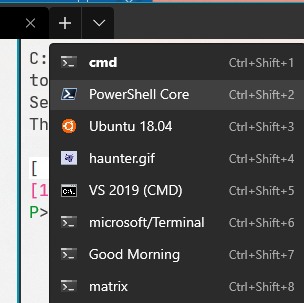
|
||||
|
||||
It's not the Terminal's responsibility to remember the commands executed by a commandline client. That's the responsibility of the _shell_. How would the terminal remember commands executed by something like `emacs` or `vim`? Those are both applications where the user is typing input and hitting enter, like they would at a cmd prompt, but without something that resembles a command history.
|
||||
|
||||
Original Source: https://github.com/microsoft/terminal/issues/6500#issuecomment-670035468
|
||||
|
||||
@@ -67,12 +67,12 @@ To update the version of a given package, use the following snippet
|
||||
|
||||
where:
|
||||
- `$PackageName` is the name of the package, e.g. Microsoft.UI.Xaml
|
||||
- `$OldVersionNumber` is the version number currently used, e.g. 2.5.0-prerelease.200609001
|
||||
- `$OldVersionNumber` is the version number currently used, e.g. 2.3.191217003-prerelease
|
||||
- `$NewVersionNumber` is the version number you want to migrate to, e.g. 2.4.200117003-prerelease
|
||||
|
||||
Example usage:
|
||||
|
||||
`git grep -z -l Microsoft.UI.Xaml | xargs -0 sed -i -e 's/2.5.0-prerelease.200609001/2.4.200117003-prerelease/g'`
|
||||
`git grep -z -l Microsoft.UI.Xaml | xargs -0 sed -i -e 's/2.3.191217003-prerelease/2.4.200117003-prerelease/g'`
|
||||
|
||||
## Using .nupkg files instead of downloaded Nuget packages
|
||||
If you want to use .nupkg files instead of the downloaded Nuget package, you can do this with the following steps:
|
||||
|
||||
@@ -1,257 +0,0 @@
|
||||
# New Json Utility API
|
||||
|
||||
## Raw value conversion (GetValue)
|
||||
|
||||
`GetValue` is a convenience helper that will either read a value into existing storage (type-deduced) or
|
||||
return a JSON value coerced into the specified type.
|
||||
|
||||
When reading into existing storage, it returns a boolean indicating whether that storage was modified.
|
||||
|
||||
If the JSON value cannot be converted to the specified type, an exception will be generated.
|
||||
|
||||
```c++
|
||||
std::string one;
|
||||
std::optional<std::string> two;
|
||||
|
||||
JsonUtils::GetValue(json, one);
|
||||
// one is populated or unchanged.
|
||||
|
||||
JsonUtils::GetValue(json, two);
|
||||
// two is populated, nullopt or unchanged
|
||||
|
||||
auto three = JsonUtils::GetValue<std::string>(json);
|
||||
// three is populated or zero-initialized
|
||||
|
||||
auto four = JsonUtils::GetValue<std::optional<std::string>>(json);
|
||||
// four is populated or nullopt
|
||||
```
|
||||
|
||||
## Key lookup (GetValueForKey)
|
||||
|
||||
`GetValueForKey` follows the same rules as `GetValue`, but takes an additional key.
|
||||
It is assumed that the JSON value passed to GetValueForKey is of `object` type.
|
||||
|
||||
```c++
|
||||
std::string one;
|
||||
std::optional<std::string> two;
|
||||
|
||||
JsonUtils::GetValueForKey(json, "firstKey", one);
|
||||
// one is populated or unchanged.
|
||||
|
||||
JsonUtils::GetValueForKey(json, "secondKey", two);
|
||||
// two is populated, nullopt or unchanged
|
||||
|
||||
auto three = JsonUtils::GetValueForKey<std::string>(json, "thirdKey");
|
||||
// three is populated or zero-initialized
|
||||
|
||||
auto four = JsonUtils::GetValueForKey<std::optional<std::string>>(json, "fourthKey");
|
||||
// four is populated or nullopt
|
||||
```
|
||||
|
||||
## Rationale: Value-Returning Getters
|
||||
|
||||
JsonUtils provides two types of `GetValue...`: value-returning and reference-filling.
|
||||
|
||||
The reference-filling fixtures use type deduction so that a developer does not
|
||||
need to specify template parameters on every `GetValue` call. It excels at
|
||||
populating class members during deserialization.
|
||||
|
||||
The value-returning fixtures, on the other hand, are very useful for partial
|
||||
deserialization and key detection when you do not need to deserialize an entire
|
||||
instance of a class or you need to reason about the presence of members.
|
||||
|
||||
To provide a concrete example of the latter, consider:
|
||||
|
||||
```c++
|
||||
if (const auto guid{ GetValueForKey<std::optional<GUID>>(json, "guid") })
|
||||
// This condition is only true if there was a "guid" member in the provided JSON object.
|
||||
// It can be accessed through *guid.
|
||||
}
|
||||
```
|
||||
|
||||
If you are... | Use
|
||||
--------------|-----
|
||||
Deserializing | `GetValue(..., storage)`
|
||||
Interrogating | `storage = GetValue<T>(...)`
|
||||
|
||||
## Converting User-Defined Types
|
||||
|
||||
All conversions are done using specializations of
|
||||
`JsonUtils::ConversionTrait<T>`. To implement a converter for a user-defined
|
||||
type, you must implement a specialization of `JsonUtils::ConversionTrait<T>`.
|
||||
|
||||
Every specialization over `T` must implement `static T FromJson(const Json::Value&)`
|
||||
and `static bool CanConvert(const Json::Value&)`.
|
||||
|
||||
```c++
|
||||
struct MyCustomType { int val; };
|
||||
|
||||
template<>
|
||||
struct ConversionTrait<MyCustomType>
|
||||
{
|
||||
// This trait converts a string of the format "[0-9]" to a value of type MyCustomType.
|
||||
|
||||
static MyCustomType FromJson(const Json::Value& json)
|
||||
{
|
||||
return MyCustomType{ json.asString()[0] - '0' };
|
||||
}
|
||||
|
||||
static bool CanConvert(const Json::Value& json)
|
||||
{
|
||||
return json.isString();
|
||||
}
|
||||
};
|
||||
```
|
||||
|
||||
### Converting User-Defined Enumerations
|
||||
|
||||
Enumeration types represent a single choice out of multiple options.
|
||||
|
||||
In a JSON data model, they are typically represented as strings.
|
||||
|
||||
For parsing enumerations, JsonUtils provides the `JSON_ENUM_MAPPER` macro. It
|
||||
can be used to establish a converter that will take a set of known strings and
|
||||
convert them to values.
|
||||
|
||||
```c++
|
||||
JSON_ENUM_MAPPER(CursorStyle)
|
||||
{
|
||||
// pair_type is provided by ENUM_MAPPER.
|
||||
JSON_MAPPINGS(5) = {
|
||||
pair_type{ "bar", CursorStyle::Bar },
|
||||
pair_type{ "vintage", CursorStyle::Vintage },
|
||||
pair_type{ "underscore", CursorStyle::Underscore },
|
||||
pair_type{ "filledBox", CursorStyle::FilledBox },
|
||||
pair_type{ "emptyBox", CursorStyle::EmptyBox }
|
||||
};
|
||||
};
|
||||
```
|
||||
|
||||
If the enum mapper fails to convert the provided string, it will throw an
|
||||
exception.
|
||||
|
||||
### Converting User-Defined Flag Sets
|
||||
|
||||
Flags represent a multiple-choice selection. They are typically implemented as
|
||||
enums with bitfield values intended to be ORed together.
|
||||
|
||||
In JSON, a set of flags may be represented by a single string (`"flagName"`) or
|
||||
an array of strings (`["flagOne", "flagTwo"]`).
|
||||
|
||||
JsonUtils provides a `JSON_FLAG_MAPPER` macro that can be used to produce a
|
||||
specialization for a set of flags.
|
||||
|
||||
Given the following flag enum,
|
||||
|
||||
```c++
|
||||
enum class JsonTestFlags : int
|
||||
{
|
||||
FlagOne = 1 << 0,
|
||||
FlagTwo = 1 << 1
|
||||
};
|
||||
```
|
||||
|
||||
You can register a flag mapper with the `JSON_FLAG_MAPPER` macro as follows:
|
||||
|
||||
```c++
|
||||
JSON_FLAG_MAPPER(JsonTestFlags)
|
||||
{
|
||||
JSON_MAPPINGS(2) = {
|
||||
pair_type{ "flagOne", JsonTestFlags::FlagOne },
|
||||
pair_type{ "flagTwo", JsonTestFlags::FlagTwo },
|
||||
};
|
||||
};
|
||||
```
|
||||
|
||||
The `FLAG_MAPPER` also provides two convenience definitions, `AllSet` and
|
||||
`AllClear`, that can be used to represent "all choices" and "no choices"
|
||||
respectively.
|
||||
|
||||
```c++
|
||||
JSON_FLAG_MAPPER(JsonTestFlags)
|
||||
{
|
||||
JSON_MAPPINGS(4) = {
|
||||
pair_type{ "never", AllClear },
|
||||
pair_type{ "flagOne", JsonTestFlags::FlagOne },
|
||||
pair_type{ "flagTwo", JsonTestFlags::FlagTwo },
|
||||
pair_type{ "always", AllSet },
|
||||
};
|
||||
};
|
||||
```
|
||||
|
||||
Because flag values are additive, `["always", "flagOne"]` will result in the
|
||||
same behavior as `"always"`.
|
||||
|
||||
If the flag mapper encounters an unknown flag, it will throw an exception.
|
||||
|
||||
If the flag mapper encounters a logical discontinuity such as `["never", "flagOne"]`
|
||||
(as in the above example), it will throw an exception.
|
||||
|
||||
### Advanced Use
|
||||
|
||||
`GetValue` and `GetValueForKey` can be passed, as their final arguments, any
|
||||
value whose type implements the same interface as `ConversionTrait<T>`--that
|
||||
is, `FromJson(const Json::Value&)` and `CanConvert(const Json::Value&)`.
|
||||
|
||||
This allows for one-off conversions without a specialization of
|
||||
`ConversionTrait` or even stateful converters.
|
||||
|
||||
#### Stateful Converter Sample
|
||||
|
||||
```c++
|
||||
struct MultiplyingConverter {
|
||||
int BaseValue;
|
||||
|
||||
bool CanConvert(const Json::Value&) { return true; }
|
||||
|
||||
int FromJson(const Json::Value& value)
|
||||
{
|
||||
return value.asInt() * BaseValue;
|
||||
}
|
||||
};
|
||||
|
||||
...
|
||||
|
||||
Json::Value json{ 66 }; // A JSON value containing the number 66
|
||||
MultiplyingConverter conv{ 10 };
|
||||
|
||||
auto v = JsonUtils::GetValue<int>(json, conv);
|
||||
// v is equal to 660.
|
||||
```
|
||||
|
||||
## Behavior Chart
|
||||
|
||||
### GetValue(T&) (type-deducing)
|
||||
|
||||
-|json type invalid|json null|valid
|
||||
-|-|-|-
|
||||
`T`|❌ exception|🔵 unchanged|✔ converted
|
||||
`std::optional<T>`|❌ exception|🟨 `nullopt`|✔ converted
|
||||
|
||||
### GetValue<T>() (returning)
|
||||
|
||||
-|json type invalid|json null|valid
|
||||
-|-|-|-
|
||||
`T`|❌ exception|🟨 `T{}` (zero value)|✔ converted
|
||||
`std::optional<T>`|❌ exception|🟨 `nullopt`|✔ converted
|
||||
|
||||
### GetValueForKey(T&) (type-deducing)
|
||||
|
||||
GetValueForKey builds on the behavior set from GetValue by adding
|
||||
a "key not found" state. The remaining three cases are the same.
|
||||
|
||||
val type|key not found|_json type invalid_|_json null_|_valid_
|
||||
-|-|-|-|-
|
||||
`T`|🔵 unchanged|_❌ exception_|_🔵 unchanged_|_✔ converted_
|
||||
`std::optional<T>`|_🔵 unchanged_|_❌ exception_|_🟨 `nullopt`_|_✔ converted_
|
||||
|
||||
### GetValueForKey<T>() (return value)
|
||||
|
||||
val type|key not found|_json type invalid_|_json null_|_valid_
|
||||
-|-|-|-|-
|
||||
`T`|🟨 `T{}` (zero value)|_❌ exception_|_🟨 `T{}` (zero value)_|_✔ converted_
|
||||
`std::optional<T>`|🟨 `nullopt`|_❌ exception_|_🟨 `nullopt`_|_✔ converted_
|
||||
|
||||
### Future Direction
|
||||
|
||||
These converters lend themselves very well to automatic _serialization_.
|
||||
Some files were not shown because too many files have changed in this diff Show More
Reference in New Issue
Block a user