Compare commits
26 Commits
release-1.
...
release-1.
| Author | SHA1 | Date | |
|---|---|---|---|

|
56a2f32d66 | ||
|
|
2a43c20546 | ||

|
b58f60117e | ||
|
|
eff3e93d79 | ||
|
|
e354313dc4 | ||
|
|
b023fff281 | ||
|
|
37e629c747 | ||
|
|
4a03c20323 | ||

|
87bc0004e8 | ||
|
|
fda80eaf64 | ||

|
889467c920 | ||
|
|
cb52de02e7 | ||
|
|
a95a3c427d | ||

|
20a60628bc | ||
|
|
91cfeb0b8b | ||
|
|
0b3aaf6a9c | ||

|
6b0b6be252 | ||
|
|
f370b0d8e4 | ||
|
|
0c8e5db388 | ||

|
950fac82e7 | ||

|
d8421ba66a | ||

|
fdc7bd5e0f | ||
|
|
3cc57a480e | ||
|
|
d2ae82dadf | ||
|
|
583ff5b389 | ||
|
|
98e050de87 |



@@ -1,19 +1,17 @@
|
||||
|
||||
AccessModifierOffset: -4
|
||||
AlignAfterOpenBracket: Align
|
||||
AllowAllArgumentsOnNextLine: true
|
||||
AlignConsecutiveMacros: false
|
||||
#AllowAllArgumentsOnNextLine: false
|
||||
AlignConsecutiveAssignments: false
|
||||
AlignConsecutiveDeclarations: false
|
||||
AllowAllConstructorInitializersOnNextLine: true
|
||||
#AllowAllConstructorInitializersOnNextLine: false
|
||||
AlignEscapedNewlines: Left
|
||||
AlignOperands: true
|
||||
AlignTrailingComments: false
|
||||
AllowAllParametersOfDeclarationOnNextLine: false
|
||||
AllowShortBlocksOnASingleLine: Never
|
||||
AllowShortFunctionsOnASingleLine: Inline
|
||||
AllowShortCaseLabelsOnASingleLine: false
|
||||
AllowShortIfStatementsOnASingleLine: Never
|
||||
AllowShortIfStatementsOnASingleLine: false
|
||||
#AllowShortLambdasOnASingleLine: Inline
|
||||
AllowShortLoopsOnASingleLine: false
|
||||
AlwaysBreakAfterReturnType: None
|
||||
@@ -22,7 +20,6 @@ AlwaysBreakTemplateDeclarations: Yes
|
||||
BinPackArguments: false
|
||||
BinPackParameters: false
|
||||
BraceWrapping:
|
||||
AfterCaseLabel: true
|
||||
AfterClass: true
|
||||
AfterControlStatement: true
|
||||
AfterEnum: true
|
||||
@@ -50,7 +47,6 @@ ConstructorInitializerAllOnOneLineOrOnePerLine: true
|
||||
ConstructorInitializerIndentWidth: 4
|
||||
ContinuationIndentWidth: 4
|
||||
Cpp11BracedListStyle: false
|
||||
DeriveLineEnding: true
|
||||
DerivePointerAlignment: false
|
||||
FixNamespaceComments: false
|
||||
IncludeBlocks: Regroup
|
||||
@@ -77,7 +73,7 @@ ReflowComments: false
|
||||
SortIncludes: false
|
||||
SortUsingDeclarations: true
|
||||
SpaceAfterCStyleCast: false
|
||||
SpaceAfterLogicalNot: false
|
||||
#SpaceAfterLogicalNot: false
|
||||
SpaceAfterTemplateKeyword: false
|
||||
SpaceBeforeAssignmentOperators: true
|
||||
SpaceBeforeCpp11BracedList: false
|
||||
@@ -92,6 +88,6 @@ SpacesInCStyleCastParentheses: false
|
||||
SpacesInContainerLiterals: false
|
||||
SpacesInParentheses: false
|
||||
SpacesInSquareBrackets: false
|
||||
Standard: Latest
|
||||
Standard: Cpp11
|
||||
TabWidth: 4
|
||||
UseTab: Never
|
||||
|
||||
3
.github/PULL_REQUEST_TEMPLATE.md
vendored
@@ -9,8 +9,7 @@
|
||||
* [ ] Closes #xxx
|
||||
* [ ] CLA signed. If not, go over [here](https://cla.opensource.microsoft.com/microsoft/Terminal) and sign the CLA
|
||||
* [ ] Tests added/passed
|
||||
* [ ] Documentation updated. If checked, please file a pull request on [our docs repo](https://github.com/MicrosoftDocs/terminal) and link it here: #xxx
|
||||
* [ ] Schema updated.
|
||||
* [ ] Requires documentation to be updated
|
||||
* [ ] I've discussed this with core contributors already. If not checked, I'm ready to accept this work might be rejected in favor of a different grand plan. Issue number where discussion took place: #xxx
|
||||
|
||||
<!-- Provide a more detailed description of the PR, other things fixed or any additional comments/features here -->
|
||||
|
||||
@@ -9,11 +9,6 @@
|
||||
|
||||
<!-- Use our own NuGet Feed -->
|
||||
<add key="TerminalDependencies" value="https://pkgs.dev.azure.com/ms/terminal/_packaging/TerminalDependencies/nuget/v3/index.json" />
|
||||
|
||||
<!-- Temporarily? use the feeds from our friends in MUX for Helix test stuff -->
|
||||
<add key="dotnetfeed" value="https://dotnetfeed.blob.core.windows.net/dotnet-core/index.json" />
|
||||
<add key="dnceng" value="https://pkgs.dev.azure.com/dnceng/public/_packaging/dotnet-eng/nuget/v3/index.json" />
|
||||
<add key="MUX-Dependencies" value="https://pkgs.dev.azure.com/ms/microsoft-ui-xaml/_packaging/MUX-Dependencies/nuget/v3/index.json" />
|
||||
|
||||
<!-- Internal NuGet feeds that may not be accessible outside Microsoft corporate network -->
|
||||
<!--<add key="TAEF - internal" value="https://microsoft.pkgs.visualstudio.com/DefaultCollection/_packaging/Taef/nuget/v3/index.json" />
|
||||
|
||||
@@ -160,11 +160,15 @@ EndProject
|
||||
Project("{8BC9CEB8-8B4A-11D0-8D11-00A0C91BC942}") = "TerminalConnection", "src\cascadia\TerminalConnection\TerminalConnection.vcxproj", "{CA5CAD1A-C46D-4588-B1C0-40F31AE9100B}"
|
||||
EndProject
|
||||
Project("{8BC9CEB8-8B4A-11D0-8D11-00A0C91BC942}") = "TerminalCore", "src\cascadia\TerminalCore\lib\TerminalCore-lib.vcxproj", "{CA5CAD1A-ABCD-429C-B551-8562EC954746}"
|
||||
ProjectSection(ProjectDependencies) = postProject
|
||||
{CA5CAD1A-D7EC-4107-B7C6-79CB77AE2907} = {CA5CAD1A-D7EC-4107-B7C6-79CB77AE2907}
|
||||
EndProjectSection
|
||||
EndProject
|
||||
Project("{8BC9CEB8-8B4A-11D0-8D11-00A0C91BC942}") = "TerminalControl", "src\cascadia\TerminalControl\TerminalControl.vcxproj", "{CA5CAD1A-44BD-4AC7-AC72-6CA5B3AB89ED}"
|
||||
ProjectSection(ProjectDependencies) = postProject
|
||||
{CA5CAD1A-C46D-4588-B1C0-40F31AE9100B} = {CA5CAD1A-C46D-4588-B1C0-40F31AE9100B}
|
||||
{CA5CAD1A-ABCD-429C-B551-8562EC954746} = {CA5CAD1A-ABCD-429C-B551-8562EC954746}
|
||||
{CA5CAD1A-D7EC-4107-B7C6-79CB77AE2907} = {CA5CAD1A-D7EC-4107-B7C6-79CB77AE2907}
|
||||
{1CF55140-EF6A-4736-A403-957E4F7430BB} = {1CF55140-EF6A-4736-A403-957E4F7430BB}
|
||||
{48D21369-3D7B-4431-9967-24E81292CF63} = {48D21369-3D7B-4431-9967-24E81292CF63}
|
||||
EndProjectSection
|
||||
@@ -174,16 +178,20 @@ Project("{8BC9CEB8-8B4A-11D0-8D11-00A0C91BC942}") = "WindowsTerminal", "src\casc
|
||||
{CA5CAD1A-44BD-4AC7-AC72-6CA5B3AB89ED} = {CA5CAD1A-44BD-4AC7-AC72-6CA5B3AB89ED}
|
||||
{CA5CAD1A-44BD-4AC7-AC72-F16E576FDD12} = {CA5CAD1A-44BD-4AC7-AC72-F16E576FDD12}
|
||||
{CA5CAD1A-ABCD-429C-B551-8562EC954746} = {CA5CAD1A-ABCD-429C-B551-8562EC954746}
|
||||
{CA5CAD1A-D7EC-4107-B7C6-79CB77AE2907} = {CA5CAD1A-D7EC-4107-B7C6-79CB77AE2907}
|
||||
{9CBD7DFA-1754-4A9D-93D7-857A9D17CB1B} = {9CBD7DFA-1754-4A9D-93D7-857A9D17CB1B}
|
||||
EndProjectSection
|
||||
EndProject
|
||||
Project("{8BC9CEB8-8B4A-11D0-8D11-00A0C91BC942}") = "TerminalApp", "src\cascadia\TerminalApp\dll\TerminalApp.vcxproj", "{CA5CAD1A-44BD-4AC7-AC72-F16E576FDD12}"
|
||||
Project("{8BC9CEB8-8B4A-11D0-8D11-00A0C91BC942}") = "TerminalApp", "src\cascadia\TerminalApp\TerminalApp.vcxproj", "{CA5CAD1A-44BD-4AC7-AC72-F16E576FDD12}"
|
||||
ProjectSection(ProjectDependencies) = postProject
|
||||
{CA5CAD1A-9A12-429C-B551-8562EC954746} = {CA5CAD1A-9A12-429C-B551-8562EC954746}
|
||||
{CA5CAD1A-C46D-4588-B1C0-40F31AE9100B} = {CA5CAD1A-C46D-4588-B1C0-40F31AE9100B}
|
||||
{CA5CAD1A-44BD-4AC7-AC72-6CA5B3AB89ED} = {CA5CAD1A-44BD-4AC7-AC72-6CA5B3AB89ED}
|
||||
{CA5CAD1A-D7EC-4107-B7C6-79CB77AE2907} = {CA5CAD1A-D7EC-4107-B7C6-79CB77AE2907}
|
||||
EndProjectSection
|
||||
EndProject
|
||||
Project("{8BC9CEB8-8B4A-11D0-8D11-00A0C91BC942}") = "TerminalSettings", "src\cascadia\TerminalSettings\TerminalSettings.vcxproj", "{CA5CAD1A-D7EC-4107-B7C6-79CB77AE2907}"
|
||||
EndProject
|
||||
Project("{8BC9CEB8-8B4A-11D0-8D11-00A0C91BC942}") = "WindowsTerminalShellExt", "src\cascadia\ShellExtension\WindowsTerminalShellExt.vcxproj", "{F2ED628A-DB22-446F-A081-4CC845B51A2B}"
|
||||
EndProject
|
||||
Project("{8BC9CEB8-8B4A-11D0-8D11-00A0C91BC942}") = "UnitTests_TerminalCore", "src\cascadia\UnitTests_TerminalCore\UnitTests.vcxproj", "{2C2BEEF4-9333-4D05-B12A-1905CBF112F9}"
|
||||
@@ -227,9 +235,10 @@ Project("{8BC9CEB8-8B4A-11D0-8D11-00A0C91BC942}") = "UnitTests_TerminalApp", "sr
|
||||
{CA5CAD1A-9A12-429C-B551-8562EC954746} = {CA5CAD1A-9A12-429C-B551-8562EC954746}
|
||||
EndProjectSection
|
||||
EndProject
|
||||
Project("{8BC9CEB8-8B4A-11D0-8D11-00A0C91BC942}") = "TerminalAppLib", "src\cascadia\TerminalApp\TerminalAppLib.vcxproj", "{CA5CAD1A-9A12-429C-B551-8562EC954746}"
|
||||
Project("{8BC9CEB8-8B4A-11D0-8D11-00A0C91BC942}") = "TerminalAppLib", "src\cascadia\TerminalApp\lib\TerminalAppLib.vcxproj", "{CA5CAD1A-9A12-429C-B551-8562EC954746}"
|
||||
ProjectSection(ProjectDependencies) = postProject
|
||||
{CA5CAD1A-44BD-4AC7-AC72-6CA5B3AB89ED} = {CA5CAD1A-44BD-4AC7-AC72-6CA5B3AB89ED}
|
||||
{CA5CAD1A-D7EC-4107-B7C6-79CB77AE2907} = {CA5CAD1A-D7EC-4107-B7C6-79CB77AE2907}
|
||||
EndProjectSection
|
||||
EndProject
|
||||
Project("{8BC9CEB8-8B4A-11D0-8D11-00A0C91BC942}") = "LocalTests_TerminalApp", "src\cascadia\LocalTests_TerminalApp\TerminalApp.LocalTests.vcxproj", "{CA5CAD1A-B11C-4DDB-A4FE-C3AFAE9B5506}"
|
||||
@@ -305,8 +314,6 @@ Project("{9A19103F-16F7-4668-BE54-9A1E7A4F7556}") = "WpfTerminalTestNetCore", "s
|
||||
{84848BFA-931D-42CE-9ADF-01EE54DE7890} = {84848BFA-931D-42CE-9ADF-01EE54DE7890}
|
||||
EndProjectSection
|
||||
EndProject
|
||||
Project("{8BC9CEB8-8B4A-11D0-8D11-00A0C91BC942}") = "wt", "src\cascadia\wt\wt.vcxproj", "{506FD703-BAA7-4F6E-9361-64F550EC8FCA}"
|
||||
EndProject
|
||||
Global
|
||||
GlobalSection(SolutionConfigurationPlatforms) = preSolution
|
||||
AuditMode|Any CPU = AuditMode|Any CPU
|
||||
@@ -1380,6 +1387,35 @@ Global
|
||||
{CA5CAD1A-44BD-4AC7-AC72-F16E576FDD12}.Release|x64.Build.0 = Release|x64
|
||||
{CA5CAD1A-44BD-4AC7-AC72-F16E576FDD12}.Release|x86.ActiveCfg = Release|Win32
|
||||
{CA5CAD1A-44BD-4AC7-AC72-F16E576FDD12}.Release|x86.Build.0 = Release|Win32
|
||||
{CA5CAD1A-D7EC-4107-B7C6-79CB77AE2907}.AuditMode|Any CPU.ActiveCfg = Debug|Win32
|
||||
{CA5CAD1A-D7EC-4107-B7C6-79CB77AE2907}.AuditMode|ARM64.ActiveCfg = Release|ARM64
|
||||
{CA5CAD1A-D7EC-4107-B7C6-79CB77AE2907}.AuditMode|DotNet_x64Test.ActiveCfg = Debug|Win32
|
||||
{CA5CAD1A-D7EC-4107-B7C6-79CB77AE2907}.AuditMode|DotNet_x86Test.ActiveCfg = Debug|Win32
|
||||
{CA5CAD1A-D7EC-4107-B7C6-79CB77AE2907}.AuditMode|x64.ActiveCfg = AuditMode|x64
|
||||
{CA5CAD1A-D7EC-4107-B7C6-79CB77AE2907}.AuditMode|x64.Build.0 = AuditMode|x64
|
||||
{CA5CAD1A-D7EC-4107-B7C6-79CB77AE2907}.AuditMode|x86.ActiveCfg = Release|Win32
|
||||
{CA5CAD1A-D7EC-4107-B7C6-79CB77AE2907}.Debug|Any CPU.ActiveCfg = Debug|Win32
|
||||
{CA5CAD1A-D7EC-4107-B7C6-79CB77AE2907}.Debug|ARM64.ActiveCfg = Debug|ARM64
|
||||
{CA5CAD1A-D7EC-4107-B7C6-79CB77AE2907}.Debug|ARM64.Build.0 = Debug|ARM64
|
||||
{CA5CAD1A-D7EC-4107-B7C6-79CB77AE2907}.Debug|DotNet_x64Test.ActiveCfg = Debug|x64
|
||||
{CA5CAD1A-D7EC-4107-B7C6-79CB77AE2907}.Debug|DotNet_x64Test.Build.0 = Debug|x64
|
||||
{CA5CAD1A-D7EC-4107-B7C6-79CB77AE2907}.Debug|DotNet_x86Test.ActiveCfg = Debug|Win32
|
||||
{CA5CAD1A-D7EC-4107-B7C6-79CB77AE2907}.Debug|DotNet_x86Test.Build.0 = Debug|Win32
|
||||
{CA5CAD1A-D7EC-4107-B7C6-79CB77AE2907}.Debug|x64.ActiveCfg = Debug|x64
|
||||
{CA5CAD1A-D7EC-4107-B7C6-79CB77AE2907}.Debug|x64.Build.0 = Debug|x64
|
||||
{CA5CAD1A-D7EC-4107-B7C6-79CB77AE2907}.Debug|x86.ActiveCfg = Debug|Win32
|
||||
{CA5CAD1A-D7EC-4107-B7C6-79CB77AE2907}.Debug|x86.Build.0 = Debug|Win32
|
||||
{CA5CAD1A-D7EC-4107-B7C6-79CB77AE2907}.Release|Any CPU.ActiveCfg = Release|Win32
|
||||
{CA5CAD1A-D7EC-4107-B7C6-79CB77AE2907}.Release|ARM64.ActiveCfg = Release|ARM64
|
||||
{CA5CAD1A-D7EC-4107-B7C6-79CB77AE2907}.Release|ARM64.Build.0 = Release|ARM64
|
||||
{CA5CAD1A-D7EC-4107-B7C6-79CB77AE2907}.Release|DotNet_x64Test.ActiveCfg = Release|x64
|
||||
{CA5CAD1A-D7EC-4107-B7C6-79CB77AE2907}.Release|DotNet_x64Test.Build.0 = Release|x64
|
||||
{CA5CAD1A-D7EC-4107-B7C6-79CB77AE2907}.Release|DotNet_x86Test.ActiveCfg = Release|Win32
|
||||
{CA5CAD1A-D7EC-4107-B7C6-79CB77AE2907}.Release|DotNet_x86Test.Build.0 = Release|Win32
|
||||
{CA5CAD1A-D7EC-4107-B7C6-79CB77AE2907}.Release|x64.ActiveCfg = Release|x64
|
||||
{CA5CAD1A-D7EC-4107-B7C6-79CB77AE2907}.Release|x64.Build.0 = Release|x64
|
||||
{CA5CAD1A-D7EC-4107-B7C6-79CB77AE2907}.Release|x86.ActiveCfg = Release|Win32
|
||||
{CA5CAD1A-D7EC-4107-B7C6-79CB77AE2907}.Release|x86.Build.0 = Release|Win32
|
||||
{F2ED628A-DB22-446F-A081-4CC845B51A2B}.AuditMode|Any CPU.ActiveCfg = Release|Win32
|
||||
{F2ED628A-DB22-446F-A081-4CC845B51A2B}.AuditMode|ARM64.ActiveCfg = Release|ARM64
|
||||
{F2ED628A-DB22-446F-A081-4CC845B51A2B}.AuditMode|DotNet_x64Test.ActiveCfg = AuditMode|Win32
|
||||
@@ -1959,33 +1995,6 @@ Global
|
||||
{1588FD7C-241E-4E7D-9113-43735F3E6BAD}.Release|DotNet_x86Test.Build.0 = Release|x86
|
||||
{1588FD7C-241E-4E7D-9113-43735F3E6BAD}.Release|x64.ActiveCfg = Release|Any CPU
|
||||
{1588FD7C-241E-4E7D-9113-43735F3E6BAD}.Release|x86.ActiveCfg = Release|Any CPU
|
||||
{506FD703-BAA7-4F6E-9361-64F550EC8FCA}.AuditMode|Any CPU.ActiveCfg = AuditMode|Win32
|
||||
{506FD703-BAA7-4F6E-9361-64F550EC8FCA}.AuditMode|ARM64.ActiveCfg = AuditMode|ARM64
|
||||
{506FD703-BAA7-4F6E-9361-64F550EC8FCA}.AuditMode|ARM64.Build.0 = AuditMode|ARM64
|
||||
{506FD703-BAA7-4F6E-9361-64F550EC8FCA}.AuditMode|DotNet_x64Test.ActiveCfg = AuditMode|Win32
|
||||
{506FD703-BAA7-4F6E-9361-64F550EC8FCA}.AuditMode|DotNet_x86Test.ActiveCfg = AuditMode|Win32
|
||||
{506FD703-BAA7-4F6E-9361-64F550EC8FCA}.AuditMode|x64.ActiveCfg = AuditMode|x64
|
||||
{506FD703-BAA7-4F6E-9361-64F550EC8FCA}.AuditMode|x64.Build.0 = AuditMode|x64
|
||||
{506FD703-BAA7-4F6E-9361-64F550EC8FCA}.AuditMode|x86.ActiveCfg = AuditMode|Win32
|
||||
{506FD703-BAA7-4F6E-9361-64F550EC8FCA}.AuditMode|x86.Build.0 = AuditMode|Win32
|
||||
{506FD703-BAA7-4F6E-9361-64F550EC8FCA}.Debug|Any CPU.ActiveCfg = Debug|Win32
|
||||
{506FD703-BAA7-4F6E-9361-64F550EC8FCA}.Debug|ARM64.ActiveCfg = Debug|ARM64
|
||||
{506FD703-BAA7-4F6E-9361-64F550EC8FCA}.Debug|ARM64.Build.0 = Debug|ARM64
|
||||
{506FD703-BAA7-4F6E-9361-64F550EC8FCA}.Debug|DotNet_x64Test.ActiveCfg = Debug|Win32
|
||||
{506FD703-BAA7-4F6E-9361-64F550EC8FCA}.Debug|DotNet_x86Test.ActiveCfg = Debug|Win32
|
||||
{506FD703-BAA7-4F6E-9361-64F550EC8FCA}.Debug|x64.ActiveCfg = Debug|x64
|
||||
{506FD703-BAA7-4F6E-9361-64F550EC8FCA}.Debug|x64.Build.0 = Debug|x64
|
||||
{506FD703-BAA7-4F6E-9361-64F550EC8FCA}.Debug|x86.ActiveCfg = Debug|Win32
|
||||
{506FD703-BAA7-4F6E-9361-64F550EC8FCA}.Debug|x86.Build.0 = Debug|Win32
|
||||
{506FD703-BAA7-4F6E-9361-64F550EC8FCA}.Release|Any CPU.ActiveCfg = Release|Win32
|
||||
{506FD703-BAA7-4F6E-9361-64F550EC8FCA}.Release|ARM64.ActiveCfg = Release|ARM64
|
||||
{506FD703-BAA7-4F6E-9361-64F550EC8FCA}.Release|ARM64.Build.0 = Release|ARM64
|
||||
{506FD703-BAA7-4F6E-9361-64F550EC8FCA}.Release|DotNet_x64Test.ActiveCfg = Release|Win32
|
||||
{506FD703-BAA7-4F6E-9361-64F550EC8FCA}.Release|DotNet_x86Test.ActiveCfg = Release|Win32
|
||||
{506FD703-BAA7-4F6E-9361-64F550EC8FCA}.Release|x64.ActiveCfg = Release|x64
|
||||
{506FD703-BAA7-4F6E-9361-64F550EC8FCA}.Release|x64.Build.0 = Release|x64
|
||||
{506FD703-BAA7-4F6E-9361-64F550EC8FCA}.Release|x86.ActiveCfg = Release|Win32
|
||||
{506FD703-BAA7-4F6E-9361-64F550EC8FCA}.Release|x86.Build.0 = Release|Win32
|
||||
EndGlobalSection
|
||||
GlobalSection(SolutionProperties) = preSolution
|
||||
HideSolutionNode = FALSE
|
||||
@@ -2035,6 +2044,7 @@ Global
|
||||
{CA5CAD1A-44BD-4AC7-AC72-6CA5B3AB89ED} = {59840756-302F-44DF-AA47-441A9D673202}
|
||||
{CA5CAD1A-1754-4A9D-93D7-857A9D17CB1B} = {59840756-302F-44DF-AA47-441A9D673202}
|
||||
{CA5CAD1A-44BD-4AC7-AC72-F16E576FDD12} = {59840756-302F-44DF-AA47-441A9D673202}
|
||||
{CA5CAD1A-D7EC-4107-B7C6-79CB77AE2907} = {59840756-302F-44DF-AA47-441A9D673202}
|
||||
{F2ED628A-DB22-446F-A081-4CC845B51A2B} = {59840756-302F-44DF-AA47-441A9D673202}
|
||||
{2C2BEEF4-9333-4D05-B12A-1905CBF112F9} = {BDB237B6-1D1D-400F-84CC-40A58FA59C8E}
|
||||
{EF3E32A7-5FF6-42B4-B6E2-96CD7D033F00} = {E8F24881-5E37-4362-B191-A3BA0ED7F4EB}
|
||||
@@ -2065,7 +2075,6 @@ Global
|
||||
{067F0A06-FCB7-472C-96E9-B03B54E8E18D} = {59840756-302F-44DF-AA47-441A9D673202}
|
||||
{6BAE5851-50D5-4934-8D5E-30361A8A40F3} = {81C352DB-1818-45B7-A284-18E259F1CC87}
|
||||
{1588FD7C-241E-4E7D-9113-43735F3E6BAD} = {59840756-302F-44DF-AA47-441A9D673202}
|
||||
{506FD703-BAA7-4F6E-9361-64F550EC8FCA} = {59840756-302F-44DF-AA47-441A9D673202}
|
||||
EndGlobalSection
|
||||
GlobalSection(ExtensibilityGlobals) = postSolution
|
||||
SolutionGuid = {3140B1B7-C8EE-43D1-A772-D82A7061A271}
|
||||
|
||||
17
README.md
@@ -60,22 +60,6 @@ choco upgrade microsoft-windows-terminal
|
||||
|
||||
If you have any issues when installing/upgrading the package please go to the [Windows Terminal package page](https://chocolatey.org/packages/microsoft-windows-terminal) and follow the [Chocolatey triage process](https://chocolatey.org/docs/package-triage-process)
|
||||
|
||||
#### Via Scoop (unofficial)
|
||||
|
||||
[Scoop](https://scoop.sh) users can download and install the latest Terminal release by installing the `windows-terminal` package:
|
||||
|
||||
```powershell
|
||||
scoop install windows-terminal
|
||||
```
|
||||
|
||||
To update Windows Terminal using Scoop, run the following:
|
||||
|
||||
```powershell
|
||||
scoop update windows-terminal
|
||||
```
|
||||
|
||||
If you have any issues when installing/updating the package, please search for or report the same on the [issues page](https://github.com/lukesampson/scoop-extras/issues) of Scoop Extras bucket repository.
|
||||
|
||||
---
|
||||
|
||||
## Windows Terminal 2.0 Roadmap
|
||||
@@ -179,7 +163,6 @@ If you would like to ask a question that you feel doesn't warrant an issue (yet)
|
||||
* Mike Griese, Developer: [@zadjii](https://twitter.com/zadjii)
|
||||
* Carlos Zamora, Developer: [@cazamor_msft](https://twitter.com/cazamor_msft)
|
||||
* Leon Liang, Developer: [@leonmsft](https://twitter.com/leonmsft)
|
||||
* Pankaj Bhojwani, Developer
|
||||
|
||||
## Developer Guidance
|
||||
|
||||
|
||||
@@ -1,32 +0,0 @@
|
||||
function GetAzureDevOpsBaseUri
|
||||
{
|
||||
Param(
|
||||
[string]$CollectionUri,
|
||||
[string]$TeamProject
|
||||
)
|
||||
|
||||
return $CollectionUri + $TeamProject
|
||||
}
|
||||
|
||||
function GetQueryTestRunsUri
|
||||
{
|
||||
Param(
|
||||
[string]$CollectionUri,
|
||||
[string]$TeamProject,
|
||||
[string]$BuildUri,
|
||||
[switch]$IncludeRunDetails
|
||||
)
|
||||
|
||||
if ($IncludeRunDetails)
|
||||
{
|
||||
$includeRunDetailsParameter = "&includeRunDetails=true"
|
||||
}
|
||||
else
|
||||
{
|
||||
$includeRunDetailsParameter = ""
|
||||
}
|
||||
|
||||
$baseUri = GetAzureDevOpsBaseUri -CollectionUri $CollectionUri -TeamProject $TeamProject
|
||||
$queryUri = "$baseUri/_apis/test/runs?buildUri=$BuildUri$includeRunDetailsParameter&api-version=5.0"
|
||||
return $queryUri
|
||||
}
|
||||
@@ -1,28 +0,0 @@
|
||||
Param(
|
||||
[Parameter(Mandatory = $true)]
|
||||
[string]$WttInputPath,
|
||||
|
||||
[Parameter(Mandatory = $true)]
|
||||
[string]$WttSingleRerunInputPath,
|
||||
|
||||
[Parameter(Mandatory = $true)]
|
||||
[string]$WttMultipleRerunInputPath,
|
||||
|
||||
[Parameter(Mandatory = $true)]
|
||||
[string]$XUnitOutputPath,
|
||||
|
||||
[Parameter(Mandatory = $true)]
|
||||
[string]$TestNamePrefix
|
||||
)
|
||||
|
||||
# Ideally these would be passed as parameters to the script. However ps makes it difficult to deal with string literals containing '&', so we just
|
||||
# read the values directly from the environment variables
|
||||
$helixResultsContainerUri = $Env:HELIX_RESULTS_CONTAINER_URI
|
||||
$helixResultsContainerRsas = $Env:HELIX_RESULTS_CONTAINER_RSAS
|
||||
|
||||
$rerunPassesRequiredToAvoidFailure = $env:rerunPassesRequiredToAvoidFailure
|
||||
|
||||
Add-Type -Language CSharp -ReferencedAssemblies System.Xml,System.Xml.Linq,System.Runtime.Serialization,System.Runtime.Serialization.Json (Get-Content $PSScriptRoot\HelixTestHelpers.cs -Raw)
|
||||
|
||||
$testResultParser = [HelixTestHelpers.TestResultParser]::new($TestNamePrefix, $helixResultsContainerUri, $helixResultsContainerRsas)
|
||||
$testResultParser.ConvertWttLogToXUnitLog($WttInputPath, $WttSingleRerunInputPath, $WttMultipleRerunInputPath, $XUnitOutputPath, $rerunPassesRequiredToAvoidFailure)
|
||||
@@ -1,112 +0,0 @@
|
||||
$scriptDirectory = $script:MyInvocation.MyCommand.Path | Split-Path -Parent
|
||||
|
||||
# List all processes to aid debugging:
|
||||
Write-Host "All processes running:"
|
||||
Get-Process
|
||||
|
||||
tasklist /svc
|
||||
|
||||
# Add this test directory as an exclusion for Windows Defender
|
||||
Write-Host "Add $scriptDirectory as Exclusion Path"
|
||||
Add-MpPreference -ExclusionPath $scriptDirectory
|
||||
Write-Host "Add $($env:HELIX_CORRELATION_PAYLOAD) as Exclusion Path"
|
||||
Add-MpPreference -ExclusionPath $env:HELIX_CORRELATION_PAYLOAD
|
||||
Get-MpPreference
|
||||
Get-MpComputerStatus
|
||||
|
||||
|
||||
# Minimize all windows:
|
||||
$shell = New-Object -ComObject "Shell.Application"
|
||||
$shell.minimizeall()
|
||||
|
||||
# Kill any instances of Windows Security Alert:
|
||||
$windowTitleToMatch = "*Windows Security Alert*"
|
||||
$procs = Get-Process | Where {$_.MainWindowTitle -like "*Windows Security Alert*"}
|
||||
foreach ($proc in $procs)
|
||||
{
|
||||
Write-Host "Found process with '$windowTitleToMatch' title: $proc"
|
||||
$proc.Kill();
|
||||
}
|
||||
|
||||
# Kill processes by name that are known to interfere with our tests:
|
||||
$processNamesToStop = @("Microsoft.Photos", "WinStore.App", "SkypeApp", "SkypeBackgroundHost", "OneDriveSetup", "OneDrive")
|
||||
foreach($procName in $processNamesToStop)
|
||||
{
|
||||
Write-Host "Attempting to kill $procName if it is running"
|
||||
Stop-Process -ProcessName $procName -Verbose -ErrorAction Ignore
|
||||
}
|
||||
Write-Host "All processes running after attempting to kill unwanted processes:"
|
||||
Get-Process
|
||||
|
||||
tasklist /svc
|
||||
|
||||
$platform = $env:testbuildplatform
|
||||
if(!$platform)
|
||||
{
|
||||
$platform = "x86"
|
||||
}
|
||||
|
||||
function UninstallApps {
|
||||
Param([string[]]$appsToUninstall)
|
||||
|
||||
foreach($pkgName in $appsToUninstall)
|
||||
{
|
||||
foreach($pkg in (Get-AppxPackage $pkgName).PackageFullName)
|
||||
{
|
||||
Write-Output "Removing: $pkg"
|
||||
Remove-AppxPackage $pkg
|
||||
}
|
||||
}
|
||||
}
|
||||
|
||||
function UninstallTestApps {
|
||||
Param([string[]]$appsToUninstall)
|
||||
|
||||
foreach($pkgName in $appsToUninstall)
|
||||
{
|
||||
foreach($pkg in (Get-AppxPackage $pkgName).PackageFullName)
|
||||
{
|
||||
Write-Output "Removing: $pkg"
|
||||
Remove-AppxPackage $pkg
|
||||
}
|
||||
|
||||
# Sometimes an app can get into a state where it is no longer returned by Get-AppxPackage, but it is still present
|
||||
# which prevents other versions of the app from being installed.
|
||||
# To handle this, we can directly call Remove-AppxPackage against the full name of the package. However, without
|
||||
# Get-AppxPackage to find the PackageFullName, we just have to manually construct the name.
|
||||
$packageFullName = "$($pkgName)_1.0.0.0_$($platform)__8wekyb3d8bbwe"
|
||||
Write-Host "Removing $packageFullName if installed"
|
||||
Remove-AppPackage $packageFullName -ErrorVariable appxerror -ErrorAction SilentlyContinue
|
||||
if($appxerror)
|
||||
{
|
||||
foreach($error in $appxerror)
|
||||
{
|
||||
# In most cases, Remove-AppPackage will fail due to the package not being found. Don't treat this as an error.
|
||||
if(!($error.Exception.Message -match "0x80073CF1"))
|
||||
{
|
||||
Write-Error $error
|
||||
}
|
||||
}
|
||||
}
|
||||
else
|
||||
{
|
||||
Write-Host "Successfully removed $packageFullName"
|
||||
}
|
||||
}
|
||||
}
|
||||
|
||||
Write-Host "Uninstall AppX packages that are known to cause issues with our tests"
|
||||
UninstallApps("*Skype*", "*Windows.Photos*")
|
||||
|
||||
Write-Host "Uninstall any of our test apps that may have been left over from previous test runs"
|
||||
UninstallTestApps("NugetPackageTestApp", "NugetPackageTestAppCX", "IXMPTestApp", "MUXControlsTestApp")
|
||||
|
||||
Write-Host "Uninstall MUX Framework package that may have been left over from previous test runs"
|
||||
# We don't want to uninstall all versions of the MUX Framework package, as there may be other apps preinstalled on the system
|
||||
# that depend on it. We only uninstall the Framework package that corresponds to the version of MUX that we are testing.
|
||||
[xml]$versionData = (Get-Content "version.props")
|
||||
$versionMajor = $versionData.GetElementsByTagName("MUXVersionMajor").'#text'
|
||||
$versionMinor = $versionData.GetElementsByTagName("MUXVersionMinor").'#text'
|
||||
UninstallApps("Microsoft.UI.Xaml.$versionMajor.$versionMinor")
|
||||
|
||||
Get-Process
|
||||
@@ -1,336 +0,0 @@
|
||||
[CmdLetBinding()]
|
||||
Param(
|
||||
[Parameter(Mandatory = $true)]
|
||||
[string]$TestFile,
|
||||
|
||||
[Parameter(Mandatory = $true)]
|
||||
[string]$OutputProjFile,
|
||||
|
||||
[Parameter(Mandatory = $true)]
|
||||
[string]$JobTestSuiteName,
|
||||
|
||||
[Parameter(Mandatory = $true)]
|
||||
[string]$TaefPath,
|
||||
|
||||
[string]$TaefQuery
|
||||
)
|
||||
|
||||
Class TestCollection
|
||||
{
|
||||
[string]$Name
|
||||
[string]$SetupMethodName
|
||||
[string]$TeardownMethodName
|
||||
[System.Collections.Generic.Dictionary[string, string]]$Properties
|
||||
|
||||
TestCollection()
|
||||
{
|
||||
if ($this.GetType() -eq [TestCollection])
|
||||
{
|
||||
throw "This class should never be instantiated directly; it should only be derived from."
|
||||
}
|
||||
}
|
||||
|
||||
TestCollection([string]$name)
|
||||
{
|
||||
$this.Init($name)
|
||||
}
|
||||
|
||||
hidden Init([string]$name)
|
||||
{
|
||||
$this.Name = $name
|
||||
$this.Properties = @{}
|
||||
}
|
||||
}
|
||||
|
||||
Class Test : TestCollection
|
||||
{
|
||||
Test([string]$name)
|
||||
{
|
||||
$this.Init($name)
|
||||
}
|
||||
}
|
||||
|
||||
Class TestClass : TestCollection
|
||||
{
|
||||
[System.Collections.Generic.List[Test]]$Tests
|
||||
|
||||
TestClass([string]$name)
|
||||
{
|
||||
$this.Init($name)
|
||||
$this.Tests = @{}
|
||||
}
|
||||
}
|
||||
|
||||
Class TestModule : TestCollection
|
||||
{
|
||||
[System.Collections.Generic.List[TestClass]]$TestClasses
|
||||
|
||||
TestModule([string]$name)
|
||||
{
|
||||
$this.Init($name)
|
||||
$this.TestClasses = @{}
|
||||
}
|
||||
}
|
||||
|
||||
function Parse-TestInfo([string]$taefOutput)
|
||||
{
|
||||
enum LineType
|
||||
{
|
||||
None
|
||||
TestModule
|
||||
TestClass
|
||||
Test
|
||||
Setup
|
||||
Teardown
|
||||
Property
|
||||
}
|
||||
|
||||
[string]$testModuleIndentation = " "
|
||||
[string]$testClassIndentation = " "
|
||||
[string]$testIndentation = " "
|
||||
[string]$setupBeginning = "Setup: "
|
||||
[string]$teardownBeginning = "Teardown: "
|
||||
[string]$propertyBeginning = "Property["
|
||||
|
||||
function Get-LineType([string]$line)
|
||||
{
|
||||
if ($line.Contains($setupBeginning))
|
||||
{
|
||||
return [LineType]::Setup;
|
||||
}
|
||||
elseif ($line.Contains($teardownBeginning))
|
||||
{
|
||||
return [LineType]::Teardown;
|
||||
}
|
||||
elseif ($line.Contains($propertyBeginning))
|
||||
{
|
||||
return [LineType]::Property;
|
||||
}
|
||||
elseif ($line.StartsWith($testModuleIndentation) -and -not $line.StartsWith("$testModuleIndentation "))
|
||||
{
|
||||
return [LineType]::TestModule;
|
||||
}
|
||||
elseif ($line.StartsWith($testClassIndentation) -and -not $line.StartsWith("$testClassIndentation "))
|
||||
{
|
||||
return [LineType]::TestClass;
|
||||
}
|
||||
elseif ($line.StartsWith($testIndentation) -and -not $line.StartsWith("$testIndentation "))
|
||||
{
|
||||
return [LineType]::Test;
|
||||
}
|
||||
else
|
||||
{
|
||||
return [LineType]::None;
|
||||
}
|
||||
}
|
||||
|
||||
[string[]]$lines = $taefOutput.Split(@([Environment]::NewLine, "`n"), [StringSplitOptions]::RemoveEmptyEntries)
|
||||
[System.Collections.Generic.List[TestModule]]$testModules = @()
|
||||
|
||||
[TestModule]$currentTestModule = $null
|
||||
[TestClass]$currentTestClass = $null
|
||||
[Test]$currentTest = $null
|
||||
|
||||
[TestCollection]$lastTestCollection = $null
|
||||
|
||||
foreach ($rawLine in $lines)
|
||||
{
|
||||
[LineType]$lineType = (Get-LineType $rawLine)
|
||||
|
||||
# We don't need the whitespace around the line anymore, so we'll discard it to make things easier.
|
||||
[string]$line = $rawLine.Trim()
|
||||
|
||||
if ($lineType -eq [LineType]::TestModule)
|
||||
{
|
||||
if ($currentTest -ne $null -and $currentTestClass -ne $null)
|
||||
{
|
||||
$currentTestClass.Tests.Add($currentTest)
|
||||
}
|
||||
|
||||
if ($currentTestClass -ne $null -and $currentTestModule -ne $null)
|
||||
{
|
||||
$currentTestModule.TestClasses.Add($currentTestClass)
|
||||
}
|
||||
|
||||
if ($currentTestModule -ne $null)
|
||||
{
|
||||
$testModules.Add($currentTestModule)
|
||||
}
|
||||
|
||||
$currentTestModule = [TestModule]::new($line)
|
||||
$currentTestClass = $null
|
||||
$currentTest = $null
|
||||
$lastTestCollection = $currentTestModule
|
||||
}
|
||||
elseif ($lineType -eq [LineType]::TestClass)
|
||||
{
|
||||
if ($currentTest -ne $null -and $currentTestClass -ne $null)
|
||||
{
|
||||
$currentTestClass.Tests.Add($currentTest)
|
||||
}
|
||||
|
||||
if ($currentTestClass -ne $null -and $currentTestModule -ne $null)
|
||||
{
|
||||
$currentTestModule.TestClasses.Add($currentTestClass)
|
||||
}
|
||||
|
||||
$currentTestClass = [TestClass]::new($line)
|
||||
$currentTest = $null
|
||||
$lastTestCollection = $currentTestClass
|
||||
}
|
||||
elseif ($lineType -eq [LineType]::Test)
|
||||
{
|
||||
if ($currentTest -ne $null -and $currentTestClass -ne $null)
|
||||
{
|
||||
$currentTestClass.Tests.Add($currentTest)
|
||||
}
|
||||
|
||||
$currentTest = [Test]::new($line)
|
||||
$lastTestCollection = $currentTest
|
||||
}
|
||||
elseif ($lineType -eq [LineType]::Setup)
|
||||
{
|
||||
if ($lastTestCollection -ne $null)
|
||||
{
|
||||
$lastTestCollection.SetupMethodName = $line.Replace($setupBeginning, "")
|
||||
}
|
||||
}
|
||||
elseif ($lineType -eq [LineType]::Teardown)
|
||||
{
|
||||
if ($lastTestCollection -ne $null)
|
||||
{
|
||||
$lastTestCollection.TeardownMethodName = $line.Replace($teardownBeginning, "")
|
||||
}
|
||||
}
|
||||
elseif ($lineType -eq [LineType]::Property)
|
||||
{
|
||||
if ($lastTestCollection -ne $null)
|
||||
{
|
||||
foreach ($match in [Regex]::Matches($line, "Property\[(.*)\]\s+=\s+(.*)"))
|
||||
{
|
||||
[string]$propertyKey = $match.Groups[1].Value;
|
||||
[string]$propertyValue = $match.Groups[2].Value;
|
||||
$lastTestCollection.Properties.Add($propertyKey, $propertyValue);
|
||||
}
|
||||
}
|
||||
}
|
||||
}
|
||||
|
||||
if ($currentTest -ne $null -and $currentTestClass -ne $null)
|
||||
{
|
||||
$currentTestClass.Tests.Add($currentTest)
|
||||
}
|
||||
|
||||
if ($currentTestClass -ne $null -and $currentTestModule -ne $null)
|
||||
{
|
||||
$currentTestModule.TestClasses.Add($currentTestClass)
|
||||
}
|
||||
|
||||
if ($currentTestModule -ne $null)
|
||||
{
|
||||
$testModules.Add($currentTestModule)
|
||||
}
|
||||
|
||||
return $testModules
|
||||
}
|
||||
|
||||
Write-Verbose "TaefQuery = $TaefQuery"
|
||||
|
||||
$TaefSelectQuery = ""
|
||||
$TaefQueryToAppend = ""
|
||||
if($TaefQuery)
|
||||
{
|
||||
$TaefSelectQuery = "/select:`"$TaefQuery`""
|
||||
$TaefQueryToAppend = " and $TaefQuery"
|
||||
}
|
||||
Write-Verbose "TaefSelectQuery = $TaefSelectQuery"
|
||||
|
||||
|
||||
$taefExe = "$TaefPath\te.exe"
|
||||
[string]$taefOutput = & "$taefExe" /listproperties $TaefSelectQuery $TestFile | Out-String
|
||||
|
||||
[System.Collections.Generic.List[TestModule]]$testModules = (Parse-TestInfo $taefOutput)
|
||||
|
||||
$projFileContent = @"
|
||||
<Project>
|
||||
<ItemGroup>
|
||||
"@
|
||||
|
||||
foreach ($testModule in $testModules)
|
||||
{
|
||||
foreach ($testClass in $testModules.TestClasses)
|
||||
{
|
||||
Write-Host "Generating Helix work item for test class $($testClass.Name)..."
|
||||
[System.Collections.Generic.List[string]]$testSuiteNames = @()
|
||||
|
||||
$testSuiteExists = $false
|
||||
$suitelessTestExists = $false
|
||||
|
||||
foreach ($test in $testClass.Tests)
|
||||
{
|
||||
# A test method inherits its 'TestSuite' property from its TestClass
|
||||
if (!$test.Properties.ContainsKey("TestSuite") -and $testClass.Properties.ContainsKey("TestSuite"))
|
||||
{
|
||||
$test.Properties["TestSuite"] = $testClass.Properties["TestSuite"]
|
||||
}
|
||||
|
||||
if ($test.Properties.ContainsKey("TestSuite"))
|
||||
{
|
||||
[string]$testSuite = $test.Properties["TestSuite"]
|
||||
|
||||
if (-not $testSuiteNames.Contains($testSuite))
|
||||
{
|
||||
Write-Host " Found test suite $testSuite. Generating Helix work item for it as well."
|
||||
$testSuiteNames.Add($testSuite)
|
||||
}
|
||||
|
||||
$testSuiteExists = $true
|
||||
}
|
||||
else
|
||||
{
|
||||
$suitelessTestExists = $true
|
||||
}
|
||||
}
|
||||
|
||||
$testClassSelectPattern = "$($testClass.Name).*"
|
||||
if($testClass.Name.Contains("::"))
|
||||
{
|
||||
$testClassSelectPattern = "$($testClass.Name)::*"
|
||||
}
|
||||
$testNameQuery= "(@Name='$testClassSelectPattern')"
|
||||
|
||||
$workItemName = $testClass.Name
|
||||
# Native tests use '::' as a separator, which is not valid for workItem names.
|
||||
$workItemName = $workItemName -replace "::", "-"
|
||||
|
||||
if ($suitelessTestExists)
|
||||
{
|
||||
$projFileContent += @"
|
||||
|
||||
<HelixWorkItem Include="$($workItemName)" Condition="'`$(TestSuite)'=='$($JobTestSuiteName)'">
|
||||
<Timeout>00:30:00</Timeout>
|
||||
<Command>call %HELIX_CORRELATION_PAYLOAD%\runtests.cmd /select:"(@Name='$($testClass.Name)*'$(if ($testSuiteExists) { "and not @TestSuite='*'" }))$($TaefQueryToAppend)"</Command>
|
||||
</HelixWorkItem>
|
||||
"@
|
||||
}
|
||||
|
||||
foreach ($testSuiteName in $testSuiteNames)
|
||||
{
|
||||
$projFileContent += @"
|
||||
|
||||
<HelixWorkItem Include="$($workItemName)-$testSuiteName" Condition="'`$(TestSuite)'=='$($JobTestSuiteName)'">
|
||||
<Timeout>00:30:00</Timeout>
|
||||
<Command>call %HELIX_CORRELATION_PAYLOAD%\runtests.cmd /select:"(@Name='$($testClass.Name)*' and @TestSuite='$testSuiteName')$($TaefQueryToAppend)"</Command>
|
||||
</HelixWorkItem>
|
||||
"@
|
||||
}
|
||||
}
|
||||
}
|
||||
|
||||
$projFileContent += @"
|
||||
|
||||
</ItemGroup>
|
||||
</Project>
|
||||
"@
|
||||
|
||||
Set-Content $OutputProjFile $projFileContent -NoNewline -Encoding UTF8
|
||||
@@ -1,669 +0,0 @@
|
||||
using System;
|
||||
using System.Collections.Generic;
|
||||
using System.IO;
|
||||
using System.Linq;
|
||||
using System.Runtime.Serialization;
|
||||
using System.Runtime.Serialization.Json;
|
||||
using System.Text;
|
||||
using System.Xml.Linq;
|
||||
|
||||
namespace HelixTestHelpers
|
||||
{
|
||||
public class TestResult
|
||||
{
|
||||
public TestResult()
|
||||
{
|
||||
Screenshots = new List<string>();
|
||||
RerunResults = new List<TestResult>();
|
||||
}
|
||||
|
||||
public string Name { get; set; }
|
||||
public string SourceWttFile { get; set; }
|
||||
public bool Passed { get; set; }
|
||||
public bool CleanupPassed { get; set; }
|
||||
public TimeSpan ExecutionTime { get; set; }
|
||||
public string Details { get; set; }
|
||||
|
||||
public List<string> Screenshots { get; private set; }
|
||||
public List<TestResult> RerunResults { get; private set; }
|
||||
|
||||
// Returns true if the test pass rate is sufficient to avoid being counted as a failure.
|
||||
public bool PassedOrUnreliable(int requiredNumberOfPasses)
|
||||
{
|
||||
if(Passed)
|
||||
{
|
||||
return true;
|
||||
}
|
||||
else
|
||||
{
|
||||
if(RerunResults.Count == 1)
|
||||
{
|
||||
return RerunResults[0].Passed;
|
||||
}
|
||||
else
|
||||
{
|
||||
return RerunResults.Where(r => r.Passed).Count() >= requiredNumberOfPasses;
|
||||
}
|
||||
}
|
||||
}
|
||||
}
|
||||
|
||||
//
|
||||
// Azure DevOps doesn't currently provide a way to directly report sub-results for tests that failed at least once
|
||||
// that were run multiple times. To get around that limitation, we'll mark the test as "Skip" since
|
||||
// that's the only non-pass/fail result we can return, and will then report the information about the
|
||||
// runs in the "reason" category for the skipped test. In order to save space, we'll make the following
|
||||
// optimizations for size:
|
||||
//
|
||||
// 1. Serialize as JSON, which is more compact than XML;
|
||||
// 2. Don't serialize values that we don't need;
|
||||
// 3. Store the URL prefix and suffix for the blob storage URL only once instead of
|
||||
// storing every log and screenshot URL in its entirety; and
|
||||
// 4. Store a list of unique error messages and then index into that instead of
|
||||
// storing every error message in its entirety.
|
||||
//
|
||||
// #4 is motivated by the fact that if a test fails multiple times, it probably failed for the same reason
|
||||
// each time, in which case we'd just be repeating ourselves if we stored every error message each time.
|
||||
//
|
||||
// TODO (https://github.com/dotnet/arcade/issues/2773): Once we're able to directly report things in a
|
||||
// more granular fashion than just a binary pass/fail result, we should do that.
|
||||
//
|
||||
[DataContract]
|
||||
internal class JsonSerializableTestResults
|
||||
{
|
||||
[DataMember]
|
||||
internal string blobPrefix;
|
||||
|
||||
[DataMember]
|
||||
internal string blobSuffix;
|
||||
|
||||
[DataMember]
|
||||
internal string[] errors;
|
||||
|
||||
[DataMember]
|
||||
internal JsonSerializableTestResult[] results;
|
||||
}
|
||||
|
||||
[DataContract]
|
||||
internal class JsonSerializableTestResult
|
||||
{
|
||||
[DataMember]
|
||||
internal string outcome;
|
||||
|
||||
[DataMember]
|
||||
internal int duration;
|
||||
|
||||
[DataMember(EmitDefaultValue = false)]
|
||||
internal string log;
|
||||
|
||||
[DataMember(EmitDefaultValue = false)]
|
||||
internal string[] screenshots;
|
||||
|
||||
[DataMember(EmitDefaultValue = false)]
|
||||
internal int errorIndex;
|
||||
}
|
||||
|
||||
public class TestPass
|
||||
{
|
||||
public TimeSpan TestPassExecutionTime { get; set; }
|
||||
public List<TestResult> TestResults { get; set; }
|
||||
|
||||
public static TestPass ParseTestWttFile(string fileName, bool cleanupFailuresAreRegressions, bool truncateTestNames)
|
||||
{
|
||||
using (var stream = File.OpenRead(fileName))
|
||||
{
|
||||
var doc = XDocument.Load(stream);
|
||||
var testResults = new List<TestResult>();
|
||||
var testExecutionTimeMap = new Dictionary<string, List<double>>();
|
||||
|
||||
TestResult currentResult = null;
|
||||
long frequency = 0;
|
||||
long startTime = 0;
|
||||
long stopTime = 0;
|
||||
bool inTestCleanup = false;
|
||||
|
||||
bool shouldLogToTestDetails = false;
|
||||
|
||||
long testPassStartTime = 0;
|
||||
long testPassStopTime = 0;
|
||||
|
||||
Func<XElement, bool> isScopeData = (elt) =>
|
||||
{
|
||||
return
|
||||
elt.Element("Data") != null &&
|
||||
elt.Element("Data").Element("WexContext") != null &&
|
||||
(
|
||||
elt.Element("Data").Element("WexContext").Value == "Cleanup" ||
|
||||
elt.Element("Data").Element("WexContext").Value == "TestScope" ||
|
||||
elt.Element("Data").Element("WexContext").Value == "TestScope" ||
|
||||
elt.Element("Data").Element("WexContext").Value == "ClassScope" ||
|
||||
elt.Element("Data").Element("WexContext").Value == "ModuleScope"
|
||||
);
|
||||
};
|
||||
|
||||
Func<XElement, bool> isModuleOrClassScopeStart = (elt) =>
|
||||
{
|
||||
return
|
||||
elt.Name == "Msg" &&
|
||||
elt.Element("Data") != null &&
|
||||
elt.Element("Data").Element("StartGroup") != null &&
|
||||
elt.Element("Data").Element("WexContext") != null &&
|
||||
(elt.Element("Data").Element("WexContext").Value == "ClassScope" ||
|
||||
elt.Element("Data").Element("WexContext").Value == "ModuleScope");
|
||||
};
|
||||
|
||||
Func<XElement, bool> isModuleScopeEnd = (elt) =>
|
||||
{
|
||||
return
|
||||
elt.Name == "Msg" &&
|
||||
elt.Element("Data") != null &&
|
||||
elt.Element("Data").Element("EndGroup") != null &&
|
||||
elt.Element("Data").Element("WexContext") != null &&
|
||||
elt.Element("Data").Element("WexContext").Value == "ModuleScope";
|
||||
};
|
||||
|
||||
Func<XElement, bool> isClassScopeEnd = (elt) =>
|
||||
{
|
||||
return
|
||||
elt.Name == "Msg" &&
|
||||
elt.Element("Data") != null &&
|
||||
elt.Element("Data").Element("EndGroup") != null &&
|
||||
elt.Element("Data").Element("WexContext") != null &&
|
||||
elt.Element("Data").Element("WexContext").Value == "ClassScope";
|
||||
};
|
||||
|
||||
int testsExecuting = 0;
|
||||
foreach (XElement element in doc.Root.Elements())
|
||||
{
|
||||
// Capturing the frequency data to record accurate
|
||||
// timing data.
|
||||
if (element.Name == "RTI")
|
||||
{
|
||||
frequency = Int64.Parse(element.Attribute("Frequency").Value);
|
||||
}
|
||||
|
||||
// It's possible for a test to launch another test. If that happens, we won't modify the
|
||||
// current result. Instead, we'll continue operating like normal and expect that we get two
|
||||
// EndTests nodes before our next StartTests. We'll check that we've actually got a stop time
|
||||
// before creating a new result. This will result in the two results being squashed
|
||||
// into one result of the outer test that ran the inner one.
|
||||
if (element.Name == "StartTest")
|
||||
{
|
||||
testsExecuting++;
|
||||
if (testsExecuting == 1)
|
||||
{
|
||||
string testName = element.Attribute("Title").Value;
|
||||
|
||||
if (truncateTestNames)
|
||||
{
|
||||
const string xamlNativePrefix = "Windows::UI::Xaml::Tests::";
|
||||
const string xamlManagedPrefix = "Windows.UI.Xaml.Tests.";
|
||||
if (testName.StartsWith(xamlNativePrefix))
|
||||
{
|
||||
testName = testName.Substring(xamlNativePrefix.Length);
|
||||
}
|
||||
else if (testName.StartsWith(xamlManagedPrefix))
|
||||
{
|
||||
testName = testName.Substring(xamlManagedPrefix.Length);
|
||||
}
|
||||
}
|
||||
|
||||
currentResult = new TestResult() { Name = testName, SourceWttFile = fileName, Passed = true, CleanupPassed = true };
|
||||
testResults.Add(currentResult);
|
||||
startTime = Int64.Parse(element.Descendants("WexTraceInfo").First().Attribute("TimeStamp").Value);
|
||||
inTestCleanup = false;
|
||||
shouldLogToTestDetails = true;
|
||||
stopTime = 0;
|
||||
}
|
||||
}
|
||||
else if (currentResult != null && element.Name == "EndTest")
|
||||
{
|
||||
testsExecuting--;
|
||||
|
||||
// If any inner test fails, we'll still fail the outer
|
||||
currentResult.Passed &= element.Attribute("Result").Value == "Pass";
|
||||
|
||||
// Only gather execution data if this is the outer test we ran initially
|
||||
if (testsExecuting == 0)
|
||||
{
|
||||
stopTime = Int64.Parse(element.Descendants("WexTraceInfo").First().Attribute("TimeStamp").Value);
|
||||
if (!testExecutionTimeMap.Keys.Contains(currentResult.Name))
|
||||
testExecutionTimeMap[currentResult.Name] = new List<double>();
|
||||
testExecutionTimeMap[currentResult.Name].Add((double)(stopTime - startTime) / frequency);
|
||||
currentResult.ExecutionTime = TimeSpan.FromSeconds(testExecutionTimeMap[currentResult.Name].Average());
|
||||
|
||||
startTime = 0;
|
||||
inTestCleanup = true;
|
||||
}
|
||||
}
|
||||
else if (currentResult != null &&
|
||||
(isModuleOrClassScopeStart(element) || isModuleScopeEnd(element) || isClassScopeEnd(element)))
|
||||
{
|
||||
shouldLogToTestDetails = false;
|
||||
inTestCleanup = false;
|
||||
}
|
||||
|
||||
// Log-appending methods.
|
||||
if (currentResult != null && element.Name == "Error")
|
||||
{
|
||||
if (shouldLogToTestDetails)
|
||||
{
|
||||
currentResult.Details += "\r\n[Error]: " + element.Attribute("UserText").Value;
|
||||
if (element.Attribute("File") != null && element.Attribute("File").Value != "")
|
||||
{
|
||||
currentResult.Details += (" [File " + element.Attribute("File").Value);
|
||||
if (element.Attribute("Line") != null)
|
||||
currentResult.Details += " Line: " + element.Attribute("Line").Value;
|
||||
currentResult.Details += "]";
|
||||
}
|
||||
}
|
||||
|
||||
|
||||
// The test cleanup errors will often come after the test claimed to have
|
||||
// 'passed'. We treat them as errors as well.
|
||||
if (inTestCleanup)
|
||||
{
|
||||
currentResult.CleanupPassed = false;
|
||||
currentResult.Passed = false;
|
||||
// In stress mode runs, this test will run n times before cleanup is run. If the cleanup
|
||||
// fails, we want to fail every test.
|
||||
if (cleanupFailuresAreRegressions)
|
||||
{
|
||||
foreach (var result in testResults.Where(res => res.Name == currentResult.Name))
|
||||
{
|
||||
result.Passed = false;
|
||||
result.CleanupPassed = false;
|
||||
}
|
||||
}
|
||||
}
|
||||
}
|
||||
|
||||
if (currentResult != null && element.Name == "Warn")
|
||||
{
|
||||
if (shouldLogToTestDetails)
|
||||
{
|
||||
currentResult.Details += "\r\n[Warn]: " + element.Attribute("UserText").Value;
|
||||
}
|
||||
|
||||
if (element.Attribute("File") != null && element.Attribute("File").Value != "")
|
||||
{
|
||||
currentResult.Details += (" [File " + element.Attribute("File").Value);
|
||||
if (element.Attribute("Line") != null)
|
||||
currentResult.Details += " Line: " + element.Attribute("Line").Value;
|
||||
currentResult.Details += "]";
|
||||
}
|
||||
}
|
||||
|
||||
if (currentResult != null && element.Name == "Msg")
|
||||
{
|
||||
var dataElement = element.Element("Data");
|
||||
if (dataElement != null)
|
||||
{
|
||||
var supportingInfo = dataElement.Element("SupportingInfo");
|
||||
if (supportingInfo != null)
|
||||
{
|
||||
var screenshots = supportingInfo.Elements("Item")
|
||||
.Where(item => GetAttributeValue(item, "Name") == "Screenshot")
|
||||
.Select(item => GetAttributeValue(item, "Value"));
|
||||
|
||||
foreach(var screenshot in screenshots)
|
||||
{
|
||||
string fileNameSuffix = string.Empty;
|
||||
|
||||
if (fileName.Contains("_rerun_multiple"))
|
||||
{
|
||||
fileNameSuffix = "_rerun_multiple";
|
||||
}
|
||||
else if (fileName.Contains("_rerun"))
|
||||
{
|
||||
fileNameSuffix = "_rerun";
|
||||
}
|
||||
|
||||
currentResult.Screenshots.Add(screenshot.Replace(".jpg", fileNameSuffix + ".jpg"));
|
||||
}
|
||||
}
|
||||
}
|
||||
}
|
||||
}
|
||||
|
||||
testPassStartTime = Int64.Parse(doc.Root.Descendants("WexTraceInfo").First().Attribute("TimeStamp").Value);
|
||||
testPassStopTime = Int64.Parse(doc.Root.Descendants("WexTraceInfo").Last().Attribute("TimeStamp").Value);
|
||||
|
||||
var testPassTime = TimeSpan.FromSeconds((double)(testPassStopTime - testPassStartTime) / frequency);
|
||||
|
||||
foreach (TestResult testResult in testResults)
|
||||
{
|
||||
if (testResult.Details != null)
|
||||
{
|
||||
testResult.Details = testResult.Details.Trim();
|
||||
}
|
||||
}
|
||||
|
||||
var testpass = new TestPass
|
||||
{
|
||||
TestPassExecutionTime = testPassTime,
|
||||
TestResults = testResults
|
||||
};
|
||||
|
||||
return testpass;
|
||||
}
|
||||
}
|
||||
|
||||
public static TestPass ParseTestWttFileWithReruns(string fileName, string singleRerunFileName, string multipleRerunFileName, bool cleanupFailuresAreRegressions, bool truncateTestNames)
|
||||
{
|
||||
TestPass testPass = ParseTestWttFile(fileName, cleanupFailuresAreRegressions, truncateTestNames);
|
||||
TestPass singleRerunTestPass = File.Exists(singleRerunFileName) ? ParseTestWttFile(singleRerunFileName, cleanupFailuresAreRegressions, truncateTestNames) : null;
|
||||
TestPass multipleRerunTestPass = File.Exists(multipleRerunFileName) ? ParseTestWttFile(multipleRerunFileName, cleanupFailuresAreRegressions, truncateTestNames) : null;
|
||||
|
||||
List<TestResult> rerunTestResults = new List<TestResult>();
|
||||
|
||||
if (singleRerunTestPass != null)
|
||||
{
|
||||
rerunTestResults.AddRange(singleRerunTestPass.TestResults);
|
||||
}
|
||||
|
||||
if (multipleRerunTestPass != null)
|
||||
{
|
||||
rerunTestResults.AddRange(multipleRerunTestPass.TestResults);
|
||||
}
|
||||
|
||||
// For each failed test result, we'll check to see whether the test passed at least once upon rerun.
|
||||
// If so, we'll set PassedOnRerun to true to flag the fact that this is an unreliable test
|
||||
// rather than a genuine test failure.
|
||||
foreach (TestResult failedTestResult in testPass.TestResults.Where(r => !r.Passed))
|
||||
{
|
||||
failedTestResult.RerunResults.AddRange(rerunTestResults.Where(r => r.Name == failedTestResult.Name));
|
||||
}
|
||||
|
||||
return testPass;
|
||||
}
|
||||
|
||||
private static string GetAttributeValue(XElement element, string attributeName)
|
||||
{
|
||||
if(element.Attribute(attributeName) != null)
|
||||
{
|
||||
return element.Attribute(attributeName).Value;
|
||||
}
|
||||
|
||||
return null;
|
||||
}
|
||||
}
|
||||
|
||||
public static class FailedTestDetector
|
||||
{
|
||||
public static void OutputFailedTestQuery(string wttInputPath)
|
||||
{
|
||||
var testPass = TestPass.ParseTestWttFile(wttInputPath, cleanupFailuresAreRegressions: true, truncateTestNames: false);
|
||||
|
||||
List<string> failedTestNames = new List<string>();
|
||||
|
||||
foreach (var result in testPass.TestResults)
|
||||
{
|
||||
if (!result.Passed)
|
||||
{
|
||||
failedTestNames.Add(result.Name);
|
||||
}
|
||||
}
|
||||
|
||||
if (failedTestNames.Count > 0)
|
||||
{
|
||||
string failedTestSelectQuery = "(@Name='";
|
||||
|
||||
for (int i = 0; i < failedTestNames.Count; i++)
|
||||
{
|
||||
failedTestSelectQuery += failedTestNames[i];
|
||||
|
||||
if (i < failedTestNames.Count - 1)
|
||||
{
|
||||
failedTestSelectQuery += "' or @Name='";
|
||||
}
|
||||
}
|
||||
|
||||
failedTestSelectQuery += "')";
|
||||
|
||||
Console.WriteLine(failedTestSelectQuery);
|
||||
}
|
||||
else
|
||||
{
|
||||
Console.WriteLine("");
|
||||
}
|
||||
}
|
||||
}
|
||||
|
||||
public class TestResultParser
|
||||
{
|
||||
private string testNamePrefix;
|
||||
private string helixResultsContainerUri;
|
||||
private string helixResultsContainerRsas;
|
||||
|
||||
public TestResultParser(string testNamePrefix, string helixResultsContainerUri, string helixResultsContainerRsas)
|
||||
{
|
||||
this.testNamePrefix = testNamePrefix;
|
||||
this.helixResultsContainerUri = helixResultsContainerUri;
|
||||
this.helixResultsContainerRsas = helixResultsContainerRsas;
|
||||
}
|
||||
|
||||
public Dictionary<string, string> GetSubResultsJsonByMethodName(string wttInputPath, string wttSingleRerunInputPath, string wttMultipleRerunInputPath)
|
||||
{
|
||||
Dictionary<string, string> subResultsJsonByMethod = new Dictionary<string, string>();
|
||||
TestPass testPass = TestPass.ParseTestWttFileWithReruns(wttInputPath, wttSingleRerunInputPath, wttMultipleRerunInputPath, cleanupFailuresAreRegressions: true, truncateTestNames: false);
|
||||
|
||||
foreach (var result in testPass.TestResults)
|
||||
{
|
||||
var methodName = result.Name.Substring(result.Name.LastIndexOf('.') + 1);
|
||||
|
||||
if (!result.Passed)
|
||||
{
|
||||
// If a test failed, we'll have rerun it multiple times. We'll record the results of each run
|
||||
// formatted as JSON.
|
||||
JsonSerializableTestResults serializableResults = new JsonSerializableTestResults();
|
||||
serializableResults.blobPrefix = helixResultsContainerUri;
|
||||
serializableResults.blobSuffix = helixResultsContainerRsas;
|
||||
|
||||
List<string> errorList = new List<string>();
|
||||
errorList.Add(result.Details);
|
||||
|
||||
foreach (TestResult rerunResult in result.RerunResults)
|
||||
{
|
||||
errorList.Add(rerunResult.Details);
|
||||
}
|
||||
|
||||
serializableResults.errors = errorList.Distinct().Where(s => s != null).ToArray();
|
||||
|
||||
var reason = new XElement("reason");
|
||||
List<JsonSerializableTestResult> serializableResultList = new List<JsonSerializableTestResult>();
|
||||
serializableResultList.Add(ConvertToSerializableResult(result, serializableResults.errors));
|
||||
|
||||
foreach (TestResult rerunResult in result.RerunResults)
|
||||
{
|
||||
serializableResultList.Add(ConvertToSerializableResult(rerunResult, serializableResults.errors));
|
||||
}
|
||||
|
||||
serializableResults.results = serializableResultList.ToArray();
|
||||
|
||||
using (MemoryStream stream = new MemoryStream())
|
||||
{
|
||||
DataContractJsonSerializer serializer = new DataContractJsonSerializer(typeof(JsonSerializableTestResults));
|
||||
serializer.WriteObject(stream, serializableResults);
|
||||
stream.Position = 0;
|
||||
|
||||
using (StreamReader streamReader = new StreamReader(stream))
|
||||
{
|
||||
subResultsJsonByMethod.Add(methodName, streamReader.ReadToEnd());
|
||||
}
|
||||
}
|
||||
}
|
||||
}
|
||||
|
||||
return subResultsJsonByMethod;
|
||||
}
|
||||
|
||||
public void ConvertWttLogToXUnitLog(string wttInputPath, string wttSingleRerunInputPath, string wttMultipleRerunInputPath, string xunitOutputPath, int requiredPassRateThreshold)
|
||||
{
|
||||
TestPass testPass = TestPass.ParseTestWttFileWithReruns(wttInputPath, wttSingleRerunInputPath, wttMultipleRerunInputPath, cleanupFailuresAreRegressions: true, truncateTestNames: false);
|
||||
var results = testPass.TestResults;
|
||||
|
||||
int resultCount = results.Count;
|
||||
int passedCount = results.Where(r => r.Passed).Count();
|
||||
|
||||
// Since we re-run tests on failure, we'll mark every test that failed at least once as "skipped" rather than "failed".
|
||||
// If the test failed sufficiently often enough for it to count as a failed test (determined by a property on the
|
||||
// Azure DevOps job), we'll later mark it as failed during test results processing.
|
||||
|
||||
int failedCount = results.Where(r => !r.PassedOrUnreliable(requiredPassRateThreshold)).Count();
|
||||
int skippedCount = results.Where(r => !r.Passed && r.PassedOrUnreliable(requiredPassRateThreshold)).Count();
|
||||
|
||||
var root = new XElement("assemblies");
|
||||
|
||||
var assembly = new XElement("assembly");
|
||||
assembly.SetAttributeValue("name", "MUXControls.Test.dll");
|
||||
assembly.SetAttributeValue("test-framework", "TAEF");
|
||||
assembly.SetAttributeValue("run-date", DateTime.Now.ToString("yyyy-MM-dd"));
|
||||
|
||||
// This doesn't need to be completely accurate since it's not exposed anywhere.
|
||||
// If we need accurate an start time we can probably calculate it from the te.wtl file, but for
|
||||
// now this is fine.
|
||||
assembly.SetAttributeValue("run-time", (DateTime.Now - testPass.TestPassExecutionTime).ToString("hh:mm:ss"));
|
||||
|
||||
assembly.SetAttributeValue("total", resultCount);
|
||||
assembly.SetAttributeValue("passed", passedCount);
|
||||
assembly.SetAttributeValue("failed", failedCount);
|
||||
assembly.SetAttributeValue("skipped", skippedCount);
|
||||
|
||||
assembly.SetAttributeValue("time", (int)testPass.TestPassExecutionTime.TotalSeconds);
|
||||
assembly.SetAttributeValue("errors", 0);
|
||||
root.Add(assembly);
|
||||
|
||||
var collection = new XElement("collection");
|
||||
collection.SetAttributeValue("total", resultCount);
|
||||
collection.SetAttributeValue("passed", passedCount);
|
||||
collection.SetAttributeValue("failed", failedCount);
|
||||
collection.SetAttributeValue("skipped", skippedCount);
|
||||
collection.SetAttributeValue("name", "Test collection");
|
||||
collection.SetAttributeValue("time", (int)testPass.TestPassExecutionTime.TotalSeconds);
|
||||
assembly.Add(collection);
|
||||
|
||||
foreach (var result in results)
|
||||
{
|
||||
var test = new XElement("test");
|
||||
test.SetAttributeValue("name", testNamePrefix + "." + result.Name);
|
||||
|
||||
var className = GetTestClassName(result.Name);
|
||||
var methodName = GetTestMethodName(result.Name);
|
||||
test.SetAttributeValue("type", className);
|
||||
test.SetAttributeValue("method", methodName);
|
||||
|
||||
test.SetAttributeValue("time", result.ExecutionTime.TotalSeconds);
|
||||
|
||||
string resultString = string.Empty;
|
||||
|
||||
if (result.Passed)
|
||||
{
|
||||
resultString = "Pass";
|
||||
}
|
||||
else if(result.PassedOrUnreliable(requiredPassRateThreshold))
|
||||
{
|
||||
resultString = "Skip";
|
||||
}
|
||||
else
|
||||
{
|
||||
resultString = "Fail";
|
||||
}
|
||||
|
||||
|
||||
test.SetAttributeValue("result", resultString);
|
||||
|
||||
if (!result.Passed)
|
||||
{
|
||||
// If a test failed, we'll have rerun it multiple times.
|
||||
// We'll save the subresults to a JSON text file that we'll upload to the helix results container -
|
||||
// this allows it to be as long as we want, whereas the reason field in Azure DevOps has a 4000 character limit.
|
||||
string subResultsFileName = methodName + "_subresults.json";
|
||||
string subResultsFilePath = Path.Combine(Path.GetDirectoryName(wttInputPath), subResultsFileName);
|
||||
|
||||
if (result.PassedOrUnreliable(requiredPassRateThreshold))
|
||||
{
|
||||
var reason = new XElement("reason");
|
||||
reason.Add(new XCData(GetUploadedFileUrl(subResultsFileName, helixResultsContainerUri, helixResultsContainerRsas)));
|
||||
test.Add(reason);
|
||||
}
|
||||
else
|
||||
{
|
||||
var failure = new XElement("failure");
|
||||
var message = new XElement("message");
|
||||
message.Add(new XCData(GetUploadedFileUrl(subResultsFileName, helixResultsContainerUri, helixResultsContainerRsas)));
|
||||
failure.Add(message);
|
||||
test.Add(failure);
|
||||
}
|
||||
}
|
||||
collection.Add(test);
|
||||
}
|
||||
|
||||
File.WriteAllText(xunitOutputPath, root.ToString());
|
||||
}
|
||||
|
||||
private JsonSerializableTestResult ConvertToSerializableResult(TestResult rerunResult, string[] uniqueErrors)
|
||||
{
|
||||
var serializableResult = new JsonSerializableTestResult();
|
||||
|
||||
serializableResult.outcome = rerunResult.Passed ? "Passed" : "Failed";
|
||||
serializableResult.duration = (int)Math.Round(rerunResult.ExecutionTime.TotalMilliseconds);
|
||||
|
||||
if (!rerunResult.Passed)
|
||||
{
|
||||
serializableResult.log = Path.GetFileName(rerunResult.SourceWttFile);
|
||||
|
||||
if (rerunResult.Screenshots.Any())
|
||||
{
|
||||
List<string> screenshots = new List<string>();
|
||||
|
||||
foreach (var screenshot in rerunResult.Screenshots)
|
||||
{
|
||||
screenshots.Add(Path.GetFileName(screenshot));
|
||||
}
|
||||
|
||||
serializableResult.screenshots = screenshots.ToArray();
|
||||
}
|
||||
|
||||
// To conserve space, we'll log the index of the error to index in a list of unique errors rather than
|
||||
// jotting down every single error in its entirety. We'll add one to the result so we can avoid
|
||||
// serializing this property when it has the default value of 0.
|
||||
serializableResult.errorIndex = Array.IndexOf(uniqueErrors, rerunResult.Details) + 1;
|
||||
}
|
||||
|
||||
return serializableResult;
|
||||
}
|
||||
|
||||
private string GetUploadedFileUrl(string filePath, string helixResultsContainerUri, string helixResultsContainerRsas)
|
||||
{
|
||||
var filename = Path.GetFileName(filePath);
|
||||
return string.Format("{0}/{1}{2}", helixResultsContainerUri, filename, helixResultsContainerRsas);
|
||||
}
|
||||
|
||||
private string GetTestNameSeparator(string testname)
|
||||
{
|
||||
var separatorString = ".";
|
||||
if (!testname.Contains(separatorString))
|
||||
{
|
||||
separatorString = "::";
|
||||
}
|
||||
return separatorString;
|
||||
}
|
||||
|
||||
private string GetTestMethodName(string fullyQualifiedName)
|
||||
{
|
||||
var separatorString = GetTestNameSeparator(fullyQualifiedName);
|
||||
var methodName = fullyQualifiedName.Substring(fullyQualifiedName.LastIndexOf(separatorString) + separatorString.Length);
|
||||
|
||||
return methodName;
|
||||
}
|
||||
|
||||
private string GetTestClassName(string fullyQualifiedName)
|
||||
{
|
||||
var separatorString = GetTestNameSeparator(fullyQualifiedName);
|
||||
var className = fullyQualifiedName.Substring(0, fullyQualifiedName.LastIndexOf(separatorString));
|
||||
|
||||
return className;
|
||||
}
|
||||
}
|
||||
}
|
||||
@@ -1,12 +0,0 @@
|
||||
# Displaying progress is unnecessary and is just distracting.
|
||||
$ProgressPreference = "SilentlyContinue"
|
||||
|
||||
$dependencyFiles = Get-ChildItem -Filter "*Microsoft.VCLibs.*.appx"
|
||||
|
||||
foreach ($file in $dependencyFiles)
|
||||
{
|
||||
Write-Host "Adding dependency $($file)..."
|
||||
|
||||
Add-AppxPackage $file
|
||||
|
||||
}
|
||||
@@ -1,8 +0,0 @@
|
||||
Param(
|
||||
[Parameter(Mandatory = $true)]
|
||||
[string]$WttInputPath
|
||||
)
|
||||
|
||||
Add-Type -Language CSharp -ReferencedAssemblies System.Xml,System.Xml.Linq,System.Runtime.Serialization,System.Runtime.Serialization.Json (Get-Content $PSScriptRoot\HelixTestHelpers.cs -Raw)
|
||||
|
||||
[HelixTestHelpers.FailedTestDetector]::OutputFailedTestQuery($WttInputPath)
|
||||
@@ -1,32 +0,0 @@
|
||||
Param(
|
||||
[Parameter(Mandatory = $true)]
|
||||
[string]$WttInputPath,
|
||||
|
||||
[Parameter(Mandatory = $true)]
|
||||
[string]$WttSingleRerunInputPath,
|
||||
|
||||
[Parameter(Mandatory = $true)]
|
||||
[string]$WttMultipleRerunInputPath,
|
||||
|
||||
[Parameter(Mandatory = $true)]
|
||||
[string]$TestNamePrefix
|
||||
)
|
||||
|
||||
# Ideally these would be passed as parameters to the script. However ps makes it difficult to deal with string literals containing '&', so we just
|
||||
# read the values directly from the environment variables
|
||||
$helixResultsContainerUri = $Env:HELIX_RESULTS_CONTAINER_URI
|
||||
$helixResultsContainerRsas = $Env:HELIX_RESULTS_CONTAINER_RSAS
|
||||
|
||||
Add-Type -Language CSharp -ReferencedAssemblies System.Xml,System.Xml.Linq,System.Runtime.Serialization,System.Runtime.Serialization.Json (Get-Content $PSScriptRoot\HelixTestHelpers.cs -Raw)
|
||||
|
||||
$testResultParser = [HelixTestHelpers.TestResultParser]::new($TestNamePrefix, $helixResultsContainerUri, $helixResultsContainerRsas)
|
||||
[System.Collections.Generic.Dictionary[string, string]]$subResultsJsonByMethodName = $testResultParser.GetSubResultsJsonByMethodName($WttInputPath, $WttSingleRerunInputPath, $WttMultipleRerunInputPath)
|
||||
|
||||
$subResultsJsonDirectory = [System.IO.Path]::GetDirectoryName($WttInputPath)
|
||||
|
||||
foreach ($methodName in $subResultsJsonByMethodName.Keys)
|
||||
{
|
||||
$subResultsJson = $subResultsJsonByMethodName[$methodName]
|
||||
$subResultsJsonPath = [System.IO.Path]::Combine($subResultsJsonDirectory, $methodName + "_subresults.json")
|
||||
Out-File $subResultsJsonPath -Encoding utf8 -InputObject $subResultsJson
|
||||
}
|
||||
@@ -1,131 +0,0 @@
|
||||
Param(
|
||||
[Parameter(Mandatory = $true)]
|
||||
[int]$MinimumExpectedTestsExecutedCount,
|
||||
|
||||
[string]$AccessToken = $env:SYSTEM_ACCESSTOKEN,
|
||||
[string]$CollectionUri = $env:SYSTEM_COLLECTIONURI,
|
||||
[string]$TeamProject = $env:SYSTEM_TEAMPROJECT,
|
||||
[string]$BuildUri = $env:BUILD_BUILDURI,
|
||||
[bool]$CheckJobAttempt
|
||||
)
|
||||
|
||||
$azureDevOpsRestApiHeaders = @{
|
||||
"Accept"="application/json"
|
||||
"Authorization"="Basic $([System.Convert]::ToBase64String([System.Text.ASCIIEncoding]::ASCII.GetBytes(":$AccessToken")))"
|
||||
}
|
||||
|
||||
. "$PSScriptRoot/AzurePipelinesHelperScripts.ps1"
|
||||
|
||||
Write-Host "Checking test results..."
|
||||
|
||||
$queryUri = GetQueryTestRunsUri -CollectionUri $CollectionUri -TeamProject $TeamProject -BuildUri $BuildUri -IncludeRunDetails
|
||||
Write-Host "queryUri = $queryUri"
|
||||
|
||||
$testRuns = Invoke-RestMethod -Uri $queryUri -Method Get -Headers $azureDevOpsRestApiHeaders
|
||||
[System.Collections.Generic.List[string]]$failingTests = @()
|
||||
[System.Collections.Generic.List[string]]$unreliableTests = @()
|
||||
[System.Collections.Generic.List[string]]$unexpectedResultTest = @()
|
||||
|
||||
[System.Collections.Generic.List[string]]$namesOfProcessedTestRuns = @()
|
||||
$totalTestsExecutedCount = 0
|
||||
|
||||
# We assume that we only have one testRun with a given name that we care about
|
||||
# We only process the last testRun with a given name (based on completedDate)
|
||||
# The name of a testRun is set to the Helix queue that it was run on (e.g. windows.10.amd64.client19h1.xaml)
|
||||
# If we have multiple test runs on the same queue that we care about, we will need to re-visit this logic
|
||||
foreach ($testRun in ($testRuns.value | Sort-Object -Property "completedDate" -Descending))
|
||||
{
|
||||
if ($CheckJobAttempt)
|
||||
{
|
||||
if ($namesOfProcessedTestRuns -contains $testRun.name)
|
||||
{
|
||||
Write-Host "Skipping test run '$($testRun.name)', since we have already processed a test run of that name."
|
||||
continue
|
||||
}
|
||||
}
|
||||
|
||||
Write-Host "Processing results from test run '$($testRun.name)'"
|
||||
$namesOfProcessedTestRuns.Add($testRun.name)
|
||||
|
||||
$totalTestsExecutedCount += $testRun.totalTests
|
||||
|
||||
$testRunResultsUri = "$($testRun.url)/results?api-version=5.0"
|
||||
$testResults = Invoke-RestMethod -Uri "$($testRun.url)/results?api-version=5.0" -Method Get -Headers $azureDevOpsRestApiHeaders
|
||||
|
||||
foreach ($testResult in $testResults.value)
|
||||
{
|
||||
$shortTestCaseTitle = $testResult.testCaseTitle -replace "[a-zA-Z0-9]+.[a-zA-Z0-9]+.Windows.UI.Xaml.Tests.MUXControls.",""
|
||||
|
||||
if ($testResult.outcome -eq "Failed")
|
||||
{
|
||||
if (-not $failingTests.Contains($shortTestCaseTitle))
|
||||
{
|
||||
$failingTests.Add($shortTestCaseTitle)
|
||||
}
|
||||
}
|
||||
elseif ($testResult.outcome -eq "Warning")
|
||||
{
|
||||
if (-not $unreliableTests.Contains($shortTestCaseTitle))
|
||||
{
|
||||
$unreliableTests.Add($shortTestCaseTitle)
|
||||
}
|
||||
}
|
||||
elseif ($testResult.outcome -ne "Passed")
|
||||
{
|
||||
# We should only see tests with result "Passed", "Failed" or "Warning"
|
||||
if (-not $unexpectedResultTest.Contains($shortTestCaseTitle))
|
||||
{
|
||||
$unexpectedResultTest.Add($shortTestCaseTitle)
|
||||
}
|
||||
}
|
||||
}
|
||||
}
|
||||
|
||||
if ($unreliableTests.Count -gt 0)
|
||||
{
|
||||
Write-Host @"
|
||||
##vso[task.logissue type=warning;]Unreliable tests:
|
||||
##vso[task.logissue type=warning;]$($unreliableTests -join "$([Environment]::NewLine)##vso[task.logissue type=warning;]")
|
||||
|
||||
"@
|
||||
}
|
||||
|
||||
if ($failingTests.Count -gt 0)
|
||||
{
|
||||
Write-Host @"
|
||||
##vso[task.logissue type=error;]Failing tests:
|
||||
##vso[task.logissue type=error;]$($failingTests -join "$([Environment]::NewLine)##vso[task.logissue type=error;]")
|
||||
|
||||
"@
|
||||
}
|
||||
|
||||
if ($unexpectedResultTest.Count -gt 0)
|
||||
{
|
||||
Write-Host @"
|
||||
##vso[task.logissue type=error;]Tests with unexpected results:
|
||||
##vso[task.logissue type=error;]$($unexpectedResultTest -join "$([Environment]::NewLine)##vso[task.logissue type=error;]")
|
||||
|
||||
"@
|
||||
}
|
||||
|
||||
if($totalTestsExecutedCount -lt $MinimumExpectedTestsExecutedCount)
|
||||
{
|
||||
Write-Host "Expected at least $MinimumExpectedTestsExecutedCount tests to be executed."
|
||||
Write-Host "Actual executed test count is: $totalTestsExecutedCount"
|
||||
Write-Host "##vso[task.complete result=Failed;]"
|
||||
}
|
||||
elseif ($failingTests.Count -gt 0)
|
||||
{
|
||||
Write-Host "At least one test failed."
|
||||
Write-Host "##vso[task.complete result=Failed;]"
|
||||
}
|
||||
elseif ($unreliableTests.Count -gt 0)
|
||||
{
|
||||
Write-Host "All tests eventually passed, but some initially failed."
|
||||
Write-Host "##vso[task.complete result=Succeeded;]"
|
||||
}
|
||||
else
|
||||
{
|
||||
Write-Host "All tests passed."
|
||||
Write-Host "##vso[task.complete result=Succeeded;]"
|
||||
}
|
||||
@@ -1,54 +0,0 @@
|
||||
[CmdLetBinding()]
|
||||
Param(
|
||||
[string]$Platform,
|
||||
[string]$Configuration,
|
||||
[string]$ArtifactName='drop'
|
||||
)
|
||||
|
||||
$payloadDir = "HelixPayload\$Configuration\$Platform"
|
||||
|
||||
$repoDirectory = Join-Path (Split-Path -Parent $script:MyInvocation.MyCommand.Path) "..\..\"
|
||||
$nugetPackagesDir = Join-Path (Split-Path -Parent $script:MyInvocation.MyCommand.Path) "packages"
|
||||
|
||||
# Create the payload directory. Remove it if it already exists.
|
||||
If(test-path $payloadDir)
|
||||
{
|
||||
Remove-Item $payloadDir -Recurse
|
||||
}
|
||||
New-Item -ItemType Directory -Force -Path $payloadDir
|
||||
|
||||
# Copy files from nuget packages
|
||||
Copy-Item "$nugetPackagesDir\microsoft.windows.apps.test.1.0.181203002\lib\netcoreapp2.1\*.dll" $payloadDir
|
||||
Copy-Item "$nugetPackagesDir\taef.redist.wlk.10.57.200731005-develop\build\Binaries\$Platform\*" $payloadDir
|
||||
Copy-Item "$nugetPackagesDir\taef.redist.wlk.10.57.200731005-develop\build\Binaries\$Platform\CoreClr\*" $payloadDir
|
||||
New-Item -ItemType Directory -Force -Path "$payloadDir\.NETCoreApp2.1\"
|
||||
Copy-Item "$nugetPackagesDir\runtime.win-$Platform.microsoft.netcore.app.2.1.0\runtimes\win-$Platform\lib\netcoreapp2.1\*" "$payloadDir\.NETCoreApp2.1\"
|
||||
Copy-Item "$nugetPackagesDir\runtime.win-$Platform.microsoft.netcore.app.2.1.0\runtimes\win-$Platform\native\*" "$payloadDir\.NETCoreApp2.1\"
|
||||
|
||||
function Copy-If-Exists
|
||||
{
|
||||
Param($source, $destinationDir)
|
||||
|
||||
if (Test-Path $source)
|
||||
{
|
||||
Write-Host "Copy from '$source' to '$destinationDir'"
|
||||
Copy-Item -Force $source $destinationDir
|
||||
}
|
||||
else
|
||||
{
|
||||
Write-Host "'$source' does not exist."
|
||||
}
|
||||
}
|
||||
|
||||
# Copy files from the 'drop' artifact dir
|
||||
Copy-Item "$repoDirectory\Artifacts\$ArtifactName\$Configuration\$Platform\Test\*" $payloadDir -Recurse
|
||||
|
||||
# Copy files from the repo
|
||||
New-Item -ItemType Directory -Force -Path "$payloadDir"
|
||||
Copy-Item "build\helix\ConvertWttLogToXUnit.ps1" "$payloadDir"
|
||||
Copy-Item "build\helix\OutputFailedTestQuery.ps1" "$payloadDir"
|
||||
Copy-Item "build\helix\OutputSubResultsJsonFiles.ps1" "$payloadDir"
|
||||
Copy-Item "build\helix\HelixTestHelpers.cs" "$payloadDir"
|
||||
Copy-Item "build\helix\runtests.cmd" $payloadDir
|
||||
Copy-Item "build\helix\InstallTestAppDependencies.ps1" "$payloadDir"
|
||||
Copy-Item "build\Helix\EnsureMachineState.ps1" "$payloadDir"
|
||||
@@ -1,112 +0,0 @@
|
||||
Param(
|
||||
[string]$AccessToken = $env:SYSTEM_ACCESSTOKEN,
|
||||
[string]$HelixAccessToken = $env:HelixAccessToken,
|
||||
[string]$CollectionUri = $env:SYSTEM_COLLECTIONURI,
|
||||
[string]$TeamProject = $env:SYSTEM_TEAMPROJECT,
|
||||
[string]$BuildUri = $env:BUILD_BUILDURI,
|
||||
[string]$OutputFolder = "HelixOutput"
|
||||
)
|
||||
|
||||
$helixLinkFile = "$OutputFolder\LinksToHelixTestFiles.html"
|
||||
|
||||
$accessTokenParam = ""
|
||||
if($HelixAccessToken)
|
||||
{
|
||||
$accessTokenParam = "?access_token=$HelixAccessToken"
|
||||
}
|
||||
|
||||
function Generate-File-Links
|
||||
{
|
||||
Param ([Array[]]$files,[string]$sectionName)
|
||||
if($files.Count -gt 0)
|
||||
{
|
||||
Out-File -FilePath $helixLinkFile -Append -InputObject "<div class=$sectionName>"
|
||||
Out-File -FilePath $helixLinkFile -Append -InputObject "<h4>$sectionName</h4>"
|
||||
Out-File -FilePath $helixLinkFile -Append -InputObject "<ul>"
|
||||
foreach($file in $files)
|
||||
{
|
||||
Out-File -FilePath $helixLinkFile -Append -InputObject "<li><a href=$($file.Link)>$($file.Name)</a></li>"
|
||||
}
|
||||
Out-File -FilePath $helixLinkFile -Append -InputObject "</ul>"
|
||||
Out-File -FilePath $helixLinkFile -Append -InputObject "</div>"
|
||||
}
|
||||
}
|
||||
|
||||
#Create output directory
|
||||
New-Item $OutputFolder -ItemType Directory
|
||||
|
||||
$azureDevOpsRestApiHeaders = @{
|
||||
"Accept"="application/json"
|
||||
"Authorization"="Basic $([System.Convert]::ToBase64String([System.Text.ASCIIEncoding]::ASCII.GetBytes(":$AccessToken")))"
|
||||
}
|
||||
|
||||
. "$PSScriptRoot/AzurePipelinesHelperScripts.ps1"
|
||||
|
||||
$queryUri = GetQueryTestRunsUri -CollectionUri $CollectionUri -TeamProject $TeamProject -BuildUri $BuildUri -IncludeRunDetails
|
||||
Write-Host "queryUri = $queryUri"
|
||||
|
||||
$testRuns = Invoke-RestMethod -Uri $queryUri -Method Get -Headers $azureDevOpsRestApiHeaders
|
||||
$webClient = New-Object System.Net.WebClient
|
||||
[System.Collections.Generic.List[string]]$workItems = @()
|
||||
|
||||
foreach ($testRun in $testRuns.value)
|
||||
{
|
||||
$testResults = Invoke-RestMethod -Uri "$($testRun.url)/results?api-version=5.0" -Method Get -Headers $azureDevOpsRestApiHeaders
|
||||
$isTestRunNameShown = $false
|
||||
|
||||
foreach ($testResult in $testResults.value)
|
||||
{
|
||||
if ("comment" -in $testResult)
|
||||
{
|
||||
$info = ConvertFrom-Json $testResult.comment
|
||||
$helixJobId = $info.HelixJobId
|
||||
$helixWorkItemName = $info.HelixWorkItemName
|
||||
|
||||
$workItem = "$helixJobId-$helixWorkItemName"
|
||||
|
||||
if (-not $workItems.Contains($workItem))
|
||||
{
|
||||
$workItems.Add($workItem)
|
||||
$filesQueryUri = "https://helix.dot.net/api/2019-06-17/jobs/$helixJobId/workitems/$helixWorkItemName/files$accessTokenParam"
|
||||
$files = Invoke-RestMethod -Uri $filesQueryUri -Method Get
|
||||
|
||||
$screenShots = $files | where { $_.Name.EndsWith(".jpg") }
|
||||
$dumps = $files | where { $_.Name.EndsWith(".dmp") }
|
||||
$pgcFiles = $files | where { $_.Name.EndsWith(".pgc") }
|
||||
if ($screenShots.Count + $dumps.Count + $pgcFiles.Count -gt 0)
|
||||
{
|
||||
if(-Not $isTestRunNameShown)
|
||||
{
|
||||
Out-File -FilePath $helixLinkFile -Append -InputObject "<h2>$($testRun.name)</h2>"
|
||||
$isTestRunNameShown = $true
|
||||
}
|
||||
Out-File -FilePath $helixLinkFile -Append -InputObject "<h3>$helixWorkItemName</h3>"
|
||||
Generate-File-Links $screenShots "Screenshots"
|
||||
Generate-File-Links $dumps "CrashDumps"
|
||||
Generate-File-Links $pgcFiles "PGC files"
|
||||
$misc = $files | where { ($screenShots -NotContains $_) -And ($dumps -NotContains $_) -And ($visualTreeVerificationFiles -NotContains $_) -And ($pgcFiles -NotContains $_) }
|
||||
Generate-File-Links $misc "Misc"
|
||||
|
||||
foreach($pgcFile in $pgcFiles)
|
||||
{
|
||||
$flavorPath = $pgcFile.Name.Split('.')[0]
|
||||
$archPath = $pgcFile.Name.Split('.')[1]
|
||||
$fileName = $pgcFile.Name.Remove(0, $flavorPath.length + $archPath.length + 2)
|
||||
$fullPath = "$OutputFolder\PGO\$flavorPath\$archPath"
|
||||
$destination = "$fullPath\$fileName"
|
||||
|
||||
Write-Host "Copying $($pgcFile.Name) to $destination"
|
||||
|
||||
if (-Not (Test-Path $fullPath))
|
||||
{
|
||||
New-Item $fullPath -ItemType Directory
|
||||
}
|
||||
|
||||
$link = "$($pgcFile.Link)$accessTokenParam"
|
||||
$webClient.DownloadFile($link, $destination)
|
||||
}
|
||||
}
|
||||
}
|
||||
}
|
||||
}
|
||||
}
|
||||
@@ -1,18 +0,0 @@
|
||||
<Project Sdk="Microsoft.DotNet.Helix.Sdk" DefaultTargets="Test">
|
||||
<PropertyGroup>
|
||||
<HelixSource>pr/terminal/$(BUILD_SOURCEBRANCH)/</HelixSource>
|
||||
<EnableXUnitReporter>true</EnableXUnitReporter>
|
||||
<EnableAzurePipelinesReporter>true</EnableAzurePipelinesReporter>
|
||||
<FailOnMissionControlTestFailure>true</FailOnMissionControlTestFailure>
|
||||
<HelixPreCommands>$(HelixPreCommands);set testnameprefix=$(Configuration).$(Platform);set testbuildplatform=$(Platform);set rerunPassesRequiredToAvoidFailure=$(rerunPassesRequiredToAvoidFailure)</HelixPreCommands>
|
||||
<OutputPath>..\..\bin\$(Platform)\$(Configuration)\</OutputPath>
|
||||
</PropertyGroup>
|
||||
|
||||
<ItemGroup>
|
||||
<HelixCorrelationPayload Include="..\..\HelixPayload\$(Configuration)\$(Platform)" />
|
||||
</ItemGroup>
|
||||
|
||||
<!-- These .proj files are generated by the build machine prior to running tests via GenerateTestProjFile.ps1. -->
|
||||
<Import Project="$(ProjFilesPath)\RunTestsInHelix-TerminalAppLocalTests.proj" Condition=" '$(TestSuite)'=='DevTestSuite' " />
|
||||
<Import Project="$(ProjFilesPath)\RunTestsInHelix-HostTestsUIA.proj" Condition=" '$(TestSuite)'=='DevTestSuite' " />
|
||||
</Project>
|
||||
@@ -1,135 +0,0 @@
|
||||
[CmdLetBinding()]
|
||||
Param(
|
||||
[Parameter(Mandatory = $true)]
|
||||
[int]$RerunPassesRequiredToAvoidFailure,
|
||||
|
||||
[string]$AccessToken = $env:SYSTEM_ACCESSTOKEN,
|
||||
[string]$CollectionUri = $env:SYSTEM_COLLECTIONURI,
|
||||
[string]$TeamProject = $env:SYSTEM_TEAMPROJECT,
|
||||
[string]$BuildUri = $env:BUILD_BUILDURI
|
||||
)
|
||||
|
||||
. "$PSScriptRoot/AzurePipelinesHelperScripts.ps1"
|
||||
|
||||
|
||||
$azureDevOpsRestApiHeaders = @{
|
||||
"Accept"="application/json"
|
||||
"Authorization"="Basic $([System.Convert]::ToBase64String([System.Text.ASCIIEncoding]::ASCII.GetBytes(":$AccessToken")))"
|
||||
}
|
||||
|
||||
$queryUri = GetQueryTestRunsUri -CollectionUri $CollectionUri -TeamProject $TeamProject -BuildUri $BuildUri
|
||||
Write-Host "queryUri = $queryUri"
|
||||
|
||||
# To account for unreliable tests, we'll iterate through all of the tests associated with this build, check to see any tests that were unreliable
|
||||
# (denoted by being marked as "skipped"), and if so, we'll instead mark those tests with a warning and enumerate all of the attempted runs
|
||||
# with their pass/fail states as well as any relevant error messages for failed attempts.
|
||||
$testRuns = Invoke-RestMethod -Uri $queryUri -Method Get -Headers $azureDevOpsRestApiHeaders
|
||||
|
||||
$timesSeenByRunName = @{}
|
||||
|
||||
foreach ($testRun in $testRuns.value)
|
||||
{
|
||||
$testRunResultsUri = "$($testRun.url)/results?api-version=5.0"
|
||||
|
||||
Write-Host "Marking test run `"$($testRun.name)`" as in progress so we can change its results to account for unreliable tests."
|
||||
Invoke-RestMethod -Uri "$($testRun.url)?api-version=5.0" -Method Patch -Body (ConvertTo-Json @{ "state" = "InProgress" }) -Headers $azureDevOpsRestApiHeaders -ContentType "application/json" | Out-Null
|
||||
|
||||
Write-Host "Retrieving test results..."
|
||||
$testResults = Invoke-RestMethod -Uri $testRunResultsUri -Method Get -Headers $azureDevOpsRestApiHeaders
|
||||
|
||||
foreach ($testResult in $testResults.value)
|
||||
{
|
||||
$testNeedsSubResultProcessing = $false
|
||||
if ($testResult.outcome -eq "NotExecuted")
|
||||
{
|
||||
$testNeedsSubResultProcessing = $true
|
||||
}
|
||||
elseif($testResult.outcome -eq "Failed")
|
||||
{
|
||||
$testNeedsSubResultProcessing = $testResult.errorMessage -like "*_subresults.json*"
|
||||
}
|
||||
|
||||
if ($testNeedsSubResultProcessing)
|
||||
{
|
||||
Write-Host " Test $($testResult.testCaseTitle) was detected as unreliable. Updating..."
|
||||
|
||||
# The errorMessage field contains a link to the JSON-encoded rerun result data.
|
||||
$rerunResults = ConvertFrom-Json (New-Object System.Net.WebClient).DownloadString($testResult.errorMessage)
|
||||
[System.Collections.Generic.List[System.Collections.Hashtable]]$rerunDataList = @()
|
||||
$attemptCount = 0
|
||||
$passCount = 0
|
||||
$totalDuration = 0
|
||||
|
||||
foreach ($rerun in $rerunResults.results)
|
||||
{
|
||||
$rerunData = @{
|
||||
"displayName" = "Attempt #$($attemptCount + 1) - $($testResult.testCaseTitle)";
|
||||
"durationInMs" = $rerun.duration;
|
||||
"outcome" = $rerun.outcome;
|
||||
}
|
||||
|
||||
if ($rerun.outcome -eq "Passed")
|
||||
{
|
||||
$passCount++
|
||||
}
|
||||
|
||||
if ($attemptCount -gt 0)
|
||||
{
|
||||
$rerunData["sequenceId"] = $attemptCount
|
||||
}
|
||||
|
||||
Write-Host " Attempt #$($attemptCount + 1): $($rerun.outcome)"
|
||||
|
||||
if ($rerun.outcome -ne "Passed")
|
||||
{
|
||||
$screenshots = "$($rerunResults.blobPrefix)/$($rerun.screenshots -join @"
|
||||
$($rerunResults.blobSuffix)
|
||||
$($rerunResults.blobPrefix)
|
||||
"@)$($rerunResults.blobSuffix)"
|
||||
|
||||
# We subtract 1 from the error index because we added 1 so we could use 0
|
||||
# as a default value not injected into the JSON in order to keep its size down.
|
||||
# We did this because there's a maximum size enforced for the errorMessage parameter
|
||||
# in the Azure DevOps REST API.
|
||||
$fullErrorMessage = @"
|
||||
Log: $($rerunResults.blobPrefix)/$($rerun.log)$($rerunResults.blobSuffix)
|
||||
|
||||
Screenshots:
|
||||
$screenshots
|
||||
|
||||
Error log:
|
||||
$($rerunResults.errors[$rerun.errorIndex - 1])
|
||||
"@
|
||||
|
||||
$rerunData["errorMessage"] = $fullErrorMessage
|
||||
}
|
||||
|
||||
$attemptCount++
|
||||
$totalDuration += $rerun.duration
|
||||
$rerunDataList.Add($rerunData)
|
||||
}
|
||||
|
||||
$overallOutcome = "Warning"
|
||||
|
||||
if ($attemptCount -eq 2)
|
||||
{
|
||||
Write-Host " Test $($testResult.testCaseTitle) passed on the immediate rerun, so we'll mark it as unreliable."
|
||||
}
|
||||
elseif ($passCount -gt $RerunPassesRequiredToAvoidFailure)
|
||||
{
|
||||
Write-Host " Test $($testResult.testCaseTitle) passed on $passCount of $attemptCount attempts, which is greater than or equal to the $RerunPassesRequiredToAvoidFailure passes required to avoid being marked as failed. Marking as unreliable."
|
||||
}
|
||||
else
|
||||
{
|
||||
Write-Host " Test $($testResult.testCaseTitle) passed on only $passCount of $attemptCount attempts, which is less than the $RerunPassesRequiredToAvoidFailure passes required to avoid being marked as failed. Marking as failed."
|
||||
$overallOutcome = "Failed"
|
||||
}
|
||||
|
||||
$updateBody = ConvertTo-Json @(@{ "id" = $testResult.id; "outcome" = $overallOutcome; "errorMessage" = " "; "durationInMs" = $totalDuration; "subResults" = $rerunDataList; "resultGroupType" = "rerun" }) -Depth 5
|
||||
Invoke-RestMethod -Uri $testRunResultsUri -Method Patch -Headers $azureDevOpsRestApiHeaders -Body $updateBody -ContentType "application/json" | Out-Null
|
||||
}
|
||||
}
|
||||
|
||||
Write-Host "Finished updates. Re-marking test run `"$($testRun.name)`" as completed."
|
||||
Invoke-RestMethod -Uri "$($testRun.url)?api-version=5.0" -Method Patch -Body (ConvertTo-Json @{ "state" = "Completed" }) -Headers $azureDevOpsRestApiHeaders -ContentType "application/json" | Out-Null
|
||||
}
|
||||
@@ -1,5 +0,0 @@
|
||||
{
|
||||
"msbuild-sdks": {
|
||||
"Microsoft.DotNet.Helix.Sdk": "5.0.0-beta.20277.5"
|
||||
}
|
||||
}
|
||||
@@ -1,8 +0,0 @@
|
||||
<?xml version="1.0" encoding="utf-8"?>
|
||||
<packages>
|
||||
<package id="MUXCustomBuildTasks" version="1.0.48" targetFramework="native" />
|
||||
<package id="TAEF.Redist.Wlk" version="10.57.200731005-develop" targetFramework="native" />
|
||||
<package id="microsoft.windows.apps.test" version="1.0.181203002" targetFramework="native" />
|
||||
<package id="runtime.win-x86.microsoft.netcore.app" version="2.1.0" targetFramework="native" />
|
||||
<package id="runtime.win-x64.microsoft.netcore.app" version="2.1.0" targetFramework="native" />
|
||||
</packages>
|
||||
@@ -1,32 +0,0 @@
|
||||
This directory contains code and configuration files to run WinUI tests in Helix.
|
||||
|
||||
Helix is a cloud hosted test execution environment which is accessed via the Arcade SDK.
|
||||
More details:
|
||||
* [Arcade](https://github.com/dotnet/arcade)
|
||||
* [Helix](https://github.com/dotnet/arcade/tree/master/src/Microsoft.DotNet.Helix/Sdk)
|
||||
|
||||
WinUI tests are scheduled in Helix by the Azure DevOps Pipeline: [RunHelixTests.yml](../RunHelixTests.yml).
|
||||
|
||||
The workflow is as follows:
|
||||
1. NuGet Restore is called on the packages.config in this directory. This downloads any runtime dependencies
|
||||
that are needed to run tests.
|
||||
2. PrepareHelixPayload.ps1 is called. This copies the necessary files from various locations into a Helix
|
||||
payload directory. This directory is what will get sent to the Helix machines.
|
||||
3. RunTestsInHelix.proj is executed. This proj has a dependency on
|
||||
[Microsoft.DotNet.Helix.Sdk](https://github.com/dotnet/arcade/tree/master/src/Microsoft.DotNet.Helix/Sdk)
|
||||
which it uses to publish the Helix payload directory and to schedule the Helix Work Items. The WinUI tests
|
||||
are parallelized into multiple Helix Work Items.
|
||||
4. Each Helix Work Item calls [runtests.cmd](runtests.cmd) with a specific query to pass to
|
||||
[TAEF](https://docs.microsoft.com/en-us/windows-hardware/drivers/taef/) which runs the tests.
|
||||
5. If a test is detected to have failed, we run it again, first once, then eight more times if it fails again.
|
||||
If it fails all ten times, we report the test as failed; otherwise, we report it as unreliable,
|
||||
which will show up as a warning, but which will not fail the build. When a test is reported as unreliable,
|
||||
we include the results for each individual run via a JSON string in the original test's errorMessage field.
|
||||
6. TAEF produces logs in WTT format. Helix is able to process logs in XUnit format. We run
|
||||
[ConvertWttLogToXUnit.ps1](ConvertWttLogToXUnit.ps1) to convert the logs into the necessary format.
|
||||
7. RunTestsInHelix.proj has EnableAzurePipelinesReporter set to true. This allows the XUnit formatted test
|
||||
results to be reported back to the Azure DevOps Pipeline.
|
||||
8. We process unreliable tests once all tests have been reported by reading the JSON string from the
|
||||
errorMessage field and calling the Azure DevOps REST API to modify the unreliable tests to have sub-results
|
||||
added to the test and to mark the test as "warning", which will enable people to see exactly how the test
|
||||
failed in runs where it did.
|
||||
@@ -1,106 +0,0 @@
|
||||
setlocal ENABLEDELAYEDEXPANSION
|
||||
|
||||
echo %TIME%
|
||||
|
||||
robocopy %HELIX_CORRELATION_PAYLOAD% . /s /NP > NUL
|
||||
|
||||
echo %TIME%
|
||||
|
||||
reg add HKLM\Software\Policies\Microsoft\Windows\Appx /v AllowAllTrustedApps /t REG_DWORD /d 1 /f
|
||||
|
||||
rem enable dump collection for our test apps:
|
||||
rem note, this script is run from a 32-bit cmd, but we need to set the native reg-key
|
||||
FOR %%A IN (TestHostApp.exe,te.exe,te.processhost.exe,conhost.exe,OpenConsole.exe,WindowsTerminal.exe) DO (
|
||||
%systemroot%\sysnative\cmd.exe /c reg add "HKLM\Software\Microsoft\Windows\Windows Error Reporting\LocalDumps\%%A" /v DumpFolder /t REG_EXPAND_SZ /d %HELIX_DUMP_FOLDER% /f
|
||||
%systemroot%\sysnative\cmd.exe /c reg add "HKLM\Software\Microsoft\Windows\Windows Error Reporting\LocalDumps\%%A" /v DumpType /t REG_DWORD /d 2 /f
|
||||
%systemroot%\sysnative\cmd.exe /c reg add "HKLM\Software\Microsoft\Windows\Windows Error Reporting\LocalDumps\%%A" /v DumpCount /t REG_DWORD /d 10 /f
|
||||
)
|
||||
|
||||
echo %TIME%
|
||||
|
||||
:: kill dhandler, which is a tool designed to handle unexpected windows appearing. But since our tests are
|
||||
:: expected to show UI we don't want it running.
|
||||
taskkill -f -im dhandler.exe
|
||||
|
||||
echo %TIME%
|
||||
powershell -ExecutionPolicy Bypass .\EnsureMachineState.ps1
|
||||
echo %TIME%
|
||||
powershell -ExecutionPolicy Bypass .\InstallTestAppDependencies.ps1
|
||||
echo %TIME%
|
||||
|
||||
set testBinaryCandidates=TerminalApp.LocalTests.dll Conhost.UIA.Tests.dll
|
||||
set testBinaries=
|
||||
for %%B in (%testBinaryCandidates%) do (
|
||||
if exist %%B (
|
||||
set "testBinaries=!testBinaries! %%B"
|
||||
)
|
||||
)
|
||||
|
||||
echo %TIME%
|
||||
te.exe %testBinaries% /enablewttlogging /unicodeOutput:false /sessionTimeout:0:15 /testtimeout:0:10 /screenCaptureOnError %*
|
||||
echo %TIME%
|
||||
|
||||
powershell -ExecutionPolicy Bypass Get-Process
|
||||
|
||||
move te.wtl te_original.wtl
|
||||
|
||||
copy /y te_original.wtl %HELIX_WORKITEM_UPLOAD_ROOT%
|
||||
copy /y WexLogFileOutput\*.jpg %HELIX_WORKITEM_UPLOAD_ROOT%
|
||||
for /f "tokens=* delims=" %%a in ('dir /b *.pgc') do ren "%%a" "%testnameprefix%.%%~na.pgc"
|
||||
copy /y *.pgc %HELIX_WORKITEM_UPLOAD_ROOT%
|
||||
|
||||
set FailedTestQuery=
|
||||
for /F "tokens=* usebackq" %%I IN (`powershell -ExecutionPolicy Bypass .\OutputFailedTestQuery.ps1 te_original.wtl`) DO (
|
||||
set FailedTestQuery=%%I
|
||||
)
|
||||
|
||||
rem The first time, we'll just re-run failed tests once. In many cases, tests fail very rarely, such that
|
||||
rem a single re-run will be sufficient to detect many unreliable tests.
|
||||
if "%FailedTestQuery%" == "" goto :SkipReruns
|
||||
|
||||
echo %TIME%
|
||||
te.exe %testBinaries% /enablewttlogging /unicodeOutput:false /sessionTimeout:0:15 /testtimeout:0:10 /screenCaptureOnError /select:"%FailedTestQuery%"
|
||||
echo %TIME%
|
||||
|
||||
move te.wtl te_rerun.wtl
|
||||
|
||||
copy /y te_rerun.wtl %HELIX_WORKITEM_UPLOAD_ROOT%
|
||||
copy /y WexLogFileOutput\*.jpg %HELIX_WORKITEM_UPLOAD_ROOT%
|
||||
|
||||
rem If there are still failing tests remaining, we'll run them eight more times, so they'll have been run a total of ten times.
|
||||
rem If any tests fail all ten times, we can be pretty confident that these are actual test failures rather than unreliable tests.
|
||||
if not exist te_rerun.wtl goto :SkipReruns
|
||||
|
||||
set FailedTestQuery=
|
||||
for /F "tokens=* usebackq" %%I IN (`powershell -ExecutionPolicy Bypass .\OutputFailedTestQuery.ps1 te_rerun.wtl`) DO (
|
||||
set FailedTestQuery=%%I
|
||||
)
|
||||
|
||||
if "%FailedTestQuery%" == "" goto :SkipReruns
|
||||
|
||||
echo %TIME%
|
||||
te.exe %testBinaries% /enablewttlogging /unicodeOutput:false /sessionTimeout:0:15 /testtimeout:0:10 /screenCaptureOnError /testmode:Loop /LoopTest:8 /select:"%FailedTestQuery%"
|
||||
echo %TIME%
|
||||
|
||||
powershell -ExecutionPolicy Bypass Get-Process
|
||||
|
||||
move te.wtl te_rerun_multiple.wtl
|
||||
|
||||
copy /y te_rerun_multiple.wtl %HELIX_WORKITEM_UPLOAD_ROOT%
|
||||
copy /y WexLogFileOutput\*.jpg %HELIX_WORKITEM_UPLOAD_ROOT%
|
||||
powershell -ExecutionPolicy Bypass .\CopyVisualTreeVerificationFiles.ps1
|
||||
|
||||
:SkipReruns
|
||||
|
||||
powershell -ExecutionPolicy Bypass Get-Process
|
||||
|
||||
echo %TIME%
|
||||
powershell -ExecutionPolicy Bypass .\OutputSubResultsJsonFiles.ps1 te_original.wtl te_rerun.wtl te_rerun_multiple.wtl %testnameprefix%
|
||||
powershell -ExecutionPolicy Bypass .\ConvertWttLogToXUnit.ps1 te_original.wtl te_rerun.wtl te_rerun_multiple.wtl testResults.xml %testnameprefix%
|
||||
echo %TIME%
|
||||
|
||||
copy /y *_subresults.json %HELIX_WORKITEM_UPLOAD_ROOT%
|
||||
|
||||
type testResults.xml
|
||||
|
||||
echo %TIME%
|
||||
@@ -1,5 +0,0 @@
|
||||
<?xml version="1.0" encoding="utf-8"?>
|
||||
<packages>
|
||||
<package id="MUXCustomBuildTasks" version="1.0.48" targetFramework="native" />
|
||||
<package id="TAEF.Redist.Wlk" version="10.57.200731005-develop" targetFramework="native" />
|
||||
</packages>
|
||||
@@ -2,8 +2,6 @@ parameters:
|
||||
configuration: 'Release'
|
||||
platform: ''
|
||||
additionalBuildArguments: ''
|
||||
minimumExpectedTestsExecutedCount: 10 # Sanity check for minimum expected tests to be reported
|
||||
rerunPassesRequiredToAvoidFailure: 5
|
||||
|
||||
jobs:
|
||||
- job: Build${{ parameters.platform }}${{ parameters.configuration }}
|
||||
@@ -17,19 +15,3 @@ jobs:
|
||||
- template: build-console-steps.yml
|
||||
parameters:
|
||||
additionalBuildArguments: ${{ parameters.additionalBuildArguments }}
|
||||
|
||||
- template: helix-runtests-job.yml
|
||||
parameters:
|
||||
name: 'RunTestsInHelix'
|
||||
dependsOn: Build${{ parameters.platform }}${{ parameters.configuration }}
|
||||
condition: and(succeeded(), and(eq('${{ parameters.platform }}', 'x64'), not(eq(variables['Build.Reason'], 'PullRequest'))))
|
||||
testSuite: 'DevTestSuite'
|
||||
rerunPassesRequiredToAvoidFailure: ${{ parameters.rerunPassesRequiredToAvoidFailure }}
|
||||
|
||||
- template: helix-processtestresults-job.yml
|
||||
parameters:
|
||||
dependsOn:
|
||||
- RunTestsInHelix
|
||||
condition: and(succeededOrFailed(), and(eq('${{ parameters.platform }}', 'x64'), not(eq(variables['Build.Reason'], 'PullRequest'))))
|
||||
rerunPassesRequiredToAvoidFailure: ${{ parameters.rerunPassesRequiredToAvoidFailure }}
|
||||
minimumExpectedTestsExecutedCount: ${{ parameters.minimumExpectedTestsExecutedCount }}
|
||||
@@ -1,6 +1,5 @@
|
||||
parameters:
|
||||
additionalBuildArguments: ''
|
||||
testLogPath: '$(Build.BinariesDirectory)\$(BuildPlatform)\$(BuildConfiguration)\testsOnBuildMachine.wtl'
|
||||
|
||||
steps:
|
||||
- checkout: self
|
||||
@@ -8,29 +7,23 @@ steps:
|
||||
clean: true
|
||||
|
||||
- task: NuGetToolInstaller@0
|
||||
displayName: 'Use NuGet 5.2.0'
|
||||
displayName: Ensure NuGet 4.8.1
|
||||
inputs:
|
||||
versionSpec: 5.2.0
|
||||
versionSpec: 4.8.1
|
||||
|
||||
- task: VisualStudioTestPlatformInstaller@1
|
||||
displayName: Ensure VSTest Platform
|
||||
|
||||
# In the Microsoft Azure DevOps tenant, NuGetCommand is ambiguous.
|
||||
# This should be `task: NuGetCommand@2`
|
||||
- task: 333b11bd-d341-40d9-afcf-b32d5ce6f23b@2
|
||||
displayName: Restore NuGet packages for solution
|
||||
displayName: Restore NuGet packages
|
||||
inputs:
|
||||
command: restore
|
||||
feedsToUse: config
|
||||
configPath: NuGet.config
|
||||
restoreSolution: OpenConsole.sln
|
||||
restoreDirectory: '$(Build.SourcesDirectory)\packages'
|
||||
|
||||
- task: 333b11bd-d341-40d9-afcf-b32d5ce6f23b@2
|
||||
displayName: Restore NuGet packages for extraneous build actions
|
||||
inputs:
|
||||
command: restore
|
||||
feedsToUse: config
|
||||
configPath: NuGet.config
|
||||
restoreSolution: build/packages.config
|
||||
restoreDirectory: '$(Build.SourcesDirectory)\packages'
|
||||
|
||||
- task: VSBuild@1
|
||||
displayName: 'Build solution **\OpenConsole.sln'
|
||||
@@ -41,7 +34,7 @@ steps:
|
||||
configuration: '$(BuildConfiguration)'
|
||||
msbuildArgs: "${{ parameters.additionalBuildArguments }}"
|
||||
clean: true
|
||||
maximumCpuCount: false
|
||||
maximumCpuCount: true
|
||||
|
||||
- task: PowerShell@2
|
||||
displayName: 'Check MSIX for common regressions'
|
||||
@@ -73,7 +66,7 @@ steps:
|
||||
inputs:
|
||||
targetType: filePath
|
||||
filePath: build\scripts\Run-Tests.ps1
|
||||
arguments: -MatchPattern '*unit.test*.dll' -Platform '$(RationalizedBuildPlatform)' -Configuration '$(BuildConfiguration)' -LogPath '${{ parameters.testLogPath }}'
|
||||
arguments: -MatchPattern '*unit.test*.dll' -Platform '$(RationalizedBuildPlatform)' -Configuration '$(BuildConfiguration)'
|
||||
condition: and(succeeded(), or(eq(variables['BuildPlatform'], 'x64'), eq(variables['BuildPlatform'], 'x86')))
|
||||
|
||||
- task: PowerShell@2
|
||||
@@ -81,41 +74,9 @@ steps:
|
||||
inputs:
|
||||
targetType: filePath
|
||||
filePath: build\scripts\Run-Tests.ps1
|
||||
arguments: -MatchPattern '*feature.test*.dll' -Platform '$(RationalizedBuildPlatform)' -Configuration '$(BuildConfiguration)' -LogPath '${{ parameters.testLogPath }}'
|
||||
arguments: -MatchPattern '*feature.test*.dll' -Platform '$(RationalizedBuildPlatform)' -Configuration '$(BuildConfiguration)'
|
||||
condition: and(succeeded(), eq(variables['BuildPlatform'], 'x64'))
|
||||
|
||||
- task: PowerShell@2
|
||||
displayName: 'Convert Test Logs from WTL to xUnit format'
|
||||
inputs:
|
||||
targetType: filePath
|
||||
filePath: build\Helix\ConvertWttLogToXUnit.ps1
|
||||
arguments: -WttInputPath '${{ parameters.testLogPath }}' -WttSingleRerunInputPath 'unused.wtl' -WttMultipleRerunInputPath 'unused2.wtl' -XUnitOutputPath 'onBuildMachineResults.xml' -TestNamePrefix '$(BuildConfiguration).$(BuildPlatform)'
|
||||
condition: or(eq(variables['BuildPlatform'], 'x64'), eq(variables['BuildPlatform'], 'x86'))
|
||||
|
||||
- task: PublishTestResults@2
|
||||
displayName: 'Upload converted test logs'
|
||||
inputs:
|
||||
testResultsFormat: 'xUnit' # Options: JUnit, NUnit, VSTest, xUnit, cTest
|
||||
testResultsFiles: '**/onBuildMachineResults.xml'
|
||||
#searchFolder: '$(System.DefaultWorkingDirectory)' # Optional
|
||||
#mergeTestResults: false # Optional
|
||||
#failTaskOnFailedTests: false # Optional
|
||||
testRunTitle: 'On Build Machine Tests' # Optional
|
||||
buildPlatform: $(BuildPlatform) # Optional
|
||||
buildConfiguration: $(BuildConfiguration) # Optional
|
||||
#publishRunAttachments: true # Optional
|
||||
|
||||
- task: CopyFiles@2
|
||||
displayName: 'Copy result logs to Artifacts'
|
||||
inputs:
|
||||
Contents: |
|
||||
**/*.wtl
|
||||
**/*onBuildMachineResults.xml
|
||||
${{ parameters.testLogPath }}
|
||||
TargetFolder: '$(Build.ArtifactStagingDirectory)/$(BuildConfiguration)/$(BuildPlatform)/test'
|
||||
OverWrite: true
|
||||
flattenFolders: true
|
||||
|
||||
- task: CopyFiles@2
|
||||
displayName: 'Copy *.appx/*.msix to Artifacts (Non-PR builds only)'
|
||||
inputs:
|
||||
@@ -129,22 +90,9 @@ steps:
|
||||
flattenFolders: true
|
||||
condition: and(succeeded(), ne(variables['Build.Reason'], 'PullRequest'))
|
||||
|
||||
- task: CopyFiles@2
|
||||
displayName: 'Copy outputs needed for test runs to Artifacts'
|
||||
inputs:
|
||||
Contents: |
|
||||
$(Build.SourcesDirectory)/bin/$(BuildPlatform)/$(BuildConfiguration)/*.exe
|
||||
$(Build.SourcesDirectory)/bin/$(BuildPlatform)/$(BuildConfiguration)/*.dll
|
||||
$(Build.SourcesDirectory)/bin/$(BuildPlatform)/$(BuildConfiguration)/*.xml
|
||||
**/Microsoft.VCLibs.*.appx
|
||||
**/TestHostApp/*
|
||||
TargetFolder: '$(Build.ArtifactStagingDirectory)/$(BuildConfiguration)/$(BuildPlatform)/test'
|
||||
OverWrite: true
|
||||
flattenFolders: true
|
||||
condition: and(and(succeeded(), eq(variables['BuildPlatform'], 'x64')), ne(variables['Build.Reason'], 'PullRequest'))
|
||||
|
||||
- task: PublishBuildArtifacts@1
|
||||
displayName: 'Publish All Build Artifacts'
|
||||
displayName: 'Publish Artifact (appx) (Non-PR builds only)'
|
||||
inputs:
|
||||
PathtoPublish: '$(Build.ArtifactStagingDirectory)'
|
||||
ArtifactName: 'drop'
|
||||
PathtoPublish: '$(Build.ArtifactStagingDirectory)/appx'
|
||||
ArtifactName: 'appx-$(BuildConfiguration)'
|
||||
condition: and(succeeded(), ne(variables['Build.Reason'], 'PullRequest'))
|
||||
|
||||
@@ -1,15 +0,0 @@
|
||||
parameters:
|
||||
condition: ''
|
||||
testFilePath: ''
|
||||
outputProjFileName: ''
|
||||
testSuite: ''
|
||||
taefQuery: ''
|
||||
|
||||
steps:
|
||||
- task: powershell@2
|
||||
displayName: 'Create ${{ parameters.outputProjFileName }}'
|
||||
condition: ${{ parameters.condition }}
|
||||
inputs:
|
||||
targetType: filePath
|
||||
filePath: build\Helix\GenerateTestProjFile.ps1
|
||||
arguments: -TestFile '${{ parameters.testFilePath }}' -OutputProjFile '$(Build.ArtifactStagingDirectory)\${{ parameters.outputProjFileName }}' -JobTestSuiteName '${{ parameters.testSuite }}' -TaefPath '$(Build.SourcesDirectory)\build\Helix\packages\taef.redist.wlk.10.57.200731005-develop\build\Binaries\x86' -TaefQuery '${{ parameters.taefQuery }}'
|
||||
@@ -1,68 +0,0 @@
|
||||
parameters:
|
||||
condition: 'succeededOrFailed()'
|
||||
dependsOn: ''
|
||||
rerunPassesRequiredToAvoidFailure: 5
|
||||
minimumExpectedTestsExecutedCount: 10
|
||||
checkJobAttempt: false
|
||||
pgoArtifact: ''
|
||||
|
||||
jobs:
|
||||
- job: ProcessTestResults
|
||||
condition: ${{ parameters.condition }}
|
||||
dependsOn: ${{ parameters.dependsOn }}
|
||||
pool:
|
||||
vmImage: 'windows-2019'
|
||||
timeoutInMinutes: 120
|
||||
variables:
|
||||
helixOutputFolder: $(Build.SourcesDirectory)\HelixOutput
|
||||
|
||||
steps:
|
||||
- task: powershell@2
|
||||
displayName: 'UpdateUnreliableTests.ps1'
|
||||
condition: succeededOrFailed()
|
||||
env:
|
||||
SYSTEM_ACCESSTOKEN: $(System.AccessToken)
|
||||
inputs:
|
||||
targetType: filePath
|
||||
filePath: build\Helix\UpdateUnreliableTests.ps1
|
||||
arguments: -RerunPassesRequiredToAvoidFailure '${{ parameters.rerunPassesRequiredToAvoidFailure }}'
|
||||
|
||||
- task: powershell@2
|
||||
displayName: 'OutputTestResults.ps1'
|
||||
condition: succeededOrFailed()
|
||||
env:
|
||||
SYSTEM_ACCESSTOKEN: $(System.AccessToken)
|
||||
inputs:
|
||||
targetType: filePath
|
||||
filePath: build\Helix\OutputTestResults.ps1
|
||||
arguments: -MinimumExpectedTestsExecutedCount '${{ parameters.minimumExpectedTestsExecutedCount }}' -CheckJobAttempt $${{ parameters.checkJobAttempt }}
|
||||
|
||||
- task: powershell@2
|
||||
displayName: 'ProcessHelixFiles.ps1'
|
||||
condition: succeededOrFailed()
|
||||
env:
|
||||
SYSTEM_ACCESSTOKEN: $(System.AccessToken)
|
||||
HelixAccessToken: $(HelixApiAccessToken)
|
||||
inputs:
|
||||
targetType: filePath
|
||||
filePath: build\Helix\ProcessHelixFiles.ps1
|
||||
arguments: -OutputFolder '$(helixOutputFolder)'
|
||||
|
||||
- ${{if ne(parameters.pgoArtifact, '') }}:
|
||||
- script: move /y $(helixOutputFolder)\PGO $(Build.ArtifactStagingDirectory)
|
||||
displayName: 'Move pgc files to PGO artifact'
|
||||
|
||||
- task: PublishBuildArtifacts@1
|
||||
displayName: 'Publish Helix files'
|
||||
condition: succeededOrFailed()
|
||||
inputs:
|
||||
PathtoPublish: $(helixOutputFolder)
|
||||
artifactName: drop
|
||||
|
||||
- ${{if ne(parameters.pgoArtifact, '') }}:
|
||||
- task: PublishBuildArtifacts@1
|
||||
displayName: 'Publish pgc files'
|
||||
condition: succeededOrFailed()
|
||||
inputs:
|
||||
PathtoPublish: $(Build.ArtifactStagingDirectory)\PGO\Release
|
||||
artifactName: ${{ parameters.pgoArtifact }}
|
||||
@@ -1,131 +0,0 @@
|
||||
parameters:
|
||||
name: 'RunTestsInHelix'
|
||||
dependsOn: ''
|
||||
condition: ''
|
||||
testSuite: ''
|
||||
# If a Pipeline runs this template more than once, this parameter should be unique per build flavor to differentiate the
|
||||
# the different test runs:
|
||||
helixType: 'test/devtest'
|
||||
artifactName: 'drop'
|
||||
maxParallel: 4
|
||||
rerunPassesRequiredToAvoidFailure: 5
|
||||
taefQuery: ''
|
||||
# if 'useBuildOutputFromBuildId' is set, we will default to using a build from this pipeline:
|
||||
useBuildOutputFromPipeline: $(System.DefinitionId)
|
||||
matrix:
|
||||
# Release_x86:
|
||||
# buildPlatform: 'x86'
|
||||
# buildConfiguration: 'release'
|
||||
# openHelixTargetQueues: 'windows.10.amd64.client19h1.open.xaml'
|
||||
# closedHelixTargetQueues: 'windows.10.amd64.client19h1.xaml'
|
||||
Release_x64:
|
||||
buildPlatform: 'x64'
|
||||
buildConfiguration: 'release'
|
||||
openHelixTargetQueues: 'windows.10.amd64.client19h1.open.xaml'
|
||||
closedHelixTargetQueues: 'windows.10.amd64.client19h1.xaml'
|
||||
|
||||
jobs:
|
||||
- job: ${{ parameters.name }}
|
||||
dependsOn: ${{ parameters.dependsOn }}
|
||||
condition: ${{ parameters.condition }}
|
||||
pool:
|
||||
vmImage: 'windows-2019'
|
||||
timeoutInMinutes: 120
|
||||
strategy:
|
||||
maxParallel: ${{ parameters.maxParallel }}
|
||||
matrix: ${{ parameters.matrix }}
|
||||
variables:
|
||||
artifactsDir: $(Build.SourcesDirectory)\Artifacts
|
||||
taefPath: $(Build.SourcesDirectory)\build\Helix\packages\taef.redist.wlk.10.57.200731005-develop\build\Binaries\$(buildPlatform)
|
||||
helixCommonArgs: '/binaryLogger:$(Build.SourcesDirectory)/${{parameters.name}}.$(buildPlatform).$(buildConfiguration).binlog /p:HelixBuild=$(Build.BuildId).$(buildPlatform).$(buildConfiguration) /p:Platform=$(buildPlatform) /p:Configuration=$(buildConfiguration) /p:HelixType=${{parameters.helixType}} /p:TestSuite=${{parameters.testSuite}} /p:ProjFilesPath=$(Build.ArtifactStagingDirectory) /p:rerunPassesRequiredToAvoidFailure=${{parameters.rerunPassesRequiredToAvoidFailure}}'
|
||||
|
||||
|
||||
steps:
|
||||
- task: CmdLine@1
|
||||
displayName: 'Display build machine environment variables'
|
||||
inputs:
|
||||
filename: 'set'
|
||||
|
||||
- task: NuGetToolInstaller@0
|
||||
displayName: 'Use NuGet 5.2.0'
|
||||
inputs:
|
||||
versionSpec: 5.2.0
|
||||
|
||||
- task: 333b11bd-d341-40d9-afcf-b32d5ce6f23b@2
|
||||
displayName: 'NuGet restore build/Helix/packages.config'
|
||||
inputs:
|
||||
restoreSolution: build/Helix/packages.config
|
||||
feedsToUse: config
|
||||
nugetConfigPath: nuget.config
|
||||
restoreDirectory: packages
|
||||
|
||||
- task: DownloadBuildArtifacts@0
|
||||
condition:
|
||||
and(succeeded(),eq(variables['useBuildOutputFromBuildId'],''))
|
||||
inputs:
|
||||
artifactName: ${{ parameters.artifactName }}
|
||||
downloadPath: '$(artifactsDir)'
|
||||
|
||||
- task: DownloadBuildArtifacts@0
|
||||
condition:
|
||||
and(succeeded(),ne(variables['useBuildOutputFromBuildId'],''))
|
||||
inputs:
|
||||
buildType: specific
|
||||
buildVersionToDownload: specific
|
||||
project: $(System.TeamProjectId)
|
||||
pipeline: ${{ parameters.useBuildOutputFromPipeline }}
|
||||
buildId: $(useBuildOutputFromBuildId)
|
||||
artifactName: ${{ parameters.artifactName }}
|
||||
downloadPath: '$(artifactsDir)'
|
||||
|
||||
- task: CmdLine@1
|
||||
displayName: 'Display Artifact Directory payload contents'
|
||||
inputs:
|
||||
filename: 'dir'
|
||||
arguments: '/s $(artifactsDir)'
|
||||
|
||||
- task: powershell@2
|
||||
displayName: 'PrepareHelixPayload.ps1'
|
||||
inputs:
|
||||
targetType: filePath
|
||||
filePath: build\Helix\PrepareHelixPayload.ps1
|
||||
arguments: -Platform '$(buildPlatform)' -Configuration '$(buildConfiguration)' -ArtifactName '${{ parameters.artifactName }}'
|
||||
|
||||
- task: CmdLine@1
|
||||
displayName: 'Display Helix payload contents'
|
||||
inputs:
|
||||
filename: 'dir'
|
||||
arguments: '/s $(Build.SourcesDirectory)\HelixPayload'
|
||||
|
||||
- template: helix-createprojfile-steps.yml
|
||||
parameters:
|
||||
condition: and(succeeded(),ne('${{ parameters.testSuite }}','NugetTestSuite'))
|
||||
testFilePath: '$(artifactsDir)\${{ parameters.artifactName }}\$(buildConfiguration)\$(buildPlatform)\Test\TerminalApp.LocalTests.dll'
|
||||
outputProjFileName: 'RunTestsInHelix-TerminalAppLocalTests.proj'
|
||||
testSuite: '${{ parameters.testSuite }}'
|
||||
taefQuery: ${{ parameters.taefQuery }}
|
||||
|
||||
- template: helix-createprojfile-steps.yml
|
||||
parameters:
|
||||
condition: and(succeeded(),ne('${{ parameters.testSuite }}','NugetTestSuite'))
|
||||
testFilePath: '$(artifactsDir)\${{ parameters.artifactName }}\$(buildConfiguration)\$(buildPlatform)\Test\Conhost.UIA.Tests.dll'
|
||||
outputProjFileName: 'RunTestsInHelix-HostTestsUIA.proj'
|
||||
testSuite: '${{ parameters.testSuite }}'
|
||||
taefQuery: ${{ parameters.taefQuery }}
|
||||
|
||||
- task: PublishBuildArtifacts@1
|
||||
displayName: 'Publish generated .proj files'
|
||||
inputs:
|
||||
PathtoPublish: $(Build.ArtifactStagingDirectory)
|
||||
artifactName: ${{ parameters.artifactName }}
|
||||
|
||||
- task: DotNetCoreCLI@2
|
||||
displayName: 'Run tests in Helix (open queues)'
|
||||
env:
|
||||
SYSTEM_ACCESSTOKEN: $(System.AccessToken)
|
||||
inputs:
|
||||
command: custom
|
||||
projects: build\Helix\RunTestsInHelix.proj
|
||||
custom: msbuild
|
||||
arguments: '$(helixCommonArgs) /p:IsExternal=true /p:Creator=Terminal /p:HelixTargetQueues=$(openHelixTargetQueues)'
|
||||
|
||||
@@ -1,15 +0,0 @@
|
||||
[CmdLetBinding()]
|
||||
Param(
|
||||
[Parameter(Mandatory=$true, Position=0)][string]$BuildPlatform,
|
||||
[Parameter(Mandatory=$true, Position=1)][string]$RationalizedPlatform,
|
||||
[Parameter(Mandatory=$true, Position=2)][string]$Configuration
|
||||
)
|
||||
|
||||
|
||||
$i = Get-Item .\packages\MuxCustomBuild*
|
||||
$wtt = Join-Path -Path $i[0].FullName -ChildPath (Join-Path -Path 'tools' -ChildPath (Join-Path -Path $BuildPlatform -ChildPath 'wttlog.dll'))
|
||||
$dest = Join-Path -Path .\bin -ChildPath (Join-Path -Path $RationalizedPlatform -ChildPath ($Configuration))
|
||||
copy $wtt $dest
|
||||
|
||||
|
||||
Exit 0
|
||||
@@ -2,24 +2,12 @@
|
||||
Param(
|
||||
[Parameter(Mandatory=$true, Position=0)][string]$MatchPattern,
|
||||
[Parameter(Mandatory=$true, Position=1)][string]$Platform,
|
||||
[Parameter(Mandatory=$true, Position=2)][string]$Configuration,
|
||||
[Parameter(Mandatory=$false, Position=3)][string]$LogPath
|
||||
[Parameter(Mandatory=$true, Position=2)][string]$Configuration
|
||||
)
|
||||
|
||||
$testdlls = Get-ChildItem -Path ".\bin\$Platform\$Configuration" -Recurse -Filter $MatchPattern
|
||||
|
||||
|
||||
$args = @();
|
||||
|
||||
if ($LogPath)
|
||||
{
|
||||
$args += '/enablewttlogging';
|
||||
$args += '/appendwttlogging';
|
||||
$args += "/logFile:$LogPath";
|
||||
Write-Host "Wtt Logging Enabled";
|
||||
}
|
||||
|
||||
&".\bin\$Platform\$Configuration\te.exe" $args $testdlls.FullName
|
||||
&".\bin\$Platform\$Configuration\te.exe" $testdlls.FullName
|
||||
|
||||
if ($lastexitcode -Ne 0) { Exit $lastexitcode }
|
||||
|
||||
|
||||
@@ -101,11 +101,6 @@ Try {
|
||||
Throw "Failed to find cpprest142_2_10.dll -- check the WAP packaging project"
|
||||
}
|
||||
|
||||
If (($null -eq (Get-Item "$AppxPackageRootPath\wtd.exe" -EA:Ignore)) -And
|
||||
($null -eq (Get-Item "$AppxPackageRootPath\wt.exe" -EA:Ignore))) {
|
||||
Throw "Failed to find wt.exe/wtd.exe -- check the WAP packaging project"
|
||||
}
|
||||
|
||||
} Finally {
|
||||
Remove-Item -Recurse -Force $AppxPackageRootPath
|
||||
}
|
||||
|
||||
@@ -5,7 +5,7 @@
|
||||
<XesUseOneStoreVersioning>true</XesUseOneStoreVersioning>
|
||||
<XesBaseYearForStoreVersion>2020</XesBaseYearForStoreVersion>
|
||||
<VersionMajor>1</VersionMajor>
|
||||
<VersionMinor>3</VersionMinor>
|
||||
<VersionMinor>1</VersionMinor>
|
||||
<VersionInfoProductName>Windows Terminal</VersionInfoProductName>
|
||||
</PropertyGroup>
|
||||
</Project>
|
||||
|
||||
2
dep/gsl
BIN
dep/llvm/clang-format.exe
Normal file
19
doc/Niksa.md
@@ -9,8 +9,6 @@ This document serves as a storage point for those posts.
|
||||
- [Output Processing between "Far East" and "Western"](#fesb)
|
||||
- [Why do we not backport things?](#backport)
|
||||
- [Why can't we have mixed elevated and non-elevated tabs in the Terminal?](#elevation)
|
||||
- [What's the difference between a shell and a terminal?](#shell-vs-terminal)
|
||||
|
||||
|
||||
## <a name="cmd"></a>Why do we avoid changing CMD.exe?
|
||||
`setlocal` doesn't behave the same way as an environment variable. It's a thing that would have to be put in at the top of the batch script that is `somefile.cmd` as one of its first commands to adjust the way that one specific batch file is processed by the `cmd.exe` engine. That's probably not suitable for your needs, but that's the way we have to go.
|
||||
@@ -181,20 +179,3 @@ Other platforms have accepted that risk in preference for user convenience. They
|
||||
|
||||
Original Source: https://github.com/microsoft/terminal/issues/632#issuecomment-519375707
|
||||
|
||||
## <a name="shell-vs-terminal"></a>What's the difference between a shell and a terminal?
|
||||
|
||||
_guest speaker @zadjii-msft_
|
||||
|
||||
I think there might be a bit of a misunderstanding here - there are two different kinds of applications we're talking about here:
|
||||
* shell applications, like `cmd.exe`, `powershell`, `zsh`, etc. These are text-only applications that emit streams of characters. They don't care at all about how they're eventually rendered to the user. These are also sometimes referred to as "commandline client" applications.
|
||||
* terminal applications, like the Windows Terminal, gnome-terminal, xterm, iterm2, hyper. These are graphical applications that can be used to render the output of commandline clients.
|
||||
|
||||
On Windows, if you just run `cmd.exe` directly, the OS will create an instance of `conhost.exe` as the _terminal_ for `cmd.exe`. The same thing happens for `powershell.exe`, the system will creates a new conhost window for any client that's not already connected to a terminal of some sort. This has lead to an enormous amount of confusion for people thinking that a conhost window is actually a "`cmd` window". `cmd` can't have a window, it's just a commandline application. Its window is always some other terminal.
|
||||
|
||||
Any terminal can run any commandline client application. So you can use the Windows Terminal to run whatever shell you want. I use mine for both `cmd` and `powershell`, and also WSL:
|
||||
|
||||
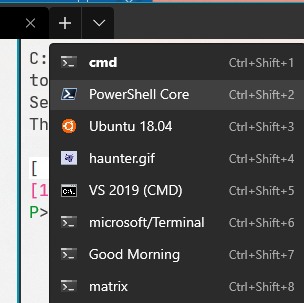
|
||||
|
||||
It's not the Terminal's responsibility to remember the commands executed by a commandline client. That's the responsibility of the _shell_. How would the terminal remember commands executed by something like `emacs` or `vim`? Those are both applications where the user is typing input and hitting enter, like they would at a cmd prompt, but without something that resembles a command history.
|
||||
|
||||
Original Source: https://github.com/microsoft/terminal/issues/6500#issuecomment-670035468
|
||||
|
||||
@@ -67,12 +67,12 @@ To update the version of a given package, use the following snippet
|
||||
|
||||
where:
|
||||
- `$PackageName` is the name of the package, e.g. Microsoft.UI.Xaml
|
||||
- `$OldVersionNumber` is the version number currently used, e.g. 2.5.0-prerelease.200609001
|
||||
- `$OldVersionNumber` is the version number currently used, e.g. 2.4.2-prerelease.200604001
|
||||
- `$NewVersionNumber` is the version number you want to migrate to, e.g. 2.4.200117003-prerelease
|
||||
|
||||
Example usage:
|
||||
|
||||
`git grep -z -l Microsoft.UI.Xaml | xargs -0 sed -i -e 's/2.5.0-prerelease.200609001/2.4.200117003-prerelease/g'`
|
||||
`git grep -z -l Microsoft.UI.Xaml | xargs -0 sed -i -e 's/2.4.2-prerelease.200604001/2.4.200117003-prerelease/g'`
|
||||
|
||||
## Using .nupkg files instead of downloaded Nuget packages
|
||||
If you want to use .nupkg files instead of the downloaded Nuget package, you can do this with the following steps:
|
||||
|
||||
@@ -8,14 +8,13 @@ Properties listed below affect the entire window, regardless of the profile sett
|
||||
| -------- | --------- | ---- | ------- | ----------- |
|
||||
| `alwaysShowTabs` | _Required_ | Boolean | `true` | When set to `true`, tabs are always displayed. When set to `false` and `showTabsInTitlebar` is set to `false`, tabs only appear after typing <kbd>Ctrl</kbd> + <kbd>T</kbd>. |
|
||||
| `copyOnSelect` | Optional | Boolean | `false` | When set to `true`, a selection is immediately copied to your clipboard upon creation. When set to `false`, the selection persists and awaits further action. |
|
||||
| `copyFormatting` | Optional | Boolean, Array | `true` | When set to `true`, the color and font formatting of selected text is also copied to your clipboard. When set to `false`, only plain text is copied to your clipboard. An array of specific formats can also be used. Supported array values include `html` and `rtf`. Plain text is always copied. |
|
||||
| `largePasteWarning` | Optional | Boolean | `true` | When set to `true`, trying to paste text with more than 5 KiB of characters will display a warning asking you whether to continue or not with the paste. |
|
||||
| `multiLinePasteWarning` | Optional | Boolean | `true` | When set to `true`, trying to paste text with a _new line_ character will display a warning asking you whether to continue or not with the paste. |
|
||||
| `copyFormatting` | Optional | Boolean | `false` | When set to `true`, the color and font formatting of selected text is also copied to your clipboard. When set to `false`, only plain text is copied to your clipboard. |
|
||||
| `defaultProfile` | _Required_ | String | PowerShell guid | Sets the default profile. Opens by typing <kbd>Ctrl</kbd> + <kbd>T</kbd> or by clicking the '+' icon. The guid of the desired default profile is used as the value. |
|
||||
| `initialCols` | _Required_ | Integer | `120` | The number of columns displayed in the window upon first load. |
|
||||
| `initialPosition` | Optional | String | `","` | The position of the top left corner of the window upon first load. On a system with multiple displays, these coordinates are relative to the top left of the primary display. If `launchMode` is set to `"maximized"`, the window will be maximized on the monitor specified by those coordinates. |
|
||||
| `initialRows` | _Required_ | Integer | `30` | The number of rows displayed in the window upon first load. |
|
||||
| `launchMode` | Optional | String | `default` | Defines whether the Terminal will launch as maximized or not. Possible values: `"default"`, `"maximized"` |
|
||||
| `rowsToScroll` | Optional | Integer | `system` | The number of rows to scroll at a time with the mouse wheel. This will override the system setting if the value is not zero or "system". |
|
||||
| `theme` | _Required_ | String | `system` | Sets the theme of the application. Possible values: `"light"`, `"dark"`, `"system"` |
|
||||
| `showTerminalTitleInTitlebar` | _Required_ | Boolean | `true` | When set to `true`, titlebar displays the title of the selected tab. When set to `false`, titlebar displays "Windows Terminal". |
|
||||
| `showTabsInTitlebar` | Optional | Boolean | `true` | When set to `true`, the tabs are moved into the titlebar and the titlebar disappears. When set to `false`, the titlebar sits above the tabs. |
|
||||
@@ -126,7 +125,7 @@ For commands with arguments:
|
||||
| `closePane` | Close the active pane. | | | |
|
||||
| `closeTab` | Close the current tab. | | | |
|
||||
| `closeWindow` | Close the current window and all tabs within it. | | | |
|
||||
| `copy` | Copy the selected terminal content to your Windows Clipboard. | 1. `singleLine`<br>2. `copyFormatting` | 1. boolean<br>2. boolean, array | 1. When `true`, the copied content will be copied as a single line. When `false`, newlines persist from the selected text.<br>2. When set to `true`, the color and font formatting of selected text is also copied to your clipboard. When set to `false`, only plain text is copied to your clipboard. An array of specific formats can also be used. Supported array values include `html` and `rtf`. Plain text is always copied. Not setting this value inherits the behavior of the `copyFormatting` global setting. |
|
||||
| `copy` | Copy the selected terminal content to your Windows Clipboard. | `singleLine` | boolean | When `true`, the copied content will be copied as a single line. When `false`, newlines persist from the selected text. |
|
||||
| `duplicateTab` | Make a copy and open the current tab. | | | |
|
||||
| `find` | Open the search dialog box. | | | |
|
||||
| `moveFocus` | Focus on a different pane depending on direction. | `direction`* | `left`, `right`, `up`, `down` | Direction in which the focus will move. |
|
||||
@@ -142,7 +141,6 @@ For commands with arguments:
|
||||
| `scrollUp` | Move the screen up. | | | |
|
||||
| `scrollUpPage` | Move the screen up a whole page. | | | |
|
||||
| `scrollDownPage` | Move the screen down a whole page. | | | |
|
||||
| `sendInput` | Sends some text input to the shell. | `input` | string | The text input to feed into the shell.<br>ANSI escape sequences may be used. Escape codes like `\x1b` must be written as `\u001b`.<br>For instance the input `"text\n"` will write "text" followed by a newline. `"\u001b[D"` will behave as if the left arrow button had been pressed. |
|
||||
| `splitPane` | Halve the size of the active pane and open another. Without any arguments, this will open the default profile in the new pane. | 1. `split`*<br>2. `commandLine`<br>3. `startingDirectory`<br>4. `tabTitle`<br>5. `index`<br>6. `profile`<br>7. `splitMode` | 1. `vertical`, `horizontal`, `auto`<br>2. string<br>3. string<br>4. string<br>5. integer<br>6. string<br>7. string | 1. How the pane will split. `auto` will split in the direction that provides the most surface area.<br>2. Executable run within the pane.<br>3. Directory in which the pane will open.<br>4. Title of the tab when the new pane is focused.<br>5. Profile that will open based on its position in the dropdown (starting at 0).<br>6. Profile that will open based on its GUID or name.<br>7. Controls how the pane splits. Only accepts `duplicate` which will duplicate the focused pane's profile into a new pane. |
|
||||
| `switchToTab` | Open a specific tab depending on index. | `index`* | integer | Tab that will open based on its position in the tab bar (starting at 0). |
|
||||
| `toggleFullscreen` | Switch between fullscreen and default window sizes. | | | |
|
||||
@@ -159,7 +157,7 @@ For commands with arguments:
|
||||
| ---- | ---- |
|
||||
| Function and Alphanumeric Keys | `f1-f24`, `a-z`, `0-9` |
|
||||
| Symbols | ``` ` ```, `-`, `=`, `[`, `]`, `\`, `;`, `'`, `,`, `.`, `/` |
|
||||
| Arrow Keys | `down`, `left`, `right`, `up`, `pagedown`, `pageup`, `pgdn`, `pgup`, `end`, `home`, `plus`, `app`, `menu` |
|
||||
| Arrow Keys | `down`, `left`, `right`, `up`, `pagedown`, `pageup`, `pgdn`, `pgup`, `end`, `home`, `plus` |
|
||||
| Action Keys | `tab`, `enter`, `esc`, `escape`, `space`, `backspace`, `delete`, `insert` |
|
||||
| Numpad Keys | `numpad_0-numpad_9`, `numpad0-numpad9`, `numpad_add`, `numpad_plus`, `numpad_decimal`, `numpad_period`, `numpad_divide`, `numpad_minus`, `numpad_subtract`, `numpad_multiply` |
|
||||
|
||||
|
||||
@@ -1,12 +1,12 @@
|
||||
{
|
||||
"$id": "https://github.com/microsoft/terminal/blob/master/doc/cascadia/profiles.schema.json",
|
||||
"$schema": "https://json-schema.org/draft/2019-09/schema#",
|
||||
"$schema": "http://json-schema.org/draft-07/schema#",
|
||||
"title": "Microsoft's Windows Terminal Settings Profile Schema",
|
||||
"definitions": {
|
||||
"KeyChordSegment": {
|
||||
"pattern": "^(?<modifier>(ctrl|alt|shift)(?:\\+(ctrl|alt|shift)(?<!\\2))?(?:\\+(ctrl|alt|shift)(?<!\\2|\\3))?\\+)?(?<key>[^\\s+]|app|menu|backspace|tab|enter|esc|escape|space|pgup|pageup|pgdn|pagedown|end|home|left|up|right|down|insert|delete|(?<!shift.+)(?:numpad_?[0-9]|numpad_(?:period|decimal))|numpad_(?:multiply|plus|add|minus|subtract|divide)|f[1-9]|f1[0-9]|f2[0-4]|plus)$",
|
||||
"pattern": "^(?<modifier>(ctrl|alt|shift)(?:\\+(ctrl|alt|shift)(?<!\\2))?(?:\\+(ctrl|alt|shift)(?<!\\2|\\3))?\\+)?(?<key>[^\\s+]|backspace|tab|enter|esc|escape|space|pgup|pageup|pgdn|pagedown|end|home|left|up|right|down|insert|delete|(?<!shift.+)(?:numpad_?[0-9]|numpad_(?:period|decimal))|numpad_(?:multiply|plus|add|minus|subtract|divide)|f[1-9]|f1[0-9]|f2[0-4]|plus)$",
|
||||
"type": "string",
|
||||
"description": "The string should fit the format \"[ctrl+][alt+][shift+]<keyName>\", where each modifier is optional, separated by + symbols, and keyName is either one of the names listed in the table below, or any single key character. The string should be written in full lowercase.\napp, menu\tMENU key\nbackspace\tBACKSPACE key\ntab\tTAB key\nenter\tENTER key\nesc, escape\tESC key\nspace\tSPACEBAR\npgup, pageup\tPAGE UP key\npgdn, pagedown\tPAGE DOWN key\nend\tEND key\nhome\tHOME key\nleft\tLEFT ARROW key\nup\tUP ARROW key\nright\tRIGHT ARROW key\ndown\tDOWN ARROW key\ninsert\tINS key\ndelete\tDEL key\nnumpad_0-numpad_9, numpad0-numpad9\tNumeric keypad keys 0 to 9. Can't be combined with the shift modifier.\nnumpad_multiply\tNumeric keypad MULTIPLY key (*)\nnumpad_plus, numpad_add\tNumeric keypad ADD key (+)\nnumpad_minus, numpad_subtract\tNumeric keypad SUBTRACT key (-)\nnumpad_period, numpad_decimal\tNumeric keypad DECIMAL key (.). Can't be combined with the shift modifier.\nnumpad_divide\tNumeric keypad DIVIDE key (/)\nf1-f24\tF1 to F24 function keys\nplus\tADD key (+)"
|
||||
"description": "The string should fit the format \"[ctrl+][alt+][shift+]<keyName>\", where each modifier is optional, separated by + symbols, and keyName is either one of the names listed in the table below, or any single key character. The string should be written in full lowercase.\nbackspace\tBACKSPACE key\ntab\tTAB key\nenter\tENTER key\nesc, escape\tESC key\nspace\tSPACEBAR\npgup, pageup\tPAGE UP key\npgdn, pagedown\tPAGE DOWN key\nend\tEND key\nhome\tHOME key\nleft\tLEFT ARROW key\nup\tUP ARROW key\nright\tRIGHT ARROW key\ndown\tDOWN ARROW key\ninsert\tINS key\ndelete\tDEL key\nnumpad_0-numpad_9, numpad0-numpad9\tNumeric keypad keys 0 to 9. Can't be combined with the shift modifier.\nnumpad_multiply\tNumeric keypad MULTIPLY key (*)\nnumpad_plus, numpad_add\tNumeric keypad ADD key (+)\nnumpad_minus, numpad_subtract\tNumeric keypad SUBTRACT key (-)\nnumpad_period, numpad_decimal\tNumeric keypad DECIMAL key (.). Can't be combined with the shift modifier.\nnumpad_divide\tNumeric keypad DIVIDE key (/)\nf1-f24\tF1 to F24 function keys\nplus\tADD key (+)"
|
||||
},
|
||||
"Color": {
|
||||
"default": "#",
|
||||
@@ -34,41 +34,28 @@
|
||||
"ShortcutActionName": {
|
||||
"enum": [
|
||||
"adjustFontSize",
|
||||
"closeOtherTabs",
|
||||
"closePane",
|
||||
"closeTab",
|
||||
"closeTabsAfter",
|
||||
"closeWindow",
|
||||
"commandPalette",
|
||||
"copy",
|
||||
"duplicateTab",
|
||||
"find",
|
||||
"moveFocus",
|
||||
"newTab",
|
||||
"nextTab",
|
||||
"openNewTabDropdown",
|
||||
"openSettings",
|
||||
"openTabColorPicker",
|
||||
"paste",
|
||||
"prevTab",
|
||||
"renameTab",
|
||||
"resetFontSize",
|
||||
"resizePane",
|
||||
"scrollDown",
|
||||
"scrollDownPage",
|
||||
"scrollUp",
|
||||
"scrollUpPage",
|
||||
"sendInput",
|
||||
"setColorScheme",
|
||||
"setTabColor",
|
||||
"splitPane",
|
||||
"switchToTab",
|
||||
"tabSearch",
|
||||
"toggleAlwaysOnTop",
|
||||
"toggleFocusMode",
|
||||
"toggleFullscreen",
|
||||
"toggleRetroEffect",
|
||||
"wt",
|
||||
"find",
|
||||
"unbound"
|
||||
],
|
||||
"type": "string"
|
||||
@@ -90,40 +77,6 @@
|
||||
],
|
||||
"type": "string"
|
||||
},
|
||||
"CopyFormat": {
|
||||
"oneOf": [
|
||||
{
|
||||
"type": "boolean"
|
||||
},
|
||||
{
|
||||
"type": "array",
|
||||
"items": {
|
||||
"type": "string",
|
||||
"enum": [
|
||||
"html",
|
||||
"rtf"
|
||||
]
|
||||
}
|
||||
},
|
||||
{
|
||||
"type": "string",
|
||||
"enum": [
|
||||
"html",
|
||||
"rtf",
|
||||
"all",
|
||||
"none"
|
||||
]
|
||||
}
|
||||
]
|
||||
},
|
||||
"AnchorKey": {
|
||||
"enum": [
|
||||
"ctrl",
|
||||
"alt",
|
||||
"shift"
|
||||
],
|
||||
"type": "string"
|
||||
},
|
||||
"NewTerminalArgs": {
|
||||
"properties": {
|
||||
"commandline": {
|
||||
@@ -189,18 +142,6 @@
|
||||
"type": "boolean",
|
||||
"default": false,
|
||||
"description": "If true, the copied content will be copied as a single line (even if there are hard line breaks present in the text). If false, newlines persist from the selected text."
|
||||
},
|
||||
"copyFormatting": {
|
||||
"default": null,
|
||||
"description": "When set to `true`, the color and font formatting of selected text is also copied to your clipboard. When set to `false`, only plain text is copied to your clipboard. An array of specific formats can also be used. Supported array values include `html` and `rtf`. Plain text is always copied. Not setting this value inherits the behavior of the `copyFormatting` global setting.",
|
||||
"oneOf": [
|
||||
{
|
||||
"$ref": "#/definitions/CopyFormat"
|
||||
},
|
||||
{
|
||||
"type": "null"
|
||||
}
|
||||
]
|
||||
}
|
||||
}
|
||||
}
|
||||
@@ -269,28 +210,6 @@
|
||||
],
|
||||
"required": [ "direction" ]
|
||||
},
|
||||
"SendInputAction": {
|
||||
"description": "Arguments corresponding to a Send Input Action",
|
||||
"allOf": [
|
||||
{
|
||||
"$ref": "#/definitions/ShortcutAction"
|
||||
},
|
||||
{
|
||||
"properties": {
|
||||
"action": {
|
||||
"type": "string",
|
||||
"pattern": "sendInput"
|
||||
},
|
||||
"input": {
|
||||
"type": "string",
|
||||
"default": "",
|
||||
"description": "The text input to feed into the shell. ANSI escape sequences may be used. Escape codes like \\x1b must be written as \\u001b."
|
||||
}
|
||||
}
|
||||
}
|
||||
],
|
||||
"required": [ "input" ]
|
||||
},
|
||||
"SplitPaneAction": {
|
||||
"description": "Arguments corresponding to a Split Pane Action",
|
||||
"allOf": [
|
||||
@@ -338,94 +257,6 @@
|
||||
}
|
||||
]
|
||||
},
|
||||
"SetTabColorAction": {
|
||||
"description": "Arguments corresponding to a Set Tab Color Action",
|
||||
"allOf": [
|
||||
{ "$ref": "#/definitions/ShortcutAction" },
|
||||
{
|
||||
"properties": {
|
||||
"action": { "type": "string", "pattern": "setTabColor" },
|
||||
"color": {
|
||||
"$ref": "#/definitions/Color",
|
||||
"default": null,
|
||||
"description": "If provided, will set the tab's color to the given value. If omitted, will reset the tab's color."
|
||||
}
|
||||
}
|
||||
}
|
||||
]
|
||||
},
|
||||
"SetColorSchemeAction": {
|
||||
"description": "Arguments corresponding to a Set Color Scheme Action",
|
||||
"allOf": [
|
||||
{ "$ref": "#/definitions/ShortcutAction" },
|
||||
{
|
||||
"properties": {
|
||||
"action": { "type": "string", "pattern": "setColorScheme" },
|
||||
"colorScheme": {
|
||||
"type": "string",
|
||||
"default": "",
|
||||
"description": "the name of the scheme to apply to the active pane"
|
||||
}
|
||||
}
|
||||
}
|
||||
],
|
||||
"required": [ "colorScheme" ]
|
||||
},
|
||||
"WtAction": {
|
||||
"description": "Arguments corresponding to a wt Action",
|
||||
"allOf": [
|
||||
{ "$ref": "#/definitions/ShortcutAction" },
|
||||
{
|
||||
"properties": {
|
||||
"action": { "type": "string", "pattern": "wt" },
|
||||
"commandline": {
|
||||
"type": "string",
|
||||
"default": "",
|
||||
"description": "a `wt` commandline to run in the current window"
|
||||
}
|
||||
}
|
||||
}
|
||||
],
|
||||
"required": [ "commandline" ]
|
||||
},
|
||||
"CloseOtherTabsAction": {
|
||||
"description": "Arguments for a closeOtherTabs action",
|
||||
"allOf": [
|
||||
{ "$ref": "#/definitions/ShortcutAction" },
|
||||
{
|
||||
"properties": {
|
||||
"action": { "type": "string", "pattern": "closeOtherTabs" },
|
||||
"index": {
|
||||
"oneOf": [
|
||||
{ "type": "integer" },
|
||||
{ "type": null }
|
||||
],
|
||||
"default": "",
|
||||
"description": "Close the tabs other than the one at this index. If no index is provided, use the focused tab's index."
|
||||
}
|
||||
}
|
||||
}
|
||||
]
|
||||
},
|
||||
"CloseTabsAfterAction": {
|
||||
"description": "Arguments for a closeTabsAfter action",
|
||||
"allOf": [
|
||||
{ "$ref": "#/definitions/ShortcutAction" },
|
||||
{
|
||||
"properties": {
|
||||
"action": { "type": "string", "pattern": "closeTabsAfter" },
|
||||
"index": {
|
||||
"oneOf": [
|
||||
{ "type": "integer" },
|
||||
{ "type": null }
|
||||
],
|
||||
"default": "",
|
||||
"description": "Close the tabs following the tab at this index. If no index is provided, use the focused tab's index."
|
||||
}
|
||||
}
|
||||
}
|
||||
]
|
||||
},
|
||||
"Keybinding": {
|
||||
"additionalProperties": false,
|
||||
"properties": {
|
||||
@@ -439,14 +270,8 @@
|
||||
{ "$ref": "#/definitions/SwitchToTabAction" },
|
||||
{ "$ref": "#/definitions/MoveFocusAction" },
|
||||
{ "$ref": "#/definitions/ResizePaneAction" },
|
||||
{ "$ref": "#/definitions/SendInputAction" },
|
||||
{ "$ref": "#/definitions/SplitPaneAction" },
|
||||
{ "$ref": "#/definitions/OpenSettingsAction" },
|
||||
{ "$ref": "#/definitions/SetTabColorAction" },
|
||||
{ "$ref": "#/definitions/SetColorSchemeAction" },
|
||||
{ "$ref": "#/definitions/WtAction" },
|
||||
{ "$ref": "#/definitions/CloseOtherTabsAction" },
|
||||
{ "$ref": "#/definitions/CloseTabsAfterAction" },
|
||||
{ "type": "null" }
|
||||
]
|
||||
},
|
||||
@@ -476,11 +301,6 @@
|
||||
"additionalProperties": true,
|
||||
"description": "Properties that affect the entire window, regardless of the profile settings.",
|
||||
"properties": {
|
||||
"alwaysOnTop": {
|
||||
"default": false,
|
||||
"description": "When set to true, the window is created on top of all other windows. If multiple windows are all \"always on top\", the most recently focused one will be the topmost",
|
||||
"type": "boolean"
|
||||
},
|
||||
"alwaysShowTabs": {
|
||||
"default": true,
|
||||
"description": "When set to true, tabs are always displayed. When set to false and \"showTabsInTitlebar\" is set to false, tabs only appear after opening a new tab.",
|
||||
@@ -493,17 +313,7 @@
|
||||
},
|
||||
"copyFormatting": {
|
||||
"default": true,
|
||||
"description": "When set to `true`, the color and font formatting of selected text is also copied to your clipboard. When set to `false`, only plain text is copied to your clipboard. An array of specific formats can also be used. Supported array values include `html` and `rtf`. Plain text is always copied.",
|
||||
"$ref": "#/definitions/CopyFormat"
|
||||
},
|
||||
"largePasteWarning": {
|
||||
"default": true,
|
||||
"description": "When set to true, trying to paste text with more than 5 KiB of characters will display a warning asking you whether to continue or not with the paste.",
|
||||
"type": "boolean"
|
||||
},
|
||||
"multiLinePasteWarning": {
|
||||
"default": true,
|
||||
"description": "When set to true, trying to paste text with a \"new line\" character will display a warning asking you whether to continue or not with the paste.",
|
||||
"description": "When set to `true`, the color and font formatting of selected text is also copied to your clipboard. When set to `false`, only plain text is copied to your clipboard.",
|
||||
"type": "boolean"
|
||||
},
|
||||
"defaultProfile": {
|
||||
@@ -560,11 +370,10 @@
|
||||
},
|
||||
"rowsToScroll": {
|
||||
"default": "system",
|
||||
"description": "This parameter once allowed you to override the systemwide \"choose how many lines to scroll at one time\" setting. It no longer does so.",
|
||||
"description": "The number of rows to scroll at a time with the mouse wheel. This will override the system setting if the value is not zero or \"system\".",
|
||||
"maximum": 999,
|
||||
"minimum": 0,
|
||||
"type": [ "integer", "string" ],
|
||||
"deprecated": true
|
||||
"type": [ "integer", "string" ]
|
||||
},
|
||||
"keybindings": {
|
||||
"description": "Properties are specific to each custom key binding.",
|
||||
@@ -617,11 +426,6 @@
|
||||
"default": true,
|
||||
"description": "When set to \"true\" closing a window with multiple tabs open will require confirmation. When set to \"false\", the confirmation dialog will not appear.",
|
||||
"type": "boolean"
|
||||
},
|
||||
"useTabSwitcher": {
|
||||
"default": true,
|
||||
"description": "When set to \"true\", the \"nextTab\" and \"prevTab\" commands will use the tab switcher UI.",
|
||||
"type": "boolean"
|
||||
}
|
||||
},
|
||||
"required": [
|
||||
@@ -821,15 +625,8 @@
|
||||
"padding": {
|
||||
"default": "8, 8, 8, 8",
|
||||
"description": "Sets the padding around the text within the window. Can have three different formats:\n -\"#\" sets the same padding for all sides \n -\"#, #\" sets the same padding for left-right and top-bottom\n -\"#, #, #, #\" sets the padding individually for left, top, right, and bottom.",
|
||||
"oneOf": [
|
||||
{
|
||||
"pattern": "^-?[0-9]+(\\.[0-9]+)?( *, *-?[0-9]+(\\.[0-9]+)?|( *, *-?[0-9]+(\\.[0-9]+)?){3})?$",
|
||||
"type": "string"
|
||||
},
|
||||
{
|
||||
"type": "integer"
|
||||
}
|
||||
]
|
||||
"pattern": "^-?[0-9]+(\\.[0-9]+)?( *, *-?[0-9]+(\\.[0-9]+)?|( *, *-?[0-9]+(\\.[0-9]+)?){3})?$",
|
||||
"type": "string"
|
||||
},
|
||||
"scrollbarState": {
|
||||
"default": "visible",
|
||||
|
||||
@@ -1,146 +0,0 @@
|
||||
---
|
||||
author: Mike Griese @zadjii-msft
|
||||
created on: 2020-07-31
|
||||
last updated: 2020-08-03
|
||||
issue id: #1337
|
||||
---
|
||||
# Per-Profile Tab Colors
|
||||
|
||||
## Abstract
|
||||
|
||||
This spec describes a way to specify tab colors in a profile in a way that will
|
||||
be forward compatible with theming the Terminal. This spec will be largely
|
||||
dedicated to the design of a single setting, but within the context of theming.
|
||||
|
||||
## Inspiration
|
||||
|
||||
Following the addition of the Tab Color Picker in [#3789], we've had numerous
|
||||
requests for the ability to set the color of a tab directly within a profile.
|
||||
While largely we're tracking theming in [#3327], including the specification of
|
||||
a tab color, the theming spec ([#5772] )is very large and will take a while to
|
||||
revise and approve. This spec is intended to pull a single point out from that
|
||||
spec to make it more easily reviewable, and implement it in a way that will
|
||||
continue working when we add support for themes in the future.
|
||||
|
||||
## Solution Design
|
||||
|
||||
To enable per-profile tab colors, we'll add a single setting: `tabColor`. For
|
||||
now<sup>[[1](#user-content-footnote-1)]</sup>, this setting will accept any
|
||||
`#rrggbb` color string.
|
||||
|
||||
Since each profile creates a `Pane` with a `TermControl`, we'll need to store
|
||||
this color not in the `Tab`, but somewhere below `Pane`, so that when you switch
|
||||
between Panes in a tab with different `tabColor`s, the color will update
|
||||
automatically. When a new `TermControl` is created, we'll store this color in the
|
||||
`TermControl`'s `Terminal` core. This is to support the future possibility of
|
||||
setting the tab color via VT sequences.
|
||||
|
||||
A Tab's color will be the result of layering a variety of sources, from the bottom up:
|
||||
|
||||
Color | | Set by
|
||||
-- | -- | --
|
||||
Runtime Color | _optional_ |Color Picker / `setTabColor` action
|
||||
Control Tab Color | _optional_ | Profile's `tabColor`, or a color set by VT
|
||||
Theme Tab Background | _optional_ | `tab.backgroundColor` in the theme
|
||||
Tab Default Color | **default** | TabView in XAML
|
||||
|
||||
Some examples:
|
||||
* **Scenario 1**: The user has set `"tabColor": "#ff0000"` in their profile.
|
||||
When they create tabs with that profile, instead of appearing in the default
|
||||
color for the TabView, they'll be `#ff0000`.
|
||||
* **Scenario 2**: The user has set `"tabColor": "#ff0000"` in their profile.
|
||||
When they try to set the color for that tab (with the color picker) to
|
||||
`#0000ff`, the tab's color is updated to reflect this new blue color. When
|
||||
they clear the runtime color (with the color picker), the tab will return to
|
||||
`#ff0000`.
|
||||
* **Scenario 3**: The user has two profiles with colors set, one to `"tabColor":
|
||||
"#ff0000"`, and the other with `"tabColor": "#00ff00"`. If they open these
|
||||
profiles in two panes side-by side, the tab's color will update to reflect the
|
||||
color from the currently-focused control.
|
||||
* **Scenario 4**: The user has two profiles with colors set, one to `"tabColor":
|
||||
"#ff0000"`, and the other with `"tabColor": "#00ff00"`. If they open these
|
||||
profiles in two panes side-by side, and try to set the color for that tab
|
||||
(with the color picker) to `#0000ff`, the tab's color is updated to reflect
|
||||
this new blue color. Regardless of which pane is focused, the tab will be
|
||||
blue.
|
||||
* **Scenario 5**: The user has set `"tabColor": "#ff0000"` in their profile
|
||||
("Profile A"), and `"tab.backgroundColor": "#00ff00"`in their theme. When they
|
||||
create tabs with "Profile A", the tabs will appear red. Other tabs (for
|
||||
profiles without `tabColor` set) will appear green, using the color from the
|
||||
theme.
|
||||
|
||||
|
||||
## UI/UX Design
|
||||
|
||||
In general, this is going to look exactly like the colored tabs look now.
|
||||
|
||||

|
||||
|
||||
## Capabilities
|
||||
|
||||
<table>
|
||||
<tr>
|
||||
<td><strong>Accessibility</strong></td>
|
||||
<td>
|
||||
N/A
|
||||
</td>
|
||||
</tr>
|
||||
<tr>
|
||||
<td><strong>Security</strong></td>
|
||||
<td>
|
||||
N/A
|
||||
</td>
|
||||
</tr>
|
||||
<tr>
|
||||
<td><strong>Reliability</strong></td>
|
||||
<td>
|
||||
No expected change
|
||||
</td>
|
||||
</tr>
|
||||
<tr>
|
||||
<td><strong>Compatibility</strong></td>
|
||||
<td>
|
||||
This entire spec outlines how this feature is designed with a emphasis on future
|
||||
compatibility. As such, there are no expected regressions in the future when we
|
||||
do add support for themes.
|
||||
</td>
|
||||
</tr>
|
||||
<tr>
|
||||
<td><strong>Performance, Power, and Efficiency</strong></td>
|
||||
<td>
|
||||
No expected change
|
||||
</td>
|
||||
</tr>
|
||||
</table>
|
||||
|
||||
## Potential Issues
|
||||
|
||||
None expected.
|
||||
|
||||
## Footnotes
|
||||
|
||||
<a id="footnote-1"><a>[1]: When full theming support is added, themes will
|
||||
provide support for setting colors as one of a variety of values:
|
||||
|
||||
* An `#rrggbb` string
|
||||
* The system accent color
|
||||
* The current background color of the Terminal
|
||||
* A value from a given resource key from XAML
|
||||
|
||||
When support for these other types of "smart" colors is added, then the profile
|
||||
`tabColor` setting will also gracefully accept these values.
|
||||
|
||||
## Future considerations
|
||||
|
||||
* It's not out of the realm of possibility that someone might want to color each
|
||||
_pane_'s color at runtime. In that case, the runtime color would be stored in
|
||||
the `Pane`, not the `Tab`.
|
||||
|
||||
|
||||
|
||||
<!-- Footnotes -->
|
||||
|
||||
[#1337]: https://github.com/microsoft/terminal/issues/1337
|
||||
[#3789]: https://github.com/microsoft/terminal/issues/3789
|
||||
[#3327]: https://github.com/microsoft/terminal/issues/3327
|
||||
[#5772]: https://github.com/microsoft/terminal/pull/5772
|
||||

|
Before Width: | Height: | Size: 816 KiB |

|
Before Width: | Height: | Size: 34 KiB |

|
Before Width: | Height: | Size: 32 KiB |

|
Before Width: | Height: | Size: 15 KiB |

|
Before Width: | Height: | Size: 92 KiB |

|
Before Width: | Height: | Size: 345 KiB |

|
Before Width: | Height: | Size: 28 KiB |

|
Before Width: | Height: | Size: 34 KiB |
@@ -1,227 +0,0 @@
|
||||
---
|
||||
author: Leon Liang @leonMSFT
|
||||
created on: 2019-11-27
|
||||
last updated: 2020-06-16
|
||||
issue id: 1502
|
||||
---
|
||||
|
||||
# Advanced Tab Switcher
|
||||
|
||||
## Abstract
|
||||
|
||||
Currently the user is able to cycle through tabs on the tab bar. However, this horizontal cycling can be pretty inconvenient when the tab titles are long or when there are too many tabs on the tab bar. It could also get hard to see all your available tabs if the tab titles are long and your screen is small. In addition, there's a common use case to quickly switch between two tabs, e.g. when one tab is used as reference and the other is the actively worked-on tab. If the tabs are not right next to each other on the tab bar, it could be difficult to quickly swap between the two. Having the tabs displayed in Most Recently Used (MRU) order would help with this problem. It could also make the user experience better when there are a handful of tabs that are frequently used, but are nowhere near each other on the tab bar.
|
||||
|
||||
Having a tab switcher UI, like the ones in Visual Studio and Visual Studio Code, could help with the tab experience. Presenting the tabs vertically in their own little UI allows the user to see more of the tabs at once, compared to scanning the tab row horizontally and scrolling left/right to find the tab you want. The tab order in those tab switchers are also in MRU order by default.
|
||||
|
||||
To try to alleviate some of these user scenarios, we want to create a tab switcher similar to the ones found in VSCode and VS. This spec will cover the design of the switcher, and how a user would interact with the switcher. It would be primarily keyboard driven, and would give a pop-up display of a vertical list of tabs. The tab switcher would also be able to display the tabs in Most Recently Used (MRU) order.
|
||||
|
||||
## Inspiration
|
||||
|
||||
This was mainly inspired by the tab switcher that's found in Visual Studio Code and Visual Studio.
|
||||
|
||||
VS Code's tab switcher appears directly underneath the tab bar.
|
||||
|
||||

|
||||
|
||||
Visual Studio's tab switcher presents itself as a box in the middle of the editor.
|
||||
|
||||

|
||||
|
||||
In terms of navigating the switcher, both VSCode and Visual Studio behave very similarly. Both open with the press of <kbd>ctrl+tab</kbd> and dismiss on release of <kbd>ctrl</kbd>. They both also allow the user to select the tab with the mouse and with <kbd>enter</kbd>. <kbd>esc</kbd> and a mouse click outside of the switcher both dismiss the window as well.
|
||||
|
||||
I'm partial towards looking like VSCode's Tab Switcher - specifically because it seems like both their Command Palette and Tab Switcher use the same UI. You can observe this by first bringing up the command palette, then hitting the keybinding to bring up the tab switcher. You'll notice that they're both using the same centered drop-down from the tab row. In fact, hitting the Tab Switcher keybinding in VSCode while the Command Palette is open simply auto fills the search box with "edit active", signifying that the user wants to select one of the tabs to edit, effectively "swapping" to the tab that's highlighted.
|
||||
|
||||
Since Terminal now has a command palette, it would be amazing to reuse that UI and simply fill it with the names of a user's currently open tabs!
|
||||
|
||||
## Solution Design
|
||||
|
||||
To extend upon the command palette, we simply need to create and maintain two Vector<Commands>, where each command will simply dispatch a `SwitchToTab` `ShortcutAction`. One vector will have the commands in tab row order, and the other will be in MRU order. They'll both have to be maintained along with our existing vector of tabs.
|
||||
|
||||
These vectors of commands can then be set as the commands to pull from in the command palette, and as long as the tab titles are available in these commands, the command palette will be able to naturally filter through the tabs as a user types in its search bar. Just like the command palette, a user will be able to navigate through the list of tabs with the arrow keys and pointer interactions. As part of this implementation, I can supplement these actions with "tab switcher specific" navigation keybindings that would only work if the command palette is in tab switcher mode.
|
||||
|
||||
The `TabSwitcherControl` will use `TerminalPage`'s `ShortcutActionDispatch` to dispatch a `SwitchToTab` `ShortcutAction`. This will eventually cause `TerminalPage::_OnTabSelectionChanged` to be called. We can update the MRU in this function to be sure that changing tabs from the TabSwitcher, clicking on a tab, or nextTab/prevTab-ing will keep the MRU up-to-date. Adding or closing tabs are handled in `_OpenNewTab` and `_CloseFocusedTab`, which will need to be modified to update the command vectors.
|
||||
|
||||
## UI/UX Design
|
||||
|
||||
The Tab Switcher will reuse a lot of the XAML code that's used in the command palette. This means it'll show up as a drop-down from the horizontal center of the tab row. It'll appear as a single overlay over the whole Terminal window. There will also be a search box on top of the list of tabs. Here's a rough mockup of how the command palette/tab switcher looks like:
|
||||
|
||||

|
||||
|
||||
Each entry in the list will show the tab's titles and their assigned number for quick switching, and only one line will be highlighted to signify the tab that is currently selected. The top 9 tabs in the list are numbered for quick switching, and the rest of the tabs will simply have an empty space where a number would be.
|
||||
|
||||
The list would look (roughly) like this:
|
||||
```
|
||||
1 foo (highlighted)
|
||||
2 boo
|
||||
3 Windows
|
||||
4 /c/Users/booboo
|
||||
5 Git Moo
|
||||
6 shoo
|
||||
7 /c/
|
||||
8 /d/
|
||||
9 /e/
|
||||
/f/
|
||||
/g/
|
||||
/h/
|
||||
```
|
||||
|
||||
The highlighted line can move up or down, and if the user moves up while the highlighted line is already at the top of the list, the highlight will wrap around to the bottom of the list. Similarly, it will wrap to the top if the highlight is at the bottom of the list and the user moves down.
|
||||
|
||||
If there's more tabs than the UI can display, the list of tabs will scroll up/down as the user keeps iterating up/down. Even if some of the numbered tabs (the first 9 tabs) are not visible, the user can still press any number 1 through 9 to quick switch to that tab.
|
||||
|
||||
To give an example of what happens after scrolling past the end, imagine a user is starting from the state in the mock above. The user then iterates down past the end of the visible list four times. The below mock shows the result.
|
||||
|
||||
```
|
||||
5 Git Moo
|
||||
6 shoo
|
||||
7 /c/
|
||||
8 /d
|
||||
9 /e/
|
||||
/f/
|
||||
/g/
|
||||
/h/
|
||||
/i/
|
||||
/j/
|
||||
/k/
|
||||
/l/ (highlighted)
|
||||
```
|
||||
|
||||
The tabs designated by numbers 1 through 4 are no longer visible (but still quick-switchable), and the list now starts with "Git Moo", which is associated with number 5.
|
||||
|
||||
### Using the Switcher
|
||||
|
||||
#### Opening the Tab Switcher
|
||||
|
||||
The user can press a keybinding named `tabSwitcher` to bring up the command palette UI with a list of tab titles.
|
||||
The user can also bring up the command palette first, and type a "tab switcher" prefix like "@" into the search bar to switch into "tab switcher mode".
|
||||
The user will be able to change it to whatever they like.
|
||||
There will also be an optional `anchor` arg that may be provided to this keybinding.
|
||||
|
||||
#### Keeping it open
|
||||
|
||||
We use the term `anchor` to illustrate the idea that the UI stays visible as long as something is "anchoring" it down.
|
||||
|
||||
Here's an example of how to set the `anchor` key in the settings:
|
||||
```
|
||||
{"keys": ["ctrl+tab"], "command": {"action": "openTabSwitcher", "anchor": "ctrl" }}
|
||||
```
|
||||
|
||||
This user provided the `anchor` key arg, and set it to <kbd>ctrl</kbd>. So, the user would open the UI with <kbd>ctrl+tab</kbd>, and as long as the user is holding <kbd>ctrl</kbd> down, the UI won't dismiss. The moment the user releases <kbd>ctrl</kbd>, the UI dismisses. The `anchor` key needs to be one of the keys in the `openTabSwitcher` keybinding. If it isn't, we'll display a warning dialog in this case saying that the `anchor` key isn't actually part of the keybinding, and the user might run into some weird behavior.
|
||||
|
||||
If `openTabSwitcher` is not given an `anchor` key, the switcher will stay visible even after the release of the keybinding.
|
||||
|
||||
#### Switching through Tabs
|
||||
|
||||
The user will be able to navigate through the switcher with the following keybindings:
|
||||
|
||||
- Switching Down: <kbd>tab</kbd> or <kbd>downArrow</kbd>
|
||||
- Switching Up: <kbd>shift+tab</kbd> or <kbd>upArrow</kbd>
|
||||
|
||||
As the user is cycling through the tab list, the selected tab will be highlighted but the terminal won't actually switch focus to the selected tab. This also applies to pointer interaction. Hovering over an item with a mouse will highlight the item but not switch to the tab.
|
||||
|
||||
#### Closing the Switcher and Bringing a Tab into Focus
|
||||
|
||||
There are two _dismissal_ keybindings:
|
||||
|
||||
1. <kbd>enter</kbd> : brings the currently selected tab into focus and dismisses the UI.
|
||||
2. <kbd>esc</kbd> : dismisses the UI without changing tab focus.
|
||||
|
||||
The following are ways a user can dismiss the UI, _whether or not_ the `Anchor` key is provided to `openTabSwitcher`.
|
||||
|
||||
1. The user can press a number associated with a tab to instantly switch to the tab and dismiss the switcher.
|
||||
2. The user can click on a tab to instantly switch to the tab and dismiss the switcher.
|
||||
3. The user can click outside of the UI to dismiss the switcher without bringing the selected tab into focus.
|
||||
4. The user can press any of the dismissal keybindings.
|
||||
|
||||
If the `anchor` key is provided, then in addition to the above methods, the UI will dismiss upon the release of the `anchor` key.
|
||||
|
||||
Pressing the `openTabSwitcher` keychord again will not close the switcher, it'll do nothing.
|
||||
|
||||
### Most Recently Used Order
|
||||
|
||||
We'll provide a setting that will allow the list of tabs to be presented in either _in-order_ (how the tabs are ordered on the tab bar), or _Most Recently Used Order_ (MRU). MRU means that the tab that the terminal most recently visited will be on the top of the list, and the tab that the terminal has not visited for the longest time will be on the bottom.
|
||||
|
||||
There will be an argument for the `openTabSwitcher` action called `displayOrder`. This can be either `inOrder` or `mruOrder`. Making the setting an argument passed into `openTabSwitcher` would allow the user to have one keybinding to open an MRU Tab Switcher, and different one for the In-Order Tab Switcher. For example:
|
||||
```
|
||||
{"keys": ["ctrl+tab"], "command": {"action": "openTabSwitcher", "anchor":"ctrl", "displayOrder":"mruOrder"}}
|
||||
{"keys": ["ctrl+shift+p"], "command": {"action": "openTabSwitcher", "anchor":"ctrl", "displayOrder":"inOrder"}}
|
||||
```
|
||||
By default (when the arg isn't specified), `displayOrder` will be "mruOrder".
|
||||
|
||||
### Numbered Tabs
|
||||
|
||||
Similar to how the user can currently switch to a particular tab with a combination of keys such as <kbd>ctrl+shift+1</kbd>, we want to have the tab switcher provide a number to the first nine tabs (1-9) in the list for quick switching. If there are more than nine tabs in the list, then the rest of the tabs will not have a number assigned.
|
||||
|
||||
## Capabilities
|
||||
|
||||
### Accessibility
|
||||
|
||||
- The tab switcher will be using WinUI, and so it'll be automatically linked to the UIA tree. This allows screen readers to find it, and so narrator will be able to navigate the switcher easily.
|
||||
- The UI is also fully keyboard-driven, with the option of using a mouse to interact with the UI.
|
||||
- When the tab switcher pops up, the focus immediately swaps to it.
|
||||
- For the sake of more contrast with the background, we could use a ThemeShadow to bring the UI closer to the user, making the focus clearer.
|
||||
|
||||
### Security
|
||||
|
||||
This shouldn't introduce any security issues.
|
||||
|
||||
### Reliability
|
||||
|
||||
How we're updating the MRU is something to watch out for since it triggers on a lot of tab interactions. However, I don't foresee the update taking long at all, and I can't imagine that users can create and delete tabs fast enough to matter.
|
||||
|
||||
### Compatibility
|
||||
|
||||
- The existing way of navigating horizontally through the tabs on the tab bar should not break.
|
||||
- These should also be separate keybindings from the keybindings associated with using the tab switcher.
|
||||
- When a user reorders their tabs on the tab bar, the MRU order remains unchanged. For example:
|
||||
- Tab Bar:`[cmd(focused), ps, wsl]` and MRU:`[cmd, ps, wsl]`
|
||||
- Reordered Tab Bar:`[wsl, cmd(focused), ps]` and MRU:`[cmd, ps, wsl]`
|
||||
|
||||
### Performance, Power, and Efficiency
|
||||
|
||||
## Potential Issues
|
||||
|
||||
We'll need to be careful about how the UI is presented depending on different sizes of the terminal. We also should test how the UI looks as it's open and resizing is happening. Visual Studio's tab switcher is a fixed size, and is always in the middle. Even when the VS window is smaller than the tab switcher size, the tab switcher will show up larger than the VS window itself.
|
||||
|
||||

|
||||

|
||||
|
||||
Visual Studio Code only allows the user to shrink the window until it hits a minimum width and height. This minimum width and height gives its tab switcher enough space to show a meaningful amount of information.
|
||||
|
||||

|
||||
|
||||
Terminal can't really replicate Visual Studio's version of the tab switcher in this situation. The TabSwitcher needs to be contained within the Terminal. So, if the TabSwitcher is always centered and has a percentage padding from the borders of the Terminal, it'll shrink as Terminal shrinks. Since the Terminal also has a minimum width, the switcher should always have enough space to be usefully visible.
|
||||
|
||||
## Future considerations
|
||||
|
||||
### Pane Navigation
|
||||
|
||||
There was discussion in [#1502] that brought up the idea of pane navigation, inspired by tmux.
|
||||
|
||||

|
||||
|
||||
Tmux allows the user to navigate directly to a pane and even give a preview of the pane. This would be extremely useful since it would allow the user to see a tree of their open tabs and panes. Currently there's no way to see what panes are open in each tab, so if you're looking for a particular pane, you'd need to cycle through your tabs to find it. If something like pane profile names (not sure what information to present in the switcher for panes) were presented in the TabSwitcher, the user could see all the panes in one box.
|
||||
|
||||
To support pane navigation, the tab switcher can simply have another column to the right of the tab list to show a list of panes inside the selected tab. As the user iterates through the tab list, they can simply hit right to dig deeper into the tab's panes, and hit left to come back to the tab list. Each tab's list of panes will be MRU or in-order, depending on which `displayOrder` arg was provided to the `openTabSwitcher` keybinding.
|
||||
|
||||
Pane navigation is a clear next step to build on top of the tab switcher, but this spec will specifically deal with just tab navigation in order to keep the scope tight. The tab switcher implementation just needs to allow for pane navigation to be added in later.
|
||||
|
||||
### Tab Preview on Hover
|
||||
|
||||
With this feature, having a tab highlighted in the switcher would make the Terminal display that tab as if it switched to it. I believe currently there is no way to set focus to a tab in a "preview" mode. This is important because MRU updates whenever a tab is focused, but we don't want the MRU to update on a preview. Given that this feature is a "nice thing to have", I'll leave it for
|
||||
after the tab switcher has landed.
|
||||
|
||||
## Resources
|
||||
|
||||
Feature Request: An advanced tab switcher [#1502]
|
||||
Ctrl+Tab toggle between last two windows like Alt+Tab [#973]
|
||||
The Command Palette Thread [#2046]
|
||||
The Command Palette Spec [#5674]
|
||||
Feature Request: Search [#605]
|
||||
|
||||
<!-- Footnotes -->
|
||||
[#605]: https://github.com/microsoft/terminal/issues/605
|
||||
[#973]: https://github.com/microsoft/terminal/issues/973
|
||||
[#1502]: https://github.com/microsoft/terminal/issues/1502
|
||||
[#2046]: https://github.com/microsoft/terminal/issues/2046
|
||||
[#5674]: https://github.com/microsoft/terminal/pull/5674
|
||||
@@ -1,300 +0,0 @@
|
||||
---
|
||||
author: Mike Griese @zadjii-msft
|
||||
created on: 2020-5-13
|
||||
last updated: 2020-08-04
|
||||
issue id: 1571
|
||||
---
|
||||
|
||||
# New Tab Menu Customization
|
||||
|
||||
## Abstract
|
||||
|
||||
Many users have lots and _lots_ of profiles that they use. Some of these
|
||||
profiles the user might not use that frequently. When that happens, the new tab
|
||||
dropdown can become quite cluttered.
|
||||
|
||||
A common ask is for the ability to reorder and reorganize this dropdown. This
|
||||
spec provides a design for how the user might be able to specify the
|
||||
customization in their settings.
|
||||
|
||||
## Inspiration
|
||||
|
||||
Largely, this spec was inspired by discussion in
|
||||
[#1571](https://github.com/microsoft/terminal/issues/1571#issuecomment-519504048)
|
||||
and the _many_ linked threads.
|
||||
|
||||
## Solution Design
|
||||
|
||||
This design proposes adding a new setting `"newTabMenu"`. When unset, (the
|
||||
default), the new tab menu is populated with all the profiles, in the order they
|
||||
appear in the users settings file. When set, this enables the user to control
|
||||
the appearance of the new tab dropdown. Let's take a look at an example:
|
||||
|
||||
```json
|
||||
{
|
||||
"profiles":{ ... },
|
||||
"newTabMenu": [
|
||||
{ "type":"profile", "profile": "cmd" },
|
||||
{ "type":"profile", "profile": "Windows PowerShell" },
|
||||
{ "type":"separator" },
|
||||
{
|
||||
"type":"folder",
|
||||
"name": "ssh",
|
||||
"icon": "C:\\path\\to\\icon.png",
|
||||
"entries":[
|
||||
{ "type":"profile", "profile": "Host 1" },
|
||||
{ "type":"profile", "profile": "8.8.8.8" },
|
||||
{ "type":"profile", "profile": "Host 2" }
|
||||
]
|
||||
},
|
||||
{ "type":"separator" },
|
||||
{ "type":"profile", "profile": "Ubuntu-18.04" },
|
||||
{ "type":"profile", "profile": "Fedora" }
|
||||
]
|
||||
}
|
||||
```
|
||||
|
||||
If a user were to use this as their new tab menu, that they would get is a menu
|
||||
that looks like this:
|
||||
|
||||

|
||||
|
||||
_fig 1_: A _very rough_ mockup of what this feature might look like
|
||||
|
||||
There are five `type`s of objects in this menu:
|
||||
* `"type":"profile"`: This is a profile. Clicking on this entry will open a new
|
||||
tab, with that profile. The profile is identified with the `"profile"`
|
||||
parameter, which accepts either a profile `name` or GUID. The icon for this
|
||||
entry will be the profile's icon, and the text on the entry will be the
|
||||
profile's name.
|
||||
* `"type":"separator"`: This represents a XAML `MenuFlyoutSeparator`, enabling
|
||||
the user to visually space out entries.
|
||||
* `"type":"folder"`: This represents a nested menu of entries.
|
||||
- The `"name"` property provides a string of text to display for the group.
|
||||
- The `"icon"` property provides a path to a image to use as the icon. This
|
||||
property is optional.
|
||||
- The `"entries"` property specifies a list of menu entries that will appear
|
||||
nested under this entry. This can contain other `"type":"folder"` groups as
|
||||
well!
|
||||
* `"type":"action"`: This represents a menu entry that should execute a specific
|
||||
`ShortcutAction`.
|
||||
- the `id` property will specify the global action ID (see [#6899], [#7175])
|
||||
to identify the action to perform when the user selects the entry. Actions
|
||||
with invalid IDs will be ignored and omitted from the list.
|
||||
- The text for this entry will be the action's label (which is
|
||||
either provided as the `"name"` in the global list of actions, or the
|
||||
generated name if no `name` was provided)
|
||||
- The icon for this entry will similarly re-use the action's `icon`.
|
||||
* `"type":"remainingProfiles"`: This is a special type of entry that will be
|
||||
expanded to contain one `"type":"profile"` entry for every profile that was
|
||||
not already listed in the menu. This will allow users to add one entry for
|
||||
just "all the profiles they haven't manually added to the menu".
|
||||
- This type of entry can only be specified once - trying to add it to the menu
|
||||
twice will raise a warning, and ignore all but the first `remainingProfiles`
|
||||
entry.
|
||||
- This type of entry can also be set inside a `folder` entry, allowing users
|
||||
to highlight only a couple profiles in the top-level of the menu, but
|
||||
enabling all other profiles to also be accessible.
|
||||
- The "name" of these entries will simply be the name of the profile
|
||||
- The "icon" of these entries will simply be the profile's icon
|
||||
|
||||
The "default" new tab menu could be imagined as the following blob of json:
|
||||
|
||||
```json
|
||||
{
|
||||
"newTabMenu": [
|
||||
{ "type":"remainingProfiles" }
|
||||
]
|
||||
}
|
||||
```
|
||||
|
||||
### Other considerations
|
||||
|
||||
Also considered during the investigation for this feature was re-using the list
|
||||
of profiles to expose the structure of the new tab menu. For example, doing
|
||||
something like:
|
||||
|
||||
```json
|
||||
"profiles": {
|
||||
"defaults": {},
|
||||
"list":
|
||||
[
|
||||
{ "name": "cmd" },
|
||||
{ "name": "powershell" },
|
||||
{ "type": "separator" },
|
||||
{
|
||||
"type": "folder" ,
|
||||
"profiles": [
|
||||
{ "name": "ubuntu" }
|
||||
]
|
||||
}
|
||||
]
|
||||
}
|
||||
```
|
||||
|
||||
This option was not pursued because we felt that it needlessly complicated the
|
||||
contents of the list of profiles objects. We'd rather have the `profiles` list
|
||||
exclusively contain `Profile` objects, and have other elements of the json
|
||||
_refer_ to those profiles. What if someone would like to have an action that
|
||||
opened a new tab with profile index 4, and then they set that action as entry 4
|
||||
in the profile's list? That would certainly be some sort of unexpected behavior.
|
||||
|
||||
Additionally, what if someone wants to have an entry that opens a tab with one
|
||||
pane with one profile in it, and another pane with different profile in it? Or
|
||||
what if they want the same profile to appear twice in the menu?
|
||||
|
||||
By overloading the structure of the `profiles` list, we're forcing all other
|
||||
consumers of the list of profiles to care about the structure of the elements of
|
||||
the list. These other consumers should only really care about the list of
|
||||
profiles, and not necessarily how they're structured in the new tab dropdown.
|
||||
Furthermore, it complicates the list of profiles, by adding actions intermixed
|
||||
with the profiles.
|
||||
|
||||
The design chosen in this spec more cleanly separates the responsibilities of
|
||||
the list of profiles and the contents of the new tab menu. This way, each object
|
||||
can be defined independent of the structure of the other.
|
||||
|
||||
## UI/UX Design
|
||||
|
||||
See the above _figure 1_.
|
||||
|
||||
The profile's `icon` will also appear as the icon on `profile` entries. If
|
||||
there's a keybinding bound to open a new tab with that profile, then that will
|
||||
also be added to the `MenuFlyoutItem` as the accelerator text, similar to the
|
||||
text we have nowadays.
|
||||
|
||||
Beneath the list of profiles will _always_ be the same "Settings", "Feedback"
|
||||
and "About" entries, separated by a `MenuFlyoutSeparator`. This is consistent
|
||||
with the UI as it exists with no customization. These entries cannot be removed
|
||||
with this feature, only the list of profiles customized.
|
||||
|
||||
## Capabilities
|
||||
|
||||
### Accessibility
|
||||
|
||||
This menu will be added to the XAML tree in the same fashion as the current new
|
||||
tab flyout, so there should be no dramatic change here.
|
||||
|
||||
### Security
|
||||
|
||||
_(no change expected)_
|
||||
|
||||
### Reliability
|
||||
|
||||
_(no change expected)_
|
||||
|
||||
### Compatibility
|
||||
|
||||
_(no change expected)_
|
||||
|
||||
### Performance, Power, and Efficiency
|
||||
|
||||
_(no change expected)_
|
||||
|
||||
## Potential Issues
|
||||
|
||||
Currently, the `openTab` and `splitPane` keybindings will accept a `index`
|
||||
parameter to say either:
|
||||
* "Create a new tab/pane with the N'th profile"
|
||||
* "Create a new tab/pane with the profile at index N in the new
|
||||
tab dropdown".
|
||||
|
||||
These two were previously synonymous, as the N'th profile was always the N'th in
|
||||
the dropdown. However, with this change, we'll be changing the meaning of that
|
||||
argument to mean explicitly the first option - "Open a tab/pane with the N'th
|
||||
profile".
|
||||
|
||||
A previous version of this spec considered changing the meaning of that
|
||||
parameter to mean "open the entry at index N", the second option. However, in
|
||||
[Command Palette, Addendum 1], we found that naming that command would become
|
||||
unnecessarily complex.
|
||||
|
||||
To cover that above scenario, we could consider adding an `index` parameter to
|
||||
the `openNewTabDropdown` action. If specified, that would open either the N'th
|
||||
action in the dropdown (ignoring separators), or open the dropdown with the n'th
|
||||
item selected.
|
||||
|
||||
The N'th entry in the menu won't always be a profile: it might be a folder with
|
||||
more options, or it might be an action (that might not be opening a new tab/pane
|
||||
at all).
|
||||
|
||||
Given all the above scenarios, `openNewTabDropdown` with an `"index":N`
|
||||
parameter will behave in the following ways. If the Nth top-level entry in the
|
||||
new tab menu is a:
|
||||
* `"type":"profile"`: perform the `newTab` or `splitPane` action with that profile.
|
||||
* `"type":"folder"`: Focus the first element in the sub menu, so the user could
|
||||
navigate it with the keyboard.
|
||||
* `"type":"separator"`: Ignore these when counting top-level entries.
|
||||
* `"type":"action"`: Perform the action.
|
||||
|
||||
So for example:
|
||||
|
||||
```
|
||||
New Tab Button ▽
|
||||
├─ Folder 1
|
||||
│ └─ Profile A
|
||||
│ └─ Action B
|
||||
├─ Separator
|
||||
├─ Folder 2
|
||||
│ └─ Profile C
|
||||
│ └─ Profile D
|
||||
├─ Action E
|
||||
└─ Profile F
|
||||
```
|
||||
|
||||
And assuming the user has bound:
|
||||
```json
|
||||
{
|
||||
"bindings":
|
||||
[
|
||||
{ "command": { "action": "openNewTabDropdown", "index": 0 }, "keys": "ctrl+shift+1" },
|
||||
{ "command": { "action": "openNewTabDropdown", "index": 1 }, "keys": "ctrl+shift+2" },
|
||||
{ "command": { "action": "openNewTabDropdown", "index": 2 }, "keys": "ctrl+shift+3" },
|
||||
{ "command": { "action": "openNewTabDropdown", "index": 3 }, "keys": "ctrl+shift+4" },
|
||||
]
|
||||
}
|
||||
```
|
||||
|
||||
* <kbd>ctrl+shift+1</kbd> focuses "Profile A", but the user needs to press
|
||||
enter/space to creates a new tab/split
|
||||
* <kbd>ctrl+shift+2</kbd> focuses "Profile C", but the user needs to press
|
||||
enter/space to creates a new tab/split
|
||||
* <kbd>ctrl+shift+3</kbd> performs Action E
|
||||
* <kbd>ctrl+shift+4</kbd> Creates a new tab/split with Profile F
|
||||
|
||||
## Future considerations
|
||||
|
||||
* The user could set a `"name"`/`"text"`, or `"icon"` property to these menu
|
||||
items manually, to override the value from the profile or action. These
|
||||
settings would be totally optional, but it's not unreasonable that someone
|
||||
might want this.
|
||||
* We may want to consider adding a default icon for all folders or actions in
|
||||
the menu. For example, a folder (like 📁) for `folder` entries, or something
|
||||
like ⚡ for actions. We'll leave these unset by default, and evaluate setting
|
||||
these icons by default in the future.
|
||||
* Something considered during review was a way to specify "All my WSL profiles".
|
||||
Maybe the user wants to have all their profiles generated by the WSL Distro
|
||||
Generator appear in a "WSL" folder. This would likely require a more elaborate
|
||||
filtering syntax, to be able to select only profiles where a certain property
|
||||
has a specific value. Consider the user who has multiple "SSH
|
||||
me@\<some host\>.com" profiles, and they want all their "SSH\*" profiles to
|
||||
appear in an "SSH" folder. This feels out-of-scope for this spec.
|
||||
* A similar structure could potentially also be used for customizing the context
|
||||
menu within a control, or the context menu for the tab. (see [#3337])
|
||||
- In both of those cases, it might be important to somehow refer to the
|
||||
context of the current tab or control in the json. Think for example about
|
||||
"Close tab" or "Close other tabs" - currently, those work by _knowing_ which
|
||||
tab the "action" is specified for, not by actually using a `closeTab` action.
|
||||
In the future, they might need to be implemented as something like
|
||||
- Close Tab: `{ "action": "closeTab", "index": "${selectedTab.index}" }`
|
||||
- Close Other Tabs: `{ "action": "closeTabs", "otherThan": "${selectedTab.index}" }`
|
||||
- Close Tabs to the Right: `{ "action": "closeTabs", "after": "${selectedTab.index}" }`
|
||||
|
||||
|
||||
<!-- Footnotes -->
|
||||
[#2046]: https://github.com/microsoft/terminal/issues/2046
|
||||
[Command Palette, Addendum 1]: https://github.com/microsoft/terminal/blob/master/doc/specs/%232046%20-%20Unified%20keybindings%20and%20commands%2C%20and%20synthesized%20action%20names.md
|
||||
|
||||
[#3337]: https://github.com/microsoft/terminal/issues/3337
|
||||
[#6899]: https://github.com/microsoft/terminal/issues/6899
|
||||
[#7175]: https://github.com/microsoft/terminal/issues/7175
|
||||

|
Before Width: | Height: | Size: 46 KiB |
@@ -1,7 +1,7 @@
|
||||
---
|
||||
author: Mike Griese @zadjii-msft
|
||||
created on: 2019-08-01
|
||||
last updated: 2020-06-16
|
||||
last updated: 2020-06-10
|
||||
issue id: 2046
|
||||
---
|
||||
|
||||
@@ -522,13 +522,6 @@ default. These are largely the actions that are bound by default.
|
||||
]
|
||||
```
|
||||
|
||||
## Addenda
|
||||
|
||||
This spec also has a follow-up spec which introduces further changes upon this
|
||||
original draft. Please also refer to:
|
||||
|
||||
* June 2020: Unified keybindings and commands, and synthesized action names.
|
||||
|
||||
## Future considerations
|
||||
|
||||
* Commands will provide an easy point for allowing an extension to add its
|
||||
|
||||
@@ -1,608 +0,0 @@
|
||||
---
|
||||
author: Mike Griese @zadjii-msft
|
||||
created on: 2020-06-15
|
||||
last updated: 2020-06-19
|
||||
issue id: 2046
|
||||
---
|
||||
|
||||
# Command Palette, Addendum 1 - Unified keybindings and commands, and synthesized action names
|
||||
|
||||
## Abstract
|
||||
|
||||
This document is intended to serve as an addition to the [Command Palette Spec].
|
||||
While that spec is complete in it's own right, subsequent discussion revealed
|
||||
additional ways to improve the functionality and usability of the command
|
||||
palette. This document builds largely on the topics already introduced in the
|
||||
original spec, so readers should first familiarize themselves with that
|
||||
document.
|
||||
|
||||
One point of note from the original document was that the original specification
|
||||
was entirely too verbose when defining both keybindings and commands for
|
||||
actions. Consider, for instance, a user that wants to bind the action "duplicate
|
||||
the current pane". In that spec, they need to add both a keybinding and a
|
||||
command:
|
||||
|
||||
```json
|
||||
{
|
||||
"keybindings": [
|
||||
{ "keys": [ "ctrl+alt+t" ], "command": { "action": "splitPane", "split":"auto", "splitMode": "duplicate" } },
|
||||
],
|
||||
"commands": [
|
||||
{ "name": "Duplicate Pane", "action": { "action": "splitPane", "split":"auto", "splitMode": "duplicate" }, "icon": null },
|
||||
]
|
||||
}
|
||||
```
|
||||
|
||||
These two entries are practically the same, except for two key differentiators:
|
||||
* the keybinding has a `keys` property, indicating which key chord activates the
|
||||
action.
|
||||
* The command has a `name` property, indicating what name to display for the
|
||||
command in the Command Palette.
|
||||
|
||||
What if the user didn't have to duplicate this action? What if the user could
|
||||
just add this action once, in their `keybindings` or `commands`, and have it
|
||||
work both as a keybinding AND a command?
|
||||
|
||||
|
||||
## Solution Design
|
||||
|
||||
This spec will outline two primary changes to keybindings and commands.
|
||||
1. Unify keybindings and commands, so both `keybindings` and `commands` can
|
||||
specify either actions bound to keys, and/or actions bound to entries in the
|
||||
Command Palette.
|
||||
2. Propose a mechanism by which actions do not _require_ a `name` to appear in
|
||||
the Command Palette.
|
||||
|
||||
These proposals are two atomic units - either could be approved or rejected
|
||||
independently of one another. They're presented together here in the same doc
|
||||
because together, they present a compelling story.
|
||||
|
||||
### Proposal 1: Unify Keybindings and Commands
|
||||
|
||||
As noted above, keybindings and commands have nearly the exact same syntax, save
|
||||
for a couple properties. To make things easier for the user, I'm proposing
|
||||
treating everything in _both_ the `keybindings` _and_ the `commands` arrays as
|
||||
**BOTH** a keybinding and a command.
|
||||
|
||||
Furthermore, as a change from the previous spec, we'll be using `bindings` from
|
||||
here on as the unified `keybindings` and `commands` lists. This is considering
|
||||
that we'll currently be using `bindings` for both commands and keybindings, but
|
||||
we'll potentially also have mouse & touch bindings in this array in the future.
|
||||
We'll "deprecate" the existing `keybindings` property, and begin to exclusively
|
||||
use `bindings` as the new property name. For compatibility reasons, we'll
|
||||
continue to parse `keybindings` in the same way we parse `bindings`. We'll
|
||||
simply layer `bindings` on top of the legacy `keybindings`.
|
||||
|
||||
* Anything entry that has a `keys` value will be added to the keybindings.
|
||||
Pressing that keybinding will activate the action defined in `command`.
|
||||
* Anything with a `name`<sup>[1]</sup> will be added as an entry (using that
|
||||
name) to the Command Palette's Action Mode.
|
||||
|
||||
###### Caveats
|
||||
|
||||
* **Nested commands** (commands with other nested commands). If a command has
|
||||
nested commands in the `commands` property, AND a `keys` property, then
|
||||
pressing that keybinding should open the Command Palette directly to that
|
||||
level of nesting of commands.
|
||||
* **"Iterable" commands** (with an `iterateOn` property): These are commands
|
||||
that are expanded into one command per profile. These cannot really be bound
|
||||
as keybindings - which action should be bound to the key? They can't all be
|
||||
bound to the same key. If a KeyBinding/Command json blob has a valid
|
||||
`iterateOn` property, then we'll ignore it as a keybinding. This includes any
|
||||
commands that are nested as children of this command - we won't be able to
|
||||
know which of the expanded children will be the one to bind the keys to.
|
||||
|
||||
<sup>[1]</sup>: This requirement will be relaxed given **Proposal 2**, below,
|
||||
but ignored for the remainder of this section, for illustrative purposes.
|
||||
|
||||
#### Example
|
||||
|
||||
Consider the following settings:
|
||||
|
||||
```json
|
||||
"bindings": [
|
||||
{ "name": "Duplicate Tab", "command": "duplicateTab", "keys": "ctrl+alt+a" },
|
||||
{ "command": "nextTab", "keys": "ctrl+alt+b" },
|
||||
{
|
||||
"icon": "...",
|
||||
"name": { "key": "NewTabWithProfileRootCommandName" },
|
||||
"commands": [
|
||||
{
|
||||
"iterateOn": "profiles",
|
||||
"icon": "${profile.icon}",
|
||||
"name": { "key": "NewTabWithProfileCommandName" },
|
||||
"command": { "action": "newTab", "profile": "${profile.name}" }
|
||||
}
|
||||
]
|
||||
},
|
||||
{
|
||||
"icon": "...",
|
||||
"name": "Connect to ssh...",
|
||||
"commands": [
|
||||
{
|
||||
"keys": "ctrl+alt+c",
|
||||
"icon": "...",
|
||||
"name": "first.com",
|
||||
"command": { "action": "newTab", "commandline": "ssh me@first.com" }
|
||||
},
|
||||
{
|
||||
"keys": "ctrl+alt+d",
|
||||
"icon": "...",
|
||||
"name": "second.com",
|
||||
"command": { "action": "newTab", "commandline": "ssh me@second.com" }
|
||||
}
|
||||
]
|
||||
}
|
||||
{
|
||||
"keys": "ctrl+alt+e",
|
||||
"icon": "...",
|
||||
"name": { "key": "SplitPaneWithProfileRootCommandName" },
|
||||
"commands": [
|
||||
{
|
||||
"iterateOn": "profiles",
|
||||
"icon": "${profile.icon}",
|
||||
"name": { "key": "SplitPaneWithProfileCommandName" },
|
||||
"commands": [
|
||||
{
|
||||
"keys": "ctrl+alt+f",
|
||||
"icon": "...",
|
||||
"name": { "key": "SplitPaneName" },
|
||||
"command": { "action": "splitPane", "profile": "${profile.name}", "split": "automatic" }
|
||||
},
|
||||
{
|
||||
"icon": "...",
|
||||
"name": { "key": "SplitPaneVerticalName" },
|
||||
"command": { "action": "splitPane", "profile": "${profile.name}", "split": "vertical" }
|
||||
},
|
||||
{
|
||||
"icon": "...",
|
||||
"name": { "key": "SplitPaneHorizontalName" },
|
||||
"command": { "action": "splitPane", "profile": "${profile.name}", "split": "horizontal" }
|
||||
}
|
||||
]
|
||||
}
|
||||
]
|
||||
}
|
||||
]
|
||||
```
|
||||
|
||||
This will generate a tree of commands as follows:
|
||||
|
||||
```
|
||||
<Command Palette>
|
||||
├─ Duplicate tab { ctrl+alt+a }
|
||||
├─ New Tab With Profile...
|
||||
│ ├─ Profile 1
|
||||
│ ├─ Profile 2
|
||||
│ └─ Profile 3
|
||||
├─ Connect to ssh...
|
||||
│ ├─ first.com { ctrl+alt+c }
|
||||
│ └─ second.com { ctrl+alt+d }
|
||||
└─ New Pane... { ctrl+alt+e }
|
||||
├─ Profile 1...
|
||||
| ├─ Split Automatically
|
||||
| ├─ Split Vertically
|
||||
| └─ Split Horizontally
|
||||
├─ Profile 2...
|
||||
| ├─ Split Automatically
|
||||
| ├─ Split Vertically
|
||||
| └─ Split Horizontally
|
||||
└─ Profile 3...
|
||||
├─ Split Automatically
|
||||
├─ Split Vertically
|
||||
└─ Split Horizontally
|
||||
```
|
||||
|
||||
Note also the keybindings in the above example:
|
||||
* <kbd>ctrl+alt+a</kbd>: This key chord is bound to the "Duplicate tab"
|
||||
(`duplicateTab`) action, which is also bound to the command with the same
|
||||
name.
|
||||
* <kbd>ctrl+alt+b</kbd>: This key chord is bound to the `nextTab` action, which
|
||||
doesn't have an associated command.
|
||||
* <kbd>ctrl+alt+c</kbd>: This key chord is bound to the "Connect to
|
||||
ssh../first.com" action, which will open a new tab with the `commandline`
|
||||
`"ssh me@first.com"`. When the user presses this keybinding, the action will
|
||||
be executed immediately, without the Command Palette appearing.
|
||||
* <kbd>ctrl+alt+d</kbd>: This is the same as the above, but with the "Connect to
|
||||
ssh../second.com" action.
|
||||
* <kbd>ctrl+alt+e</kbd>: This key chord is bound to opening the Command Palette
|
||||
to the "New Pane..." command's menu. When the user presses this keybinding,
|
||||
they'll be prompted with this command's sub-commands:
|
||||
```
|
||||
Profile 1...
|
||||
Profile 2...
|
||||
Profile 3...
|
||||
```
|
||||
* <kbd>ctrl+alt+f</kbd>: This key will _not_ be bound to any action. The parent
|
||||
action is iterable, which means that the `SplitPaneName` command is going to
|
||||
get turned into one command for each and every profile, and therefore cannot
|
||||
be bound to just a single action.
|
||||
|
||||
### Proposal 2: Automatically synthesize action names
|
||||
|
||||
Previously, all Commands were required to have a `name`. This name was used as
|
||||
the text for the action in the Action Mode of the Command Palette. However, this
|
||||
is a little tedious for users who already have lots of keys bound. They'll need
|
||||
to go through and add names to each of their existing keybindings to ensure that
|
||||
the actions appear in the palette. Could we instead synthesize the names for the
|
||||
commands ourselves? This would enable users to automatically get each of their
|
||||
existing keybindings to appear in the palette without any extra work.
|
||||
|
||||
To support this, the following changes will be made:
|
||||
* `ActionAndArgs` will get a `GenerateName()` method defined. This will create a
|
||||
string describing the `ShortcutAction` and it's associated `ActionArgs`.
|
||||
- Not EVERY action _needs_ to define a result for `GenerateName`. Actions that
|
||||
don't _won't_ be automatically added to the Command Palette.
|
||||
- Each of the strings used in `GenerateName` will need to come from our
|
||||
resources, so they can be localized appropriately.
|
||||
* When we're parsing commands, if a command doesn't have a `name`, we'll instead
|
||||
attempt to use `GenerateName` to create the unique string for the action
|
||||
associated with this command. If the command does have a `name` set, we'll use
|
||||
that string instead, allowing the user to override the default name.
|
||||
- If a command has it's name set to `null`, then we'll ignore the command
|
||||
entirely, not just use the generated name.
|
||||
|
||||
[**Appendix 1**](#appendix-1-name-generation-samples-for-ShortcutActions) below
|
||||
shows a complete sample of the strings that will be generated for each of the existing
|
||||
`ShortcutActions`, and many of the actions that have been proposed, but not yet
|
||||
implemented.
|
||||
|
||||
These strings should be human-friendly versions of the actions and their
|
||||
associated args. For some of these actions, with very few arguments, the strings
|
||||
can be relatively simple. Take for example, `CopyText`:
|
||||
|
||||
JSON | Generated String
|
||||
-- | --
|
||||
`{ "action":"copyText" }` | "Copy text"
|
||||
`{ "action":"copyText", "singleLine": true }` | "Copy text as a single line"
|
||||
`{ "action":"copyText", "singleLine": false, "copyFormatting": false }` | "Copy text without formatting"
|
||||
`{ "action":"copyText", "singleLine": true, "copyFormatting": true }` | "Copy text as a single line without formatting"
|
||||
|
||||
CopyText is a bit of a simplistic case however, with very few args or
|
||||
permutations of argument values. For things like `newTab`, `splitPane`, where
|
||||
there are many possible arguments and values, it will be acceptable to simply
|
||||
append `", property:value"` strings to the generated names for each of the set
|
||||
values.
|
||||
|
||||
For example:
|
||||
|
||||
JSON | Generated String
|
||||
-- | --
|
||||
`{ "action":"newTab", "profile": "Hello" }` | "Open a new tab, profile:Hello"
|
||||
`{ "action":"newTab", "profile": "Hello", "directory":"C:\\", "commandline": "wsl.exe", title": "Foo" }` | "Open a new tab, profile:Hello, directory:C:\\, commandline:wsl.exe, title:Foo"
|
||||
|
||||
|
||||
This is being chosen in favor of something that might be more human-friendly,
|
||||
like "Open a new tab with profile {profile name} in {directory} with
|
||||
{commandline} and a title of {title}". This string would be much harder to
|
||||
synthesize, especially considering localization concerns.
|
||||
|
||||
#### Remove the resource key notation
|
||||
|
||||
Since we'll be using localized names for each of the actions in `GenerateName`,
|
||||
we no longer _need_ to provide the `{ "name":{ "key": "SomeResourceKey" } }`
|
||||
syntax introduced in the original spec. This functionality was used to allow us
|
||||
to define localizable names for the default commands.
|
||||
|
||||
However, I think we should keep this functionality, to allow us additional
|
||||
flexibility when defining default commands.
|
||||
|
||||
### Complete Defaults
|
||||
|
||||
Considering both of the above proposals, the default keybindings and commands
|
||||
will be defined as follows:
|
||||
|
||||
* The current default keybindings will be untouched. These actions will
|
||||
automatically be added to the Command Palette, using their names generated
|
||||
from `GenerateName`.
|
||||
- **TODO: FOR DISCUSSION**: Should we manually set the names for the default
|
||||
"New Tab, profile index: 0" keybindings to `null`? This seems like a not
|
||||
terribly helpful name for the Command Palette, especially considering the
|
||||
iterable commands listed below.
|
||||
* We'll add a few new commands:
|
||||
- A nested, iterable command for "Open new tab with
|
||||
profile..."/"Profile:{profile name}"
|
||||
- A nested, iterable command for "Select color scheme..."/"{scheme name}"
|
||||
- A nested, iterable command for "New Pane..."/"Profile:{profile
|
||||
name}..."/["Automatic", "Horizontal", "Vertical"]
|
||||
> 👉 NOTE: These default nested commands can be removed by the user defining
|
||||
> `{ "name": "Open new tab with profile...", "action":null }` (et al) in their
|
||||
> settings.
|
||||
- If we so chose, in the future we can add further commands that we think are
|
||||
helpful to `defaults.json`, without needing to give them keys. For example,
|
||||
we could add
|
||||
```json
|
||||
{ "command": { "action": "copy", "singleLine": true } }
|
||||
```
|
||||
to `bindings`, to add a "copy text as a single line" command, without
|
||||
necessarily binding it to a keystroke.
|
||||
|
||||
|
||||
These changes to the `defaults.json` are represented in json as the following:
|
||||
|
||||
```json
|
||||
"bindings": [
|
||||
{
|
||||
"icon": null,
|
||||
"name": { "key": "NewTabWithProfileRootCommandName" },
|
||||
"commands": [
|
||||
{
|
||||
"iterateOn": "profiles",
|
||||
"icon": "${profile.icon}",
|
||||
"name": "${profile.name}",
|
||||
"command": { "action": "newTab", "profile": "${profile.name}" }
|
||||
}
|
||||
]
|
||||
},
|
||||
{
|
||||
"icon": null,
|
||||
"name": { "key": "SelectColorSchemeRootCommandName" },
|
||||
"commands": [
|
||||
{
|
||||
"iterateOn": "schemes",
|
||||
"icon": null,
|
||||
"name": "${scheme.name}",
|
||||
"command": { "action": "selectColorScheme", "scheme": "${scheme.name}" }
|
||||
}
|
||||
]
|
||||
},
|
||||
{
|
||||
"icon": null,
|
||||
"name": { "key": "SplitPaneWithProfileRootCommandName" },
|
||||
"commands": [
|
||||
{
|
||||
"iterateOn": "profiles",
|
||||
"icon": "${profile.icon}",
|
||||
"name": { "key": "SplitPaneWithProfileCommandName" },
|
||||
"commands": [
|
||||
{
|
||||
"icon": null,
|
||||
"name": { "key": "SplitPaneName" },
|
||||
"command": { "action": "splitPane", "profile": "${profile.name}", "split": "automatic" }
|
||||
},
|
||||
{
|
||||
"icon": null,
|
||||
"name": { "key": "SplitPaneVerticalName" },
|
||||
"command": { "action": "splitPane", "profile": "${profile.name}", "split": "vertical" }
|
||||
},
|
||||
{
|
||||
"icon": null,
|
||||
"name": { "key": "SplitPaneHorizontalName" },
|
||||
"command": { "action": "splitPane", "profile": "${profile.name}", "split": "horizontal" }
|
||||
}
|
||||
]
|
||||
}
|
||||
]
|
||||
}
|
||||
]
|
||||
```
|
||||
|
||||
A complete diagram of what the default Command Palette will look like given the
|
||||
default keybindings and these changes is given in [**Appendix
|
||||
2**](#appendix-2-complete-default-command-palette).
|
||||
|
||||
## Concerns
|
||||
|
||||
**DISCUSSION**: "New tab with index {index}". How does this play with
|
||||
the new tab dropdown customizations in [#5888]? In recent iterations of that
|
||||
spec, we changed the meaning of `{ "action": "newTab", "index": 1 }` to mean
|
||||
"open the first entry in the new tab menu". If that's a profile, then we'll open
|
||||
a new tab with it. If it's an action, we'll perform that action. If it's a
|
||||
nested menu, then we'll open the menu to that entry.
|
||||
|
||||
Additionally, how exactly does that play with something like `{ "action":
|
||||
"newTab", "index": 1, "commandline": "wsl.exe" }`? This is really a discussion
|
||||
for that spec, but is an issue highlighted by this spec. If the first entry is
|
||||
anything other than a `profile`, then the `commandline` parameter doesn't really
|
||||
mean anything anymore. I'm tempted to revert this particular portion of the new
|
||||
tab menu customization spec over this.
|
||||
|
||||
We could instead add an `index` to `openNewTabDropdown`, and have that string
|
||||
instead be "Open new tab dropdown, index:1". That would help disambiguate the
|
||||
two.
|
||||
|
||||
Following discussion, it was decided that this was in fact the cleanest
|
||||
solution, when accounting for both the needs of the new tab dropdown and the
|
||||
command palette. The [#5888] spec has been updated to reflect this.
|
||||
|
||||
## Future considerations
|
||||
|
||||
* Some of these command names are starting to get _very_ long. Perhaps we need a
|
||||
netting to display Command Palette entries on two lines (or multiple, as
|
||||
necessary).
|
||||
* When displaying the entries of a nested command to the user, should we display
|
||||
a small label showing the name of the previous command? My gut says _yes_. In
|
||||
the Proposal 1 example, pressing `ctrl+alt+e` to jump to "Split Pane..."
|
||||
should probably show a small label that displays "Split Pane..." above the
|
||||
list of nested commands.
|
||||
* It wouldn't be totally impossible to allow keys to be bound to an iterable
|
||||
command, and then simply have the key work as "open the command palette with
|
||||
only the commands generated by this iterable command". This is left as a
|
||||
future option, as it might require some additional technical plumbing.
|
||||
|
||||
## Appendix 1: Name generation samples for `ShortcutAction`s
|
||||
|
||||
### Current `ShortcutActions`
|
||||
|
||||
* `CopyText`
|
||||
- "Copy text"
|
||||
- "Copy text as a single line"
|
||||
- "Copy text without formatting"
|
||||
- "Copy text as a single line without formatting"
|
||||
* `PasteText`
|
||||
- "Paste text"
|
||||
* `OpenNewTabDropdown`
|
||||
- "Open new tab dropdown"
|
||||
* `DuplicateTab`
|
||||
- "Duplicate tab"
|
||||
* `NewTab`
|
||||
- "Open a new tab, profile:{profile name}, directory:{directory}, commandline:{commandline}, title:{title}"
|
||||
* `NewWindow`
|
||||
- "Open a new window"
|
||||
- "Open a new window, profile:{profile name}, directory:{directory}, commandline:{commandline}, title:{title}"
|
||||
* `CloseWindow`
|
||||
- "Close window"
|
||||
* `CloseTab`
|
||||
- "Close tab"
|
||||
* `ClosePane`
|
||||
- "Close pane"
|
||||
* `NextTab`
|
||||
- "Switch to the next tab"
|
||||
* `PrevTab`
|
||||
- "Switch to the previous tab"
|
||||
* `SplitPane`
|
||||
- "Open a new pane, profile:{profile name}, split direction:{direction}, split size:{X%/Y chars}, resize parents, directory:{directory}, commandline:{commandline}, title:{title}"
|
||||
- "Duplicate the current pane, split direction:{direction}, split size:{X%/Y chars}, resize parents, directory:{directory}, commandline:{commandline}, title:{title}"
|
||||
* `SwitchToTab`
|
||||
- "Switch to tab {index}"
|
||||
* `AdjustFontSize`
|
||||
- "Increase the font size"
|
||||
- "Decrease the font size"
|
||||
* `ResetFontSize`
|
||||
- "Reset the font size"
|
||||
* `ScrollUp`
|
||||
- "Scroll up a line"
|
||||
- "Scroll up {amount} lines"
|
||||
* `ScrollDown`
|
||||
- "Scroll down a line"
|
||||
- "Scroll down {amount} lines"
|
||||
* `ScrollUpPage`
|
||||
- "Scroll up a page"
|
||||
- "Scroll up {amount} pages"
|
||||
* `ScrollDownPage`
|
||||
- "Scroll down a page"
|
||||
- "Scroll down {amount} pages"
|
||||
* `ResizePane`
|
||||
- "Resize pane {direction}"
|
||||
- "Resize pane {direction} {percent}%"
|
||||
* `MoveFocus`
|
||||
- "Move focus {direction}"
|
||||
* `Find`
|
||||
- "Toggle the search box"
|
||||
* `ToggleFullscreen`
|
||||
- "Toggle fullscreen mode"
|
||||
* `OpenSettings`
|
||||
- "Open settings"
|
||||
- "Open settings file"
|
||||
- "Open default settings file"
|
||||
* `ToggleCommandPalette`
|
||||
- "Toggle the Command Palette"
|
||||
- "Toggle the Command Palette in commandline mode"
|
||||
|
||||
### Other yet unimplemented actions:
|
||||
* `SwitchColorScheme`
|
||||
- "Select color scheme {name}"
|
||||
* `ToggleRetroEffect`
|
||||
- "Toggle the retro terminal effect"
|
||||
* `ExecuteCommandline`
|
||||
- "Run a wt commandline: {cmdline}"
|
||||
* `ExecuteActions`
|
||||
- OPINION: THIS ONE SHOULDN'T HAVE A NAME. We're not including any of these by
|
||||
default. The user knows what they're putting in the settings by adding this
|
||||
action, let them name it.
|
||||
- Alternatively: "Run actions: {action.ToName() for action in actions}"
|
||||
* `SendInput`
|
||||
- OPINION: THIS ONE SHOULDN'T HAVE A NAME. We're not including any of these by
|
||||
default. The user knows what they're putting in the settings by adding this
|
||||
action, let them name it.
|
||||
* `ToggleMarkMode`
|
||||
- "Toggle Mark Mode"
|
||||
* `NextTab`
|
||||
- "Switch to the next most-recent tab"
|
||||
* `SetTabColor`
|
||||
- "Set the color of the current tab to {#color}"
|
||||
* It would be _really_ cool if we could display a sample of the color
|
||||
inline, but that's left as a future consideration.
|
||||
- "Set the color for this tab..."
|
||||
* this command isn't nested, but hitting enter immediately does something
|
||||
with the UI, so that's _fine_
|
||||
* `RenameTab`
|
||||
- "Rename this tab to {name}"
|
||||
- "Rename this tab..."
|
||||
* this command isn't nested, but hitting enter immediately does something
|
||||
with the UI, so that's _fine_
|
||||
|
||||
|
||||
## Appendix 2: Complete Default Command Palette
|
||||
|
||||
This diagram shows what the default value of the Command Palette would be. This
|
||||
assumes that the user has 3 profiles, "Profile 1", "Profile 2", and "Profile 3",
|
||||
as well as 3 schemes: "Scheme 1", "Scheme 2", and "Scheme 3".
|
||||
|
||||
```
|
||||
<Command Palette>
|
||||
├─ Close Window
|
||||
├─ Toggle fullscreen mode
|
||||
├─ Open new tab dropdown
|
||||
├─ Open settings
|
||||
├─ Open default settings file
|
||||
├─ Toggle the search box
|
||||
├─ New Tab
|
||||
├─ New Tab, profile index: 0
|
||||
├─ New Tab, profile index: 1
|
||||
├─ New Tab, profile index: 2
|
||||
├─ New Tab, profile index: 3
|
||||
├─ New Tab, profile index: 4
|
||||
├─ New Tab, profile index: 5
|
||||
├─ New Tab, profile index: 6
|
||||
├─ New Tab, profile index: 7
|
||||
├─ New Tab, profile index: 8
|
||||
├─ Duplicate tab
|
||||
├─ Switch to the next tab
|
||||
├─ Switch to the previous tab
|
||||
├─ Switch to tab 0
|
||||
├─ Switch to tab 1
|
||||
├─ Switch to tab 2
|
||||
├─ Switch to tab 3
|
||||
├─ Switch to tab 4
|
||||
├─ Switch to tab 5
|
||||
├─ Switch to tab 6
|
||||
├─ Switch to tab 7
|
||||
├─ Switch to tab 8
|
||||
├─ Close pane
|
||||
├─ Open a new pane, split: horizontal
|
||||
├─ Open a new pane, split: vertical
|
||||
├─ Duplicate the current pane
|
||||
├─ Resize pane down
|
||||
├─ Resize pane left
|
||||
├─ Resize pane right
|
||||
├─ Resize pane up
|
||||
├─ Move focus down
|
||||
├─ Move focus left
|
||||
├─ Move focus right
|
||||
├─ Move focus up
|
||||
├─ Copy Text
|
||||
├─ Paste Text
|
||||
├─ Scroll down a line
|
||||
├─ Scroll down a page
|
||||
├─ Scroll up a line
|
||||
├─ Scroll up a page
|
||||
├─ Increase the font size
|
||||
├─ Decrease the font size
|
||||
├─ Reset the font size
|
||||
├─ New Tab With Profile...
|
||||
│ ├─ Profile 1
|
||||
│ ├─ Profile 2
|
||||
│ └─ Profile 3
|
||||
├─ Select Color Scheme...
|
||||
│ ├─ Scheme 1
|
||||
│ ├─ Scheme 2
|
||||
│ └─ Scheme 3
|
||||
└─ New Pane...
|
||||
├─ Profile 1...
|
||||
| ├─ Split Automatically
|
||||
| ├─ Split Vertically
|
||||
| └─ Split Horizontally
|
||||
├─ Profile 2...
|
||||
| ├─ Split Automatically
|
||||
| ├─ Split Vertically
|
||||
| └─ Split Horizontally
|
||||
└─ Profile 3...
|
||||
├─ Split Automatically
|
||||
├─ Split Vertically
|
||||
└─ Split Horizontally
|
||||
```
|
||||
|
||||
|
||||
<!-- Footnotes -->
|
||||
[Command Palette Spec]: https://github.com/microsoft/terminal/blob/master/doc/specs/%232046%20-%20Command%20Palette.md
|
||||
@@ -1,228 +0,0 @@
|
||||
---
|
||||
author: Mike Griese @zadjii-msft
|
||||
created on: 2020-07-13
|
||||
last updated: 2020-07-22
|
||||
issue id: 6899
|
||||
---
|
||||
|
||||
# Action IDs
|
||||
|
||||
## Abstract
|
||||
|
||||
This document is intended to serve as an addition to the [Command Palette Spec],
|
||||
as well as the [New Tab Menu Customization Spec].
|
||||
|
||||
As we come to rely more on actions being a mechanism by which the user defines
|
||||
"do something in the Terminal", we'll want to make it even easier for users to
|
||||
re-use the actions that they've already defined, as to reduce duplicated json as
|
||||
much as possible. This spec proposes a mechanism by which actions could be
|
||||
uniquely identifiable, so that the user could refer to bindings in other
|
||||
contexts without needing to replicate an entire json blob.
|
||||
|
||||
## Solution Design
|
||||
|
||||
This spec was largely inspired by the following diagram from @DHowett:
|
||||
|
||||

|
||||
|
||||
The goal is to introduce an `id` parameter by which actions could be uniquely
|
||||
refered to. If we'd ever like to use an action outside the list of `actions`, we
|
||||
can simply refer to the action's ID, allowing the user to only define the action
|
||||
_once_.
|
||||
|
||||
We'll start by renaming `bindings` to `actions`. `bindings` was suggested as a
|
||||
rename for `keybindings` in [#6532], as a way to make the name more generic.
|
||||
Discussion with the team lead to the understanding that the name `actions` would
|
||||
be even better, as a way of making the meaning of the "list of actions" more
|
||||
obvious.
|
||||
|
||||
When we're parsing `actions`, we'll make three passes:
|
||||
* The first pass will scan the list for objects with an `id` property. We'll
|
||||
attempt to parse those entries into `ActionAndArgs` which we'll store in the
|
||||
global `id->ActionAndArgs` map. If any entry doesn't have an `id` set, we'll
|
||||
skip it in this phase. If an entry doesn't have a `command` set, we'll ignore
|
||||
it in this pass.
|
||||
* The second pass will scan for _keybindings_. Any entries with `keys` set will
|
||||
create a `KeyChord->ActionAndArgs` entry in the keybindings map. If the entry
|
||||
has an `id` set, then we'll simply re-use the action we've already parsed for
|
||||
the `id`, from the action map. If there isn't an `id`, then we'll parse the
|
||||
action manually at this time. Entries without a `keys` set will be ignored in
|
||||
this pass.
|
||||
* The final pass will be to generate _commands_. Similar to the keybindings
|
||||
pass, we'll attempt to lookup actions for entries with an `id` set. If there
|
||||
isn't an `id`, then we'll parse the action manually at this time. We'll then
|
||||
get the name for the entry, either from the `name` property if it's set, or
|
||||
the action's `GenerateName` method.
|
||||
|
||||
For a visual representation, let's assume the user has the following in their
|
||||
`actions`:
|
||||
|
||||

|
||||
|
||||
We'll first parse the `actions` to generate the mapping of `id`->`Actions`:
|
||||
|
||||

|
||||
|
||||
Then, we'll parse the `actions` to generate the mapping of keys to actions, with
|
||||
some actions already being defined in the map of `id`->`Actions`:
|
||||
|
||||

|
||||
|
||||
|
||||
When layering `actions`, if a later settings file contains an action with the
|
||||
same `id`, it will replace the current value. In this way, users can redefine
|
||||
actions, or remove default ones (with something like `{ "id":
|
||||
"Terminal.OpenTab", "command":null }`
|
||||
|
||||
We'd maintain a large list of default actions, each with unique `id`s set. These
|
||||
are all given `id`'s with a `Terminal.` prefix, to easily identify them as
|
||||
built-in, default actions. Not all of these actions will be given keys, but they
|
||||
will all be given `id`s.
|
||||
|
||||
> 👉 NOTE: The IDs for the default actions will need to be manually created, not
|
||||
> autogenerated. These `id`s are not strings displayed in the user interface, so
|
||||
> localization is not a concern.
|
||||
|
||||
As we add additional menus to the Terminal, like the customization for the new
|
||||
tab dropdown, or the tab context menu, or the `TermControl` context menu, they
|
||||
could all refer to these actions by `id`, rather than duplicating the same json.
|
||||
|
||||
|
||||
### Existing Scenarios
|
||||
|
||||
Keybindings will still be stored as a `keys->Action` mapping, so the user will
|
||||
still be able to override default keybindings exactly the same as before.
|
||||
|
||||
Similarly, commands in the Command Palette will continue using their existing
|
||||
`name->Action` mapping they're currently using. For a binding like
|
||||
|
||||
```json
|
||||
{ "keys": "ctrl+alt+x", "id": "Terminal.OpenDefaultSettings" },
|
||||
```
|
||||
* We'll bind whatever action is defined as `Terminal.OpenDefaultSettings` to
|
||||
<kbd>ctrl+alt+x</kbd>.
|
||||
* We'll use whatever action is defined as `Terminal.OpenDefaultSettings` to
|
||||
generate a name for the command palette.
|
||||
|
||||
### Future Context Menus
|
||||
|
||||
In [New Tab Menu Customization Spec], we discuss allowing the user to bind
|
||||
actions to the new tab menu. In that spec, they can do so with something like
|
||||
the following:
|
||||
|
||||
```json
|
||||
{
|
||||
"newTabMenu": [
|
||||
{ "type":"action", "command": { "action": "adjustFontSize", "delta": 1 }, }
|
||||
{ "type":"action", "command": { "action": "adjustFontSize", "delta": -1 }, }
|
||||
{ "type":"action", "command": "resetFontSize", }
|
||||
{ "type":"profile", "profile": "cmd" },
|
||||
{ "type":"profile", "profile": "Windows PowerShell" },
|
||||
{ "type":"separator" },
|
||||
{
|
||||
"type":"folder",
|
||||
"name": "Settings...",
|
||||
"icon": "C:\\path\\to\\icon.png",
|
||||
"entries":[
|
||||
{ "type":"action", "command": "openSettings" },
|
||||
{ "type":"action", "command": { "action": "openSettings", "target": "defaultsFile" } },
|
||||
]
|
||||
}
|
||||
]
|
||||
}
|
||||
```
|
||||
|
||||
In this example, the user has also exposed the "Increase font size", "Decrease
|
||||
font size", and "Reset font size" actions, as well as the settings files in a
|
||||
submenu. With this proposal, the above could instead be re-written as:
|
||||
|
||||
```json
|
||||
{
|
||||
"newTabMenu": [
|
||||
{ "type":"action", "id": "Terminal.IncreaseFontSize" },
|
||||
{ "type":"action", "id": "Terminal.DecreaseFontSize" },
|
||||
{ "type":"action", "id": "Terminal.ResetFontSize" },
|
||||
{ "type":"profile", "profile": "cmd" },
|
||||
{ "type":"profile", "profile": "Windows PowerShell" },
|
||||
{ "type":"separator" },
|
||||
{
|
||||
"type":"folder",
|
||||
"name": "Settings...",
|
||||
"icon": "C:\\path\\to\\icon.png",
|
||||
"entries":[
|
||||
{ "type":"action", "id": "Terminal.OpenDefaultSettings" },
|
||||
{ "type":"action", "id": "Terminal.OpenSettings" },
|
||||
]
|
||||
}
|
||||
]
|
||||
}
|
||||
```
|
||||
|
||||
In this example, the actions are looked up from the global map using the `id`
|
||||
provided, enabling the user to re-use their existing definitions. If the user
|
||||
re-defined the `Terminal.IncreaseFontSize` action to mean something else, then
|
||||
the action in the new tab menu will also be automatically updated.
|
||||
|
||||
Furthermore, when additional menus are added (such as the tab context menu, or
|
||||
the `TermControl` context menu), these could also leverage a similar syntax to
|
||||
the above to allow re-use of the `id` parameter.
|
||||
|
||||
Discussion with the team also suggested that users shouldn't be able to define
|
||||
actions in these menus _at all_. The actions should exclusively be defined in
|
||||
`actions`, and other menus should only be able to refer to these actions by
|
||||
`id`.
|
||||
|
||||
## UI/UX Design
|
||||
|
||||
There's not a whole lot of UI for this feature specifically. This is largely
|
||||
behind-the-scenes refactoring of how actions can be defined.
|
||||
|
||||
## Capabilities
|
||||
|
||||
### Accessibility
|
||||
|
||||
_(not applicable)_
|
||||
|
||||
### Security
|
||||
|
||||
_(no change expected)_
|
||||
|
||||
### Reliability
|
||||
|
||||
_(no change expected)_
|
||||
|
||||
### Compatibility
|
||||
|
||||
_(no change expected)_
|
||||
|
||||
### Performance, Power, and Efficiency
|
||||
|
||||
_(no change expected)_
|
||||
|
||||
## Potential Issues
|
||||
|
||||
This won't necessarily play well with iterable commands in the Command Palette,
|
||||
but that's okay. For iterable commands, users will still need to define the
|
||||
actions manually.
|
||||
|
||||
## Future considerations
|
||||
|
||||
* See the following issues for other places where this might be useful:
|
||||
- [#1912] - Context Menu for Tabs
|
||||
* See also [#5524], [#5025], [#5633]
|
||||
- [#3337] - Right-click menu inside TerminalControl (w/ Copy & Paste?)
|
||||
* See also [#5633] and [#5025], both those actions seem reasonable in either
|
||||
the tab context menu or the control context menu.
|
||||
|
||||
<!-- Footnotes -->
|
||||
[Command Palette Spec]: https://github.com/microsoft/terminal/blob/master/doc/specs/%232046%20-%20Command%20Palette.md
|
||||
[New Tab Menu Customization Spec]: https://github.com/microsoft/terminal/blob/master/doc/specs/%231571%20-%20New%20Tab%20Menu%20Customization.md
|
||||
|
||||
[#1571]: https://github.com/microsoft/terminal/issues/1571
|
||||
[#1912]: https://github.com/microsoft/terminal/issues/1912
|
||||
[#3337]: https://github.com/microsoft/terminal/issues/3337
|
||||
[#5025]: https://github.com/microsoft/terminal/issues/5025
|
||||
[#5524]: https://github.com/microsoft/terminal/issues/5524
|
||||
[#5633]: https://github.com/microsoft/terminal/issues/5633
|
||||
[#6532]: https://github.com/microsoft/terminal/issues/6532
|
||||
[#6899]: https://github.com/microsoft/terminal/issues/6899
|
||||

|
Before Width: | Height: | Size: 104 KiB |

|
Before Width: | Height: | Size: 130 KiB |

|
Before Width: | Height: | Size: 112 KiB |

|
Before Width: | Height: | Size: 55 KiB |

|
Before Width: | Height: | Size: 63 KiB |
@@ -1,122 +0,0 @@
|
||||
---
|
||||
author: Carlos Zamora @carlos-zamora
|
||||
created on: 2019-08-22
|
||||
last updated: 2020-07-06
|
||||
issue id: 980
|
||||
---
|
||||
|
||||
# Snap On Output
|
||||
|
||||
## Abstract
|
||||
|
||||
The goal of this change is to determine the Terminal's scroll response to newly generated output.
|
||||
|
||||
Currently, new output causes the Terminal to always scroll to it. Some users want to be able to scroll through the buffer without interruptions.
|
||||
|
||||
## Inspiration
|
||||
|
||||
In ConHost, a selection causes the active process to be completely paused. When the selection is removed, the process continues.
|
||||
|
||||
Typical Unix terminals work differently. Rather than disabling the output, they disable the automatic scrolling. This allows the user to continue to see more output by choice.
|
||||
|
||||
## Solution Design
|
||||
|
||||
By default, the viewport will scroll to new output if the following conditions are met:
|
||||
- no selection is active
|
||||
- the viewport is at the "virtual bottom" (the bottom of the scroll history)
|
||||
|
||||
This behavior will not be configurable. If the user wants the viewport to stop autoscrolling, the user will simply create a selection or scroll any distance above the virtual bottom. Conversely, if the user wants the viewport to automatically scroll, the user must scroll to the bottom. Scrolling to the bottom is most easily achieved using the `snapOnInput` functionality.
|
||||
|
||||
Alternative solutions were considered and are recorded below. These solutions may be revisited if users desire an additional level of configurability.
|
||||
|
||||
Researching other terminal emulators has shown that this behavior is not configurable.
|
||||
|
||||
## Alternative Solutions
|
||||
|
||||
### Solution 1: `snapOnOutput` profile setting - enum flags
|
||||
`SnapOnOutput` will be a profile-level `ICoreSettings` setting of type enum or enum array. It can be set to one or multiple of the following values:
|
||||
- `never`: new output does not cause the viewport to update to the bottom of the scroll region
|
||||
- `noSelection`: new output causes the viewport to update to the bottom of the scroll region **IF** no selection is active
|
||||
- `atBottom`: new output causes the viewport to update **IF** the viewport is already at the virtual bottom
|
||||
- `always`: new output causes the viewport to update to the bottom of the scroll region
|
||||
|
||||
The `TerminalCore` is responsible for moving the viewport on a scroll event. All of the logic for this feature should be handled here.
|
||||
|
||||
A new private enum array `_snapOnOutput` will be introduced to save which of these settings are included. The `_NotifyScrollEvent()` calls (and nearby code) will be surrounded by conditional checks for the enums above. This allows it to be used to determine if the viewport should update given a specific situation.
|
||||
|
||||
The `snapOnOutput` setting is introduced as a profile setting to match `snapOnInput`.
|
||||
|
||||
The default `snapOnOutput` value will be `[ "noSelection", "atBottom" ]`.
|
||||
|
||||
When an enum array is defined in the settings, it will be interpreted using boolean logic. The following scenarios will be invalid using the FlagMapper:
|
||||
- `[ "always", "atBottom" ]`
|
||||
- `[ "never", "atBottom" ]`
|
||||
|
||||
### Solution 2: `scrollLock` keybinding action
|
||||
|
||||
A `scrollLock` keybinding action would toggle automatically scrolling to new output.
|
||||
|
||||
**NOTE**: This can be easily confused with the <kbd>ScrollLock</kbd> key. Researching the use of the <kbd>ScrollLock</kbd> key has shown that programs rarely use this key. In most apps, pressing the <kbd>ScrollLock</kbd> key does not actually prevent scrolling the application. Additionally, finding a way to bing the `scrollLock` action to the <kbd>ScrollLock</kbd> key would be difficult. A physical keyboard may not necessarily have a <kbd>ScrollLock</kbd> key. Also, we would have to poll for the internal state of "is the scroll lock key enabled", which may change while the user is not necessarily using Terminal.
|
||||
|
||||
The introduction of a `scrollLock` action would require a visual indicator for the user to know when scrolling has been disabled. However, this introduces a number of problems:
|
||||
- if the indicator is persistent, it may block the view
|
||||
- if the indicator is not persistent, the user may be unaware of being in a state where scrolling doesn't work properly
|
||||
|
||||
**Additionally relevant research**:
|
||||
- In Unix consoles, <kbd>ctrl+s</kbd> and <kbd>ctrl+q</kbd> freeze and unfreeze output respectively. However, this is a feature that is implemented outside of the scope for Terminal. Other shells like PowerShell do not have this feature, for example. There, <kbd>ctrl+s</kbd> does a 'Forward Search History' instead.
|
||||
- Additionally, there is a <kbd>Pause</kbd> key that pauses the output in the conhost console. Pressing any other key will resume scrolling.
|
||||
|
||||
|
||||
## Capabilities
|
||||
|
||||
### Accessibility
|
||||
|
||||
N/A
|
||||
|
||||
### Security
|
||||
|
||||
N/A
|
||||
|
||||
### Reliability
|
||||
|
||||
N/A
|
||||
|
||||
### Compatibility
|
||||
|
||||
N/A
|
||||
|
||||
### Performance, Power, and Efficiency
|
||||
|
||||
N/A
|
||||
|
||||
## Potential Issues
|
||||
|
||||
### Circling the buffer
|
||||
If the text buffer fills up, the text buffer begins 'circling'. This means that new output shifts lines of the buffer up to make space. In a case like this, if `snapOnOutput` is set to `never`, the viewport should actually scroll up to keep the same content on the viewport.
|
||||
|
||||
In the event that the buffer is circling and the viewport has been moved to the top of the buffer, that content of the buffer is now lost (as the 'Infinite Scrollback' feature does not exist or is disabled). At that point, the viewport will remain at the top of the buffer and the new output will push old output out of the buffer.
|
||||
|
||||
### Infinite Scrollback
|
||||
See **Future considerations** > **Infinite Scrollback**.
|
||||
|
||||
## Future considerations
|
||||
|
||||
### Extensibility
|
||||
The introduction of `enum SnapOnOutput` allows for this feature to be enabled/disabled in more complex scenarios. A potential extension would be to introduce a new UI element or keybinding to toggle this feature.
|
||||
|
||||
### Infinite Scrollback
|
||||
At the time of introducing this, the infinite scrollback feature is not supported. This means that the buffer saves the history up to the `historySize` amount of lines. When infinite scrollback is introduced, the buffer needs to change its own contents to allow the user to scroll beyond the `historySize`. With infinite scrollback enabled and the mutable viewport **NOT** snapping to new output, the `TerminalCore` needs to keep track of...
|
||||
- what contents are currently visible to the user (in the current location of the mutable viewport)
|
||||
- how to respond to a user's action of changing the location of the mutable viewport (i.e.: snapOnInput, scroll up/down)
|
||||
|
||||
### Private Mode Escape Sequences
|
||||
There are a couple of private mode escape sequences that some terminals use to control this kind of thing. DECSET 1010, for example, snaps the viewport to the bottom on output, whereas DECSET 1011 spans the viewport to the bottom on a keypress.
|
||||
|
||||
DECSET 1010 should set the `SnapOnOutput` value via a Terminal API.
|
||||
DECSET 1011 should set the `SnapOnInput` value via a Terminal API.
|
||||
|
||||
## Resources
|
||||
|
||||
[GH#980](https://github.com/microsoft/terminal/issues/980)
|
||||
[DECSET 1010](https://invisible-island.net/xterm/ctlseqs/ctlseqs.html#h4-Functions-using-CSI-_-ordered-by-the-final-character-lparen-s-rparen:CSI-?-Pm-h:Ps-=-1-0-1-0.1F79)
|
||||
[DECSET 1011](https://invisible-island.net/xterm/ctlseqs/ctlseqs.html#h4-Functions-using-CSI-_-ordered-by-the-final-character-lparen-s-rparen:CSI-?-Pm-h:Ps-=-1-0-1-1.1F7A)
|
||||
@@ -7,7 +7,7 @@ This document outlines the roadmap towards delivering Windows Terminal 2.0 by Sp
|
||||
|
||||
## Milestones
|
||||
|
||||
The Windows Terminal project is engineered and delivered as a set of 4-week milestones. New features will go into [Windows Terminal Preview](https://aka.ms/terminal-preview) first, then a month after they've been in Preview, those features will move into [Windows Terminal](https://aka.ms/terminal).
|
||||
The Windows Terminal project is engineered and delivered as a set of 4-week milestones. New features will go into [Windows Terminal Preview](https://aka.ms/terminal-preview) first, then a month after they been in Preview, those features will move into [Windows Terminal](https://aka.ms/terminal).
|
||||
|
||||
| Duration | Activity | Releases |
|
||||
| --- | --- | --- |
|
||||
@@ -21,7 +21,7 @@ Below is the schedule for when milestones will be included in release builds of
|
||||
|
||||
| Milestone End Date | Milestone Name | Preview Release Blog Post |
|
||||
| ------------------ | -------------- | ------------------------- |
|
||||
| 2020-06-18 | [1.1] in Windows Terminal Preview | [Windows Terminal Preview 1.1 Release](https://devblogs.microsoft.com/commandline/windows-terminal-preview-1-1-release/) |
|
||||
| 2020-06-30 | [1.1] in Windows Terminal Preview | |
|
||||
| 2020-07-31 | [1.2] in Windows Terminal Preview<br>[1.1] in Windows Terminal | |
|
||||
| 2020-08-31 | 1.3 in Windows Terminal Preview<br>[1.2] in Windows Terminal | |
|
||||
| 2020-09-30 | 1.4 in Windows Terminal Preview<br>1.3 in Windows Terminal | |
|
||||
|
||||
@@ -4,7 +4,7 @@
|
||||
"type": "git",
|
||||
"git": {
|
||||
"repositoryUrl": "https://github.com/fmtlib/fmt",
|
||||
"commitHash": "f19b1a521ee8b606dedcadfda69fd10ddf882753"
|
||||
"commitHash": "9bdd1596cef1b57b9556f8bef32dc4a32322ef3e"
|
||||
}
|
||||
}
|
||||
}
|
||||
|
||||
@@ -48,7 +48,7 @@ FMT_CONSTEXPR To lossless_integral_conversion(const From from, int& ec) {
|
||||
// From fits in To without any problem.
|
||||
} else {
|
||||
// From does not always fit in To, resort to a dynamic check.
|
||||
if (from < (T::min)() || from > (T::max)()) {
|
||||
if (from < T::min() || from > T::max()) {
|
||||
// outside range.
|
||||
ec = 1;
|
||||
return {};
|
||||
@@ -74,7 +74,7 @@ FMT_CONSTEXPR To lossless_integral_conversion(const From from, int& ec) {
|
||||
|
||||
if (F::is_signed && !T::is_signed) {
|
||||
// From may be negative, not allowed!
|
||||
if (fmt::detail::is_negative(from)) {
|
||||
if (fmt::internal::is_negative(from)) {
|
||||
ec = 1;
|
||||
return {};
|
||||
}
|
||||
@@ -84,7 +84,7 @@ FMT_CONSTEXPR To lossless_integral_conversion(const From from, int& ec) {
|
||||
// yes, From always fits in To.
|
||||
} else {
|
||||
// from may not fit in To, we have to do a dynamic check
|
||||
if (from > static_cast<From>((T::max)())) {
|
||||
if (from > static_cast<From>(T::max())) {
|
||||
ec = 1;
|
||||
return {};
|
||||
}
|
||||
@@ -97,7 +97,7 @@ FMT_CONSTEXPR To lossless_integral_conversion(const From from, int& ec) {
|
||||
// yes, From always fits in To.
|
||||
} else {
|
||||
// from may not fit in To, we have to do a dynamic check
|
||||
if (from > static_cast<From>((T::max)())) {
|
||||
if (from > static_cast<From>(T::max())) {
|
||||
// outside range.
|
||||
ec = 1;
|
||||
return {};
|
||||
@@ -141,7 +141,7 @@ FMT_CONSTEXPR To safe_float_conversion(const From from, int& ec) {
|
||||
|
||||
// catch the only happy case
|
||||
if (std::isfinite(from)) {
|
||||
if (from >= T::lowest() && from <= (T::max)()) {
|
||||
if (from >= T::lowest() && from <= T::max()) {
|
||||
return static_cast<To>(from);
|
||||
}
|
||||
// not within range.
|
||||
@@ -195,13 +195,12 @@ To safe_duration_cast(std::chrono::duration<FromRep, FromPeriod> from,
|
||||
}
|
||||
// multiply with Factor::num without overflow or underflow
|
||||
if (Factor::num != 1) {
|
||||
const auto max1 = detail::max_value<IntermediateRep>() / Factor::num;
|
||||
const auto max1 = internal::max_value<IntermediateRep>() / Factor::num;
|
||||
if (count > max1) {
|
||||
ec = 1;
|
||||
return {};
|
||||
}
|
||||
const auto min1 =
|
||||
(std::numeric_limits<IntermediateRep>::min)() / Factor::num;
|
||||
const auto min1 = std::numeric_limits<IntermediateRep>::min() / Factor::num;
|
||||
if (count < min1) {
|
||||
ec = 1;
|
||||
return {};
|
||||
@@ -270,7 +269,7 @@ To safe_duration_cast(std::chrono::duration<FromRep, FromPeriod> from,
|
||||
|
||||
// multiply with Factor::num without overflow or underflow
|
||||
if (Factor::num != 1) {
|
||||
constexpr auto max1 = detail::max_value<IntermediateRep>() /
|
||||
constexpr auto max1 = internal::max_value<IntermediateRep>() /
|
||||
static_cast<IntermediateRep>(Factor::num);
|
||||
if (count > max1) {
|
||||
ec = 1;
|
||||
@@ -307,12 +306,12 @@ To safe_duration_cast(std::chrono::duration<FromRep, FromPeriod> from,
|
||||
// Usage: f FMT_NOMACRO()
|
||||
#define FMT_NOMACRO
|
||||
|
||||
namespace detail {
|
||||
namespace internal {
|
||||
inline null<> localtime_r FMT_NOMACRO(...) { return null<>(); }
|
||||
inline null<> localtime_s(...) { return null<>(); }
|
||||
inline null<> gmtime_r(...) { return null<>(); }
|
||||
inline null<> gmtime_s(...) { return null<>(); }
|
||||
} // namespace detail
|
||||
} // namespace internal
|
||||
|
||||
// Thread-safe replacement for std::localtime
|
||||
inline std::tm localtime(std::time_t time) {
|
||||
@@ -323,22 +322,22 @@ inline std::tm localtime(std::time_t time) {
|
||||
dispatcher(std::time_t t) : time_(t) {}
|
||||
|
||||
bool run() {
|
||||
using namespace fmt::detail;
|
||||
using namespace fmt::internal;
|
||||
return handle(localtime_r(&time_, &tm_));
|
||||
}
|
||||
|
||||
bool handle(std::tm* tm) { return tm != nullptr; }
|
||||
|
||||
bool handle(detail::null<>) {
|
||||
using namespace fmt::detail;
|
||||
bool handle(internal::null<>) {
|
||||
using namespace fmt::internal;
|
||||
return fallback(localtime_s(&tm_, &time_));
|
||||
}
|
||||
|
||||
bool fallback(int res) { return res == 0; }
|
||||
|
||||
#if !FMT_MSC_VER
|
||||
bool fallback(detail::null<>) {
|
||||
using namespace fmt::detail;
|
||||
bool fallback(internal::null<>) {
|
||||
using namespace fmt::internal;
|
||||
std::tm* tm = std::localtime(&time_);
|
||||
if (tm) tm_ = *tm;
|
||||
return tm != nullptr;
|
||||
@@ -360,21 +359,21 @@ inline std::tm gmtime(std::time_t time) {
|
||||
dispatcher(std::time_t t) : time_(t) {}
|
||||
|
||||
bool run() {
|
||||
using namespace fmt::detail;
|
||||
using namespace fmt::internal;
|
||||
return handle(gmtime_r(&time_, &tm_));
|
||||
}
|
||||
|
||||
bool handle(std::tm* tm) { return tm != nullptr; }
|
||||
|
||||
bool handle(detail::null<>) {
|
||||
using namespace fmt::detail;
|
||||
bool handle(internal::null<>) {
|
||||
using namespace fmt::internal;
|
||||
return fallback(gmtime_s(&tm_, &time_));
|
||||
}
|
||||
|
||||
bool fallback(int res) { return res == 0; }
|
||||
|
||||
#if !FMT_MSC_VER
|
||||
bool fallback(detail::null<>) {
|
||||
bool fallback(internal::null<>) {
|
||||
std::tm* tm = std::gmtime(&time_);
|
||||
if (tm) tm_ = *tm;
|
||||
return tm != nullptr;
|
||||
@@ -387,17 +386,17 @@ inline std::tm gmtime(std::time_t time) {
|
||||
return gt.tm_;
|
||||
}
|
||||
|
||||
namespace detail {
|
||||
inline size_t strftime(char* str, size_t count, const char* format,
|
||||
const std::tm* time) {
|
||||
namespace internal {
|
||||
inline std::size_t strftime(char* str, std::size_t count, const char* format,
|
||||
const std::tm* time) {
|
||||
return std::strftime(str, count, format, time);
|
||||
}
|
||||
|
||||
inline size_t strftime(wchar_t* str, size_t count, const wchar_t* format,
|
||||
const std::tm* time) {
|
||||
inline std::size_t strftime(wchar_t* str, std::size_t count,
|
||||
const wchar_t* format, const std::tm* time) {
|
||||
return std::wcsftime(str, count, format, time);
|
||||
}
|
||||
} // namespace detail
|
||||
} // namespace internal
|
||||
|
||||
template <typename Char> struct formatter<std::tm, Char> {
|
||||
template <typename ParseContext>
|
||||
@@ -406,7 +405,7 @@ template <typename Char> struct formatter<std::tm, Char> {
|
||||
if (it != ctx.end() && *it == ':') ++it;
|
||||
auto end = it;
|
||||
while (end != ctx.end() && *end != '}') ++end;
|
||||
tm_format.reserve(detail::to_unsigned(end - it + 1));
|
||||
tm_format.reserve(internal::to_unsigned(end - it + 1));
|
||||
tm_format.append(it, end);
|
||||
tm_format.push_back('\0');
|
||||
return end;
|
||||
@@ -415,10 +414,11 @@ template <typename Char> struct formatter<std::tm, Char> {
|
||||
template <typename FormatContext>
|
||||
auto format(const std::tm& tm, FormatContext& ctx) -> decltype(ctx.out()) {
|
||||
basic_memory_buffer<Char> buf;
|
||||
size_t start = buf.size();
|
||||
std::size_t start = buf.size();
|
||||
for (;;) {
|
||||
size_t size = buf.capacity() - start;
|
||||
size_t count = detail::strftime(&buf[start], size, &tm_format[0], &tm);
|
||||
std::size_t size = buf.capacity() - start;
|
||||
std::size_t count =
|
||||
internal::strftime(&buf[start], size, &tm_format[0], &tm);
|
||||
if (count != 0) {
|
||||
buf.resize(start + count);
|
||||
break;
|
||||
@@ -430,7 +430,7 @@ template <typename Char> struct formatter<std::tm, Char> {
|
||||
// https://github.com/fmtlib/fmt/issues/367
|
||||
break;
|
||||
}
|
||||
const size_t MIN_GROWTH = 10;
|
||||
const std::size_t MIN_GROWTH = 10;
|
||||
buf.reserve(buf.capacity() + (size > MIN_GROWTH ? size : MIN_GROWTH));
|
||||
}
|
||||
return std::copy(buf.begin(), buf.end(), ctx.out());
|
||||
@@ -439,7 +439,7 @@ template <typename Char> struct formatter<std::tm, Char> {
|
||||
basic_memory_buffer<Char> tm_format;
|
||||
};
|
||||
|
||||
namespace detail {
|
||||
namespace internal {
|
||||
template <typename Period> FMT_CONSTEXPR const char* get_units() {
|
||||
return nullptr;
|
||||
}
|
||||
@@ -768,25 +768,19 @@ OutputIt format_duration_value(OutputIt out, Rep val, int precision) {
|
||||
return format_to(out, std::is_floating_point<Rep>::value ? fp_f : format,
|
||||
val);
|
||||
}
|
||||
template <typename Char, typename OutputIt>
|
||||
OutputIt copy_unit(string_view unit, OutputIt out, Char) {
|
||||
return std::copy(unit.begin(), unit.end(), out);
|
||||
}
|
||||
|
||||
template <typename OutputIt>
|
||||
OutputIt copy_unit(string_view unit, OutputIt out, wchar_t) {
|
||||
// This works when wchar_t is UTF-32 because units only contain characters
|
||||
// that have the same representation in UTF-16 and UTF-32.
|
||||
utf8_to_utf16 u(unit);
|
||||
return std::copy(u.c_str(), u.c_str() + u.size(), out);
|
||||
}
|
||||
|
||||
template <typename Char, typename Period, typename OutputIt>
|
||||
OutputIt format_duration_unit(OutputIt out) {
|
||||
if (const char* unit = get_units<Period>())
|
||||
return copy_unit(string_view(unit), out, Char());
|
||||
if (const char* unit = get_units<Period>()) {
|
||||
string_view s(unit);
|
||||
if (const_check(std::is_same<Char, wchar_t>())) {
|
||||
utf8_to_utf16 u(s);
|
||||
return std::copy(u.c_str(), u.c_str() + u.size(), out);
|
||||
}
|
||||
return std::copy(s.begin(), s.end(), out);
|
||||
}
|
||||
const Char num_f[] = {'[', '{', '}', ']', 's', 0};
|
||||
if (const_check(Period::den == 1)) return format_to(out, num_f, Period::num);
|
||||
if (Period::den == 1) return format_to(out, num_f, Period::num);
|
||||
const Char num_def_f[] = {'[', '{', '}', '/', '{', '}', ']', 's', 0};
|
||||
return format_to(out, num_def_f, Period::num, Period::den);
|
||||
}
|
||||
@@ -880,9 +874,9 @@ struct chrono_formatter {
|
||||
if (isnan(value)) return write_nan();
|
||||
uint32_or_64_or_128_t<int> n =
|
||||
to_unsigned(to_nonnegative_int(value, max_value<int>()));
|
||||
int num_digits = detail::count_digits(n);
|
||||
int num_digits = internal::count_digits(n);
|
||||
if (width > num_digits) out = std::fill_n(out, width - num_digits, '0');
|
||||
out = format_decimal<char_type>(out, n, num_digits).end;
|
||||
out = format_decimal<char_type>(out, n, num_digits);
|
||||
}
|
||||
|
||||
void write_nan() { std::copy_n("nan", 3, out); }
|
||||
@@ -1010,14 +1004,14 @@ struct chrono_formatter {
|
||||
out = format_duration_unit<char_type, Period>(out);
|
||||
}
|
||||
};
|
||||
} // namespace detail
|
||||
} // namespace internal
|
||||
|
||||
template <typename Rep, typename Period, typename Char>
|
||||
struct formatter<std::chrono::duration<Rep, Period>, Char> {
|
||||
private:
|
||||
basic_format_specs<Char> specs;
|
||||
int precision;
|
||||
using arg_ref_type = detail::arg_ref<Char>;
|
||||
using arg_ref_type = internal::arg_ref<Char>;
|
||||
arg_ref_type width_ref;
|
||||
arg_ref_type precision_ref;
|
||||
mutable basic_string_view<Char> format_str;
|
||||
@@ -1038,7 +1032,7 @@ struct formatter<std::chrono::duration<Rep, Period>, Char> {
|
||||
return arg_ref_type(arg_id);
|
||||
}
|
||||
|
||||
FMT_CONSTEXPR arg_ref_type make_arg_ref(detail::auto_id) {
|
||||
FMT_CONSTEXPR arg_ref_type make_arg_ref(internal::auto_id) {
|
||||
return arg_ref_type(context.next_arg_id());
|
||||
}
|
||||
|
||||
@@ -1068,17 +1062,17 @@ struct formatter<std::chrono::duration<Rep, Period>, Char> {
|
||||
auto begin = ctx.begin(), end = ctx.end();
|
||||
if (begin == end || *begin == '}') return {begin, begin};
|
||||
spec_handler handler{*this, ctx, format_str};
|
||||
begin = detail::parse_align(begin, end, handler);
|
||||
begin = internal::parse_align(begin, end, handler);
|
||||
if (begin == end) return {begin, begin};
|
||||
begin = detail::parse_width(begin, end, handler);
|
||||
begin = internal::parse_width(begin, end, handler);
|
||||
if (begin == end) return {begin, begin};
|
||||
if (*begin == '.') {
|
||||
if (std::is_floating_point<Rep>::value)
|
||||
begin = detail::parse_precision(begin, end, handler);
|
||||
begin = internal::parse_precision(begin, end, handler);
|
||||
else
|
||||
handler.on_error("precision not allowed for this argument type");
|
||||
}
|
||||
end = parse_chrono_format(begin, end, detail::chrono_format_checker());
|
||||
end = parse_chrono_format(begin, end, internal::chrono_format_checker());
|
||||
return {begin, end};
|
||||
}
|
||||
|
||||
@@ -1089,7 +1083,7 @@ struct formatter<std::chrono::duration<Rep, Period>, Char> {
|
||||
-> decltype(ctx.begin()) {
|
||||
auto range = do_parse(ctx);
|
||||
format_str = basic_string_view<Char>(
|
||||
&*range.begin, detail::to_unsigned(range.end - range.begin));
|
||||
&*range.begin, internal::to_unsigned(range.end - range.begin));
|
||||
return range.end;
|
||||
}
|
||||
|
||||
@@ -1100,21 +1094,23 @@ struct formatter<std::chrono::duration<Rep, Period>, Char> {
|
||||
// is not specified.
|
||||
basic_memory_buffer<Char> buf;
|
||||
auto out = std::back_inserter(buf);
|
||||
detail::handle_dynamic_spec<detail::width_checker>(specs.width, width_ref,
|
||||
ctx);
|
||||
detail::handle_dynamic_spec<detail::precision_checker>(precision,
|
||||
precision_ref, ctx);
|
||||
using range = internal::output_range<decltype(ctx.out()), Char>;
|
||||
internal::basic_writer<range> w(range(ctx.out()));
|
||||
internal::handle_dynamic_spec<internal::width_checker>(specs.width,
|
||||
width_ref, ctx);
|
||||
internal::handle_dynamic_spec<internal::precision_checker>(
|
||||
precision, precision_ref, ctx);
|
||||
if (begin == end || *begin == '}') {
|
||||
out = detail::format_duration_value<Char>(out, d.count(), precision);
|
||||
detail::format_duration_unit<Char, Period>(out);
|
||||
out = internal::format_duration_value<Char>(out, d.count(), precision);
|
||||
internal::format_duration_unit<Char, Period>(out);
|
||||
} else {
|
||||
detail::chrono_formatter<FormatContext, decltype(out), Rep, Period> f(
|
||||
internal::chrono_formatter<FormatContext, decltype(out), Rep, Period> f(
|
||||
ctx, out, d);
|
||||
f.precision = precision;
|
||||
parse_chrono_format(begin, end, f);
|
||||
}
|
||||
return detail::write(
|
||||
ctx.out(), basic_string_view<Char>(buf.data(), buf.size()), specs);
|
||||
w.write(buf.data(), buf.size(), specs);
|
||||
return w.out();
|
||||
}
|
||||
};
|
||||
|
||||
|
||||
@@ -198,7 +198,7 @@ struct rgb {
|
||||
uint8_t b;
|
||||
};
|
||||
|
||||
namespace detail {
|
||||
namespace internal {
|
||||
|
||||
// color is a struct of either a rgb color or a terminal color.
|
||||
struct color_type {
|
||||
@@ -221,7 +221,7 @@ struct color_type {
|
||||
uint32_t rgb_color;
|
||||
} value;
|
||||
};
|
||||
} // namespace detail
|
||||
} // namespace internal
|
||||
|
||||
// Experimental text formatting support.
|
||||
class text_style {
|
||||
@@ -298,11 +298,11 @@ class text_style {
|
||||
FMT_CONSTEXPR bool has_emphasis() const FMT_NOEXCEPT {
|
||||
return static_cast<uint8_t>(ems) != 0;
|
||||
}
|
||||
FMT_CONSTEXPR detail::color_type get_foreground() const FMT_NOEXCEPT {
|
||||
FMT_CONSTEXPR internal::color_type get_foreground() const FMT_NOEXCEPT {
|
||||
FMT_ASSERT(has_foreground(), "no foreground specified for this style");
|
||||
return foreground_color;
|
||||
}
|
||||
FMT_CONSTEXPR detail::color_type get_background() const FMT_NOEXCEPT {
|
||||
FMT_CONSTEXPR internal::color_type get_background() const FMT_NOEXCEPT {
|
||||
FMT_ASSERT(has_background(), "no background specified for this style");
|
||||
return background_color;
|
||||
}
|
||||
@@ -313,7 +313,7 @@ class text_style {
|
||||
|
||||
private:
|
||||
FMT_CONSTEXPR text_style(bool is_foreground,
|
||||
detail::color_type text_color) FMT_NOEXCEPT
|
||||
internal::color_type text_color) FMT_NOEXCEPT
|
||||
: set_foreground_color(),
|
||||
set_background_color(),
|
||||
ems() {
|
||||
@@ -326,23 +326,23 @@ class text_style {
|
||||
}
|
||||
}
|
||||
|
||||
friend FMT_CONSTEXPR_DECL text_style fg(detail::color_type foreground)
|
||||
friend FMT_CONSTEXPR_DECL text_style fg(internal::color_type foreground)
|
||||
FMT_NOEXCEPT;
|
||||
friend FMT_CONSTEXPR_DECL text_style bg(detail::color_type background)
|
||||
friend FMT_CONSTEXPR_DECL text_style bg(internal::color_type background)
|
||||
FMT_NOEXCEPT;
|
||||
|
||||
detail::color_type foreground_color;
|
||||
detail::color_type background_color;
|
||||
internal::color_type foreground_color;
|
||||
internal::color_type background_color;
|
||||
bool set_foreground_color;
|
||||
bool set_background_color;
|
||||
emphasis ems;
|
||||
};
|
||||
|
||||
FMT_CONSTEXPR text_style fg(detail::color_type foreground) FMT_NOEXCEPT {
|
||||
FMT_CONSTEXPR text_style fg(internal::color_type foreground) FMT_NOEXCEPT {
|
||||
return text_style(/*is_foreground=*/true, foreground);
|
||||
}
|
||||
|
||||
FMT_CONSTEXPR text_style bg(detail::color_type background) FMT_NOEXCEPT {
|
||||
FMT_CONSTEXPR text_style bg(internal::color_type background) FMT_NOEXCEPT {
|
||||
return text_style(/*is_foreground=*/false, background);
|
||||
}
|
||||
|
||||
@@ -350,21 +350,21 @@ FMT_CONSTEXPR text_style operator|(emphasis lhs, emphasis rhs) FMT_NOEXCEPT {
|
||||
return text_style(lhs) | rhs;
|
||||
}
|
||||
|
||||
namespace detail {
|
||||
namespace internal {
|
||||
|
||||
template <typename Char> struct ansi_color_escape {
|
||||
FMT_CONSTEXPR ansi_color_escape(detail::color_type text_color,
|
||||
FMT_CONSTEXPR ansi_color_escape(internal::color_type text_color,
|
||||
const char* esc) FMT_NOEXCEPT {
|
||||
// If we have a terminal color, we need to output another escape code
|
||||
// sequence.
|
||||
if (!text_color.is_rgb) {
|
||||
bool is_background = esc == detail::data::background_color;
|
||||
bool is_background = esc == internal::data::background_color;
|
||||
uint32_t value = text_color.value.term_color;
|
||||
// Background ASCII codes are the same as the foreground ones but with
|
||||
// 10 more.
|
||||
if (is_background) value += 10u;
|
||||
|
||||
size_t index = 0;
|
||||
std::size_t index = 0;
|
||||
buffer[index++] = static_cast<Char>('\x1b');
|
||||
buffer[index++] = static_cast<Char>('[');
|
||||
|
||||
@@ -398,7 +398,7 @@ template <typename Char> struct ansi_color_escape {
|
||||
if (em_bits & static_cast<uint8_t>(emphasis::strikethrough))
|
||||
em_codes[3] = 9;
|
||||
|
||||
size_t index = 0;
|
||||
std::size_t index = 0;
|
||||
for (int i = 0; i < 4; ++i) {
|
||||
if (!em_codes[i]) continue;
|
||||
buffer[index++] = static_cast<Char>('\x1b');
|
||||
@@ -429,14 +429,14 @@ template <typename Char> struct ansi_color_escape {
|
||||
|
||||
template <typename Char>
|
||||
FMT_CONSTEXPR ansi_color_escape<Char> make_foreground_color(
|
||||
detail::color_type foreground) FMT_NOEXCEPT {
|
||||
return ansi_color_escape<Char>(foreground, detail::data::foreground_color);
|
||||
internal::color_type foreground) FMT_NOEXCEPT {
|
||||
return ansi_color_escape<Char>(foreground, internal::data::foreground_color);
|
||||
}
|
||||
|
||||
template <typename Char>
|
||||
FMT_CONSTEXPR ansi_color_escape<Char> make_background_color(
|
||||
detail::color_type background) FMT_NOEXCEPT {
|
||||
return ansi_color_escape<Char>(background, detail::data::background_color);
|
||||
internal::color_type background) FMT_NOEXCEPT {
|
||||
return ansi_color_escape<Char>(background, internal::data::background_color);
|
||||
}
|
||||
|
||||
template <typename Char>
|
||||
@@ -455,11 +455,11 @@ inline void fputs<wchar_t>(const wchar_t* chars, FILE* stream) FMT_NOEXCEPT {
|
||||
}
|
||||
|
||||
template <typename Char> inline void reset_color(FILE* stream) FMT_NOEXCEPT {
|
||||
fputs(detail::data::reset_color, stream);
|
||||
fputs(internal::data::reset_color, stream);
|
||||
}
|
||||
|
||||
template <> inline void reset_color<wchar_t>(FILE* stream) FMT_NOEXCEPT {
|
||||
fputs(detail::data::wreset_color, stream);
|
||||
fputs(internal::data::wreset_color, stream);
|
||||
}
|
||||
|
||||
template <typename Char>
|
||||
@@ -476,31 +476,33 @@ void vformat_to(basic_memory_buffer<Char>& buf, const text_style& ts,
|
||||
bool has_style = false;
|
||||
if (ts.has_emphasis()) {
|
||||
has_style = true;
|
||||
auto emphasis = detail::make_emphasis<Char>(ts.get_emphasis());
|
||||
auto emphasis = internal::make_emphasis<Char>(ts.get_emphasis());
|
||||
buf.append(emphasis.begin(), emphasis.end());
|
||||
}
|
||||
if (ts.has_foreground()) {
|
||||
has_style = true;
|
||||
auto foreground = detail::make_foreground_color<Char>(ts.get_foreground());
|
||||
auto foreground =
|
||||
internal::make_foreground_color<Char>(ts.get_foreground());
|
||||
buf.append(foreground.begin(), foreground.end());
|
||||
}
|
||||
if (ts.has_background()) {
|
||||
has_style = true;
|
||||
auto background = detail::make_background_color<Char>(ts.get_background());
|
||||
auto background =
|
||||
internal::make_background_color<Char>(ts.get_background());
|
||||
buf.append(background.begin(), background.end());
|
||||
}
|
||||
detail::vformat_to(buf, format_str, args);
|
||||
if (has_style) detail::reset_color<Char>(buf);
|
||||
internal::vformat_to(buf, format_str, args);
|
||||
if (has_style) internal::reset_color<Char>(buf);
|
||||
}
|
||||
} // namespace detail
|
||||
} // namespace internal
|
||||
|
||||
template <typename S, typename Char = char_t<S>>
|
||||
void vprint(std::FILE* f, const text_style& ts, const S& format,
|
||||
basic_format_args<buffer_context<Char>> args) {
|
||||
basic_memory_buffer<Char> buf;
|
||||
detail::vformat_to(buf, ts, to_string_view(format), args);
|
||||
internal::vformat_to(buf, ts, to_string_view(format), args);
|
||||
buf.push_back(Char(0));
|
||||
detail::fputs(buf.data(), f);
|
||||
internal::fputs(buf.data(), f);
|
||||
}
|
||||
|
||||
/**
|
||||
@@ -511,10 +513,10 @@ void vprint(std::FILE* f, const text_style& ts, const S& format,
|
||||
"Elapsed time: {0:.2f} seconds", 1.23);
|
||||
*/
|
||||
template <typename S, typename... Args,
|
||||
FMT_ENABLE_IF(detail::is_string<S>::value)>
|
||||
FMT_ENABLE_IF(internal::is_string<S>::value)>
|
||||
void print(std::FILE* f, const text_style& ts, const S& format_str,
|
||||
const Args&... args) {
|
||||
detail::check_format_string<Args...>(format_str);
|
||||
internal::check_format_string<Args...>(format_str);
|
||||
using context = buffer_context<char_t<S>>;
|
||||
format_arg_store<context, Args...> as{args...};
|
||||
vprint(f, ts, format_str, basic_format_args<context>(as));
|
||||
@@ -528,7 +530,7 @@ void print(std::FILE* f, const text_style& ts, const S& format_str,
|
||||
"Elapsed time: {0:.2f} seconds", 1.23);
|
||||
*/
|
||||
template <typename S, typename... Args,
|
||||
FMT_ENABLE_IF(detail::is_string<S>::value)>
|
||||
FMT_ENABLE_IF(internal::is_string<S>::value)>
|
||||
void print(const text_style& ts, const S& format_str, const Args&... args) {
|
||||
return print(stdout, ts, format_str, args...);
|
||||
}
|
||||
@@ -538,7 +540,7 @@ inline std::basic_string<Char> vformat(
|
||||
const text_style& ts, const S& format_str,
|
||||
basic_format_args<buffer_context<type_identity_t<Char>>> args) {
|
||||
basic_memory_buffer<Char> buf;
|
||||
detail::vformat_to(buf, ts, to_string_view(format_str), args);
|
||||
internal::vformat_to(buf, ts, to_string_view(format_str), args);
|
||||
return fmt::to_string(buf);
|
||||
}
|
||||
|
||||
@@ -558,7 +560,7 @@ template <typename S, typename... Args, typename Char = char_t<S>>
|
||||
inline std::basic_string<Char> format(const text_style& ts, const S& format_str,
|
||||
const Args&... args) {
|
||||
return vformat(ts, to_string_view(format_str),
|
||||
detail::make_args_checked<Args...>(format_str, args...));
|
||||
internal::make_args_checked<Args...>(format_str, args...));
|
||||
}
|
||||
|
||||
FMT_END_NAMESPACE
|
||||
|
||||
@@ -13,33 +13,7 @@
|
||||
#include "format.h"
|
||||
|
||||
FMT_BEGIN_NAMESPACE
|
||||
namespace detail {
|
||||
|
||||
// A compile-time string which is compiled into fast formatting code.
|
||||
class compiled_string {};
|
||||
|
||||
template <typename S>
|
||||
struct is_compiled_string : std::is_base_of<compiled_string, S> {};
|
||||
|
||||
/**
|
||||
\rst
|
||||
Converts a string literal *s* into a format string that will be parsed at
|
||||
compile time and converted into efficient formatting code. Requires C++17
|
||||
``constexpr if`` compiler support.
|
||||
|
||||
**Example**::
|
||||
|
||||
// Converts 42 into std::string using the most efficient method and no
|
||||
// runtime format string processing.
|
||||
std::string s = fmt::format(FMT_COMPILE("{}"), 42);
|
||||
\endrst
|
||||
*/
|
||||
#define FMT_COMPILE(s) FMT_STRING_IMPL(s, fmt::detail::compiled_string)
|
||||
|
||||
template <typename T, typename... Tail>
|
||||
const T& first(const T& value, const Tail&...) {
|
||||
return value;
|
||||
}
|
||||
namespace internal {
|
||||
|
||||
// Part of a compiled format string. It can be either literal text or a
|
||||
// replacement field.
|
||||
@@ -88,15 +62,13 @@ template <typename Char> struct part_counter {
|
||||
if (begin != end) ++num_parts;
|
||||
}
|
||||
|
||||
FMT_CONSTEXPR int on_arg_id() { return ++num_parts, 0; }
|
||||
FMT_CONSTEXPR int on_arg_id(int) { return ++num_parts, 0; }
|
||||
FMT_CONSTEXPR int on_arg_id(basic_string_view<Char>) {
|
||||
return ++num_parts, 0;
|
||||
}
|
||||
FMT_CONSTEXPR void on_arg_id() { ++num_parts; }
|
||||
FMT_CONSTEXPR void on_arg_id(int) { ++num_parts; }
|
||||
FMT_CONSTEXPR void on_arg_id(basic_string_view<Char>) { ++num_parts; }
|
||||
|
||||
FMT_CONSTEXPR void on_replacement_field(int, const Char*) {}
|
||||
FMT_CONSTEXPR void on_replacement_field(const Char*) {}
|
||||
|
||||
FMT_CONSTEXPR const Char* on_format_specs(int, const Char* begin,
|
||||
FMT_CONSTEXPR const Char* on_format_specs(const Char* begin,
|
||||
const Char* end) {
|
||||
// Find the matching brace.
|
||||
unsigned brace_counter = 0;
|
||||
@@ -144,28 +116,25 @@ class format_string_compiler : public error_handler {
|
||||
handler_(part::make_text({begin, to_unsigned(end - begin)}));
|
||||
}
|
||||
|
||||
FMT_CONSTEXPR int on_arg_id() {
|
||||
FMT_CONSTEXPR void on_arg_id() {
|
||||
part_ = part::make_arg_index(parse_context_.next_arg_id());
|
||||
return 0;
|
||||
}
|
||||
|
||||
FMT_CONSTEXPR int on_arg_id(int id) {
|
||||
FMT_CONSTEXPR void on_arg_id(int id) {
|
||||
parse_context_.check_arg_id(id);
|
||||
part_ = part::make_arg_index(id);
|
||||
return 0;
|
||||
}
|
||||
|
||||
FMT_CONSTEXPR int on_arg_id(basic_string_view<Char> id) {
|
||||
FMT_CONSTEXPR void on_arg_id(basic_string_view<Char> id) {
|
||||
part_ = part::make_arg_name(id);
|
||||
return 0;
|
||||
}
|
||||
|
||||
FMT_CONSTEXPR void on_replacement_field(int, const Char* ptr) {
|
||||
FMT_CONSTEXPR void on_replacement_field(const Char* ptr) {
|
||||
part_.arg_id_end = ptr;
|
||||
handler_(part_);
|
||||
}
|
||||
|
||||
FMT_CONSTEXPR const Char* on_format_specs(int, const Char* begin,
|
||||
FMT_CONSTEXPR const Char* on_format_specs(const Char* begin,
|
||||
const Char* end) {
|
||||
auto repl = typename part::replacement();
|
||||
dynamic_specs_handler<basic_format_parse_context<Char>> handler(
|
||||
@@ -191,24 +160,23 @@ FMT_CONSTEXPR void compile_format_string(basic_string_view<Char> format_str,
|
||||
format_string_compiler<Char, PartHandler>(format_str, handler));
|
||||
}
|
||||
|
||||
template <typename OutputIt, typename Context, typename Id>
|
||||
template <typename Range, typename Context, typename Id>
|
||||
void format_arg(
|
||||
basic_format_parse_context<typename Context::char_type>& parse_ctx,
|
||||
basic_format_parse_context<typename Range::value_type>& parse_ctx,
|
||||
Context& ctx, Id arg_id) {
|
||||
ctx.advance_to(visit_format_arg(
|
||||
arg_formatter<OutputIt, typename Context::char_type>(ctx, &parse_ctx),
|
||||
ctx.arg(arg_id)));
|
||||
ctx.advance_to(
|
||||
visit_format_arg(arg_formatter<Range>(ctx, &parse_ctx), ctx.arg(arg_id)));
|
||||
}
|
||||
|
||||
// vformat_to is defined in a subnamespace to prevent ADL.
|
||||
namespace cf {
|
||||
template <typename Context, typename OutputIt, typename CompiledFormat>
|
||||
auto vformat_to(OutputIt out, CompiledFormat& cf,
|
||||
basic_format_args<Context> args) -> typename Context::iterator {
|
||||
template <typename Context, typename Range, typename CompiledFormat>
|
||||
auto vformat_to(Range out, CompiledFormat& cf, basic_format_args<Context> args)
|
||||
-> typename Context::iterator {
|
||||
using char_type = typename Context::char_type;
|
||||
basic_format_parse_context<char_type> parse_ctx(
|
||||
to_string_view(cf.format_str_));
|
||||
Context ctx(out, args);
|
||||
Context ctx(out.begin(), args);
|
||||
|
||||
const auto& parts = cf.parts();
|
||||
for (auto part_it = std::begin(parts); part_it != std::end(parts);
|
||||
@@ -229,12 +197,12 @@ auto vformat_to(OutputIt out, CompiledFormat& cf,
|
||||
|
||||
case format_part_t::kind::arg_index:
|
||||
advance_to(parse_ctx, part.arg_id_end);
|
||||
detail::format_arg<OutputIt>(parse_ctx, ctx, value.arg_index);
|
||||
internal::format_arg<Range>(parse_ctx, ctx, value.arg_index);
|
||||
break;
|
||||
|
||||
case format_part_t::kind::arg_name:
|
||||
advance_to(parse_ctx, part.arg_id_end);
|
||||
detail::format_arg<OutputIt>(parse_ctx, ctx, value.str);
|
||||
internal::format_arg<Range>(parse_ctx, ctx, value.str);
|
||||
break;
|
||||
|
||||
case format_part_t::kind::replacement: {
|
||||
@@ -258,9 +226,7 @@ auto vformat_to(OutputIt out, CompiledFormat& cf,
|
||||
|
||||
advance_to(parse_ctx, part.arg_id_end);
|
||||
ctx.advance_to(
|
||||
visit_format_arg(arg_formatter<OutputIt, typename Context::char_type>(
|
||||
ctx, nullptr, &specs),
|
||||
arg));
|
||||
visit_format_arg(arg_formatter<Range>(ctx, nullptr, &specs), arg));
|
||||
break;
|
||||
}
|
||||
}
|
||||
@@ -274,7 +240,7 @@ struct basic_compiled_format {};
|
||||
template <typename S, typename = void>
|
||||
struct compiled_format_base : basic_compiled_format {
|
||||
using char_type = char_t<S>;
|
||||
using parts_container = std::vector<detail::format_part<char_type>>;
|
||||
using parts_container = std::vector<internal::format_part<char_type>>;
|
||||
|
||||
parts_container compiled_parts;
|
||||
|
||||
@@ -339,7 +305,7 @@ struct compiled_format_base<S, enable_if_t<is_compile_string<S>::value>>
|
||||
const parts_container& parts() const {
|
||||
static FMT_CONSTEXPR_DECL const auto compiled_parts =
|
||||
compile_to_parts<char_type, num_format_parts>(
|
||||
detail::to_string_view(S()));
|
||||
internal::to_string_view(S()));
|
||||
return compiled_parts.data;
|
||||
}
|
||||
};
|
||||
@@ -352,8 +318,8 @@ class compiled_format : private compiled_format_base<S> {
|
||||
private:
|
||||
basic_string_view<char_type> format_str_;
|
||||
|
||||
template <typename Context, typename OutputIt, typename CompiledFormat>
|
||||
friend auto cf::vformat_to(OutputIt out, CompiledFormat& cf,
|
||||
template <typename Context, typename Range, typename CompiledFormat>
|
||||
friend auto cf::vformat_to(Range out, CompiledFormat& cf,
|
||||
basic_format_args<Context> args) ->
|
||||
typename Context::iterator;
|
||||
|
||||
@@ -393,7 +359,8 @@ template <typename Char> struct text {
|
||||
|
||||
template <typename OutputIt, typename... Args>
|
||||
OutputIt format(OutputIt out, const Args&...) const {
|
||||
return write<Char>(out, data);
|
||||
// TODO: reserve
|
||||
return copy_str<Char>(data.begin(), data.end(), out);
|
||||
}
|
||||
};
|
||||
|
||||
@@ -406,6 +373,33 @@ constexpr text<Char> make_text(basic_string_view<Char> s, size_t pos,
|
||||
return {{&s[pos], size}};
|
||||
}
|
||||
|
||||
template <typename Char, typename OutputIt, typename T,
|
||||
std::enable_if_t<std::is_integral_v<T>, int> = 0>
|
||||
OutputIt format_default(OutputIt out, T value) {
|
||||
// TODO: reserve
|
||||
format_int fi(value);
|
||||
return std::copy(fi.data(), fi.data() + fi.size(), out);
|
||||
}
|
||||
|
||||
template <typename Char, typename OutputIt>
|
||||
OutputIt format_default(OutputIt out, double value) {
|
||||
writer w(out);
|
||||
w.write(value);
|
||||
return w.out();
|
||||
}
|
||||
|
||||
template <typename Char, typename OutputIt>
|
||||
OutputIt format_default(OutputIt out, Char value) {
|
||||
*out++ = value;
|
||||
return out;
|
||||
}
|
||||
|
||||
template <typename Char, typename OutputIt>
|
||||
OutputIt format_default(OutputIt out, const Char* value) {
|
||||
auto length = std::char_traits<Char>::length(value);
|
||||
return copy_str<Char>(value, value + length, out);
|
||||
}
|
||||
|
||||
// A replacement field that refers to argument N.
|
||||
template <typename Char, typename T, int N> struct field {
|
||||
using char_type = Char;
|
||||
@@ -414,30 +408,13 @@ template <typename Char, typename T, int N> struct field {
|
||||
OutputIt format(OutputIt out, const Args&... args) const {
|
||||
// This ensures that the argument type is convertile to `const T&`.
|
||||
const T& arg = get<N>(args...);
|
||||
return write<Char>(out, arg);
|
||||
return format_default<Char>(out, arg);
|
||||
}
|
||||
};
|
||||
|
||||
template <typename Char, typename T, int N>
|
||||
struct is_compiled_format<field<Char, T, N>> : std::true_type {};
|
||||
|
||||
// A replacement field that refers to argument N and has format specifiers.
|
||||
template <typename Char, typename T, int N> struct spec_field {
|
||||
using char_type = Char;
|
||||
mutable formatter<T, Char> fmt;
|
||||
|
||||
template <typename OutputIt, typename... Args>
|
||||
OutputIt format(OutputIt out, const Args&... args) const {
|
||||
// This ensures that the argument type is convertile to `const T&`.
|
||||
const T& arg = get<N>(args...);
|
||||
basic_format_context<OutputIt, Char> ctx(out, {});
|
||||
return fmt.format(arg, ctx);
|
||||
}
|
||||
};
|
||||
|
||||
template <typename Char, typename T, int N>
|
||||
struct is_compiled_format<spec_field<Char, T, N>> : std::true_type {};
|
||||
|
||||
template <typename L, typename R> struct concat {
|
||||
L lhs;
|
||||
R rhs;
|
||||
@@ -473,8 +450,7 @@ constexpr auto compile_format_string(S format_str);
|
||||
|
||||
template <typename Args, size_t POS, int ID, typename T, typename S>
|
||||
constexpr auto parse_tail(T head, S format_str) {
|
||||
if constexpr (POS !=
|
||||
basic_string_view<typename S::char_type>(format_str).size()) {
|
||||
if constexpr (POS != to_string_view(format_str).size()) {
|
||||
constexpr auto tail = compile_format_string<Args, POS, ID>(format_str);
|
||||
if constexpr (std::is_same<remove_cvref_t<decltype(tail)>,
|
||||
unknown_format>())
|
||||
@@ -486,21 +462,6 @@ constexpr auto parse_tail(T head, S format_str) {
|
||||
}
|
||||
}
|
||||
|
||||
template <typename T, typename Char> struct parse_specs_result {
|
||||
formatter<T, Char> fmt;
|
||||
size_t end;
|
||||
};
|
||||
|
||||
template <typename T, typename Char>
|
||||
constexpr parse_specs_result<T, Char> parse_specs(basic_string_view<Char> str,
|
||||
size_t pos) {
|
||||
str.remove_prefix(pos);
|
||||
auto ctx = basic_format_parse_context<Char>(str);
|
||||
auto f = formatter<T, Char>();
|
||||
auto end = f.parse(ctx);
|
||||
return {f, pos + (end - str.data()) + 1};
|
||||
}
|
||||
|
||||
// Compiles a non-empty format string and returns the compiled representation
|
||||
// or unknown_format() on unrecognized input.
|
||||
template <typename Args, size_t POS, int ID, typename S>
|
||||
@@ -514,13 +475,12 @@ constexpr auto compile_format_string(S format_str) {
|
||||
return parse_tail<Args, POS + 2, ID>(make_text(str, POS, 1), format_str);
|
||||
} else if constexpr (str[POS + 1] == '}') {
|
||||
using type = get_type<ID, Args>;
|
||||
return parse_tail<Args, POS + 2, ID + 1>(field<char_type, type, ID>(),
|
||||
format_str);
|
||||
} else if constexpr (str[POS + 1] == ':') {
|
||||
using type = get_type<ID, Args>;
|
||||
constexpr auto result = parse_specs<type>(str, POS + 2);
|
||||
return parse_tail<Args, result.end, ID + 1>(
|
||||
spec_field<char_type, type, ID>{result.fmt}, format_str);
|
||||
if constexpr (std::is_same<type, int>::value) {
|
||||
return parse_tail<Args, POS + 2, ID + 1>(field<char_type, type, ID>(),
|
||||
format_str);
|
||||
} else {
|
||||
return unknown_format();
|
||||
}
|
||||
} else {
|
||||
return unknown_format();
|
||||
}
|
||||
@@ -534,130 +494,100 @@ constexpr auto compile_format_string(S format_str) {
|
||||
format_str);
|
||||
}
|
||||
}
|
||||
#endif // __cpp_if_constexpr
|
||||
} // namespace internal
|
||||
|
||||
#if FMT_USE_CONSTEXPR
|
||||
# ifdef __cpp_if_constexpr
|
||||
template <typename... Args, typename S,
|
||||
FMT_ENABLE_IF(is_compile_string<S>::value ||
|
||||
detail::is_compiled_string<S>::value)>
|
||||
FMT_ENABLE_IF(is_compile_string<S>::value)>
|
||||
constexpr auto compile(S format_str) {
|
||||
constexpr basic_string_view<typename S::char_type> str = format_str;
|
||||
if constexpr (str.size() == 0) {
|
||||
return detail::make_text(str, 0, 0);
|
||||
return internal::make_text(str, 0, 0);
|
||||
} else {
|
||||
constexpr auto result =
|
||||
detail::compile_format_string<detail::type_list<Args...>, 0, 0>(
|
||||
internal::compile_format_string<internal::type_list<Args...>, 0, 0>(
|
||||
format_str);
|
||||
if constexpr (std::is_same<remove_cvref_t<decltype(result)>,
|
||||
detail::unknown_format>()) {
|
||||
return detail::compiled_format<S, Args...>(to_string_view(format_str));
|
||||
internal::unknown_format>()) {
|
||||
return internal::compiled_format<S, Args...>(to_string_view(format_str));
|
||||
} else {
|
||||
return result;
|
||||
}
|
||||
}
|
||||
}
|
||||
#else
|
||||
template <typename... Args, typename S,
|
||||
FMT_ENABLE_IF(is_compile_string<S>::value)>
|
||||
constexpr auto compile(S format_str) -> detail::compiled_format<S, Args...> {
|
||||
return detail::compiled_format<S, Args...>(to_string_view(format_str));
|
||||
}
|
||||
#endif // __cpp_if_constexpr
|
||||
|
||||
// Compiles the format string which must be a string literal.
|
||||
template <typename... Args, typename Char, size_t N>
|
||||
auto compile(const Char (&format_str)[N])
|
||||
-> detail::compiled_format<const Char*, Args...> {
|
||||
return detail::compiled_format<const Char*, Args...>(
|
||||
basic_string_view<Char>(format_str, N - 1));
|
||||
}
|
||||
} // namespace detail
|
||||
|
||||
// DEPRECATED! use FMT_COMPILE instead.
|
||||
template <typename... Args>
|
||||
FMT_DEPRECATED auto compile(const Args&... args)
|
||||
-> decltype(detail::compile(args...)) {
|
||||
return detail::compile(args...);
|
||||
}
|
||||
|
||||
#if FMT_USE_CONSTEXPR
|
||||
# ifdef __cpp_if_constexpr
|
||||
|
||||
template <typename CompiledFormat, typename... Args,
|
||||
typename Char = typename CompiledFormat::char_type,
|
||||
FMT_ENABLE_IF(detail::is_compiled_format<CompiledFormat>::value)>
|
||||
FMT_INLINE std::basic_string<Char> format(const CompiledFormat& cf,
|
||||
const Args&... args) {
|
||||
FMT_ENABLE_IF(internal::is_compiled_format<CompiledFormat>::value)>
|
||||
std::basic_string<Char> format(const CompiledFormat& cf, const Args&... args) {
|
||||
basic_memory_buffer<Char> buffer;
|
||||
detail::buffer<Char>& base = buffer;
|
||||
cf.format(std::back_inserter(base), args...);
|
||||
cf.format(std::back_inserter(buffer), args...);
|
||||
return to_string(buffer);
|
||||
}
|
||||
|
||||
template <typename OutputIt, typename CompiledFormat, typename... Args,
|
||||
FMT_ENABLE_IF(detail::is_compiled_format<CompiledFormat>::value)>
|
||||
FMT_ENABLE_IF(internal::is_compiled_format<CompiledFormat>::value)>
|
||||
OutputIt format_to(OutputIt out, const CompiledFormat& cf,
|
||||
const Args&... args) {
|
||||
return cf.format(out, args...);
|
||||
}
|
||||
# else
|
||||
template <typename... Args, typename S,
|
||||
FMT_ENABLE_IF(is_compile_string<S>::value)>
|
||||
constexpr auto compile(S format_str) -> internal::compiled_format<S, Args...> {
|
||||
return internal::compiled_format<S, Args...>(to_string_view(format_str));
|
||||
}
|
||||
# endif // __cpp_if_constexpr
|
||||
#endif // FMT_USE_CONSTEXPR
|
||||
|
||||
// Compiles the format string which must be a string literal.
|
||||
template <typename... Args, typename Char, size_t N>
|
||||
auto compile(const Char (&format_str)[N])
|
||||
-> internal::compiled_format<const Char*, Args...> {
|
||||
return internal::compiled_format<const Char*, Args...>(
|
||||
basic_string_view<Char>(format_str, N - 1));
|
||||
}
|
||||
|
||||
template <typename CompiledFormat, typename... Args,
|
||||
typename Char = typename CompiledFormat::char_type,
|
||||
FMT_ENABLE_IF(std::is_base_of<detail::basic_compiled_format,
|
||||
FMT_ENABLE_IF(std::is_base_of<internal::basic_compiled_format,
|
||||
CompiledFormat>::value)>
|
||||
std::basic_string<Char> format(const CompiledFormat& cf, const Args&... args) {
|
||||
basic_memory_buffer<Char> buffer;
|
||||
using range = buffer_range<Char>;
|
||||
using context = buffer_context<Char>;
|
||||
detail::buffer<Char>& base = buffer;
|
||||
detail::cf::vformat_to<context>(std::back_inserter(base), cf,
|
||||
make_format_args<context>(args...));
|
||||
internal::cf::vformat_to<context>(range(buffer), cf,
|
||||
make_format_args<context>(args...));
|
||||
return to_string(buffer);
|
||||
}
|
||||
|
||||
template <typename S, typename... Args,
|
||||
FMT_ENABLE_IF(detail::is_compiled_string<S>::value)>
|
||||
FMT_INLINE std::basic_string<typename S::char_type> format(const S&,
|
||||
Args&&... args) {
|
||||
constexpr basic_string_view<typename S::char_type> str = S();
|
||||
if (str.size() == 2 && str[0] == '{' && str[1] == '}')
|
||||
return fmt::to_string(detail::first(args...));
|
||||
constexpr auto compiled = detail::compile<Args...>(S());
|
||||
return format(compiled, std::forward<Args>(args)...);
|
||||
}
|
||||
|
||||
template <typename OutputIt, typename CompiledFormat, typename... Args,
|
||||
FMT_ENABLE_IF(std::is_base_of<detail::basic_compiled_format,
|
||||
FMT_ENABLE_IF(std::is_base_of<internal::basic_compiled_format,
|
||||
CompiledFormat>::value)>
|
||||
OutputIt format_to(OutputIt out, const CompiledFormat& cf,
|
||||
const Args&... args) {
|
||||
using char_type = typename CompiledFormat::char_type;
|
||||
using range = internal::output_range<OutputIt, char_type>;
|
||||
using context = format_context_t<OutputIt, char_type>;
|
||||
return detail::cf::vformat_to<context>(out, cf,
|
||||
make_format_args<context>(args...));
|
||||
return internal::cf::vformat_to<context>(range(out), cf,
|
||||
make_format_args<context>(args...));
|
||||
}
|
||||
|
||||
template <typename OutputIt, typename S, typename... Args,
|
||||
FMT_ENABLE_IF(detail::is_compiled_string<S>::value)>
|
||||
OutputIt format_to(OutputIt out, const S&, const Args&... args) {
|
||||
constexpr auto compiled = detail::compile<Args...>(S());
|
||||
return format_to(out, compiled, args...);
|
||||
}
|
||||
|
||||
template <
|
||||
typename OutputIt, typename CompiledFormat, typename... Args,
|
||||
FMT_ENABLE_IF(detail::is_output_iterator<OutputIt>::value&& std::is_base_of<
|
||||
detail::basic_compiled_format, CompiledFormat>::value)>
|
||||
template <typename OutputIt, typename CompiledFormat, typename... Args,
|
||||
FMT_ENABLE_IF(internal::is_output_iterator<OutputIt>::value)>
|
||||
format_to_n_result<OutputIt> format_to_n(OutputIt out, size_t n,
|
||||
const CompiledFormat& cf,
|
||||
const Args&... args) {
|
||||
auto it =
|
||||
format_to(detail::truncating_iterator<OutputIt>(out, n), cf, args...);
|
||||
format_to(internal::truncating_iterator<OutputIt>(out, n), cf, args...);
|
||||
return {it.base(), it.count()};
|
||||
}
|
||||
|
||||
template <typename CompiledFormat, typename... Args>
|
||||
size_t formatted_size(const CompiledFormat& cf, const Args&... args) {
|
||||
return format_to(detail::counting_iterator(), cf, args...).count();
|
||||
std::size_t formatted_size(const CompiledFormat& cf, const Args&... args) {
|
||||
return format_to(internal::counting_iterator(), cf, args...).count();
|
||||
}
|
||||
|
||||
FMT_END_NAMESPACE
|
||||
|
||||
@@ -15,7 +15,6 @@
|
||||
#include <cstdarg>
|
||||
#include <cstring> // for std::memmove
|
||||
#include <cwchar>
|
||||
#include <exception>
|
||||
|
||||
#include "format.h"
|
||||
#if !defined(FMT_STATIC_THOUSANDS_SEPARATOR)
|
||||
@@ -23,16 +22,8 @@
|
||||
#endif
|
||||
|
||||
#ifdef _WIN32
|
||||
# if !defined(NOMINMAX) && !defined(WIN32_LEAN_AND_MEAN)
|
||||
# define NOMINMAX
|
||||
# define WIN32_LEAN_AND_MEAN
|
||||
# include <windows.h>
|
||||
# undef WIN32_LEAN_AND_MEAN
|
||||
# undef NOMINMAX
|
||||
# else
|
||||
# include <windows.h>
|
||||
# endif
|
||||
# include <io.h>
|
||||
# include <windows.h>
|
||||
#endif
|
||||
|
||||
#ifdef _MSC_VER
|
||||
@@ -42,19 +33,15 @@
|
||||
|
||||
// Dummy implementations of strerror_r and strerror_s called if corresponding
|
||||
// system functions are not available.
|
||||
inline fmt::detail::null<> strerror_r(int, char*, ...) { return {}; }
|
||||
inline fmt::detail::null<> strerror_s(char*, size_t, ...) { return {}; }
|
||||
inline fmt::internal::null<> strerror_r(int, char*, ...) { return {}; }
|
||||
inline fmt::internal::null<> strerror_s(char*, std::size_t, ...) { return {}; }
|
||||
|
||||
FMT_BEGIN_NAMESPACE
|
||||
namespace detail {
|
||||
namespace internal {
|
||||
|
||||
FMT_FUNC void assert_fail(const char* file, int line, const char* message) {
|
||||
// Use unchecked std::fprintf to avoid triggering another assertion when
|
||||
// writing to stderr fails
|
||||
std::fprintf(stderr, "%s:%d: assertion failed: %s", file, line, message);
|
||||
// Chosen instead of std::abort to satisfy Clang in CUDA mode during device
|
||||
// code pass.
|
||||
std::terminate();
|
||||
print(stderr, "{}:{}: assertion failed: {}", file, line, message);
|
||||
std::abort();
|
||||
}
|
||||
|
||||
#ifndef _MSC_VER
|
||||
@@ -80,14 +67,14 @@ inline int fmt_snprintf(char* buffer, size_t size, const char* format, ...) {
|
||||
// other - failure
|
||||
// Buffer should be at least of size 1.
|
||||
FMT_FUNC int safe_strerror(int error_code, char*& buffer,
|
||||
size_t buffer_size) FMT_NOEXCEPT {
|
||||
std::size_t buffer_size) FMT_NOEXCEPT {
|
||||
FMT_ASSERT(buffer != nullptr && buffer_size != 0, "invalid buffer");
|
||||
|
||||
class dispatcher {
|
||||
private:
|
||||
int error_code_;
|
||||
char*& buffer_;
|
||||
size_t buffer_size_;
|
||||
std::size_t buffer_size_;
|
||||
|
||||
// A noop assignment operator to avoid bogus warnings.
|
||||
void operator=(const dispatcher&) {}
|
||||
@@ -110,7 +97,7 @@ FMT_FUNC int safe_strerror(int error_code, char*& buffer,
|
||||
|
||||
// Handle the case when strerror_r is not available.
|
||||
FMT_MAYBE_UNUSED
|
||||
int handle(detail::null<>) {
|
||||
int handle(internal::null<>) {
|
||||
return fallback(strerror_s(buffer_, buffer_size_, error_code_));
|
||||
}
|
||||
|
||||
@@ -124,7 +111,7 @@ FMT_FUNC int safe_strerror(int error_code, char*& buffer,
|
||||
|
||||
#if !FMT_MSC_VER
|
||||
// Fallback to strerror if strerror_r and strerror_s are not available.
|
||||
int fallback(detail::null<>) {
|
||||
int fallback(internal::null<>) {
|
||||
errno = 0;
|
||||
buffer_ = strerror(error_code_);
|
||||
return errno;
|
||||
@@ -132,7 +119,7 @@ FMT_FUNC int safe_strerror(int error_code, char*& buffer,
|
||||
#endif
|
||||
|
||||
public:
|
||||
dispatcher(int err_code, char*& buf, size_t buf_size)
|
||||
dispatcher(int err_code, char*& buf, std::size_t buf_size)
|
||||
: error_code_(err_code), buffer_(buf), buffer_size_(buf_size) {}
|
||||
|
||||
int run() { return handle(strerror_r(error_code_, buffer_, buffer_size_)); }
|
||||
@@ -140,7 +127,7 @@ FMT_FUNC int safe_strerror(int error_code, char*& buffer,
|
||||
return dispatcher(error_code, buffer, buffer_size).run();
|
||||
}
|
||||
|
||||
FMT_FUNC void format_error_code(detail::buffer<char>& out, int error_code,
|
||||
FMT_FUNC void format_error_code(internal::buffer<char>& out, int error_code,
|
||||
string_view message) FMT_NOEXCEPT {
|
||||
// Report error code making sure that the output fits into
|
||||
// inline_buffer_size to avoid dynamic memory allocation and potential
|
||||
@@ -149,17 +136,20 @@ FMT_FUNC void format_error_code(detail::buffer<char>& out, int error_code,
|
||||
static const char SEP[] = ": ";
|
||||
static const char ERROR_STR[] = "error ";
|
||||
// Subtract 2 to account for terminating null characters in SEP and ERROR_STR.
|
||||
size_t error_code_size = sizeof(SEP) + sizeof(ERROR_STR) - 2;
|
||||
std::size_t error_code_size = sizeof(SEP) + sizeof(ERROR_STR) - 2;
|
||||
auto abs_value = static_cast<uint32_or_64_or_128_t<int>>(error_code);
|
||||
if (detail::is_negative(error_code)) {
|
||||
if (internal::is_negative(error_code)) {
|
||||
abs_value = 0 - abs_value;
|
||||
++error_code_size;
|
||||
}
|
||||
error_code_size += detail::to_unsigned(detail::count_digits(abs_value));
|
||||
auto it = std::back_inserter(out);
|
||||
if (message.size() <= inline_buffer_size - error_code_size)
|
||||
format_to(it, "{}{}", message, SEP);
|
||||
format_to(it, "{}{}", ERROR_STR, error_code);
|
||||
error_code_size += internal::to_unsigned(internal::count_digits(abs_value));
|
||||
internal::writer w(out);
|
||||
if (message.size() <= inline_buffer_size - error_code_size) {
|
||||
w.write(message);
|
||||
w.write(SEP);
|
||||
}
|
||||
w.write(ERROR_STR);
|
||||
w.write(error_code);
|
||||
assert(out.size() <= inline_buffer_size);
|
||||
}
|
||||
|
||||
@@ -178,10 +168,10 @@ FMT_FUNC void fwrite_fully(const void* ptr, size_t size, size_t count,
|
||||
size_t written = std::fwrite(ptr, size, count, stream);
|
||||
if (written < count) FMT_THROW(system_error(errno, "cannot write to file"));
|
||||
}
|
||||
} // namespace detail
|
||||
} // namespace internal
|
||||
|
||||
#if !defined(FMT_STATIC_THOUSANDS_SEPARATOR)
|
||||
namespace detail {
|
||||
namespace internal {
|
||||
|
||||
template <typename Locale>
|
||||
locale_ref::locale_ref(const Locale& loc) : locale_(&loc) {
|
||||
@@ -204,16 +194,18 @@ template <typename Char> FMT_FUNC Char decimal_point_impl(locale_ref loc) {
|
||||
return std::use_facet<std::numpunct<Char>>(loc.get<std::locale>())
|
||||
.decimal_point();
|
||||
}
|
||||
} // namespace detail
|
||||
} // namespace internal
|
||||
#else
|
||||
template <typename Char>
|
||||
FMT_FUNC std::string detail::grouping_impl(locale_ref) {
|
||||
FMT_FUNC std::string internal::grouping_impl(locale_ref) {
|
||||
return "\03";
|
||||
}
|
||||
template <typename Char> FMT_FUNC Char detail::thousands_sep_impl(locale_ref) {
|
||||
template <typename Char>
|
||||
FMT_FUNC Char internal::thousands_sep_impl(locale_ref) {
|
||||
return FMT_STATIC_THOUSANDS_SEPARATOR;
|
||||
}
|
||||
template <typename Char> FMT_FUNC Char detail::decimal_point_impl(locale_ref) {
|
||||
template <typename Char>
|
||||
FMT_FUNC Char internal::decimal_point_impl(locale_ref) {
|
||||
return '.';
|
||||
}
|
||||
#endif
|
||||
@@ -230,9 +222,9 @@ FMT_FUNC void system_error::init(int err_code, string_view format_str,
|
||||
base = std::runtime_error(to_string(buffer));
|
||||
}
|
||||
|
||||
namespace detail {
|
||||
namespace internal {
|
||||
|
||||
template <> FMT_FUNC int count_digits<4>(detail::fallback_uintptr n) {
|
||||
template <> FMT_FUNC int count_digits<4>(internal::fallback_uintptr n) {
|
||||
// fallback_uintptr is always stored in little endian.
|
||||
int i = static_cast<int>(sizeof(void*)) - 1;
|
||||
while (i > 0 && n.value[i] == 0) --i;
|
||||
@@ -241,27 +233,12 @@ template <> FMT_FUNC int count_digits<4>(detail::fallback_uintptr n) {
|
||||
}
|
||||
|
||||
template <typename T>
|
||||
const typename basic_data<T>::digit_pair basic_data<T>::digits[] = {
|
||||
{'0', '0'}, {'0', '1'}, {'0', '2'}, {'0', '3'}, {'0', '4'},
|
||||
{'0', '5'}, {'0', '6'}, {'0', '7'}, {'0', '8'}, {'0', '9'},
|
||||
{'1', '0'}, {'1', '1'}, {'1', '2'}, {'1', '3'}, {'1', '4'},
|
||||
{'1', '5'}, {'1', '6'}, {'1', '7'}, {'1', '8'}, {'1', '9'},
|
||||
{'2', '0'}, {'2', '1'}, {'2', '2'}, {'2', '3'}, {'2', '4'},
|
||||
{'2', '5'}, {'2', '6'}, {'2', '7'}, {'2', '8'}, {'2', '9'},
|
||||
{'3', '0'}, {'3', '1'}, {'3', '2'}, {'3', '3'}, {'3', '4'},
|
||||
{'3', '5'}, {'3', '6'}, {'3', '7'}, {'3', '8'}, {'3', '9'},
|
||||
{'4', '0'}, {'4', '1'}, {'4', '2'}, {'4', '3'}, {'4', '4'},
|
||||
{'4', '5'}, {'4', '6'}, {'4', '7'}, {'4', '8'}, {'4', '9'},
|
||||
{'5', '0'}, {'5', '1'}, {'5', '2'}, {'5', '3'}, {'5', '4'},
|
||||
{'5', '5'}, {'5', '6'}, {'5', '7'}, {'5', '8'}, {'5', '9'},
|
||||
{'6', '0'}, {'6', '1'}, {'6', '2'}, {'6', '3'}, {'6', '4'},
|
||||
{'6', '5'}, {'6', '6'}, {'6', '7'}, {'6', '8'}, {'6', '9'},
|
||||
{'7', '0'}, {'7', '1'}, {'7', '2'}, {'7', '3'}, {'7', '4'},
|
||||
{'7', '5'}, {'7', '6'}, {'7', '7'}, {'7', '8'}, {'7', '9'},
|
||||
{'8', '0'}, {'8', '1'}, {'8', '2'}, {'8', '3'}, {'8', '4'},
|
||||
{'8', '5'}, {'8', '6'}, {'8', '7'}, {'8', '8'}, {'8', '9'},
|
||||
{'9', '0'}, {'9', '1'}, {'9', '2'}, {'9', '3'}, {'9', '4'},
|
||||
{'9', '5'}, {'9', '6'}, {'9', '7'}, {'9', '8'}, {'9', '9'}};
|
||||
const char basic_data<T>::digits[] =
|
||||
"0001020304050607080910111213141516171819"
|
||||
"2021222324252627282930313233343536373839"
|
||||
"4041424344454647484950515253545556575859"
|
||||
"6061626364656667686970717273747576777879"
|
||||
"8081828384858687888990919293949596979899";
|
||||
|
||||
template <typename T>
|
||||
const char basic_data<T>::hex_digits[] = "0123456789abcdef";
|
||||
@@ -340,10 +317,6 @@ const char basic_data<T>::background_color[] = "\x1b[48;2;";
|
||||
template <typename T> const char basic_data<T>::reset_color[] = "\x1b[0m";
|
||||
template <typename T> const wchar_t basic_data<T>::wreset_color[] = L"\x1b[0m";
|
||||
template <typename T> const char basic_data<T>::signs[] = {0, '-', '+', ' '};
|
||||
template <typename T>
|
||||
const char basic_data<T>::left_padding_shifts[] = {31, 31, 0, 1, 0};
|
||||
template <typename T>
|
||||
const char basic_data<T>::right_padding_shifts[] = {0, 31, 0, 1, 0};
|
||||
|
||||
template <typename T> struct bits {
|
||||
static FMT_CONSTEXPR_DECL const int value =
|
||||
@@ -603,10 +576,9 @@ class bigint {
|
||||
void operator=(const bigint&) = delete;
|
||||
|
||||
void assign(const bigint& other) {
|
||||
auto size = other.bigits_.size();
|
||||
bigits_.resize(size);
|
||||
bigits_.resize(other.bigits_.size());
|
||||
auto data = other.bigits_.data();
|
||||
std::copy(data, data + size, make_checked(bigits_.data(), size));
|
||||
std::copy(data, data + other.bigits_.size(), bigits_.data());
|
||||
exp_ = other.exp_;
|
||||
}
|
||||
|
||||
@@ -622,7 +594,7 @@ class bigint {
|
||||
|
||||
int num_bigits() const { return static_cast<int>(bigits_.size()) + exp_; }
|
||||
|
||||
FMT_NOINLINE bigint& operator<<=(int shift) {
|
||||
bigint& operator<<=(int shift) {
|
||||
assert(shift >= 0);
|
||||
exp_ += shift / bigit_bits;
|
||||
shift %= bigit_bits;
|
||||
@@ -1153,7 +1125,7 @@ int snprintf_float(T value, int precision, float_specs specs,
|
||||
precision = (precision >= 0 ? precision : 6) - 1;
|
||||
|
||||
// Build the format string.
|
||||
enum { max_format_size = 7 }; // The longest format is "%#.*Le".
|
||||
enum { max_format_size = 7 }; // Ths longest format is "%#.*Le".
|
||||
char format[max_format_size];
|
||||
char* format_ptr = format;
|
||||
*format_ptr++ = '%';
|
||||
@@ -1173,13 +1145,13 @@ int snprintf_float(T value, int precision, float_specs specs,
|
||||
for (;;) {
|
||||
auto begin = buf.data() + offset;
|
||||
auto capacity = buf.capacity() - offset;
|
||||
#ifdef FMT_FUZZ
|
||||
#ifdef FUZZING_BUILD_MODE_UNSAFE_FOR_PRODUCTION
|
||||
if (precision > 100000)
|
||||
throw std::runtime_error(
|
||||
"fuzz mode - avoid large allocation inside snprintf");
|
||||
#endif
|
||||
// Suppress the warning about a nonliteral format string.
|
||||
// Cannot use auto because of a bug in MinGW (#1532).
|
||||
// Cannot use auto becase of a bug in MinGW (#1532).
|
||||
int (*snprintf_ptr)(char*, size_t, const char*, ...) = FMT_SNPRINTF;
|
||||
int result = precision >= 0
|
||||
? snprintf_ptr(begin, capacity, format, precision, value)
|
||||
@@ -1296,14 +1268,14 @@ FMT_FUNC const char* utf8_decode(const char* buf, uint32_t* c, int* e) {
|
||||
|
||||
return next;
|
||||
}
|
||||
} // namespace detail
|
||||
} // namespace internal
|
||||
|
||||
template <> struct formatter<detail::bigint> {
|
||||
template <> struct formatter<internal::bigint> {
|
||||
format_parse_context::iterator parse(format_parse_context& ctx) {
|
||||
return ctx.begin();
|
||||
}
|
||||
|
||||
format_context::iterator format(const detail::bigint& n,
|
||||
format_context::iterator format(const internal::bigint& n,
|
||||
format_context& ctx) {
|
||||
auto out = ctx.out();
|
||||
bool first = true;
|
||||
@@ -1317,12 +1289,12 @@ template <> struct formatter<detail::bigint> {
|
||||
out = format_to(out, "{:08x}", value);
|
||||
}
|
||||
if (n.exp_ > 0)
|
||||
out = format_to(out, "p{}", n.exp_ * detail::bigint::bigit_bits);
|
||||
out = format_to(out, "p{}", n.exp_ * internal::bigint::bigit_bits);
|
||||
return out;
|
||||
}
|
||||
};
|
||||
|
||||
FMT_FUNC detail::utf8_to_utf16::utf8_to_utf16(string_view s) {
|
||||
FMT_FUNC internal::utf8_to_utf16::utf8_to_utf16(string_view s) {
|
||||
auto transcode = [this](const char* p) {
|
||||
auto cp = uint32_t();
|
||||
auto error = 0;
|
||||
@@ -1353,7 +1325,7 @@ FMT_FUNC detail::utf8_to_utf16::utf8_to_utf16(string_view s) {
|
||||
buffer_.push_back(0);
|
||||
}
|
||||
|
||||
FMT_FUNC void format_system_error(detail::buffer<char>& out, int error_code,
|
||||
FMT_FUNC void format_system_error(internal::buffer<char>& out, int error_code,
|
||||
string_view message) FMT_NOEXCEPT {
|
||||
FMT_TRY {
|
||||
memory_buffer buf;
|
||||
@@ -1361,9 +1333,12 @@ FMT_FUNC void format_system_error(detail::buffer<char>& out, int error_code,
|
||||
for (;;) {
|
||||
char* system_message = &buf[0];
|
||||
int result =
|
||||
detail::safe_strerror(error_code, system_message, buf.size());
|
||||
internal::safe_strerror(error_code, system_message, buf.size());
|
||||
if (result == 0) {
|
||||
format_to(std::back_inserter(out), "{}: {}", message, system_message);
|
||||
internal::writer w(out);
|
||||
w.write(message);
|
||||
w.write(": ");
|
||||
w.write(system_message);
|
||||
return;
|
||||
}
|
||||
if (result != ERANGE)
|
||||
@@ -1375,7 +1350,7 @@ FMT_FUNC void format_system_error(detail::buffer<char>& out, int error_code,
|
||||
format_error_code(out, error_code, message);
|
||||
}
|
||||
|
||||
FMT_FUNC void detail::error_handler::on_error(const char* message) {
|
||||
FMT_FUNC void internal::error_handler::on_error(const char* message) {
|
||||
FMT_THROW(format_error(message));
|
||||
}
|
||||
|
||||
@@ -1384,39 +1359,14 @@ FMT_FUNC void report_system_error(int error_code,
|
||||
report_error(format_system_error, error_code, message);
|
||||
}
|
||||
|
||||
struct stringifier {
|
||||
template <typename T> FMT_INLINE std::string operator()(T value) const {
|
||||
return to_string(value);
|
||||
}
|
||||
std::string operator()(basic_format_arg<format_context>::handle h) const {
|
||||
memory_buffer buf;
|
||||
detail::buffer<char>& base = buf;
|
||||
format_parse_context parse_ctx({});
|
||||
format_context format_ctx(std::back_inserter(base), {}, {});
|
||||
h.format(parse_ctx, format_ctx);
|
||||
return to_string(buf);
|
||||
}
|
||||
};
|
||||
|
||||
FMT_FUNC std::string detail::vformat(string_view format_str, format_args args) {
|
||||
if (format_str.size() == 2 && equal2(format_str.data(), "{}")) {
|
||||
auto arg = args.get(0);
|
||||
if (!arg) error_handler().on_error("argument not found");
|
||||
return visit_format_arg(stringifier(), arg);
|
||||
}
|
||||
memory_buffer buffer;
|
||||
detail::vformat_to(buffer, format_str, args);
|
||||
return to_string(buffer);
|
||||
}
|
||||
|
||||
FMT_FUNC void vprint(std::FILE* f, string_view format_str, format_args args) {
|
||||
memory_buffer buffer;
|
||||
detail::vformat_to(buffer, format_str,
|
||||
basic_format_args<buffer_context<char>>(args));
|
||||
internal::vformat_to(buffer, format_str,
|
||||
basic_format_args<buffer_context<char>>(args));
|
||||
#ifdef _WIN32
|
||||
auto fd = _fileno(f);
|
||||
if (_isatty(fd)) {
|
||||
detail::utf8_to_utf16 u16(string_view(buffer.data(), buffer.size()));
|
||||
internal::utf8_to_utf16 u16(string_view(buffer.data(), buffer.size()));
|
||||
auto written = DWORD();
|
||||
if (!WriteConsoleW(reinterpret_cast<HANDLE>(_get_osfhandle(fd)),
|
||||
u16.c_str(), static_cast<DWORD>(u16.size()), &written,
|
||||
@@ -1426,16 +1376,16 @@ FMT_FUNC void vprint(std::FILE* f, string_view format_str, format_args args) {
|
||||
return;
|
||||
}
|
||||
#endif
|
||||
detail::fwrite_fully(buffer.data(), 1, buffer.size(), f);
|
||||
internal::fwrite_fully(buffer.data(), 1, buffer.size(), f);
|
||||
}
|
||||
|
||||
#ifdef _WIN32
|
||||
// Print assuming legacy (non-Unicode) encoding.
|
||||
FMT_FUNC void detail::vprint_mojibake(std::FILE* f, string_view format_str,
|
||||
format_args args) {
|
||||
FMT_FUNC void internal::vprint_mojibake(std::FILE* f, string_view format_str,
|
||||
format_args args) {
|
||||
memory_buffer buffer;
|
||||
detail::vformat_to(buffer, format_str,
|
||||
basic_format_args<buffer_context<char>>(args));
|
||||
internal::vformat_to(buffer, format_str,
|
||||
basic_format_args<buffer_context<char>>(args));
|
||||
fwrite_fully(buffer.data(), 1, buffer.size(), f);
|
||||
}
|
||||
#endif
|
||||
|
||||
@@ -14,15 +14,15 @@
|
||||
|
||||
FMT_BEGIN_NAMESPACE
|
||||
|
||||
namespace detail {
|
||||
namespace internal {
|
||||
template <typename Char>
|
||||
typename buffer_context<Char>::iterator vformat_to(
|
||||
const std::locale& loc, buffer<Char>& buf,
|
||||
basic_string_view<Char> format_str,
|
||||
basic_format_args<buffer_context<type_identity_t<Char>>> args) {
|
||||
using af = arg_formatter<typename buffer_context<Char>::iterator, Char>;
|
||||
return vformat_to<af>(std::back_inserter(buf), to_string_view(format_str),
|
||||
args, detail::locale_ref(loc));
|
||||
using range = buffer_range<Char>;
|
||||
return vformat_to<arg_formatter<range>>(buf, to_string_view(format_str), args,
|
||||
internal::locale_ref(loc));
|
||||
}
|
||||
|
||||
template <typename Char>
|
||||
@@ -30,43 +30,43 @@ std::basic_string<Char> vformat(
|
||||
const std::locale& loc, basic_string_view<Char> format_str,
|
||||
basic_format_args<buffer_context<type_identity_t<Char>>> args) {
|
||||
basic_memory_buffer<Char> buffer;
|
||||
detail::vformat_to(loc, buffer, format_str, args);
|
||||
internal::vformat_to(loc, buffer, format_str, args);
|
||||
return fmt::to_string(buffer);
|
||||
}
|
||||
} // namespace detail
|
||||
} // namespace internal
|
||||
|
||||
template <typename S, typename Char = char_t<S>>
|
||||
inline std::basic_string<Char> vformat(
|
||||
const std::locale& loc, const S& format_str,
|
||||
basic_format_args<buffer_context<type_identity_t<Char>>> args) {
|
||||
return detail::vformat(loc, to_string_view(format_str), args);
|
||||
return internal::vformat(loc, to_string_view(format_str), args);
|
||||
}
|
||||
|
||||
template <typename S, typename... Args, typename Char = char_t<S>>
|
||||
inline std::basic_string<Char> format(const std::locale& loc,
|
||||
const S& format_str, Args&&... args) {
|
||||
return detail::vformat(
|
||||
return internal::vformat(
|
||||
loc, to_string_view(format_str),
|
||||
detail::make_args_checked<Args...>(format_str, args...));
|
||||
internal::make_args_checked<Args...>(format_str, args...));
|
||||
}
|
||||
|
||||
template <typename S, typename OutputIt, typename... Args,
|
||||
typename Char = enable_if_t<
|
||||
detail::is_output_iterator<OutputIt>::value, char_t<S>>>
|
||||
internal::is_output_iterator<OutputIt>::value, char_t<S>>>
|
||||
inline OutputIt vformat_to(
|
||||
OutputIt out, const std::locale& loc, const S& format_str,
|
||||
format_args_t<type_identity_t<OutputIt>, Char> args) {
|
||||
using af = detail::arg_formatter<OutputIt, Char>;
|
||||
return vformat_to<af>(out, to_string_view(format_str), args,
|
||||
detail::locale_ref(loc));
|
||||
using range = internal::output_range<OutputIt, Char>;
|
||||
return vformat_to<arg_formatter<range>>(
|
||||
range(out), to_string_view(format_str), args, internal::locale_ref(loc));
|
||||
}
|
||||
|
||||
template <typename OutputIt, typename S, typename... Args,
|
||||
FMT_ENABLE_IF(detail::is_output_iterator<OutputIt>::value&&
|
||||
detail::is_string<S>::value)>
|
||||
FMT_ENABLE_IF(internal::is_output_iterator<OutputIt>::value&&
|
||||
internal::is_string<S>::value)>
|
||||
inline OutputIt format_to(OutputIt out, const std::locale& loc,
|
||||
const S& format_str, Args&&... args) {
|
||||
detail::check_format_string<Args...>(format_str);
|
||||
internal::check_format_string<Args...>(format_str);
|
||||
using context = format_context_t<OutputIt, char_t<S>>;
|
||||
format_arg_store<context, Args...> as{args...};
|
||||
return vformat_to(out, loc, to_string_view(format_str),
|
||||
|
||||
@@ -50,7 +50,7 @@
|
||||
#ifdef FMT_SYSTEM
|
||||
# define FMT_POSIX_CALL(call) FMT_SYSTEM(call)
|
||||
#else
|
||||
# define FMT_SYSTEM(call) ::call
|
||||
# define FMT_SYSTEM(call) call
|
||||
# ifdef _WIN32
|
||||
// Fix warnings about deprecated symbols.
|
||||
# define FMT_POSIX_CALL(call) ::_##call
|
||||
@@ -133,7 +133,7 @@ class error_code {
|
||||
};
|
||||
|
||||
#ifdef _WIN32
|
||||
namespace detail {
|
||||
namespace internal {
|
||||
// A converter from UTF-16 to UTF-8.
|
||||
// It is only provided for Windows since other systems support UTF-8 natively.
|
||||
class utf16_to_utf8 {
|
||||
@@ -156,7 +156,7 @@ class utf16_to_utf8 {
|
||||
|
||||
FMT_API void format_windows_error(buffer<char>& out, int error_code,
|
||||
string_view message) FMT_NOEXCEPT;
|
||||
} // namespace detail
|
||||
} // namespace internal
|
||||
|
||||
/** A Windows error. */
|
||||
class windows_error : public system_error {
|
||||
@@ -277,8 +277,7 @@ class file {
|
||||
enum {
|
||||
RDONLY = FMT_POSIX(O_RDONLY), // Open for reading only.
|
||||
WRONLY = FMT_POSIX(O_WRONLY), // Open for writing only.
|
||||
RDWR = FMT_POSIX(O_RDWR), // Open for reading and writing.
|
||||
CREATE = FMT_POSIX(O_CREAT) // Create if the file doesn't exist.
|
||||
RDWR = FMT_POSIX(O_RDWR) // Open for reading and writing.
|
||||
};
|
||||
|
||||
// Constructs a file object which doesn't represent any file.
|
||||
@@ -314,10 +313,10 @@ class file {
|
||||
FMT_API long long size() const;
|
||||
|
||||
// Attempts to read count bytes from the file into the specified buffer.
|
||||
FMT_API size_t read(void* buffer, size_t count);
|
||||
FMT_API std::size_t read(void* buffer, std::size_t count);
|
||||
|
||||
// Attempts to write count bytes from the specified buffer to the file.
|
||||
FMT_API size_t write(const void* buffer, size_t count);
|
||||
FMT_API std::size_t write(const void* buffer, std::size_t count);
|
||||
|
||||
// Duplicates a file descriptor with the dup function and returns
|
||||
// the duplicate as a file object.
|
||||
@@ -342,63 +341,6 @@ class file {
|
||||
|
||||
// Returns the memory page size.
|
||||
long getpagesize();
|
||||
|
||||
class direct_buffered_file;
|
||||
|
||||
template <typename S, typename... Args>
|
||||
void print(direct_buffered_file& f, const S& format_str,
|
||||
const Args&... args);
|
||||
|
||||
// A buffered file with a direct buffer access and no synchronization.
|
||||
class direct_buffered_file {
|
||||
private:
|
||||
file file_;
|
||||
|
||||
enum { buffer_size = 4096 };
|
||||
char buffer_[buffer_size];
|
||||
int pos_;
|
||||
|
||||
void flush() {
|
||||
if (pos_ == 0) return;
|
||||
file_.write(buffer_, pos_);
|
||||
pos_ = 0;
|
||||
}
|
||||
|
||||
int free_capacity() const { return buffer_size - pos_; }
|
||||
|
||||
public:
|
||||
direct_buffered_file(cstring_view path, int oflag)
|
||||
: file_(path, oflag), pos_(0) {}
|
||||
|
||||
~direct_buffered_file() {
|
||||
flush();
|
||||
}
|
||||
|
||||
void close() {
|
||||
flush();
|
||||
file_.close();
|
||||
}
|
||||
|
||||
template <typename S, typename... Args>
|
||||
friend void print(direct_buffered_file& f, const S& format_str,
|
||||
const Args&... args) {
|
||||
// We could avoid double buffering.
|
||||
auto buf = fmt::memory_buffer();
|
||||
fmt::format_to(std::back_inserter(buf), format_str, args...);
|
||||
auto remaining_pos = 0;
|
||||
auto remaining_size = buf.size();
|
||||
while (remaining_size > detail::to_unsigned(f.free_capacity())) {
|
||||
auto size = f.free_capacity();
|
||||
memcpy(f.buffer_ + f.pos_, buf.data() + remaining_pos, size);
|
||||
f.pos_ += size;
|
||||
f.flush();
|
||||
remaining_pos += size;
|
||||
remaining_size -= size;
|
||||
}
|
||||
memcpy(f.buffer_ + f.pos_, buf.data() + remaining_pos, remaining_size);
|
||||
f.pos_ += static_cast<int>(remaining_size);
|
||||
}
|
||||
};
|
||||
#endif // FMT_USE_FCNTL
|
||||
|
||||
#ifdef FMT_LOCALE
|
||||
|
||||
@@ -9,15 +9,10 @@
|
||||
#define FMT_OSTREAM_H_
|
||||
|
||||
#include <ostream>
|
||||
|
||||
#include "format.h"
|
||||
|
||||
FMT_BEGIN_NAMESPACE
|
||||
|
||||
template <typename Char> class basic_printf_parse_context;
|
||||
template <typename OutputIt, typename Char> class basic_printf_context;
|
||||
|
||||
namespace detail {
|
||||
namespace internal {
|
||||
|
||||
template <class Char> class formatbuf : public std::basic_streambuf<Char> {
|
||||
private:
|
||||
@@ -80,7 +75,7 @@ template <typename T, typename Char> class is_streamable {
|
||||
|
||||
// Write the content of buf to os.
|
||||
template <typename Char>
|
||||
void write_buffer(std::basic_ostream<Char>& os, buffer<Char>& buf) {
|
||||
void write(std::basic_ostream<Char>& os, buffer<Char>& buf) {
|
||||
const Char* buf_data = buf.data();
|
||||
using unsigned_streamsize = std::make_unsigned<std::streamsize>::type;
|
||||
unsigned_streamsize size = buf.size();
|
||||
@@ -98,53 +93,34 @@ void format_value(buffer<Char>& buf, const T& value,
|
||||
locale_ref loc = locale_ref()) {
|
||||
formatbuf<Char> format_buf(buf);
|
||||
std::basic_ostream<Char> output(&format_buf);
|
||||
#if !defined(FMT_STATIC_THOUSANDS_SEPARATOR)
|
||||
#if !defined(FMT_STATIC_THOUSANDS_SEPARATOR)
|
||||
if (loc) output.imbue(loc.get<std::locale>());
|
||||
#endif
|
||||
output << value;
|
||||
#endif
|
||||
output.exceptions(std::ios_base::failbit | std::ios_base::badbit);
|
||||
output << value;
|
||||
buf.resize(buf.size());
|
||||
}
|
||||
|
||||
// Formats an object of type T that has an overloaded ostream operator<<.
|
||||
template <typename T, typename Char>
|
||||
struct fallback_formatter<T, Char, enable_if_t<is_streamable<T, Char>::value>>
|
||||
: private formatter<basic_string_view<Char>, Char> {
|
||||
FMT_CONSTEXPR auto parse(basic_format_parse_context<Char>& ctx)
|
||||
-> decltype(ctx.begin()) {
|
||||
return formatter<basic_string_view<Char>, Char>::parse(ctx);
|
||||
}
|
||||
template <typename ParseCtx,
|
||||
FMT_ENABLE_IF(std::is_same<
|
||||
ParseCtx, basic_printf_parse_context<Char>>::value)>
|
||||
auto parse(ParseCtx& ctx) -> decltype(ctx.begin()) {
|
||||
return ctx.begin();
|
||||
}
|
||||
|
||||
template <typename OutputIt>
|
||||
auto format(const T& value, basic_format_context<OutputIt, Char>& ctx)
|
||||
-> OutputIt {
|
||||
: formatter<basic_string_view<Char>, Char> {
|
||||
template <typename Context>
|
||||
auto format(const T& value, Context& ctx) -> decltype(ctx.out()) {
|
||||
basic_memory_buffer<Char> buffer;
|
||||
format_value(buffer, value, ctx.locale());
|
||||
basic_string_view<Char> str(buffer.data(), buffer.size());
|
||||
return formatter<basic_string_view<Char>, Char>::format(str, ctx);
|
||||
}
|
||||
template <typename OutputIt>
|
||||
auto format(const T& value, basic_printf_context<OutputIt, Char>& ctx)
|
||||
-> OutputIt {
|
||||
basic_memory_buffer<Char> buffer;
|
||||
format_value(buffer, value, ctx.locale());
|
||||
return std::copy(buffer.begin(), buffer.end(), ctx.out());
|
||||
}
|
||||
};
|
||||
} // namespace detail
|
||||
} // namespace internal
|
||||
|
||||
template <typename Char>
|
||||
void vprint(std::basic_ostream<Char>& os, basic_string_view<Char> format_str,
|
||||
basic_format_args<buffer_context<type_identity_t<Char>>> args) {
|
||||
basic_memory_buffer<Char> buffer;
|
||||
detail::vformat_to(buffer, format_str, args);
|
||||
detail::write_buffer(os, buffer);
|
||||
internal::vformat_to(buffer, format_str, args);
|
||||
internal::write(os, buffer);
|
||||
}
|
||||
|
||||
/**
|
||||
@@ -157,10 +133,10 @@ void vprint(std::basic_ostream<Char>& os, basic_string_view<Char> format_str,
|
||||
\endrst
|
||||
*/
|
||||
template <typename S, typename... Args,
|
||||
typename Char = enable_if_t<detail::is_string<S>::value, char_t<S>>>
|
||||
typename Char = enable_if_t<internal::is_string<S>::value, char_t<S>>>
|
||||
void print(std::basic_ostream<Char>& os, const S& format_str, Args&&... args) {
|
||||
vprint(os, to_string_view(format_str),
|
||||
detail::make_args_checked<Args...>(format_str, args...));
|
||||
internal::make_args_checked<Args...>(format_str, args...));
|
||||
}
|
||||
FMT_END_NAMESPACE
|
||||
|
||||
|
||||
@@ -1,2 +1,2 @@
|
||||
#include "os.h"
|
||||
#warning "fmt/posix.h is deprecated; use fmt/os.h instead"
|
||||
#warning "fmt/posix.h is deprecated; use fmt/os.h instead"
|
||||
@@ -14,7 +14,7 @@
|
||||
#include "ostream.h"
|
||||
|
||||
FMT_BEGIN_NAMESPACE
|
||||
namespace detail {
|
||||
namespace internal {
|
||||
|
||||
// Checks if a value fits in int - used to avoid warnings about comparing
|
||||
// signed and unsigned integers.
|
||||
@@ -90,11 +90,11 @@ template <typename T, typename Context> class arg_converter {
|
||||
if (const_check(sizeof(target_type) <= sizeof(int))) {
|
||||
// Extra casts are used to silence warnings.
|
||||
if (is_signed) {
|
||||
arg_ = detail::make_arg<Context>(
|
||||
arg_ = internal::make_arg<Context>(
|
||||
static_cast<int>(static_cast<target_type>(value)));
|
||||
} else {
|
||||
using unsigned_type = typename make_unsigned_or_bool<target_type>::type;
|
||||
arg_ = detail::make_arg<Context>(
|
||||
arg_ = internal::make_arg<Context>(
|
||||
static_cast<unsigned>(static_cast<unsigned_type>(value)));
|
||||
}
|
||||
} else {
|
||||
@@ -102,9 +102,9 @@ template <typename T, typename Context> class arg_converter {
|
||||
// glibc's printf doesn't sign extend arguments of smaller types:
|
||||
// std::printf("%lld", -42); // prints "4294967254"
|
||||
// but we don't have to do the same because it's a UB.
|
||||
arg_ = detail::make_arg<Context>(static_cast<long long>(value));
|
||||
arg_ = internal::make_arg<Context>(static_cast<long long>(value));
|
||||
} else {
|
||||
arg_ = detail::make_arg<Context>(
|
||||
arg_ = internal::make_arg<Context>(
|
||||
static_cast<typename make_unsigned_or_bool<U>::type>(value));
|
||||
}
|
||||
}
|
||||
@@ -133,7 +133,7 @@ template <typename Context> class char_converter {
|
||||
|
||||
template <typename T, FMT_ENABLE_IF(std::is_integral<T>::value)>
|
||||
void operator()(T value) {
|
||||
arg_ = detail::make_arg<Context>(
|
||||
arg_ = internal::make_arg<Context>(
|
||||
static_cast<typename Context::char_type>(value));
|
||||
}
|
||||
|
||||
@@ -141,13 +141,6 @@ template <typename Context> class char_converter {
|
||||
void operator()(T) {} // No conversion needed for non-integral types.
|
||||
};
|
||||
|
||||
// An argument visitor that return a pointer to a C string if argument is a
|
||||
// string or null otherwise.
|
||||
template <typename Char> struct get_cstring {
|
||||
template <typename T> const Char* operator()(T) { return nullptr; }
|
||||
const Char* operator()(const Char* s) { return s; }
|
||||
};
|
||||
|
||||
// Checks if an argument is a valid printf width specifier and sets
|
||||
// left alignment if it is negative.
|
||||
template <typename Char> class printf_width_handler {
|
||||
@@ -162,7 +155,7 @@ template <typename Char> class printf_width_handler {
|
||||
template <typename T, FMT_ENABLE_IF(std::is_integral<T>::value)>
|
||||
unsigned operator()(T value) {
|
||||
auto width = static_cast<uint32_or_64_or_128_t<T>>(value);
|
||||
if (detail::is_negative(value)) {
|
||||
if (internal::is_negative(value)) {
|
||||
specs_.align = align::left;
|
||||
width = 0 - width;
|
||||
}
|
||||
@@ -179,25 +172,23 @@ template <typename Char> class printf_width_handler {
|
||||
};
|
||||
|
||||
template <typename Char, typename Context>
|
||||
void vprintf(buffer<Char>& buf, basic_string_view<Char> format,
|
||||
basic_format_args<Context> args) {
|
||||
void printf(buffer<Char>& buf, basic_string_view<Char> format,
|
||||
basic_format_args<Context> args) {
|
||||
Context(std::back_inserter(buf), format, args).format();
|
||||
}
|
||||
} // namespace detail
|
||||
|
||||
// For printing into memory_buffer.
|
||||
template <typename Char, typename Context>
|
||||
FMT_DEPRECATED void printf(detail::buffer<Char>& buf,
|
||||
basic_string_view<Char> format,
|
||||
basic_format_args<Context> args) {
|
||||
return detail::vprintf(buf, format, args);
|
||||
template <typename OutputIt, typename Char, typename Context>
|
||||
internal::truncating_iterator<OutputIt> printf(
|
||||
internal::truncating_iterator<OutputIt> it, basic_string_view<Char> format,
|
||||
basic_format_args<Context> args) {
|
||||
return Context(it, format, args).format();
|
||||
}
|
||||
using detail::vprintf;
|
||||
} // namespace internal
|
||||
|
||||
using internal::printf; // For printing into memory_buffer.
|
||||
|
||||
template <typename Range> class printf_arg_formatter;
|
||||
|
||||
template <typename Char>
|
||||
class basic_printf_parse_context : public basic_format_parse_context<Char> {
|
||||
using basic_format_parse_context<Char>::basic_format_parse_context;
|
||||
};
|
||||
template <typename OutputIt, typename Char> class basic_printf_context;
|
||||
|
||||
/**
|
||||
@@ -205,15 +196,15 @@ template <typename OutputIt, typename Char> class basic_printf_context;
|
||||
The ``printf`` argument formatter.
|
||||
\endrst
|
||||
*/
|
||||
template <typename OutputIt, typename Char>
|
||||
class printf_arg_formatter : public detail::arg_formatter_base<OutputIt, Char> {
|
||||
template <typename Range>
|
||||
class printf_arg_formatter : public internal::arg_formatter_base<Range> {
|
||||
public:
|
||||
using iterator = OutputIt;
|
||||
using iterator = typename Range::iterator;
|
||||
|
||||
private:
|
||||
using char_type = Char;
|
||||
using base = detail::arg_formatter_base<OutputIt, Char>;
|
||||
using context_type = basic_printf_context<OutputIt, Char>;
|
||||
using char_type = typename Range::value_type;
|
||||
using base = internal::arg_formatter_base<Range>;
|
||||
using context_type = basic_printf_context<iterator, char_type>;
|
||||
|
||||
context_type& context_;
|
||||
|
||||
@@ -238,9 +229,9 @@ class printf_arg_formatter : public detail::arg_formatter_base<OutputIt, Char> {
|
||||
\endrst
|
||||
*/
|
||||
printf_arg_formatter(iterator iter, format_specs& specs, context_type& ctx)
|
||||
: base(iter, &specs, detail::locale_ref()), context_(ctx) {}
|
||||
: base(Range(iter), &specs, internal::locale_ref()), context_(ctx) {}
|
||||
|
||||
template <typename T, FMT_ENABLE_IF(fmt::detail::is_integral<T>::value)>
|
||||
template <typename T, FMT_ENABLE_IF(fmt::internal::is_integral<T>::value)>
|
||||
iterator operator()(T value) {
|
||||
// MSVC2013 fails to compile separate overloads for bool and char_type so
|
||||
// use std::is_same instead.
|
||||
@@ -255,11 +246,7 @@ class printf_arg_formatter : public detail::arg_formatter_base<OutputIt, Char> {
|
||||
return (*this)(static_cast<int>(value));
|
||||
fmt_specs.sign = sign::none;
|
||||
fmt_specs.alt = false;
|
||||
fmt_specs.fill[0] = ' '; // Ignore '0' flag for char types.
|
||||
// align::numeric needs to be overwritten here since the '0' flag is
|
||||
// ignored for non-numeric types
|
||||
if (fmt_specs.align == align::none || fmt_specs.align == align::numeric)
|
||||
fmt_specs.align = align::right;
|
||||
fmt_specs.align = align::right;
|
||||
return base::operator()(value);
|
||||
} else {
|
||||
return base::operator()(value);
|
||||
@@ -325,21 +312,18 @@ template <typename T> struct printf_formatter {
|
||||
|
||||
template <typename FormatContext>
|
||||
auto format(const T& value, FormatContext& ctx) -> decltype(ctx.out()) {
|
||||
detail::format_value(detail::get_container(ctx.out()), value);
|
||||
internal::format_value(internal::get_container(ctx.out()), value);
|
||||
return ctx.out();
|
||||
}
|
||||
};
|
||||
|
||||
/**
|
||||
This template formats data and writes the output through an output iterator.
|
||||
*/
|
||||
/** This template formats data and writes the output to a writer. */
|
||||
template <typename OutputIt, typename Char> class basic_printf_context {
|
||||
public:
|
||||
/** The character type for the output. */
|
||||
using char_type = Char;
|
||||
using iterator = OutputIt;
|
||||
using format_arg = basic_format_arg<basic_printf_context>;
|
||||
using parse_context_type = basic_printf_parse_context<Char>;
|
||||
template <typename T> using formatter_type = printf_formatter<T>;
|
||||
|
||||
private:
|
||||
@@ -347,7 +331,7 @@ template <typename OutputIt, typename Char> class basic_printf_context {
|
||||
|
||||
OutputIt out_;
|
||||
basic_format_args<basic_printf_context> args_;
|
||||
parse_context_type parse_ctx_;
|
||||
basic_format_parse_context<Char> parse_ctx_;
|
||||
|
||||
static void parse_flags(format_specs& specs, const Char*& it,
|
||||
const Char* end);
|
||||
@@ -362,8 +346,9 @@ template <typename OutputIt, typename Char> class basic_printf_context {
|
||||
public:
|
||||
/**
|
||||
\rst
|
||||
Constructs a ``printf_context`` object. References to the arguments are
|
||||
stored in the context object so make sure they have appropriate lifetimes.
|
||||
Constructs a ``printf_context`` object. References to the arguments and
|
||||
the writer are stored in the context object so make sure they have
|
||||
appropriate lifetimes.
|
||||
\endrst
|
||||
*/
|
||||
basic_printf_context(OutputIt out, basic_string_view<char_type> format_str,
|
||||
@@ -373,18 +358,18 @@ template <typename OutputIt, typename Char> class basic_printf_context {
|
||||
OutputIt out() { return out_; }
|
||||
void advance_to(OutputIt it) { out_ = it; }
|
||||
|
||||
detail::locale_ref locale() { return {}; }
|
||||
internal::locale_ref locale() { return {}; }
|
||||
|
||||
format_arg arg(int id) const { return args_.get(id); }
|
||||
|
||||
parse_context_type& parse_context() { return parse_ctx_; }
|
||||
basic_format_parse_context<Char>& parse_context() { return parse_ctx_; }
|
||||
|
||||
FMT_CONSTEXPR void on_error(const char* message) {
|
||||
parse_ctx_.on_error(message);
|
||||
}
|
||||
|
||||
/** Formats stored arguments and writes the output to the range. */
|
||||
template <typename ArgFormatter = printf_arg_formatter<OutputIt, Char>>
|
||||
template <typename ArgFormatter = printf_arg_formatter<buffer_range<Char>>>
|
||||
OutputIt format();
|
||||
};
|
||||
|
||||
@@ -404,9 +389,7 @@ void basic_printf_context<OutputIt, Char>::parse_flags(format_specs& specs,
|
||||
specs.fill[0] = '0';
|
||||
break;
|
||||
case ' ':
|
||||
if (specs.sign != sign::plus) {
|
||||
specs.sign = sign::space;
|
||||
}
|
||||
specs.sign = sign::space;
|
||||
break;
|
||||
case '#':
|
||||
specs.alt = true;
|
||||
@@ -424,7 +407,7 @@ basic_printf_context<OutputIt, Char>::get_arg(int arg_index) {
|
||||
arg_index = parse_ctx_.next_arg_id();
|
||||
else
|
||||
parse_ctx_.check_arg_id(--arg_index);
|
||||
return detail::get_arg(*this, arg_index);
|
||||
return internal::get_arg(*this, arg_index);
|
||||
}
|
||||
|
||||
template <typename OutputIt, typename Char>
|
||||
@@ -436,7 +419,7 @@ int basic_printf_context<OutputIt, Char>::parse_header(const Char*& it,
|
||||
if (c >= '0' && c <= '9') {
|
||||
// Parse an argument index (if followed by '$') or a width possibly
|
||||
// preceded with '0' flag(s).
|
||||
detail::error_handler eh;
|
||||
internal::error_handler eh;
|
||||
int value = parse_nonnegative_int(it, end, eh);
|
||||
if (it != end && *it == '$') { // value is an argument index
|
||||
++it;
|
||||
@@ -455,12 +438,12 @@ int basic_printf_context<OutputIt, Char>::parse_header(const Char*& it,
|
||||
// Parse width.
|
||||
if (it != end) {
|
||||
if (*it >= '0' && *it <= '9') {
|
||||
detail::error_handler eh;
|
||||
internal::error_handler eh;
|
||||
specs.width = parse_nonnegative_int(it, end, eh);
|
||||
} else if (*it == '*') {
|
||||
++it;
|
||||
specs.width = static_cast<int>(visit_format_arg(
|
||||
detail::printf_width_handler<char_type>(specs), get_arg()));
|
||||
internal::printf_width_handler<char_type>(specs), get_arg()));
|
||||
}
|
||||
}
|
||||
return arg_index;
|
||||
@@ -488,52 +471,38 @@ OutputIt basic_printf_context<OutputIt, Char>::format() {
|
||||
|
||||
// Parse argument index, flags and width.
|
||||
int arg_index = parse_header(it, end, specs);
|
||||
if (arg_index == 0) on_error("argument not found");
|
||||
if (arg_index == 0) on_error("argument index out of range");
|
||||
|
||||
// Parse precision.
|
||||
if (it != end && *it == '.') {
|
||||
++it;
|
||||
c = it != end ? *it : 0;
|
||||
if ('0' <= c && c <= '9') {
|
||||
detail::error_handler eh;
|
||||
internal::error_handler eh;
|
||||
specs.precision = parse_nonnegative_int(it, end, eh);
|
||||
} else if (c == '*') {
|
||||
++it;
|
||||
specs.precision = static_cast<int>(
|
||||
visit_format_arg(detail::printf_precision_handler(), get_arg()));
|
||||
visit_format_arg(internal::printf_precision_handler(), get_arg()));
|
||||
} else {
|
||||
specs.precision = 0;
|
||||
}
|
||||
}
|
||||
|
||||
format_arg arg = get_arg(arg_index);
|
||||
// For d, i, o, u, x, and X conversion specifiers, if a precision is
|
||||
// specified, the '0' flag is ignored
|
||||
if (specs.precision >= 0 && arg.is_integral())
|
||||
specs.fill[0] =
|
||||
' '; // Ignore '0' flag for non-numeric types or if '-' present.
|
||||
if (specs.precision >= 0 && arg.type() == detail::type::cstring_type) {
|
||||
auto str = visit_format_arg(detail::get_cstring<Char>(), arg);
|
||||
auto str_end = str + specs.precision;
|
||||
auto nul = std::find(str, str_end, Char());
|
||||
arg = detail::make_arg<basic_printf_context>(basic_string_view<Char>(
|
||||
str,
|
||||
detail::to_unsigned(nul != str_end ? nul - str : specs.precision)));
|
||||
}
|
||||
if (specs.alt && visit_format_arg(detail::is_zero_int(), arg))
|
||||
if (specs.alt && visit_format_arg(internal::is_zero_int(), arg))
|
||||
specs.alt = false;
|
||||
if (specs.fill[0] == '0') {
|
||||
if (arg.is_arithmetic() && specs.align != align::left)
|
||||
if (arg.is_arithmetic())
|
||||
specs.align = align::numeric;
|
||||
else
|
||||
specs.fill[0] = ' '; // Ignore '0' flag for non-numeric types or if '-'
|
||||
// flag is also present.
|
||||
specs.fill[0] = ' '; // Ignore '0' flag for non-numeric types.
|
||||
}
|
||||
|
||||
// Parse length and convert the argument to the required type.
|
||||
c = it != end ? *it++ : 0;
|
||||
char_type t = it != end ? *it : 0;
|
||||
using detail::convert_arg;
|
||||
using internal::convert_arg;
|
||||
switch (c) {
|
||||
case 'h':
|
||||
if (t == 'h') {
|
||||
@@ -557,7 +526,7 @@ OutputIt basic_printf_context<OutputIt, Char>::format() {
|
||||
convert_arg<intmax_t>(arg, t);
|
||||
break;
|
||||
case 'z':
|
||||
convert_arg<size_t>(arg, t);
|
||||
convert_arg<std::size_t>(arg, t);
|
||||
break;
|
||||
case 't':
|
||||
convert_arg<std::ptrdiff_t>(arg, t);
|
||||
@@ -582,7 +551,7 @@ OutputIt basic_printf_context<OutputIt, Char>::format() {
|
||||
specs.type = 'd';
|
||||
break;
|
||||
case 'c':
|
||||
visit_format_arg(detail::char_converter<basic_printf_context>(arg),
|
||||
visit_format_arg(internal::char_converter<basic_printf_context>(arg),
|
||||
arg);
|
||||
break;
|
||||
}
|
||||
@@ -591,14 +560,15 @@ OutputIt basic_printf_context<OutputIt, Char>::format() {
|
||||
start = it;
|
||||
|
||||
// Format argument.
|
||||
out = visit_format_arg(ArgFormatter(out, specs, *this), arg);
|
||||
visit_format_arg(ArgFormatter(out, specs, *this), arg);
|
||||
}
|
||||
return std::copy(start, it, out);
|
||||
}
|
||||
|
||||
template <typename Char>
|
||||
using basic_printf_context_t =
|
||||
basic_printf_context<std::back_insert_iterator<detail::buffer<Char>>, Char>;
|
||||
basic_printf_context<std::back_insert_iterator<internal::buffer<Char>>,
|
||||
Char>;
|
||||
|
||||
using printf_context = basic_printf_context_t<char>;
|
||||
using wprintf_context = basic_printf_context_t<wchar_t>;
|
||||
@@ -635,7 +605,7 @@ inline std::basic_string<Char> vsprintf(
|
||||
const S& format,
|
||||
basic_format_args<basic_printf_context_t<type_identity_t<Char>>> args) {
|
||||
basic_memory_buffer<Char> buffer;
|
||||
vprintf(buffer, to_string_view(format), args);
|
||||
printf(buffer, to_string_view(format), args);
|
||||
return to_string(buffer);
|
||||
}
|
||||
|
||||
@@ -649,7 +619,7 @@ inline std::basic_string<Char> vsprintf(
|
||||
\endrst
|
||||
*/
|
||||
template <typename S, typename... Args,
|
||||
typename Char = enable_if_t<detail::is_string<S>::value, char_t<S>>>
|
||||
typename Char = enable_if_t<internal::is_string<S>::value, char_t<S>>>
|
||||
inline std::basic_string<Char> sprintf(const S& format, const Args&... args) {
|
||||
using context = basic_printf_context_t<Char>;
|
||||
return vsprintf(to_string_view(format), make_format_args<context>(args...));
|
||||
@@ -660,8 +630,8 @@ inline int vfprintf(
|
||||
std::FILE* f, const S& format,
|
||||
basic_format_args<basic_printf_context_t<type_identity_t<Char>>> args) {
|
||||
basic_memory_buffer<Char> buffer;
|
||||
vprintf(buffer, to_string_view(format), args);
|
||||
size_t size = buffer.size();
|
||||
printf(buffer, to_string_view(format), args);
|
||||
std::size_t size = buffer.size();
|
||||
return std::fwrite(buffer.data(), sizeof(Char), size, f) < size
|
||||
? -1
|
||||
: static_cast<int>(size);
|
||||
@@ -677,7 +647,7 @@ inline int vfprintf(
|
||||
\endrst
|
||||
*/
|
||||
template <typename S, typename... Args,
|
||||
typename Char = enable_if_t<detail::is_string<S>::value, char_t<S>>>
|
||||
typename Char = enable_if_t<internal::is_string<S>::value, char_t<S>>>
|
||||
inline int fprintf(std::FILE* f, const S& format, const Args&... args) {
|
||||
using context = basic_printf_context_t<Char>;
|
||||
return vfprintf(f, to_string_view(format),
|
||||
@@ -701,7 +671,7 @@ inline int vprintf(
|
||||
\endrst
|
||||
*/
|
||||
template <typename S, typename... Args,
|
||||
FMT_ENABLE_IF(detail::is_string<S>::value)>
|
||||
FMT_ENABLE_IF(internal::is_string<S>::value)>
|
||||
inline int printf(const S& format_str, const Args&... args) {
|
||||
using context = basic_printf_context_t<char_t<S>>;
|
||||
return vprintf(to_string_view(format_str),
|
||||
@@ -713,8 +683,8 @@ inline int vfprintf(
|
||||
std::basic_ostream<Char>& os, const S& format,
|
||||
basic_format_args<basic_printf_context_t<type_identity_t<Char>>> args) {
|
||||
basic_memory_buffer<Char> buffer;
|
||||
vprintf(buffer, to_string_view(format), args);
|
||||
detail::write_buffer(os, buffer);
|
||||
printf(buffer, to_string_view(format), args);
|
||||
internal::write(os, buffer);
|
||||
return static_cast<int>(buffer.size());
|
||||
}
|
||||
|
||||
@@ -723,7 +693,7 @@ template <typename ArgFormatter, typename Char,
|
||||
typename Context =
|
||||
basic_printf_context<typename ArgFormatter::iterator, Char>>
|
||||
typename ArgFormatter::iterator vprintf(
|
||||
detail::buffer<Char>& out, basic_string_view<Char> format_str,
|
||||
internal::buffer<Char>& out, basic_string_view<Char> format_str,
|
||||
basic_format_args<type_identity_t<Context>> args) {
|
||||
typename ArgFormatter::iterator iter(out);
|
||||
Context(iter, format_str, args).template format<ArgFormatter>();
|
||||
|
||||
@@ -33,7 +33,7 @@ template <typename Char> struct formatting_base {
|
||||
|
||||
template <typename Char, typename Enable = void>
|
||||
struct formatting_range : formatting_base<Char> {
|
||||
static FMT_CONSTEXPR_DECL const size_t range_length_limit =
|
||||
static FMT_CONSTEXPR_DECL const std::size_t range_length_limit =
|
||||
FMT_RANGE_OUTPUT_LENGTH_LIMIT; // output only up to N items from the
|
||||
// range.
|
||||
Char prefix;
|
||||
@@ -54,7 +54,7 @@ struct formatting_tuple : formatting_base<Char> {
|
||||
static FMT_CONSTEXPR_DECL const bool add_prepostfix_space = false;
|
||||
};
|
||||
|
||||
namespace detail {
|
||||
namespace internal {
|
||||
|
||||
template <typename RangeT, typename OutputIterator>
|
||||
OutputIterator copy(const RangeT& range, OutputIterator out) {
|
||||
@@ -118,24 +118,26 @@ template <typename T> class is_tuple_like_ {
|
||||
#if defined(__cpp_lib_integer_sequence) || FMT_MSC_VER >= 1900
|
||||
template <typename T, T... N>
|
||||
using integer_sequence = std::integer_sequence<T, N...>;
|
||||
template <size_t... N> using index_sequence = std::index_sequence<N...>;
|
||||
template <size_t N> using make_index_sequence = std::make_index_sequence<N>;
|
||||
template <std::size_t... N> using index_sequence = std::index_sequence<N...>;
|
||||
template <std::size_t N>
|
||||
using make_index_sequence = std::make_index_sequence<N>;
|
||||
#else
|
||||
template <typename T, T... N> struct integer_sequence {
|
||||
using value_type = T;
|
||||
|
||||
static FMT_CONSTEXPR size_t size() { return sizeof...(N); }
|
||||
static FMT_CONSTEXPR std::size_t size() { return sizeof...(N); }
|
||||
};
|
||||
|
||||
template <size_t... N> using index_sequence = integer_sequence<size_t, N...>;
|
||||
template <std::size_t... N>
|
||||
using index_sequence = integer_sequence<std::size_t, N...>;
|
||||
|
||||
template <typename T, size_t N, T... Ns>
|
||||
template <typename T, std::size_t N, T... Ns>
|
||||
struct make_integer_sequence : make_integer_sequence<T, N - 1, N - 1, Ns...> {};
|
||||
template <typename T, T... Ns>
|
||||
struct make_integer_sequence<T, 0, Ns...> : integer_sequence<T, Ns...> {};
|
||||
|
||||
template <size_t N>
|
||||
using make_index_sequence = make_integer_sequence<size_t, N>;
|
||||
template <std::size_t N>
|
||||
using make_index_sequence = make_integer_sequence<std::size_t, N>;
|
||||
#endif
|
||||
|
||||
template <class Tuple, class F, size_t... Is>
|
||||
@@ -183,11 +185,11 @@ FMT_CONSTEXPR const wchar_t* format_str_quoted(bool add_space, const wchar_t) {
|
||||
return add_space ? L" '{}'" : L"'{}'";
|
||||
}
|
||||
|
||||
} // namespace detail
|
||||
} // namespace internal
|
||||
|
||||
template <typename T> struct is_tuple_like {
|
||||
static FMT_CONSTEXPR_DECL const bool value =
|
||||
detail::is_tuple_like_<T>::value && !detail::is_range_<T>::value;
|
||||
internal::is_tuple_like_<T>::value && !internal::is_range_<T>::value;
|
||||
};
|
||||
|
||||
template <typename TupleT, typename Char>
|
||||
@@ -200,17 +202,17 @@ struct formatter<TupleT, Char, enable_if_t<fmt::is_tuple_like<TupleT>::value>> {
|
||||
if (formatting.add_prepostfix_space) {
|
||||
*out++ = ' ';
|
||||
}
|
||||
out = detail::copy(formatting.delimiter, out);
|
||||
out = internal::copy(formatting.delimiter, out);
|
||||
}
|
||||
out = format_to(out,
|
||||
detail::format_str_quoted(
|
||||
internal::format_str_quoted(
|
||||
(formatting.add_delimiter_spaces && i > 0), v),
|
||||
v);
|
||||
++i;
|
||||
}
|
||||
|
||||
formatting_tuple<Char>& formatting;
|
||||
size_t& i;
|
||||
std::size_t& i;
|
||||
typename std::add_lvalue_reference<decltype(
|
||||
std::declval<FormatContext>().out())>::type out;
|
||||
};
|
||||
@@ -226,14 +228,14 @@ struct formatter<TupleT, Char, enable_if_t<fmt::is_tuple_like<TupleT>::value>> {
|
||||
template <typename FormatContext = format_context>
|
||||
auto format(const TupleT& values, FormatContext& ctx) -> decltype(ctx.out()) {
|
||||
auto out = ctx.out();
|
||||
size_t i = 0;
|
||||
detail::copy(formatting.prefix, out);
|
||||
std::size_t i = 0;
|
||||
internal::copy(formatting.prefix, out);
|
||||
|
||||
detail::for_each(values, format_each<FormatContext>{formatting, i, out});
|
||||
internal::for_each(values, format_each<FormatContext>{formatting, i, out});
|
||||
if (formatting.add_prepostfix_space) {
|
||||
*out++ = ' ';
|
||||
}
|
||||
detail::copy(formatting.postfix, out);
|
||||
internal::copy(formatting.postfix, out);
|
||||
|
||||
return ctx.out();
|
||||
}
|
||||
@@ -241,9 +243,10 @@ struct formatter<TupleT, Char, enable_if_t<fmt::is_tuple_like<TupleT>::value>> {
|
||||
|
||||
template <typename T, typename Char> struct is_range {
|
||||
static FMT_CONSTEXPR_DECL const bool value =
|
||||
detail::is_range_<T>::value && !detail::is_like_std_string<T>::value &&
|
||||
internal::is_range_<T>::value &&
|
||||
!internal::is_like_std_string<T>::value &&
|
||||
!std::is_convertible<T, std::basic_string<Char>>::value &&
|
||||
!std::is_constructible<detail::std_string_view<Char>, T>::value;
|
||||
!std::is_constructible<internal::std_string_view<Char>, T>::value;
|
||||
};
|
||||
|
||||
template <typename RangeT, typename Char>
|
||||
@@ -259,17 +262,15 @@ struct formatter<RangeT, Char,
|
||||
template <typename FormatContext>
|
||||
typename FormatContext::iterator format(const RangeT& values,
|
||||
FormatContext& ctx) {
|
||||
auto out = detail::copy(formatting.prefix, ctx.out());
|
||||
size_t i = 0;
|
||||
auto it = values.begin();
|
||||
auto end = values.end();
|
||||
for (; it != end; ++it) {
|
||||
auto out = internal::copy(formatting.prefix, ctx.out());
|
||||
std::size_t i = 0;
|
||||
for (auto it = values.begin(), end = values.end(); it != end; ++it) {
|
||||
if (i > 0) {
|
||||
if (formatting.add_prepostfix_space) *out++ = ' ';
|
||||
out = detail::copy(formatting.delimiter, out);
|
||||
out = internal::copy(formatting.delimiter, out);
|
||||
}
|
||||
out = format_to(out,
|
||||
detail::format_str_quoted(
|
||||
internal::format_str_quoted(
|
||||
(formatting.add_delimiter_spaces && i > 0), *it),
|
||||
*it);
|
||||
if (++i > formatting.range_length_limit) {
|
||||
@@ -278,11 +279,11 @@ struct formatter<RangeT, Char,
|
||||
}
|
||||
}
|
||||
if (formatting.add_prepostfix_space) *out++ = ' ';
|
||||
return detail::copy(formatting.postfix, out);
|
||||
return internal::copy(formatting.postfix, out);
|
||||
}
|
||||
};
|
||||
|
||||
template <typename Char, typename... T> struct tuple_arg_join : detail::view {
|
||||
template <typename Char, typename... T> struct tuple_arg_join : internal::view {
|
||||
const std::tuple<T...>& tuple;
|
||||
basic_string_view<Char> sep;
|
||||
|
||||
@@ -300,14 +301,14 @@ struct formatter<tuple_arg_join<Char, T...>, Char> {
|
||||
template <typename FormatContext>
|
||||
typename FormatContext::iterator format(
|
||||
const tuple_arg_join<Char, T...>& value, FormatContext& ctx) {
|
||||
return format(value, ctx, detail::make_index_sequence<sizeof...(T)>{});
|
||||
return format(value, ctx, internal::make_index_sequence<sizeof...(T)>{});
|
||||
}
|
||||
|
||||
private:
|
||||
template <typename FormatContext, size_t... N>
|
||||
typename FormatContext::iterator format(
|
||||
const tuple_arg_join<Char, T...>& value, FormatContext& ctx,
|
||||
detail::index_sequence<N...>) {
|
||||
internal::index_sequence<N...>) {
|
||||
return format_args(value, ctx, std::get<N>(value.tuple)...);
|
||||
}
|
||||
|
||||
@@ -370,14 +371,14 @@ FMT_CONSTEXPR tuple_arg_join<wchar_t, T...> join(const std::tuple<T...>& tuple,
|
||||
\endrst
|
||||
*/
|
||||
template <typename T>
|
||||
arg_join<const T*, const T*, char> join(std::initializer_list<T> list,
|
||||
string_view sep) {
|
||||
arg_join<internal::iterator_t<const std::initializer_list<T>>, char> join(
|
||||
std::initializer_list<T> list, string_view sep) {
|
||||
return join(std::begin(list), std::end(list), sep);
|
||||
}
|
||||
|
||||
template <typename T>
|
||||
arg_join<const T*, const T*, wchar_t> join(std::initializer_list<T> list,
|
||||
wstring_view sep) {
|
||||
arg_join<internal::iterator_t<const std::initializer_list<T>>, wchar_t> join(
|
||||
std::initializer_list<T> list, wstring_view sep) {
|
||||
return join(std::begin(list), std::end(list), sep);
|
||||
}
|
||||
|
||||
|
||||
@@ -8,12 +8,12 @@
|
||||
#include "fmt/format-inl.h"
|
||||
|
||||
FMT_BEGIN_NAMESPACE
|
||||
namespace detail {
|
||||
namespace internal {
|
||||
|
||||
template <typename T>
|
||||
int format_float(char* buf, std::size_t size, const char* format, int precision,
|
||||
T value) {
|
||||
#ifdef FMT_FUZZ
|
||||
#ifdef FUZZING_BUILD_MODE_UNSAFE_FOR_PRODUCTION
|
||||
if (precision > 100000)
|
||||
throw std::runtime_error(
|
||||
"fuzz mode - avoid large allocation inside snprintf");
|
||||
@@ -23,47 +23,154 @@ int format_float(char* buf, std::size_t size, const char* format, int precision,
|
||||
return precision < 0 ? snprintf_ptr(buf, size, format, value)
|
||||
: snprintf_ptr(buf, size, format, precision, value);
|
||||
}
|
||||
} // namespace detail
|
||||
struct sprintf_specs {
|
||||
int precision;
|
||||
char type;
|
||||
bool alt : 1;
|
||||
|
||||
template struct FMT_INSTANTIATION_DEF_API detail::basic_data<void>;
|
||||
template <typename Char>
|
||||
constexpr sprintf_specs(basic_format_specs<Char> specs)
|
||||
: precision(specs.precision), type(specs.type), alt(specs.alt) {}
|
||||
|
||||
constexpr bool has_precision() const { return precision >= 0; }
|
||||
};
|
||||
|
||||
// This is deprecated and is kept only to preserve ABI compatibility.
|
||||
template <typename Double>
|
||||
char* sprintf_format(Double value, internal::buffer<char>& buf,
|
||||
sprintf_specs specs) {
|
||||
// Buffer capacity must be non-zero, otherwise MSVC's vsnprintf_s will fail.
|
||||
FMT_ASSERT(buf.capacity() != 0, "empty buffer");
|
||||
|
||||
// Build format string.
|
||||
enum { max_format_size = 10 }; // longest format: %#-*.*Lg
|
||||
char format[max_format_size];
|
||||
char* format_ptr = format;
|
||||
*format_ptr++ = '%';
|
||||
if (specs.alt || !specs.type) *format_ptr++ = '#';
|
||||
if (specs.precision >= 0) {
|
||||
*format_ptr++ = '.';
|
||||
*format_ptr++ = '*';
|
||||
}
|
||||
if (std::is_same<Double, long double>::value) *format_ptr++ = 'L';
|
||||
|
||||
char type = specs.type;
|
||||
|
||||
if (type == '%')
|
||||
type = 'f';
|
||||
else if (type == 0 || type == 'n')
|
||||
type = 'g';
|
||||
#if FMT_MSC_VER
|
||||
if (type == 'F') {
|
||||
// MSVC's printf doesn't support 'F'.
|
||||
type = 'f';
|
||||
}
|
||||
#endif
|
||||
*format_ptr++ = type;
|
||||
*format_ptr = '\0';
|
||||
|
||||
// Format using snprintf.
|
||||
char* start = nullptr;
|
||||
char* decimal_point_pos = nullptr;
|
||||
for (;;) {
|
||||
std::size_t buffer_size = buf.capacity();
|
||||
start = &buf[0];
|
||||
int result =
|
||||
format_float(start, buffer_size, format, specs.precision, value);
|
||||
if (result >= 0) {
|
||||
unsigned n = internal::to_unsigned(result);
|
||||
if (n < buf.capacity()) {
|
||||
// Find the decimal point.
|
||||
auto p = buf.data(), end = p + n;
|
||||
if (*p == '+' || *p == '-') ++p;
|
||||
if (specs.type != 'a' && specs.type != 'A') {
|
||||
while (p < end && *p >= '0' && *p <= '9') ++p;
|
||||
if (p < end && *p != 'e' && *p != 'E') {
|
||||
decimal_point_pos = p;
|
||||
if (!specs.type) {
|
||||
// Keep only one trailing zero after the decimal point.
|
||||
++p;
|
||||
if (*p == '0') ++p;
|
||||
while (p != end && *p >= '1' && *p <= '9') ++p;
|
||||
char* where = p;
|
||||
while (p != end && *p == '0') ++p;
|
||||
if (p == end || *p < '0' || *p > '9') {
|
||||
if (p != end) std::memmove(where, p, to_unsigned(end - p));
|
||||
n -= static_cast<unsigned>(p - where);
|
||||
}
|
||||
}
|
||||
}
|
||||
}
|
||||
buf.resize(n);
|
||||
break; // The buffer is large enough - continue with formatting.
|
||||
}
|
||||
buf.reserve(n + 1);
|
||||
} else {
|
||||
// If result is negative we ask to increase the capacity by at least 1,
|
||||
// but as std::vector, the buffer grows exponentially.
|
||||
buf.reserve(buf.capacity() + 1);
|
||||
}
|
||||
}
|
||||
return decimal_point_pos;
|
||||
}
|
||||
} // namespace internal
|
||||
|
||||
template FMT_API char* internal::sprintf_format(double, internal::buffer<char>&,
|
||||
sprintf_specs);
|
||||
template FMT_API char* internal::sprintf_format(long double,
|
||||
internal::buffer<char>&,
|
||||
sprintf_specs);
|
||||
|
||||
template struct FMT_INSTANTIATION_DEF_API internal::basic_data<void>;
|
||||
|
||||
// Workaround a bug in MSVC2013 that prevents instantiation of format_float.
|
||||
int (*instantiate_format_float)(double, int, detail::float_specs,
|
||||
detail::buffer<char>&) = detail::format_float;
|
||||
int (*instantiate_format_float)(double, int, internal::float_specs,
|
||||
internal::buffer<char>&) =
|
||||
internal::format_float;
|
||||
|
||||
#ifndef FMT_STATIC_THOUSANDS_SEPARATOR
|
||||
template FMT_API detail::locale_ref::locale_ref(const std::locale& loc);
|
||||
template FMT_API std::locale detail::locale_ref::get<std::locale>() const;
|
||||
template FMT_API internal::locale_ref::locale_ref(const std::locale& loc);
|
||||
template FMT_API std::locale internal::locale_ref::get<std::locale>() const;
|
||||
#endif
|
||||
|
||||
// Explicit instantiations for char.
|
||||
|
||||
template FMT_API std::string detail::grouping_impl<char>(locale_ref);
|
||||
template FMT_API char detail::thousands_sep_impl(locale_ref);
|
||||
template FMT_API char detail::decimal_point_impl(locale_ref);
|
||||
template FMT_API std::string internal::grouping_impl<char>(locale_ref);
|
||||
template FMT_API char internal::thousands_sep_impl(locale_ref);
|
||||
template FMT_API char internal::decimal_point_impl(locale_ref);
|
||||
|
||||
template FMT_API void detail::buffer<char>::append(const char*, const char*);
|
||||
template FMT_API void internal::buffer<char>::append(const char*, const char*);
|
||||
|
||||
template FMT_API FMT_BUFFER_CONTEXT(char)::iterator detail::vformat_to(
|
||||
detail::buffer<char>&, string_view,
|
||||
basic_format_args<FMT_BUFFER_CONTEXT(char)>);
|
||||
template FMT_API void internal::arg_map<format_context>::init(
|
||||
const basic_format_args<format_context>& args);
|
||||
|
||||
template FMT_API int detail::snprintf_float(double, int, detail::float_specs,
|
||||
detail::buffer<char>&);
|
||||
template FMT_API int detail::snprintf_float(long double, int,
|
||||
detail::float_specs,
|
||||
detail::buffer<char>&);
|
||||
template FMT_API int detail::format_float(double, int, detail::float_specs,
|
||||
detail::buffer<char>&);
|
||||
template FMT_API int detail::format_float(long double, int, detail::float_specs,
|
||||
detail::buffer<char>&);
|
||||
template FMT_API std::string internal::vformat<char>(
|
||||
string_view, basic_format_args<format_context>);
|
||||
|
||||
template FMT_API format_context::iterator internal::vformat_to(
|
||||
internal::buffer<char>&, string_view, basic_format_args<format_context>);
|
||||
|
||||
template FMT_API int internal::snprintf_float(double, int,
|
||||
internal::float_specs,
|
||||
internal::buffer<char>&);
|
||||
template FMT_API int internal::snprintf_float(long double, int,
|
||||
internal::float_specs,
|
||||
internal::buffer<char>&);
|
||||
template FMT_API int internal::format_float(double, int, internal::float_specs,
|
||||
internal::buffer<char>&);
|
||||
template FMT_API int internal::format_float(long double, int,
|
||||
internal::float_specs,
|
||||
internal::buffer<char>&);
|
||||
|
||||
// Explicit instantiations for wchar_t.
|
||||
|
||||
template FMT_API std::string detail::grouping_impl<wchar_t>(locale_ref);
|
||||
template FMT_API wchar_t detail::thousands_sep_impl(locale_ref);
|
||||
template FMT_API wchar_t detail::decimal_point_impl(locale_ref);
|
||||
template FMT_API std::string internal::grouping_impl<wchar_t>(locale_ref);
|
||||
template FMT_API wchar_t internal::thousands_sep_impl(locale_ref);
|
||||
template FMT_API wchar_t internal::decimal_point_impl(locale_ref);
|
||||
|
||||
template FMT_API void detail::buffer<wchar_t>::append(const wchar_t*,
|
||||
const wchar_t*);
|
||||
template FMT_API void internal::buffer<wchar_t>::append(const wchar_t*,
|
||||
const wchar_t*);
|
||||
|
||||
template FMT_API std::wstring internal::vformat<wchar_t>(
|
||||
wstring_view, basic_format_args<wformat_context>);
|
||||
FMT_END_NAMESPACE
|
||||
|
||||
@@ -73,14 +73,14 @@ inline std::size_t convert_rwcount(std::size_t count) { return count; }
|
||||
FMT_BEGIN_NAMESPACE
|
||||
|
||||
#ifdef _WIN32
|
||||
detail::utf16_to_utf8::utf16_to_utf8(wstring_view s) {
|
||||
internal::utf16_to_utf8::utf16_to_utf8(wstring_view s) {
|
||||
if (int error_code = convert(s)) {
|
||||
FMT_THROW(windows_error(error_code,
|
||||
"cannot convert string from UTF-16 to UTF-8"));
|
||||
}
|
||||
}
|
||||
|
||||
int detail::utf16_to_utf8::convert(wstring_view s) {
|
||||
int internal::utf16_to_utf8::convert(wstring_view s) {
|
||||
if (s.size() > INT_MAX) return ERROR_INVALID_PARAMETER;
|
||||
int s_size = static_cast<int>(s.size());
|
||||
if (s_size == 0) {
|
||||
@@ -105,13 +105,13 @@ void windows_error::init(int err_code, string_view format_str,
|
||||
format_args args) {
|
||||
error_code_ = err_code;
|
||||
memory_buffer buffer;
|
||||
detail::format_windows_error(buffer, err_code, vformat(format_str, args));
|
||||
internal::format_windows_error(buffer, err_code, vformat(format_str, args));
|
||||
std::runtime_error& base = *this;
|
||||
base = std::runtime_error(to_string(buffer));
|
||||
}
|
||||
|
||||
void detail::format_windows_error(detail::buffer<char>& out, int error_code,
|
||||
string_view message) FMT_NOEXCEPT {
|
||||
void internal::format_windows_error(internal::buffer<char>& out, int error_code,
|
||||
string_view message) FMT_NOEXCEPT {
|
||||
FMT_TRY {
|
||||
wmemory_buffer buf;
|
||||
buf.resize(inline_buffer_size);
|
||||
@@ -124,7 +124,10 @@ void detail::format_windows_error(detail::buffer<char>& out, int error_code,
|
||||
if (result != 0) {
|
||||
utf16_to_utf8 utf8_message;
|
||||
if (utf8_message.convert(system_message) == ERROR_SUCCESS) {
|
||||
format_to(std::back_inserter(out), "{}: {}", message, utf8_message);
|
||||
internal::writer w(out);
|
||||
w.write(message);
|
||||
w.write(": ");
|
||||
w.write(utf8_message);
|
||||
return;
|
||||
}
|
||||
break;
|
||||
@@ -140,7 +143,7 @@ void detail::format_windows_error(detail::buffer<char>& out, int error_code,
|
||||
|
||||
void report_windows_error(int error_code,
|
||||
fmt::string_view message) FMT_NOEXCEPT {
|
||||
report_error(detail::format_windows_error, error_code, message);
|
||||
report_error(internal::format_windows_error, error_code, message);
|
||||
}
|
||||
#endif // _WIN32
|
||||
|
||||
@@ -231,14 +234,14 @@ std::size_t file::read(void* buffer, std::size_t count) {
|
||||
RWResult result = 0;
|
||||
FMT_RETRY(result, FMT_POSIX_CALL(read(fd_, buffer, convert_rwcount(count))));
|
||||
if (result < 0) FMT_THROW(system_error(errno, "cannot read from file"));
|
||||
return detail::to_unsigned(result);
|
||||
return internal::to_unsigned(result);
|
||||
}
|
||||
|
||||
std::size_t file::write(const void* buffer, std::size_t count) {
|
||||
RWResult result = 0;
|
||||
FMT_RETRY(result, FMT_POSIX_CALL(write(fd_, buffer, convert_rwcount(count))));
|
||||
if (result < 0) FMT_THROW(system_error(errno, "cannot write to file"));
|
||||
return detail::to_unsigned(result);
|
||||
return internal::to_unsigned(result);
|
||||
}
|
||||
|
||||
file file::dup(int fd) {
|
||||
@@ -289,11 +292,7 @@ void file::pipe(file& read_end, file& write_end) {
|
||||
|
||||
buffered_file file::fdopen(const char* mode) {
|
||||
// Don't retry as fdopen doesn't return EINTR.
|
||||
#if defined(__MINGW32__) && defined(_POSIX_)
|
||||
FILE* f = ::fdopen(fd_, mode);
|
||||
#else
|
||||
FILE* f = FMT_POSIX_CALL(fdopen(fd_, mode));
|
||||
#endif
|
||||
if (!f)
|
||||
FMT_THROW(
|
||||
system_error(errno, "cannot associate stream with file descriptor"));
|
||||
|
||||
BIN
res/Cascadia.ttf
@@ -17,5 +17,5 @@ Please consult the [license](https://raw.githubusercontent.com/microsoft/cascadi
|
||||
|
||||
### Fonts Included
|
||||
|
||||
* Cascadia Code, Cascadia Mono (2009.21)
|
||||
* from microsoft/cascadia-code@32f84124db1970fa5d032f0fe9019e6922961beb
|
||||
* Cascadia Code, Cascadia Mono (2007.15)
|
||||
* from microsoft/cascadia-code@2a54363b2c867f7ae811b9a034c0024cef67de96
|
||||
|
||||
@@ -7,7 +7,7 @@
|
||||
|
||||
#include "targetver.h"
|
||||
|
||||
#include <cstdio>
|
||||
#include <stdio.h>
|
||||
#include <tchar.h>
|
||||
|
||||
// TODO: reference additional headers your program requires here
|
||||
|
||||
@@ -37,7 +37,7 @@ namespace Samples.Terminal
|
||||
internal ReadConsoleInputStream(HFILE handle,
|
||||
BlockingCollection<Kernel32.INPUT_RECORD> nonKeyEvents)
|
||||
{
|
||||
Debug.Assert(!handle.IsInvalid, "handle.IsInvalid == false");
|
||||
Debug.Assert(handle.IsInvalid == false, "handle.IsInvalid == false");
|
||||
|
||||
_handle = handle.DangerousGetHandle();
|
||||
_nonKeyEvents = nonKeyEvents;
|
||||
@@ -111,7 +111,7 @@ namespace Samples.Terminal
|
||||
if (record.EventType == Kernel32.EVENT_TYPE.KEY_EVENT)
|
||||
{
|
||||
// skip key up events - if not, every key will be duped in the stream
|
||||
if (!record.Event.KeyEvent.bKeyDown) continue;
|
||||
if (record.Event.KeyEvent.bKeyDown == false) continue;
|
||||
|
||||
// pack ucs-2/utf-16le/unicode chars into position in our byte[] buffer.
|
||||
var glyph = (ushort) record.Event.KeyEvent.uChar;
|
||||
|
||||
@@ -223,7 +223,7 @@ void ATTR_ROW::ReplaceAttrs(const TextAttribute& toBeReplacedAttr, const TextAtt
|
||||
// Return Value:
|
||||
// - STATUS_NO_MEMORY if there wasn't enough memory to insert the runs
|
||||
// otherwise STATUS_SUCCESS if we were successful.
|
||||
[[nodiscard]] HRESULT ATTR_ROW::InsertAttrRuns(const gsl::span<const TextAttributeRun> newAttrs,
|
||||
[[nodiscard]] HRESULT ATTR_ROW::InsertAttrRuns(const std::basic_string_view<TextAttributeRun> newAttrs,
|
||||
const size_t iStart,
|
||||
const size_t iEnd,
|
||||
const size_t cBufferWidth)
|
||||
@@ -250,7 +250,7 @@ void ATTR_ROW::ReplaceAttrs(const TextAttribute& toBeReplacedAttr, const TextAtt
|
||||
if (newAttrs.size() == 1)
|
||||
{
|
||||
// Get the new color attribute we're trying to apply
|
||||
const TextAttribute NewAttr = til::at(newAttrs, 0).GetAttributes();
|
||||
const TextAttribute NewAttr = newAttrs.at(0).GetAttributes();
|
||||
|
||||
// If the existing run was only 1 element...
|
||||
// ...and the new color is the same as the old, we don't have to do anything and can exit quick.
|
||||
@@ -264,16 +264,15 @@ void ATTR_ROW::ReplaceAttrs(const TextAttribute& toBeReplacedAttr, const TextAtt
|
||||
{
|
||||
// First we try to find the run where the insertion happens, using lowerBound and upperBound to track
|
||||
// where we are currently at.
|
||||
const auto begin = _list.begin();
|
||||
size_t lowerBound = 0;
|
||||
size_t upperBound = 0;
|
||||
for (size_t i = 0; i < _list.size(); i++)
|
||||
{
|
||||
const auto curr = begin + i;
|
||||
upperBound += curr->GetLength();
|
||||
|
||||
upperBound += _list.at(i).GetLength();
|
||||
if (iStart >= lowerBound && iStart < upperBound)
|
||||
{
|
||||
const auto curr = std::next(_list.begin(), i);
|
||||
|
||||
// The run that we try to insert into has the same color as the new one.
|
||||
// e.g.
|
||||
// AAAAABBBBBBBCCC
|
||||
@@ -372,7 +371,7 @@ void ATTR_ROW::ReplaceAttrs(const TextAttribute& toBeReplacedAttr, const TextAtt
|
||||
if (iStart == 0 && iEnd == iLastBufferCol)
|
||||
{
|
||||
// Just dump what we're given over what we have and call it a day.
|
||||
_list.assign(newAttrs.begin(), newAttrs.end());
|
||||
_list.assign(newAttrs.cbegin(), newAttrs.cend());
|
||||
|
||||
return S_OK;
|
||||
}
|
||||
@@ -386,7 +385,7 @@ void ATTR_ROW::ReplaceAttrs(const TextAttribute& toBeReplacedAttr, const TextAtt
|
||||
// fact that an existing piece of the run was split in half (to hold the latter half).
|
||||
const size_t cNewRun = _list.size() + newAttrs.size() + 1;
|
||||
std::vector<TextAttributeRun> newRun;
|
||||
newRun.reserve(cNewRun);
|
||||
newRun.resize(cNewRun);
|
||||
|
||||
// We will start analyzing from the beginning of our existing run.
|
||||
// Use some pointers to keep track of where we are in walking through our runs.
|
||||
@@ -394,9 +393,10 @@ void ATTR_ROW::ReplaceAttrs(const TextAttribute& toBeReplacedAttr, const TextAtt
|
||||
// Get the existing run that we'll be updating/manipulating.
|
||||
const auto existingRun = _list.begin();
|
||||
auto pExistingRunPos = existingRun;
|
||||
const auto pExistingRunEnd = _list.end();
|
||||
const auto pExistingRunEnd = existingRun + _list.size();
|
||||
auto pInsertRunPos = newAttrs.begin();
|
||||
size_t cInsertRunRemaining = newAttrs.size();
|
||||
auto pNewRunPos = newRun.begin();
|
||||
size_t iExistingRunCoverage = 0;
|
||||
|
||||
// Copy the existing run into the new buffer up to the "start index" where the new run will be injected.
|
||||
@@ -410,7 +410,7 @@ void ATTR_ROW::ReplaceAttrs(const TextAttribute& toBeReplacedAttr, const TextAtt
|
||||
iExistingRunCoverage += pExistingRunPos->GetLength();
|
||||
|
||||
// Copy it to the new run buffer and advance both pointers.
|
||||
newRun.push_back(*pExistingRunPos++);
|
||||
*pNewRunPos++ = *pExistingRunPos++;
|
||||
}
|
||||
|
||||
// When we get to this point, we've copied full segments from the original existing run
|
||||
@@ -429,8 +429,12 @@ void ATTR_ROW::ReplaceAttrs(const TextAttribute& toBeReplacedAttr, const TextAtt
|
||||
// We need to fix this up below so it says G2 instead to leave room for the Y3 to fit in
|
||||
// the new/final run.
|
||||
|
||||
// Copying above advanced the pointer to an empty cell beyond what we copied.
|
||||
// Back up one cell so we can manipulate the final item we copied from the existing run to the new run.
|
||||
pNewRunPos--;
|
||||
|
||||
// Fetch out the length so we can fix it up based on the below conditions.
|
||||
size_t length = newRun.back().GetLength();
|
||||
size_t length = pNewRunPos->GetLength();
|
||||
|
||||
// If we've covered more cells already than the start of the attributes to be inserted...
|
||||
if (iExistingRunCoverage > iStart)
|
||||
@@ -445,7 +449,7 @@ void ATTR_ROW::ReplaceAttrs(const TextAttribute& toBeReplacedAttr, const TextAtt
|
||||
// Now we're still on that "last cell copied" into the new run.
|
||||
// If the color of that existing copied cell matches the color of the first segment
|
||||
// of the run we're about to insert, we can just increment the length to extend the coverage.
|
||||
if (newRun.back().GetAttributes() == pInsertRunPos->GetAttributes())
|
||||
if (pNewRunPos->GetAttributes() == pInsertRunPos->GetAttributes())
|
||||
{
|
||||
length += pInsertRunPos->GetLength();
|
||||
|
||||
@@ -456,11 +460,18 @@ void ATTR_ROW::ReplaceAttrs(const TextAttribute& toBeReplacedAttr, const TextAtt
|
||||
}
|
||||
|
||||
// We're done manipulating the length. Store it back.
|
||||
newRun.back().SetLength(length);
|
||||
pNewRunPos->SetLength(length);
|
||||
|
||||
// Now that we're done adjusting the last copied item, advance the pointer into a fresh/blank
|
||||
// part of the new run array.
|
||||
pNewRunPos++;
|
||||
}
|
||||
|
||||
// Bulk copy the majority (or all, depending on circumstance) of the insert run into the final run buffer.
|
||||
std::copy_n(pInsertRunPos, cInsertRunRemaining, std::back_inserter(newRun));
|
||||
std::copy_n(pInsertRunPos, cInsertRunRemaining, pNewRunPos);
|
||||
|
||||
// Advance the new run pointer into the position just after everything we copied.
|
||||
pNewRunPos += cInsertRunRemaining;
|
||||
|
||||
// We're technically done with the insert run now and have 0 remaining, but won't bother updating its pointers
|
||||
// and counts any further because we won't use them.
|
||||
@@ -477,6 +488,9 @@ void ATTR_ROW::ReplaceAttrs(const TextAttribute& toBeReplacedAttr, const TextAtt
|
||||
// If we still have original existing run cells remaining, copy them into the final new run.
|
||||
if (pExistingRunPos != pExistingRunEnd || iExistingRunCoverage != (iEnd + 1))
|
||||
{
|
||||
// Back up one cell so we can inspect the most recent item copied into the new run for optimizations.
|
||||
pNewRunPos--;
|
||||
|
||||
// We advanced the existing run pointer and its count to on or past the end of what the insertion run filled in.
|
||||
// If this ended up being past the end of what the insertion run covers, we have to account for the cells after
|
||||
// the insertion run but before the next piece of the original existing run.
|
||||
@@ -500,11 +514,11 @@ void ATTR_ROW::ReplaceAttrs(const TextAttribute& toBeReplacedAttr, const TextAtt
|
||||
// This case is slightly off from the example above. This case is for if the B2 above was actually Y2.
|
||||
// That Y2 from the existing run is the same color as the Y2 we just filled a few columns left in the final run
|
||||
// so we can just adjust the final run's column count instead of adding another segment here.
|
||||
if (newRun.back().GetAttributes() == pExistingRunPos->GetAttributes())
|
||||
if (pNewRunPos->GetAttributes() == pExistingRunPos->GetAttributes())
|
||||
{
|
||||
size_t length = newRun.back().GetLength();
|
||||
size_t length = pNewRunPos->GetLength();
|
||||
length += (iExistingRunCoverage - (iEnd + 1));
|
||||
newRun.back().SetLength(length);
|
||||
pNewRunPos->SetLength(length);
|
||||
}
|
||||
else
|
||||
{
|
||||
@@ -512,14 +526,14 @@ void ATTR_ROW::ReplaceAttrs(const TextAttribute& toBeReplacedAttr, const TextAtt
|
||||
// its length for the discrepancy in columns not yet covered by the final/new run.
|
||||
|
||||
// Move forward to a blank spot in the new run
|
||||
newRun.emplace_back();
|
||||
pNewRunPos++;
|
||||
|
||||
// Copy the existing run's color information to the new run
|
||||
newRun.back().SetAttributes(pExistingRunPos->GetAttributes());
|
||||
pNewRunPos->SetAttributes(pExistingRunPos->GetAttributes());
|
||||
|
||||
// Adjust the length of that copied color to cover only the reduced number of columns needed
|
||||
// now that some have been replaced by the insert run.
|
||||
newRun.back().SetLength(iExistingRunCoverage - (iEnd + 1));
|
||||
pNewRunPos->SetLength(iExistingRunCoverage - (iEnd + 1));
|
||||
}
|
||||
|
||||
// Now that we're done recovering a piece of the existing run we skipped, move the pointer forward again.
|
||||
@@ -537,25 +551,34 @@ void ATTR_ROW::ReplaceAttrs(const TextAttribute& toBeReplacedAttr, const TextAtt
|
||||
// New Run desired when done = R3 -> B7
|
||||
// Existing run pointer is on B2.
|
||||
// We want to merge the 2 from the B2 into the B5 so we get B7.
|
||||
else if (newRun.back().GetAttributes() == pExistingRunPos->GetAttributes())
|
||||
else if (pNewRunPos->GetAttributes() == pExistingRunPos->GetAttributes())
|
||||
{
|
||||
// Add the value from the existing run into the current new run position.
|
||||
size_t length = newRun.back().GetLength();
|
||||
size_t length = pNewRunPos->GetLength();
|
||||
length += pExistingRunPos->GetLength();
|
||||
newRun.back().SetLength(length);
|
||||
pNewRunPos->SetLength(length);
|
||||
|
||||
// Advance the existing run position since we consumed its value and merged it in.
|
||||
pExistingRunPos++;
|
||||
}
|
||||
|
||||
// OK. We're done inspecting the most recently copied cell for optimizations.
|
||||
pNewRunPos++;
|
||||
|
||||
// Now bulk copy any segments left in the original existing run
|
||||
if (pExistingRunPos < pExistingRunEnd)
|
||||
{
|
||||
std::copy_n(pExistingRunPos, (pExistingRunEnd - pExistingRunPos), std::back_inserter(newRun));
|
||||
std::copy_n(pExistingRunPos, (pExistingRunEnd - pExistingRunPos), pNewRunPos);
|
||||
|
||||
// Fix up the end pointer so we know where we are for counting how much of the new run's memory space we used.
|
||||
pNewRunPos += (pExistingRunEnd - pExistingRunPos);
|
||||
}
|
||||
}
|
||||
|
||||
// OK, phew. We're done. Now we just need to free the existing run and store the new run in its place.
|
||||
// OK, phew. We're done. Now we just need to free the existing run, store the new run in its place,
|
||||
// and update the count for the correct length of the new run now that we've filled it up.
|
||||
|
||||
newRun.erase(pNewRunPos, newRun.end());
|
||||
_list.swap(newRun);
|
||||
|
||||
return S_OK;
|
||||
|
||||
@@ -46,7 +46,7 @@ public:
|
||||
|
||||
void Resize(const size_t newWidth);
|
||||
|
||||
[[nodiscard]] HRESULT InsertAttrRuns(const gsl::span<const TextAttributeRun> newAttrs,
|
||||
[[nodiscard]] HRESULT InsertAttrRuns(const std::basic_string_view<TextAttributeRun> newAttrs,
|
||||
const size_t iStart,
|
||||
const size_t iEnd,
|
||||
const size_t cBufferWidth);
|
||||
|
||||
@@ -112,24 +112,34 @@ OutputCellIterator::OutputCellIterator(const std::wstring_view utf16Text, const
|
||||
// - This is an iterator over legacy colors only. The text is not modified.
|
||||
// Arguments:
|
||||
// - legacyAttrs - One legacy color item per cell
|
||||
OutputCellIterator::OutputCellIterator(const gsl::span<const WORD> legacyAttrs) noexcept :
|
||||
// - unused - useless bool to change function signature for legacyAttrs constructor because the C++ compiler in
|
||||
// razzle cannot distinguish between a std::wstring_view and a std::basic_string_view<WORD>
|
||||
// NOTE: This one internally casts to wchar_t because Razzle sees WORD and wchar_t as the same type
|
||||
// despite that Visual Studio build can tell the difference.
|
||||
#pragma warning(push)
|
||||
#pragma warning(suppress : 26490)
|
||||
// Suppresses reinterpret_cast. We're only doing this because Windows doesn't understand the type difference between wchar_t and DWORD.
|
||||
// It is not worth trying to separate that out further or risking performance over this particular warning here.
|
||||
// TODO GH 2673 - Investigate real wchar_t flag in Windows and resolve this audit issue
|
||||
OutputCellIterator::OutputCellIterator(const std::basic_string_view<WORD> legacyAttrs, const bool /*unused*/) noexcept :
|
||||
_mode(Mode::LegacyAttr),
|
||||
_currentView(s_GenerateViewLegacyAttr(til::at(legacyAttrs, 0))),
|
||||
_run(legacyAttrs),
|
||||
_currentView(s_GenerateViewLegacyAttr(legacyAttrs.at(0))),
|
||||
_run(std::wstring_view(reinterpret_cast<const wchar_t*>(legacyAttrs.data()), legacyAttrs.size())),
|
||||
_attr(InvalidTextAttribute),
|
||||
_distance(0),
|
||||
_pos(0),
|
||||
_fillLimit(0)
|
||||
{
|
||||
}
|
||||
#pragma warning(pop)
|
||||
|
||||
// Routine Description:
|
||||
// - This is an iterator over legacy cell data. We will use the unicode text and the legacy color attribute.
|
||||
// Arguments:
|
||||
// - charInfos - Multiple cell with unicode text and legacy color data.
|
||||
OutputCellIterator::OutputCellIterator(const gsl::span<const CHAR_INFO> charInfos) noexcept :
|
||||
OutputCellIterator::OutputCellIterator(const std::basic_string_view<CHAR_INFO> charInfos) noexcept :
|
||||
_mode(Mode::CharInfo),
|
||||
_currentView(s_GenerateView(til::at(charInfos, 0))),
|
||||
_currentView(s_GenerateView(charInfos.at(0))),
|
||||
_run(charInfos),
|
||||
_attr(InvalidTextAttribute),
|
||||
_distance(0),
|
||||
@@ -142,9 +152,9 @@ OutputCellIterator::OutputCellIterator(const gsl::span<const CHAR_INFO> charInfo
|
||||
// - This is an iterator over existing OutputCells with full text and color data.
|
||||
// Arguments:
|
||||
// - cells - Multiple cells in a run
|
||||
OutputCellIterator::OutputCellIterator(const gsl::span<const OutputCell> cells) :
|
||||
OutputCellIterator::OutputCellIterator(const std::basic_string_view<OutputCell> cells) :
|
||||
_mode(Mode::Cell),
|
||||
_currentView(s_GenerateView(til::at(cells, 0))),
|
||||
_currentView(s_GenerateView(cells.at(0))),
|
||||
_run(cells),
|
||||
_attr(InvalidTextAttribute),
|
||||
_distance(0),
|
||||
@@ -180,15 +190,15 @@ OutputCellIterator::operator bool() const noexcept
|
||||
}
|
||||
case Mode::Cell:
|
||||
{
|
||||
return _pos < std::get<gsl::span<const OutputCell>>(_run).size();
|
||||
return _pos < std::get<std::basic_string_view<OutputCell>>(_run).length();
|
||||
}
|
||||
case Mode::CharInfo:
|
||||
{
|
||||
return _pos < std::get<gsl::span<const CHAR_INFO>>(_run).size();
|
||||
return _pos < std::get<std::basic_string_view<CHAR_INFO>>(_run).length();
|
||||
}
|
||||
case Mode::LegacyAttr:
|
||||
{
|
||||
return _pos < std::get<gsl::span<const WORD>>(_run).size();
|
||||
return _pos < std::get<std::wstring_view>(_run).length();
|
||||
}
|
||||
default:
|
||||
FAIL_FAST_HR(E_NOTIMPL);
|
||||
@@ -265,7 +275,7 @@ OutputCellIterator& OutputCellIterator::operator++()
|
||||
_pos++;
|
||||
if (operator bool())
|
||||
{
|
||||
_currentView = s_GenerateView(til::at(std::get<gsl::span<const OutputCell>>(_run), _pos));
|
||||
_currentView = s_GenerateView(std::get<std::basic_string_view<OutputCell>>(_run).at(_pos));
|
||||
}
|
||||
break;
|
||||
}
|
||||
@@ -275,7 +285,7 @@ OutputCellIterator& OutputCellIterator::operator++()
|
||||
_pos++;
|
||||
if (operator bool())
|
||||
{
|
||||
_currentView = s_GenerateView(til::at(std::get<gsl::span<const CHAR_INFO>>(_run), _pos));
|
||||
_currentView = s_GenerateView(std::get<std::basic_string_view<CHAR_INFO>>(_run).at(_pos));
|
||||
}
|
||||
break;
|
||||
}
|
||||
@@ -285,7 +295,7 @@ OutputCellIterator& OutputCellIterator::operator++()
|
||||
_pos++;
|
||||
if (operator bool())
|
||||
{
|
||||
_currentView = s_GenerateViewLegacyAttr(til::at(std::get<gsl::span<const WORD>>(_run), _pos));
|
||||
_currentView = s_GenerateViewLegacyAttr(std::get<std::wstring_view>(_run).at(_pos));
|
||||
}
|
||||
break;
|
||||
}
|
||||
|
||||
@@ -39,9 +39,9 @@ public:
|
||||
OutputCellIterator(const CHAR_INFO& charInfo, const size_t fillLimit = 0) noexcept;
|
||||
OutputCellIterator(const std::wstring_view utf16Text);
|
||||
OutputCellIterator(const std::wstring_view utf16Text, const TextAttribute attribute);
|
||||
OutputCellIterator(const gsl::span<const WORD> legacyAttributes) noexcept;
|
||||
OutputCellIterator(const gsl::span<const CHAR_INFO> charInfos) noexcept;
|
||||
OutputCellIterator(const gsl::span<const OutputCell> cells);
|
||||
OutputCellIterator(const std::basic_string_view<WORD> legacyAttributes, const bool unused) noexcept;
|
||||
OutputCellIterator(const std::basic_string_view<CHAR_INFO> charInfos) noexcept;
|
||||
OutputCellIterator(const std::basic_string_view<OutputCell> cells);
|
||||
~OutputCellIterator() = default;
|
||||
|
||||
OutputCellIterator& operator=(const OutputCellIterator& it) = default;
|
||||
@@ -86,13 +86,12 @@ private:
|
||||
};
|
||||
Mode _mode;
|
||||
|
||||
gsl::span<const WORD> _legacyAttrs;
|
||||
std::basic_string_view<WORD> _legacyAttrs;
|
||||
|
||||
std::variant<
|
||||
std::wstring_view,
|
||||
gsl::span<const WORD>,
|
||||
gsl::span<const CHAR_INFO>,
|
||||
gsl::span<const OutputCell>,
|
||||
std::basic_string_view<CHAR_INFO>,
|
||||
std::basic_string_view<OutputCell>,
|
||||
std::monostate>
|
||||
_run;
|
||||
|
||||
|
||||
@@ -50,7 +50,7 @@ gsl::span<OutputCell> OutputCellRect::GetRow(const size_t row)
|
||||
// - Read-only iterator of OutputCells
|
||||
OutputCellIterator OutputCellRect::GetRowIter(const size_t row) const
|
||||
{
|
||||
const gsl::span<const OutputCell> view(_FindRowOffset(row), _cols);
|
||||
const std::basic_string_view<OutputCell> view(_FindRowOffset(row), _cols);
|
||||
|
||||
return OutputCellIterator(view);
|
||||
}
|
||||
|
||||
@@ -160,98 +160,66 @@ OutputCellIterator ROW::WriteCells(OutputCellIterator it, const size_t index, co
|
||||
// If we're given a right-side column limit, use it. Otherwise, the write limit is the final column index available in the char row.
|
||||
const auto finalColumnInRow = limitRight.value_or(_charRow.size() - 1);
|
||||
|
||||
if (it)
|
||||
while (it && currentIndex <= finalColumnInRow)
|
||||
{
|
||||
// Accumulate usages of the same color so we can spend less time in InsertAttrRuns rewriting it.
|
||||
auto currentColor = it->TextAttr();
|
||||
size_t colorUses = 0;
|
||||
size_t colorStarts = index;
|
||||
|
||||
while (it && currentIndex <= finalColumnInRow)
|
||||
// Fill the color if the behavior isn't set to keeping the current color.
|
||||
if (it->TextAttrBehavior() != TextAttributeBehavior::Current)
|
||||
{
|
||||
// Fill the color if the behavior isn't set to keeping the current color.
|
||||
if (it->TextAttrBehavior() != TextAttributeBehavior::Current)
|
||||
const TextAttributeRun attrRun{ 1, it->TextAttr() };
|
||||
LOG_IF_FAILED(_attrRow.InsertAttrRuns({ &attrRun, 1 },
|
||||
currentIndex,
|
||||
currentIndex,
|
||||
_charRow.size()));
|
||||
}
|
||||
|
||||
// Fill the text if the behavior isn't set to saying there's only a color stored in this iterator.
|
||||
if (it->TextAttrBehavior() != TextAttributeBehavior::StoredOnly)
|
||||
{
|
||||
const bool fillingLastColumn = currentIndex == finalColumnInRow;
|
||||
|
||||
// TODO: MSFT: 19452170 - We need to ensure when writing any trailing byte that the one to the left
|
||||
// is a matching leading byte. Likewise, if we're writing a leading byte, we need to make sure we still have space in this loop
|
||||
// for the trailing byte coming up before writing it.
|
||||
|
||||
// If we're trying to fill the first cell with a trailing byte, pad it out instead by clearing it.
|
||||
// Don't increment iterator. We'll advance the index and try again with this value on the next round through the loop.
|
||||
if (currentIndex == 0 && it->DbcsAttr().IsTrailing())
|
||||
{
|
||||
// If the color of this cell is the same as the run we're currently on,
|
||||
// just increment the counter.
|
||||
if (currentColor == it->TextAttr())
|
||||
{
|
||||
++colorUses;
|
||||
}
|
||||
else
|
||||
{
|
||||
// Otherwise, commit this color into the run and save off the new one.
|
||||
const TextAttributeRun run{ colorUses, currentColor };
|
||||
// Now commit the new color runs into the attr row.
|
||||
LOG_IF_FAILED(_attrRow.InsertAttrRuns({ &run, 1 },
|
||||
colorStarts,
|
||||
currentIndex - 1,
|
||||
_charRow.size()));
|
||||
currentColor = it->TextAttr();
|
||||
colorUses = 1;
|
||||
colorStarts = currentIndex;
|
||||
}
|
||||
_charRow.ClearCell(currentIndex);
|
||||
}
|
||||
|
||||
// Fill the text if the behavior isn't set to saying there's only a color stored in this iterator.
|
||||
if (it->TextAttrBehavior() != TextAttributeBehavior::StoredOnly)
|
||||
// If we're trying to fill the last cell with a leading byte, pad it out instead by clearing it.
|
||||
// Don't increment iterator. We'll exit because we couldn't write a lead at the end of a line.
|
||||
else if (fillingLastColumn && it->DbcsAttr().IsLeading())
|
||||
{
|
||||
const bool fillingLastColumn = currentIndex == finalColumnInRow;
|
||||
|
||||
// TODO: MSFT: 19452170 - We need to ensure when writing any trailing byte that the one to the left
|
||||
// is a matching leading byte. Likewise, if we're writing a leading byte, we need to make sure we still have space in this loop
|
||||
// for the trailing byte coming up before writing it.
|
||||
|
||||
// If we're trying to fill the first cell with a trailing byte, pad it out instead by clearing it.
|
||||
// Don't increment iterator. We'll advance the index and try again with this value on the next round through the loop.
|
||||
if (currentIndex == 0 && it->DbcsAttr().IsTrailing())
|
||||
{
|
||||
_charRow.ClearCell(currentIndex);
|
||||
}
|
||||
// If we're trying to fill the last cell with a leading byte, pad it out instead by clearing it.
|
||||
// Don't increment iterator. We'll exit because we couldn't write a lead at the end of a line.
|
||||
else if (fillingLastColumn && it->DbcsAttr().IsLeading())
|
||||
{
|
||||
_charRow.ClearCell(currentIndex);
|
||||
_charRow.SetDoubleBytePadded(true);
|
||||
}
|
||||
// Otherwise, copy the data given and increment the iterator.
|
||||
else
|
||||
{
|
||||
_charRow.DbcsAttrAt(currentIndex) = it->DbcsAttr();
|
||||
_charRow.GlyphAt(currentIndex) = it->Chars();
|
||||
++it;
|
||||
}
|
||||
|
||||
// If we're asked to (un)set the wrap status and we just filled the last column with some text...
|
||||
// NOTE:
|
||||
// - wrap = std::nullopt --> don't change the wrap value
|
||||
// - wrap = true --> we're filling cells as a steam, consider this a wrap
|
||||
// - wrap = false --> we're filling cells as a block, unwrap
|
||||
if (wrap.has_value() && fillingLastColumn)
|
||||
{
|
||||
// set wrap status on the row to parameter's value.
|
||||
_charRow.SetWrapForced(wrap.value());
|
||||
}
|
||||
_charRow.ClearCell(currentIndex);
|
||||
_charRow.SetDoubleBytePadded(true);
|
||||
}
|
||||
// Otherwise, copy the data given and increment the iterator.
|
||||
else
|
||||
{
|
||||
_charRow.DbcsAttrAt(currentIndex) = it->DbcsAttr();
|
||||
_charRow.GlyphAt(currentIndex) = it->Chars();
|
||||
++it;
|
||||
}
|
||||
|
||||
// Move to the next cell for the next time through the loop.
|
||||
++currentIndex;
|
||||
// If we're asked to (un)set the wrap status and we just filled the last column with some text...
|
||||
// NOTE:
|
||||
// - wrap = std::nullopt --> don't change the wrap value
|
||||
// - wrap = true --> we're filling cells as a steam, consider this a wrap
|
||||
// - wrap = false --> we're filling cells as a block, unwrap
|
||||
if (wrap.has_value() && fillingLastColumn)
|
||||
{
|
||||
// set wrap status on the row to parameter's value.
|
||||
_charRow.SetWrapForced(wrap.value());
|
||||
}
|
||||
}
|
||||
else
|
||||
{
|
||||
++it;
|
||||
}
|
||||
|
||||
// Now commit the final color into the attr row
|
||||
if (colorUses)
|
||||
{
|
||||
const TextAttributeRun run{ colorUses, currentColor };
|
||||
LOG_IF_FAILED(_attrRow.InsertAttrRuns({ &run, 1 },
|
||||
colorStarts,
|
||||
currentIndex - 1,
|
||||
_charRow.size()));
|
||||
}
|
||||
// Move to the next cell for the next time through the loop.
|
||||
++currentIndex;
|
||||
}
|
||||
|
||||
return it;
|
||||
|
||||
@@ -5,74 +5,18 @@
|
||||
#include "TextAttribute.hpp"
|
||||
#include "../../inc/conattrs.hpp"
|
||||
|
||||
BYTE TextAttribute::s_legacyDefaultForeground = 7;
|
||||
BYTE TextAttribute::s_legacyDefaultBackground = 0;
|
||||
|
||||
// Routine Description:
|
||||
// - Sets the legacy attributes which map to and from the default colors.
|
||||
// Parameters:
|
||||
// - defaultAttributes: the attribute values to be used for default colors.
|
||||
// Return value:
|
||||
// - None
|
||||
void TextAttribute::SetLegacyDefaultAttributes(const WORD defaultAttributes) noexcept
|
||||
{
|
||||
s_legacyDefaultForeground = defaultAttributes & FG_ATTRS;
|
||||
s_legacyDefaultBackground = (defaultAttributes & BG_ATTRS) >> 4;
|
||||
}
|
||||
|
||||
// Routine Description:
|
||||
// Pursuant to GH#6807
|
||||
// This routine replaces VT colors from the 16-color set with the "default"
|
||||
// flag. It is intended to be used as part of the "VT Quirk" in
|
||||
// WriteConsole[AW].
|
||||
//
|
||||
// There is going to be a very long tail of applications that will
|
||||
// explicitly request VT SGR 40/37 when what they really want is to
|
||||
// SetConsoleTextAttribute() with a black background/white foreground.
|
||||
// Instead of making those applications look bad (and therefore making us
|
||||
// look bad, because we're releasing this as an update to something that
|
||||
// "looks good" already), we're introducing this compatibility hack. Before
|
||||
// the color reckoning in GH#6698 + GH#6506, *every* color was subject to
|
||||
// being spontaneously and erroneously turned into the default color. Now,
|
||||
// only the 16-color palette value that matches the active console
|
||||
// background color will be destroyed when the quirk is enabled.
|
||||
//
|
||||
// This is not intended to be a long-term solution. This comment will be
|
||||
// discovered in forty years(*) time and people will laugh at our hubris.
|
||||
//
|
||||
// *it doesn't matter when you're reading this, it will always be 40 years
|
||||
// from now.
|
||||
TextAttribute TextAttribute::StripErroneousVT16VersionsOfLegacyDefaults(const TextAttribute& attribute) noexcept
|
||||
{
|
||||
const auto fg{ attribute.GetForeground() };
|
||||
const auto bg{ attribute.GetBackground() };
|
||||
auto copy{ attribute };
|
||||
if (fg.IsIndex16() &&
|
||||
attribute.IsBold() == WI_IsFlagSet(s_legacyDefaultForeground, FOREGROUND_INTENSITY) &&
|
||||
fg.GetIndex() == (s_legacyDefaultForeground & ~FOREGROUND_INTENSITY))
|
||||
{
|
||||
// We don't want to turn 1;37m into 39m (or even 1;39m), as this was meant to mimic a legacy color.
|
||||
copy.SetDefaultForeground();
|
||||
}
|
||||
if (bg.IsIndex16() && bg.GetIndex() == s_legacyDefaultBackground)
|
||||
{
|
||||
copy.SetDefaultBackground();
|
||||
}
|
||||
return copy;
|
||||
}
|
||||
|
||||
// Routine Description:
|
||||
// - Returns a WORD with legacy-style attributes for this textattribute.
|
||||
// Parameters:
|
||||
// - None
|
||||
// - defaultAttributes: the attribute values to be used for default colors.
|
||||
// Return value:
|
||||
// - a WORD with legacy-style attributes for this textattribute.
|
||||
WORD TextAttribute::GetLegacyAttributes() const noexcept
|
||||
WORD TextAttribute::GetLegacyAttributes(const WORD defaultAttributes) const noexcept
|
||||
{
|
||||
const BYTE fgIndex = _foreground.GetLegacyIndex(s_legacyDefaultForeground);
|
||||
const BYTE bgIndex = _background.GetLegacyIndex(s_legacyDefaultBackground);
|
||||
const BYTE fgIndex = _foreground.GetLegacyIndex(defaultAttributes & FG_ATTRS);
|
||||
const BYTE bgIndex = _background.GetLegacyIndex((defaultAttributes & BG_ATTRS) >> 4);
|
||||
const WORD metaAttrs = _wAttrLegacy & META_ATTRS;
|
||||
const bool brighten = IsBold() && _foreground.CanBeBrightened();
|
||||
const bool brighten = _foreground.IsIndex16() && IsBold();
|
||||
return fgIndex | (bgIndex << 4) | metaAttrs | (brighten ? FOREGROUND_INTENSITY : 0);
|
||||
}
|
||||
|
||||
@@ -81,55 +25,54 @@ bool TextAttribute::IsLegacy() const noexcept
|
||||
return _foreground.IsLegacy() && _background.IsLegacy();
|
||||
}
|
||||
|
||||
// Routine Description:
|
||||
// - Calculates rgb colors based off of current color table and active modification attributes.
|
||||
// Arguments:
|
||||
// - colorTable: the current color table rgb values.
|
||||
// - defaultFgColor: the default foreground color rgb value.
|
||||
// - defaultBgColor: the default background color rgb value.
|
||||
// - reverseScreenMode: true if the screen mode is reversed.
|
||||
// - None
|
||||
// Return Value:
|
||||
// - the foreground and background colors that should be displayed.
|
||||
std::pair<COLORREF, COLORREF> TextAttribute::CalculateRgbColors(const gsl::span<const COLORREF> colorTable,
|
||||
const COLORREF defaultFgColor,
|
||||
const COLORREF defaultBgColor,
|
||||
const bool reverseScreenMode) const noexcept
|
||||
// - color that should be displayed as the foreground color
|
||||
COLORREF TextAttribute::CalculateRgbForeground(std::basic_string_view<COLORREF> colorTable,
|
||||
COLORREF defaultFgColor,
|
||||
COLORREF defaultBgColor) const noexcept
|
||||
{
|
||||
auto fg = _foreground.GetColor(colorTable, defaultFgColor, IsBold());
|
||||
auto bg = _background.GetColor(colorTable, defaultBgColor);
|
||||
if (IsFaint())
|
||||
{
|
||||
fg = (fg >> 1) & 0x7F7F7F; // Divide foreground color components by two.
|
||||
}
|
||||
if (IsReverseVideo() ^ reverseScreenMode)
|
||||
{
|
||||
std::swap(fg, bg);
|
||||
}
|
||||
if (IsInvisible())
|
||||
{
|
||||
fg = bg;
|
||||
}
|
||||
return { fg, bg };
|
||||
return IsReverseVideo() ? _GetRgbBackground(colorTable, defaultBgColor) : _GetRgbForeground(colorTable, defaultFgColor);
|
||||
}
|
||||
|
||||
TextColor TextAttribute::GetForeground() const noexcept
|
||||
// Routine Description:
|
||||
// - Calculates rgb background color based off of current color table and active modification attributes
|
||||
// Arguments:
|
||||
// - None
|
||||
// Return Value:
|
||||
// - color that should be displayed as the background color
|
||||
COLORREF TextAttribute::CalculateRgbBackground(std::basic_string_view<COLORREF> colorTable,
|
||||
COLORREF defaultFgColor,
|
||||
COLORREF defaultBgColor) const noexcept
|
||||
{
|
||||
return _foreground;
|
||||
return IsReverseVideo() ? _GetRgbForeground(colorTable, defaultFgColor) : _GetRgbBackground(colorTable, defaultBgColor);
|
||||
}
|
||||
|
||||
TextColor TextAttribute::GetBackground() const noexcept
|
||||
// Routine Description:
|
||||
// - gets rgb foreground color, possibly based off of current color table. Does not take active modification
|
||||
// attributes into account
|
||||
// Arguments:
|
||||
// - None
|
||||
// Return Value:
|
||||
// - color that is stored as the foreground color
|
||||
COLORREF TextAttribute::_GetRgbForeground(std::basic_string_view<COLORREF> colorTable,
|
||||
COLORREF defaultColor) const noexcept
|
||||
{
|
||||
return _background;
|
||||
return _foreground.GetColor(colorTable, defaultColor, IsBold());
|
||||
}
|
||||
|
||||
void TextAttribute::SetForeground(const TextColor foreground) noexcept
|
||||
// Routine Description:
|
||||
// - gets rgb background color, possibly based off of current color table. Does not take active modification
|
||||
// attributes into account
|
||||
// Arguments:
|
||||
// - None
|
||||
// Return Value:
|
||||
// - color that is stored as the background color
|
||||
COLORREF TextAttribute::_GetRgbBackground(std::basic_string_view<COLORREF> colorTable,
|
||||
COLORREF defaultColor) const noexcept
|
||||
{
|
||||
_foreground = foreground;
|
||||
}
|
||||
|
||||
void TextAttribute::SetBackground(const TextColor background) noexcept
|
||||
{
|
||||
_background = background;
|
||||
return _background.GetColor(colorTable, defaultColor, false);
|
||||
}
|
||||
|
||||
void TextAttribute::SetForeground(const COLORREF rgbForeground) noexcept
|
||||
@@ -219,11 +162,6 @@ bool TextAttribute::IsBold() const noexcept
|
||||
return WI_IsFlagSet(_extendedAttrs, ExtendedAttributes::Bold);
|
||||
}
|
||||
|
||||
bool TextAttribute::IsFaint() const noexcept
|
||||
{
|
||||
return WI_IsFlagSet(_extendedAttrs, ExtendedAttributes::Faint);
|
||||
}
|
||||
|
||||
bool TextAttribute::IsItalic() const noexcept
|
||||
{
|
||||
return WI_IsFlagSet(_extendedAttrs, ExtendedAttributes::Italics);
|
||||
@@ -246,17 +184,8 @@ bool TextAttribute::IsCrossedOut() const noexcept
|
||||
|
||||
bool TextAttribute::IsUnderlined() const noexcept
|
||||
{
|
||||
return WI_IsFlagSet(_extendedAttrs, ExtendedAttributes::Underlined);
|
||||
}
|
||||
|
||||
bool TextAttribute::IsDoublyUnderlined() const noexcept
|
||||
{
|
||||
return WI_IsFlagSet(_extendedAttrs, ExtendedAttributes::DoublyUnderlined);
|
||||
}
|
||||
|
||||
bool TextAttribute::IsOverlined() const noexcept
|
||||
{
|
||||
return WI_IsFlagSet(_wAttrLegacy, COMMON_LVB_GRID_HORIZONTAL);
|
||||
// TODO:GH#2915 Treat underline separately from LVB_UNDERSCORE
|
||||
return WI_IsFlagSet(_wAttrLegacy, COMMON_LVB_UNDERSCORE);
|
||||
}
|
||||
|
||||
bool TextAttribute::IsReverseVideo() const noexcept
|
||||
@@ -269,12 +198,7 @@ void TextAttribute::SetBold(bool isBold) noexcept
|
||||
WI_UpdateFlag(_extendedAttrs, ExtendedAttributes::Bold, isBold);
|
||||
}
|
||||
|
||||
void TextAttribute::SetFaint(bool isFaint) noexcept
|
||||
{
|
||||
WI_UpdateFlag(_extendedAttrs, ExtendedAttributes::Faint, isFaint);
|
||||
}
|
||||
|
||||
void TextAttribute::SetItalic(bool isItalic) noexcept
|
||||
void TextAttribute::SetItalics(bool isItalic) noexcept
|
||||
{
|
||||
WI_UpdateFlag(_extendedAttrs, ExtendedAttributes::Italics, isItalic);
|
||||
}
|
||||
@@ -294,19 +218,10 @@ void TextAttribute::SetCrossedOut(bool isCrossedOut) noexcept
|
||||
WI_UpdateFlag(_extendedAttrs, ExtendedAttributes::CrossedOut, isCrossedOut);
|
||||
}
|
||||
|
||||
void TextAttribute::SetUnderlined(bool isUnderlined) noexcept
|
||||
void TextAttribute::SetUnderline(bool isUnderlined) noexcept
|
||||
{
|
||||
WI_UpdateFlag(_extendedAttrs, ExtendedAttributes::Underlined, isUnderlined);
|
||||
}
|
||||
|
||||
void TextAttribute::SetDoublyUnderlined(bool isDoublyUnderlined) noexcept
|
||||
{
|
||||
WI_UpdateFlag(_extendedAttrs, ExtendedAttributes::DoublyUnderlined, isDoublyUnderlined);
|
||||
}
|
||||
|
||||
void TextAttribute::SetOverlined(bool isOverlined) noexcept
|
||||
{
|
||||
WI_UpdateFlag(_wAttrLegacy, COMMON_LVB_GRID_HORIZONTAL, isOverlined);
|
||||
// TODO:GH#2915 Treat underline separately from LVB_UNDERSCORE
|
||||
WI_UpdateFlag(_wAttrLegacy, COMMON_LVB_UNDERSCORE, isUnderlined);
|
||||
}
|
||||
|
||||
void TextAttribute::SetReverseVideo(bool isReversed) noexcept
|
||||
|
||||
@@ -42,8 +42,8 @@ public:
|
||||
|
||||
explicit constexpr TextAttribute(const WORD wLegacyAttr) noexcept :
|
||||
_wAttrLegacy{ gsl::narrow_cast<WORD>(wLegacyAttr & META_ATTRS) },
|
||||
_foreground{ s_LegacyIndexOrDefault(wLegacyAttr & FG_ATTRS, s_legacyDefaultForeground) },
|
||||
_background{ s_LegacyIndexOrDefault((wLegacyAttr & BG_ATTRS) >> 4, s_legacyDefaultBackground) },
|
||||
_foreground{ gsl::narrow_cast<BYTE>(wLegacyAttr & FG_ATTRS), true },
|
||||
_background{ gsl::narrow_cast<BYTE>((wLegacyAttr & BG_ATTRS) >> 4), true },
|
||||
_extendedAttrs{ ExtendedAttributes::Normal }
|
||||
{
|
||||
// If we're given lead/trailing byte information with the legacy color, strip it.
|
||||
@@ -59,14 +59,14 @@ public:
|
||||
{
|
||||
}
|
||||
|
||||
static void SetLegacyDefaultAttributes(const WORD defaultAttributes) noexcept;
|
||||
static TextAttribute StripErroneousVT16VersionsOfLegacyDefaults(const TextAttribute& attribute) noexcept;
|
||||
WORD GetLegacyAttributes() const noexcept;
|
||||
WORD GetLegacyAttributes(const WORD defaultAttributes = 0x07) const noexcept;
|
||||
|
||||
std::pair<COLORREF, COLORREF> CalculateRgbColors(const gsl::span<const COLORREF> colorTable,
|
||||
const COLORREF defaultFgColor,
|
||||
const COLORREF defaultBgColor,
|
||||
const bool reverseScreenMode = false) const noexcept;
|
||||
COLORREF CalculateRgbForeground(std::basic_string_view<COLORREF> colorTable,
|
||||
COLORREF defaultFgColor,
|
||||
COLORREF defaultBgColor) const noexcept;
|
||||
COLORREF CalculateRgbBackground(std::basic_string_view<COLORREF> colorTable,
|
||||
COLORREF defaultFgColor,
|
||||
COLORREF defaultBgColor) const noexcept;
|
||||
|
||||
bool IsLeadingByte() const noexcept;
|
||||
bool IsTrailingByte() const noexcept;
|
||||
@@ -89,33 +89,23 @@ public:
|
||||
|
||||
bool IsLegacy() const noexcept;
|
||||
bool IsBold() const noexcept;
|
||||
bool IsFaint() const noexcept;
|
||||
bool IsItalic() const noexcept;
|
||||
bool IsBlinking() const noexcept;
|
||||
bool IsInvisible() const noexcept;
|
||||
bool IsCrossedOut() const noexcept;
|
||||
bool IsUnderlined() const noexcept;
|
||||
bool IsDoublyUnderlined() const noexcept;
|
||||
bool IsOverlined() const noexcept;
|
||||
bool IsReverseVideo() const noexcept;
|
||||
|
||||
void SetBold(bool isBold) noexcept;
|
||||
void SetFaint(bool isFaint) noexcept;
|
||||
void SetItalic(bool isItalic) noexcept;
|
||||
void SetItalics(bool isItalic) noexcept;
|
||||
void SetBlinking(bool isBlinking) noexcept;
|
||||
void SetInvisible(bool isInvisible) noexcept;
|
||||
void SetCrossedOut(bool isCrossedOut) noexcept;
|
||||
void SetUnderlined(bool isUnderlined) noexcept;
|
||||
void SetDoublyUnderlined(bool isDoublyUnderlined) noexcept;
|
||||
void SetOverlined(bool isOverlined) noexcept;
|
||||
void SetUnderline(bool isUnderlined) noexcept;
|
||||
void SetReverseVideo(bool isReversed) noexcept;
|
||||
|
||||
ExtendedAttributes GetExtendedAttributes() const noexcept;
|
||||
|
||||
TextColor GetForeground() const noexcept;
|
||||
TextColor GetBackground() const noexcept;
|
||||
void SetForeground(const TextColor foreground) noexcept;
|
||||
void SetBackground(const TextColor background) noexcept;
|
||||
void SetForeground(const COLORREF rgbForeground) noexcept;
|
||||
void SetBackground(const COLORREF rgbBackground) noexcept;
|
||||
void SetIndexedForeground(const BYTE fgIndex) noexcept;
|
||||
@@ -156,13 +146,10 @@ public:
|
||||
}
|
||||
|
||||
private:
|
||||
static constexpr TextColor s_LegacyIndexOrDefault(const BYTE requestedIndex, const BYTE defaultIndex)
|
||||
{
|
||||
return requestedIndex == defaultIndex ? TextColor{} : TextColor{ requestedIndex, true };
|
||||
}
|
||||
|
||||
static BYTE s_legacyDefaultForeground;
|
||||
static BYTE s_legacyDefaultBackground;
|
||||
COLORREF _GetRgbForeground(std::basic_string_view<COLORREF> colorTable,
|
||||
COLORREF defaultColor) const noexcept;
|
||||
COLORREF _GetRgbBackground(std::basic_string_view<COLORREF> colorTable,
|
||||
COLORREF defaultColor) const noexcept;
|
||||
|
||||
WORD _wAttrLegacy;
|
||||
TextColor _foreground;
|
||||
@@ -220,12 +207,11 @@ namespace WEX
|
||||
static WEX::Common::NoThrowString ToString(const TextAttribute& attr)
|
||||
{
|
||||
return WEX::Common::NoThrowString().Format(
|
||||
L"{FG:%s,BG:%s,bold:%d,wLegacy:(0x%04x),ext:(0x%02x)}",
|
||||
L"{FG:%s,BG:%s,bold:%d,wLegacy:(0x%04x)}",
|
||||
VerifyOutputTraits<TextColor>::ToString(attr._foreground).GetBuffer(),
|
||||
VerifyOutputTraits<TextColor>::ToString(attr._background).GetBuffer(),
|
||||
attr.IsBold(),
|
||||
attr._wAttrLegacy,
|
||||
static_cast<DWORD>(attr._extendedAttrs));
|
||||
attr._wAttrLegacy);
|
||||
}
|
||||
};
|
||||
}
|
||||
|
||||
@@ -50,11 +50,6 @@ constexpr std::array<BYTE, 256> Index256ToIndex16 = {
|
||||
|
||||
// clang-format on
|
||||
|
||||
bool TextColor::CanBeBrightened() const noexcept
|
||||
{
|
||||
return IsIndex16() || IsDefault();
|
||||
}
|
||||
|
||||
bool TextColor::IsLegacy() const noexcept
|
||||
{
|
||||
return IsIndex16() || (IsIndex256() && _index < 16);
|
||||
@@ -138,7 +133,7 @@ void TextColor::SetDefault() noexcept
|
||||
// - brighten: if true, we'll brighten a dark color table index.
|
||||
// Return Value:
|
||||
// - a COLORREF containing the real value of this TextColor.
|
||||
COLORREF TextColor::GetColor(gsl::span<const COLORREF> colorTable,
|
||||
COLORREF TextColor::GetColor(std::basic_string_view<COLORREF> colorTable,
|
||||
const COLORREF defaultColor,
|
||||
bool brighten) const noexcept
|
||||
{
|
||||
@@ -158,9 +153,9 @@ COLORREF TextColor::GetColor(gsl::span<const COLORREF> colorTable,
|
||||
// If we find a match, return instead the bright version of this color
|
||||
for (size_t i = 0; i < 8; i++)
|
||||
{
|
||||
if (til::at(colorTable, i) == defaultColor)
|
||||
if (colorTable.at(i) == defaultColor)
|
||||
{
|
||||
return til::at(colorTable, i + 8);
|
||||
return colorTable.at(i + 8);
|
||||
}
|
||||
}
|
||||
}
|
||||
@@ -169,15 +164,15 @@ COLORREF TextColor::GetColor(gsl::span<const COLORREF> colorTable,
|
||||
}
|
||||
else if (IsRgb())
|
||||
{
|
||||
return GetRGB();
|
||||
return _GetRGB();
|
||||
}
|
||||
else if (IsIndex16() && brighten)
|
||||
{
|
||||
return til::at(colorTable, _index | 8);
|
||||
return colorTable.at(_index | 8);
|
||||
}
|
||||
else
|
||||
{
|
||||
return til::at(colorTable, _index);
|
||||
return colorTable.at(_index);
|
||||
}
|
||||
}
|
||||
|
||||
@@ -219,7 +214,7 @@ BYTE TextColor::GetLegacyIndex(const BYTE defaultIndex) const noexcept
|
||||
// - <none>
|
||||
// Return Value:
|
||||
// - a COLORREF containing our stored value
|
||||
COLORREF TextColor::GetRGB() const noexcept
|
||||
COLORREF TextColor::_GetRGB() const noexcept
|
||||
{
|
||||
return RGB(_red, _green, _blue);
|
||||
}
|
||||
|
||||
@@ -77,7 +77,6 @@ public:
|
||||
friend constexpr bool operator==(const TextColor& a, const TextColor& b) noexcept;
|
||||
friend constexpr bool operator!=(const TextColor& a, const TextColor& b) noexcept;
|
||||
|
||||
bool CanBeBrightened() const noexcept;
|
||||
bool IsLegacy() const noexcept;
|
||||
bool IsIndex16() const noexcept;
|
||||
bool IsIndex256() const noexcept;
|
||||
@@ -88,9 +87,9 @@ public:
|
||||
void SetIndex(const BYTE index, const bool isIndex256) noexcept;
|
||||
void SetDefault() noexcept;
|
||||
|
||||
COLORREF GetColor(gsl::span<const COLORREF> colorTable,
|
||||
COLORREF GetColor(std::basic_string_view<COLORREF> colorTable,
|
||||
const COLORREF defaultColor,
|
||||
const bool brighten = false) const noexcept;
|
||||
const bool brighten) const noexcept;
|
||||
|
||||
BYTE GetLegacyIndex(const BYTE defaultIndex) const noexcept;
|
||||
|
||||
@@ -99,8 +98,6 @@ public:
|
||||
return _index;
|
||||
}
|
||||
|
||||
COLORREF GetRGB() const noexcept;
|
||||
|
||||
private:
|
||||
ColorType _meta : 2;
|
||||
union
|
||||
@@ -110,6 +107,8 @@ private:
|
||||
BYTE _green;
|
||||
BYTE _blue;
|
||||
|
||||
COLORREF _GetRGB() const noexcept;
|
||||
|
||||
#ifdef UNIT_TESTING
|
||||
friend class TextBufferTests;
|
||||
template<typename TextColor>
|
||||
@@ -150,7 +149,7 @@ namespace WEX
|
||||
}
|
||||
else if (color.IsRgb())
|
||||
{
|
||||
return WEX::Common::NoThrowString().Format(L"{RGB:0x%06x}", color.GetRGB());
|
||||
return WEX::Common::NoThrowString().Format(L"{RGB:0x%06x}", color._GetRGB());
|
||||
}
|
||||
else
|
||||
{
|
||||
|
||||
@@ -35,7 +35,7 @@ void UnicodeStorage::StoreGlyph(const key_type key, const mapped_type& glyph)
|
||||
// - erases key and its associated data from the storage
|
||||
// Arguments:
|
||||
// - key - the key to remove
|
||||
void UnicodeStorage::Erase(const key_type key) noexcept
|
||||
void UnicodeStorage::Erase(const key_type key)
|
||||
{
|
||||
_map.erase(key);
|
||||
}
|
||||
@@ -47,7 +47,7 @@ void UnicodeStorage::Erase(const key_type key) noexcept
|
||||
// - rowMap - A map of the old row IDs to the new row IDs.
|
||||
// - width - The width of the new row. Remove any items that are beyond the row width.
|
||||
// - Use nullopt if we're not resizing the width of the row, just renumbering the rows.
|
||||
void UnicodeStorage::Remap(const std::unordered_map<SHORT, SHORT>& rowMap, const std::optional<SHORT> width)
|
||||
void UnicodeStorage::Remap(const std::map<SHORT, SHORT>& rowMap, const std::optional<SHORT> width)
|
||||
{
|
||||
// Make a temporary map to hold all the new row positioning
|
||||
std::unordered_map<key_type, mapped_type> newMap;
|
||||
|
||||
@@ -53,9 +53,9 @@ public:
|
||||
|
||||
void StoreGlyph(const key_type key, const mapped_type& glyph);
|
||||
|
||||
void Erase(const key_type key) noexcept;
|
||||
void Erase(const key_type key);
|
||||
|
||||
void Remap(const std::unordered_map<SHORT, SHORT>& rowMap, const std::optional<SHORT> width);
|
||||
void Remap(const std::map<SHORT, SHORT>& rowMap, const std::optional<SHORT> width);
|
||||
|
||||
private:
|
||||
std::unordered_map<key_type, mapped_type> _map;
|
||||
|
||||
@@ -261,7 +261,7 @@ wchar_t Search::_ApplySensitivity(const wchar_t wch) const noexcept
|
||||
// - Helper to increment a coordinate in respect to the associated screen buffer
|
||||
// Arguments
|
||||
// - coord - Updated by function to increment one position (will wrap X and Y direction)
|
||||
void Search::_IncrementCoord(COORD& coord) const noexcept
|
||||
void Search::_IncrementCoord(COORD& coord) const
|
||||
{
|
||||
_uiaData.GetTextBuffer().GetSize().IncrementInBoundsCircular(coord);
|
||||
}
|
||||
@@ -270,7 +270,7 @@ void Search::_IncrementCoord(COORD& coord) const noexcept
|
||||
// - Helper to decrement a coordinate in respect to the associated screen buffer
|
||||
// Arguments
|
||||
// - coord - Updated by function to decrement one position (will wrap X and Y direction)
|
||||
void Search::_DecrementCoord(COORD& coord) const noexcept
|
||||
void Search::_DecrementCoord(COORD& coord) const
|
||||
{
|
||||
_uiaData.GetTextBuffer().GetSize().DecrementInBoundsCircular(coord);
|
||||
}
|
||||
|
||||
@@ -63,8 +63,8 @@ private:
|
||||
bool _CompareChars(const std::wstring_view one, const std::wstring_view two) const noexcept;
|
||||
void _UpdateNextPosition();
|
||||
|
||||
void _IncrementCoord(COORD& coord) const noexcept;
|
||||
void _DecrementCoord(COORD& coord) const noexcept;
|
||||
void _IncrementCoord(COORD& coord) const;
|
||||
void _DecrementCoord(COORD& coord) const;
|
||||
|
||||
static COORD s_GetInitialAnchor(Microsoft::Console::Types::IUiaData& uiaData, const Direction dir);
|
||||
|
||||
|
||||
@@ -33,16 +33,13 @@ TextBuffer::TextBuffer(const COORD screenBufferSize,
|
||||
_cursor{ cursorSize, *this },
|
||||
_storage{},
|
||||
_unicodeStorage{},
|
||||
_renderTarget{ renderTarget },
|
||||
_size{}
|
||||
_renderTarget{ renderTarget }
|
||||
{
|
||||
// initialize ROWs
|
||||
for (size_t i = 0; i < static_cast<size_t>(screenBufferSize.Y); ++i)
|
||||
{
|
||||
_storage.emplace_back(static_cast<SHORT>(i), screenBufferSize.X, _currentAttributes, this);
|
||||
}
|
||||
|
||||
_UpdateSize();
|
||||
}
|
||||
|
||||
// Routine Description:
|
||||
@@ -626,7 +623,7 @@ COORD TextBuffer::GetLastNonSpaceCharacter(std::optional<const Microsoft::Consol
|
||||
// Return Value:
|
||||
// - Coordinate position in screen coordinates of the character just before the cursor.
|
||||
// - NOTE: Will return 0,0 if already in the top left corner
|
||||
COORD TextBuffer::_GetPreviousFromCursor() const noexcept
|
||||
COORD TextBuffer::_GetPreviousFromCursor() const
|
||||
{
|
||||
COORD coordPosition = GetCursor().GetPosition();
|
||||
|
||||
@@ -655,15 +652,9 @@ const SHORT TextBuffer::GetFirstRowIndex() const noexcept
|
||||
{
|
||||
return _firstRow;
|
||||
}
|
||||
|
||||
const Viewport TextBuffer::GetSize() const noexcept
|
||||
const Viewport TextBuffer::GetSize() const
|
||||
{
|
||||
return _size;
|
||||
}
|
||||
|
||||
void TextBuffer::_UpdateSize()
|
||||
{
|
||||
_size = Viewport::FromDimensions({ 0, 0 }, { gsl::narrow<SHORT>(_storage.at(0).size()), gsl::narrow<SHORT>(_storage.size()) });
|
||||
return Viewport::FromDimensions({ 0, 0 }, { gsl::narrow<SHORT>(_storage.at(0).size()), gsl::narrow<SHORT>(_storage.size()) });
|
||||
}
|
||||
|
||||
void TextBuffer::_SetFirstRowIndex(const SHORT FirstRowIndex) noexcept
|
||||
@@ -787,7 +778,7 @@ const Cursor& TextBuffer::GetCursor() const noexcept
|
||||
return _currentAttributes;
|
||||
}
|
||||
|
||||
void TextBuffer::SetCurrentAttributes(const TextAttribute& currentAttributes) noexcept
|
||||
void TextBuffer::SetCurrentAttributes(const TextAttribute currentAttributes) noexcept
|
||||
{
|
||||
_currentAttributes = currentAttributes;
|
||||
}
|
||||
@@ -854,9 +845,6 @@ void TextBuffer::Reset()
|
||||
// Also take advantage of the row ID refresh loop to resize the rows in the X dimension
|
||||
// and cleanup the UnicodeStorage characters that might fall outside the resized buffer.
|
||||
_RefreshRowIDs(newSize.X);
|
||||
|
||||
// Update the cached size value
|
||||
_UpdateSize();
|
||||
}
|
||||
CATCH_RETURN();
|
||||
|
||||
@@ -884,7 +872,7 @@ UnicodeStorage& TextBuffer::GetUnicodeStorage() noexcept
|
||||
// - newRowWidth - Optional new value for the row width.
|
||||
void TextBuffer::_RefreshRowIDs(std::optional<SHORT> newRowWidth)
|
||||
{
|
||||
std::unordered_map<SHORT, SHORT> rowMap;
|
||||
std::map<SHORT, SHORT> rowMap;
|
||||
SHORT i = 0;
|
||||
for (auto& it : _storage)
|
||||
{
|
||||
@@ -1461,16 +1449,18 @@ void TextBuffer::_ExpandTextRow(SMALL_RECT& textRow) const
|
||||
// - includeCRLF - inject CRLF pairs to the end of each line
|
||||
// - trimTrailingWhitespace - remove the trailing whitespace at the end of each line
|
||||
// - textRects - the rectangular regions from which the data will be extracted from the buffer (i.e.: selection rects)
|
||||
// - GetAttributeColors - function used to map TextAttribute to RGB COLORREFs. If null, only extract the text.
|
||||
// - GetForegroundColor - function used to map TextAttribute to RGB COLORREF for foreground color. If null, only extract the text.
|
||||
// - GetBackgroundColor - function used to map TextAttribute to RGB COLORREF for background color. If null, only extract the text.
|
||||
// Return Value:
|
||||
// - The text, background color, and foreground color data of the selected region of the text buffer.
|
||||
const TextBuffer::TextAndColor TextBuffer::GetText(const bool includeCRLF,
|
||||
const bool trimTrailingWhitespace,
|
||||
const std::vector<SMALL_RECT>& selectionRects,
|
||||
std::function<std::pair<COLORREF, COLORREF>(const TextAttribute&)> GetAttributeColors) const
|
||||
std::function<COLORREF(TextAttribute&)> GetForegroundColor,
|
||||
std::function<COLORREF(TextAttribute&)> GetBackgroundColor) const
|
||||
{
|
||||
TextAndColor data;
|
||||
const bool copyTextColor = GetAttributeColors != nullptr;
|
||||
const bool copyTextColor = GetForegroundColor && GetBackgroundColor;
|
||||
|
||||
// preallocate our vectors to reduce reallocs
|
||||
size_t const rows = selectionRects.size();
|
||||
@@ -1515,8 +1505,9 @@ const TextBuffer::TextAndColor TextBuffer::GetText(const bool includeCRLF,
|
||||
|
||||
if (copyTextColor)
|
||||
{
|
||||
const auto cellData = cell.TextAttr();
|
||||
const auto [CellFgAttr, CellBkAttr] = GetAttributeColors(cellData);
|
||||
auto cellData = cell.TextAttr();
|
||||
COLORREF const CellFgAttr = GetForegroundColor(cellData);
|
||||
COLORREF const CellBkAttr = GetBackgroundColor(cellData);
|
||||
for (const wchar_t wch : cell.Chars())
|
||||
{
|
||||
selectionFgAttr.push_back(CellFgAttr);
|
||||
|
||||
@@ -110,7 +110,7 @@ public:
|
||||
|
||||
const SHORT GetFirstRowIndex() const noexcept;
|
||||
|
||||
const Microsoft::Console::Types::Viewport GetSize() const noexcept;
|
||||
const Microsoft::Console::Types::Viewport GetSize() const;
|
||||
|
||||
void ScrollRows(const SHORT firstRow, const SHORT size, const SHORT delta);
|
||||
|
||||
@@ -118,7 +118,7 @@ public:
|
||||
|
||||
[[nodiscard]] TextAttribute GetCurrentAttributes() const noexcept;
|
||||
|
||||
void SetCurrentAttributes(const TextAttribute& currentAttributes) noexcept;
|
||||
void SetCurrentAttributes(const TextAttribute currentAttributes) noexcept;
|
||||
|
||||
void Reset();
|
||||
|
||||
@@ -152,7 +152,8 @@ public:
|
||||
const TextAndColor GetText(const bool lineSelection,
|
||||
const bool trimTrailingWhitespace,
|
||||
const std::vector<SMALL_RECT>& textRects,
|
||||
std::function<std::pair<COLORREF, COLORREF>(const TextAttribute&)> GetAttributeColors = nullptr) const;
|
||||
std::function<COLORREF(TextAttribute&)> GetForegroundColor = nullptr,
|
||||
std::function<COLORREF(TextAttribute&)> GetBackgroundColor = nullptr) const;
|
||||
|
||||
static std::string GenHTML(const TextAndColor& rows,
|
||||
const int fontHeightPoints,
|
||||
@@ -176,8 +177,6 @@ public:
|
||||
std::optional<std::reference_wrapper<PositionInformation>> positionInfo);
|
||||
|
||||
private:
|
||||
void _UpdateSize();
|
||||
Microsoft::Console::Types::Viewport _size;
|
||||
std::deque<ROW> _storage;
|
||||
Cursor _cursor;
|
||||
|
||||
@@ -194,7 +193,7 @@ private:
|
||||
|
||||
void _SetFirstRowIndex(const SHORT FirstRowIndex) noexcept;
|
||||
|
||||
COORD _GetPreviousFromCursor() const noexcept;
|
||||
COORD _GetPreviousFromCursor() const;
|
||||
|
||||
void _SetWrapOnCurrentRow();
|
||||
void _AdjustWrapOnCurrentRow(const bool fSet);
|
||||
|
||||
@@ -21,13 +21,12 @@ class TextAttributeTests
|
||||
TEST_METHOD(TestRoundtripExhaustive);
|
||||
TEST_METHOD(TestTextAttributeColorGetters);
|
||||
TEST_METHOD(TestReverseDefaultColors);
|
||||
TEST_METHOD(TestRoundtripDefaultColors);
|
||||
|
||||
static const int COLOR_TABLE_SIZE = 16;
|
||||
COLORREF _colorTable[COLOR_TABLE_SIZE];
|
||||
COLORREF _defaultFg = RGB(1, 2, 3);
|
||||
COLORREF _defaultBg = RGB(4, 5, 6);
|
||||
gsl::span<const COLORREF> _GetTableView();
|
||||
std::basic_string_view<COLORREF> _GetTableView();
|
||||
};
|
||||
|
||||
bool TextAttributeTests::ClassSetup()
|
||||
@@ -51,9 +50,9 @@ bool TextAttributeTests::ClassSetup()
|
||||
return true;
|
||||
}
|
||||
|
||||
gsl::span<const COLORREF> TextAttributeTests::_GetTableView()
|
||||
std::basic_string_view<COLORREF> TextAttributeTests::_GetTableView()
|
||||
{
|
||||
return gsl::span<const COLORREF>(&_colorTable[0], COLOR_TABLE_SIZE);
|
||||
return std::basic_string_view<COLORREF>(&_colorTable[0], COLOR_TABLE_SIZE);
|
||||
}
|
||||
|
||||
void TextAttributeTests::TestRoundtripLegacy()
|
||||
@@ -118,10 +117,13 @@ void TextAttributeTests::TestRoundtripExhaustive()
|
||||
|
||||
auto attr = TextAttribute(wLegacy);
|
||||
|
||||
if (wLegacy != attr.GetLegacyAttributes())
|
||||
bool isLegacy = attr.IsLegacy();
|
||||
bool areEqual = (wLegacy == attr.GetLegacyAttributes());
|
||||
if (!(isLegacy && areEqual))
|
||||
{
|
||||
Log::Comment(NoThrowString().Format(
|
||||
L"Failed on wLegacy=0x%x", wLegacy));
|
||||
VERIFY_IS_TRUE(attr.IsLegacy());
|
||||
VERIFY_ARE_EQUAL(wLegacy, attr.GetLegacyAttributes());
|
||||
}
|
||||
}
|
||||
@@ -130,7 +132,6 @@ void TextAttributeTests::TestRoundtripExhaustive()
|
||||
void TextAttributeTests::TestTextAttributeColorGetters()
|
||||
{
|
||||
const COLORREF red = RGB(255, 0, 0);
|
||||
const COLORREF faintRed = RGB(127, 0, 0);
|
||||
const COLORREF green = RGB(0, 255, 0);
|
||||
TextAttribute attr(red, green);
|
||||
auto view = _GetTableView();
|
||||
@@ -139,56 +140,21 @@ void TextAttributeTests::TestTextAttributeColorGetters()
|
||||
// values when reverse video is not set
|
||||
VERIFY_IS_FALSE(attr.IsReverseVideo());
|
||||
|
||||
VERIFY_ARE_EQUAL(red, attr.GetForeground().GetColor(view, _defaultFg));
|
||||
VERIFY_ARE_EQUAL(green, attr.GetBackground().GetColor(view, _defaultBg));
|
||||
VERIFY_ARE_EQUAL(std::make_pair(red, green), attr.CalculateRgbColors(view, _defaultFg, _defaultBg));
|
||||
VERIFY_ARE_EQUAL(red, attr._GetRgbForeground(view, _defaultFg));
|
||||
VERIFY_ARE_EQUAL(red, attr.CalculateRgbForeground(view, _defaultFg, _defaultBg));
|
||||
|
||||
VERIFY_ARE_EQUAL(green, attr._GetRgbBackground(view, _defaultBg));
|
||||
VERIFY_ARE_EQUAL(green, attr.CalculateRgbBackground(view, _defaultFg, _defaultBg));
|
||||
|
||||
// with reverse video set, calculated foreground/background values should be
|
||||
// switched while getters stay the same
|
||||
attr.SetReverseVideo(true);
|
||||
|
||||
VERIFY_ARE_EQUAL(red, attr.GetForeground().GetColor(view, _defaultFg));
|
||||
VERIFY_ARE_EQUAL(green, attr.GetBackground().GetColor(view, _defaultBg));
|
||||
VERIFY_ARE_EQUAL(std::make_pair(green, red), attr.CalculateRgbColors(view, _defaultFg, _defaultBg));
|
||||
VERIFY_ARE_EQUAL(red, attr._GetRgbForeground(view, _defaultFg));
|
||||
VERIFY_ARE_EQUAL(green, attr.CalculateRgbForeground(view, _defaultFg, _defaultBg));
|
||||
|
||||
// reset the reverse video
|
||||
attr.SetReverseVideo(false);
|
||||
|
||||
// with faint set, the calculated foreground value should be fainter
|
||||
// while the background and getters stay the same
|
||||
attr.SetFaint(true);
|
||||
|
||||
VERIFY_ARE_EQUAL(red, attr.GetForeground().GetColor(view, _defaultFg));
|
||||
VERIFY_ARE_EQUAL(green, attr.GetBackground().GetColor(view, _defaultBg));
|
||||
VERIFY_ARE_EQUAL(std::make_pair(faintRed, green), attr.CalculateRgbColors(view, _defaultFg, _defaultBg));
|
||||
|
||||
// with reverse video set, calculated foreground/background values should be
|
||||
// switched, and the background fainter, while getters stay the same
|
||||
attr.SetReverseVideo(true);
|
||||
|
||||
VERIFY_ARE_EQUAL(red, attr.GetForeground().GetColor(view, _defaultFg));
|
||||
VERIFY_ARE_EQUAL(green, attr.GetBackground().GetColor(view, _defaultBg));
|
||||
VERIFY_ARE_EQUAL(std::make_pair(green, faintRed), attr.CalculateRgbColors(view, _defaultFg, _defaultBg));
|
||||
|
||||
// reset the reverse video and faint attributes
|
||||
attr.SetReverseVideo(false);
|
||||
attr.SetFaint(false);
|
||||
|
||||
// with invisible set, the calculated foreground value should match the
|
||||
// background, while getters stay the same
|
||||
attr.SetInvisible(true);
|
||||
|
||||
VERIFY_ARE_EQUAL(red, attr.GetForeground().GetColor(view, _defaultFg));
|
||||
VERIFY_ARE_EQUAL(green, attr.GetBackground().GetColor(view, _defaultBg));
|
||||
VERIFY_ARE_EQUAL(std::make_pair(green, green), attr.CalculateRgbColors(view, _defaultFg, _defaultBg));
|
||||
|
||||
// with reverse video set, the calculated background value should match
|
||||
// the foreground, while getters stay the same
|
||||
attr.SetReverseVideo(true);
|
||||
|
||||
VERIFY_ARE_EQUAL(red, attr.GetForeground().GetColor(view, _defaultFg));
|
||||
VERIFY_ARE_EQUAL(green, attr.GetBackground().GetColor(view, _defaultBg));
|
||||
VERIFY_ARE_EQUAL(std::make_pair(red, red), attr.CalculateRgbColors(view, _defaultFg, _defaultBg));
|
||||
VERIFY_ARE_EQUAL(green, attr._GetRgbBackground(view, _defaultBg));
|
||||
VERIFY_ARE_EQUAL(red, attr.CalculateRgbBackground(view, _defaultFg, _defaultBg));
|
||||
}
|
||||
|
||||
void TextAttributeTests::TestReverseDefaultColors()
|
||||
@@ -202,73 +168,40 @@ void TextAttributeTests::TestReverseDefaultColors()
|
||||
// values when reverse video is not set
|
||||
VERIFY_IS_FALSE(attr.IsReverseVideo());
|
||||
|
||||
VERIFY_ARE_EQUAL(_defaultFg, attr.GetForeground().GetColor(view, _defaultFg));
|
||||
VERIFY_ARE_EQUAL(_defaultBg, attr.GetBackground().GetColor(view, _defaultBg));
|
||||
VERIFY_ARE_EQUAL(std::make_pair(_defaultFg, _defaultBg), attr.CalculateRgbColors(view, _defaultFg, _defaultBg));
|
||||
VERIFY_ARE_EQUAL(_defaultFg, attr._GetRgbForeground(view, _defaultFg));
|
||||
VERIFY_ARE_EQUAL(_defaultFg, attr.CalculateRgbForeground(view, _defaultFg, _defaultBg));
|
||||
|
||||
VERIFY_ARE_EQUAL(_defaultBg, attr._GetRgbBackground(view, _defaultBg));
|
||||
VERIFY_ARE_EQUAL(_defaultBg, attr.CalculateRgbBackground(view, _defaultFg, _defaultBg));
|
||||
|
||||
// with reverse video set, calculated foreground/background values should be
|
||||
// switched while getters stay the same
|
||||
attr.SetReverseVideo(true);
|
||||
VERIFY_IS_TRUE(attr.IsReverseVideo());
|
||||
|
||||
VERIFY_ARE_EQUAL(_defaultFg, attr.GetForeground().GetColor(view, _defaultFg));
|
||||
VERIFY_ARE_EQUAL(_defaultBg, attr.GetBackground().GetColor(view, _defaultBg));
|
||||
VERIFY_ARE_EQUAL(std::make_pair(_defaultBg, _defaultFg), attr.CalculateRgbColors(view, _defaultFg, _defaultBg));
|
||||
VERIFY_ARE_EQUAL(_defaultFg, attr._GetRgbForeground(view, _defaultFg));
|
||||
VERIFY_ARE_EQUAL(_defaultBg, attr.CalculateRgbForeground(view, _defaultFg, _defaultBg));
|
||||
|
||||
VERIFY_ARE_EQUAL(_defaultBg, attr._GetRgbBackground(view, _defaultBg));
|
||||
VERIFY_ARE_EQUAL(_defaultFg, attr.CalculateRgbBackground(view, _defaultFg, _defaultBg));
|
||||
|
||||
attr.SetForeground(red);
|
||||
VERIFY_IS_TRUE(attr.IsReverseVideo());
|
||||
|
||||
VERIFY_ARE_EQUAL(red, attr.GetForeground().GetColor(view, _defaultFg));
|
||||
VERIFY_ARE_EQUAL(_defaultBg, attr.GetBackground().GetColor(view, _defaultBg));
|
||||
VERIFY_ARE_EQUAL(std::make_pair(_defaultBg, red), attr.CalculateRgbColors(view, _defaultFg, _defaultBg));
|
||||
VERIFY_ARE_EQUAL(red, attr._GetRgbForeground(view, _defaultFg));
|
||||
VERIFY_ARE_EQUAL(_defaultBg, attr.CalculateRgbForeground(view, _defaultFg, _defaultBg));
|
||||
|
||||
VERIFY_ARE_EQUAL(_defaultBg, attr._GetRgbBackground(view, _defaultBg));
|
||||
VERIFY_ARE_EQUAL(red, attr.CalculateRgbBackground(view, _defaultFg, _defaultBg));
|
||||
|
||||
attr.Invert();
|
||||
VERIFY_IS_FALSE(attr.IsReverseVideo());
|
||||
attr.SetDefaultForeground();
|
||||
attr.SetBackground(green);
|
||||
|
||||
VERIFY_ARE_EQUAL(_defaultFg, attr.GetForeground().GetColor(view, _defaultFg));
|
||||
VERIFY_ARE_EQUAL(green, attr.GetBackground().GetColor(view, _defaultBg));
|
||||
VERIFY_ARE_EQUAL(std::make_pair(_defaultFg, green), attr.CalculateRgbColors(view, _defaultFg, _defaultBg));
|
||||
}
|
||||
|
||||
void TextAttributeTests::TestRoundtripDefaultColors()
|
||||
{
|
||||
// Set the legacy default colors to yellow on blue.
|
||||
const BYTE fgLegacyDefault = FOREGROUND_RED;
|
||||
const BYTE bgLegacyDefault = BACKGROUND_BLUE;
|
||||
TextAttribute::SetLegacyDefaultAttributes(fgLegacyDefault | bgLegacyDefault);
|
||||
|
||||
WORD legacyAttribute;
|
||||
TextAttribute textAttribute;
|
||||
|
||||
Log::Comment(L"Foreground legacy default index should map to default text color.");
|
||||
legacyAttribute = fgLegacyDefault | BACKGROUND_GREEN;
|
||||
textAttribute.SetDefaultForeground();
|
||||
textAttribute.SetIndexedBackground256(BACKGROUND_GREEN >> 4);
|
||||
VERIFY_ARE_EQUAL(textAttribute, TextAttribute{ legacyAttribute });
|
||||
|
||||
Log::Comment(L"Default foreground text color should map back to legacy default index.");
|
||||
VERIFY_ARE_EQUAL(legacyAttribute, textAttribute.GetLegacyAttributes());
|
||||
|
||||
Log::Comment(L"Background legacy default index should map to default text color.");
|
||||
legacyAttribute = FOREGROUND_GREEN | bgLegacyDefault;
|
||||
textAttribute.SetIndexedForeground256(FOREGROUND_GREEN);
|
||||
textAttribute.SetDefaultBackground();
|
||||
VERIFY_ARE_EQUAL(textAttribute, TextAttribute{ legacyAttribute });
|
||||
|
||||
Log::Comment(L"Default background text color should map back to legacy default index.");
|
||||
VERIFY_ARE_EQUAL(legacyAttribute, textAttribute.GetLegacyAttributes());
|
||||
|
||||
Log::Comment(L"Foreground and background legacy defaults should map to default text colors.");
|
||||
legacyAttribute = fgLegacyDefault | bgLegacyDefault;
|
||||
textAttribute.SetDefaultForeground();
|
||||
textAttribute.SetDefaultBackground();
|
||||
VERIFY_ARE_EQUAL(textAttribute, TextAttribute{ legacyAttribute });
|
||||
|
||||
Log::Comment(L"Default foreground and background text colors should map back to legacy defaults.");
|
||||
VERIFY_ARE_EQUAL(legacyAttribute, textAttribute.GetLegacyAttributes());
|
||||
|
||||
// Reset the legacy default colors to white on black.
|
||||
TextAttribute::SetLegacyDefaultAttributes(FOREGROUND_RED | FOREGROUND_GREEN | FOREGROUND_BLUE);
|
||||
VERIFY_ARE_EQUAL(_defaultFg, attr._GetRgbForeground(view, _defaultFg));
|
||||
VERIFY_ARE_EQUAL(_defaultFg, attr.CalculateRgbForeground(view, _defaultFg, _defaultBg));
|
||||
|
||||
VERIFY_ARE_EQUAL(green, attr._GetRgbBackground(view, _defaultBg));
|
||||
VERIFY_ARE_EQUAL(green, attr.CalculateRgbBackground(view, _defaultFg, _defaultBg));
|
||||
}
|
||||
|
||||
@@ -27,7 +27,7 @@ class TextColorTests
|
||||
COLORREF _colorTable[COLOR_TABLE_SIZE];
|
||||
COLORREF _defaultFg = RGB(1, 2, 3);
|
||||
COLORREF _defaultBg = RGB(4, 5, 6);
|
||||
gsl::span<const COLORREF> _GetTableView();
|
||||
std::basic_string_view<COLORREF> _GetTableView();
|
||||
};
|
||||
|
||||
bool TextColorTests::ClassSetup()
|
||||
@@ -51,9 +51,9 @@ bool TextColorTests::ClassSetup()
|
||||
return true;
|
||||
}
|
||||
|
||||
gsl::span<const COLORREF> TextColorTests::_GetTableView()
|
||||
std::basic_string_view<COLORREF> TextColorTests::_GetTableView()
|
||||
{
|
||||
return gsl::span<const COLORREF>(&_colorTable[0], COLOR_TABLE_SIZE);
|
||||
return std::basic_string_view<COLORREF>(&_colorTable[0], COLOR_TABLE_SIZE);
|
||||
}
|
||||
|
||||
void TextColorTests::TestDefaultColor()
|
||||
|
||||
@@ -13,8 +13,6 @@
|
||||
-->
|
||||
<AppxOSMinVersionReplaceManifestVersion>false</AppxOSMinVersionReplaceManifestVersion>
|
||||
<AppxOSMaxVersionTestedReplaceManifestVersion>false</AppxOSMaxVersionTestedReplaceManifestVersion>
|
||||
<OCExecutionAliasName Condition="'$(WindowsTerminalBranding)'==''">wtd</OCExecutionAliasName>
|
||||
<OCExecutionAliasName Condition="'$(OCExecutionAliasName)'==''">wt</OCExecutionAliasName>
|
||||
</PropertyGroup>
|
||||
<PropertyGroup>
|
||||
<ProjectGuid>CA5CAD1A-224A-4171-B13A-F16E576FDD12</ProjectGuid>
|
||||
@@ -68,7 +66,6 @@
|
||||
<ProjectReference Include="..\..\host\exe\Host.EXE.vcxproj" />
|
||||
<ProjectReference Include="..\TerminalAzBridge\TerminalAzBridge.vcxproj" />
|
||||
<ProjectReference Include="..\ShellExtension\WindowsTerminalShellExt.vcxproj" />
|
||||
<ProjectReference Include="..\wt\wt.vcxproj" />
|
||||
</ItemGroup>
|
||||
|
||||
<Target Name="OpenConsoleStompSourceProjectForWapProject" BeforeTargets="_ConvertItems">
|
||||
@@ -80,8 +77,6 @@
|
||||
<!-- Blank the SourceProject here to vend all files into the root of the package. -->
|
||||
<SourceProject>
|
||||
</SourceProject>
|
||||
<!-- Replace the filename for wt/wtd.exe with the one the manifest wants. -->
|
||||
<TargetPath Condition="'%(Filename)' == 'wt' and '%(Extension)' == '.exe'">$(OCExecutionAliasName).exe</TargetPath>
|
||||
</_FilteredNonWapProjProjectOutput>
|
||||
</ItemGroup>
|
||||
</Target>
|
||||
@@ -147,12 +142,12 @@
|
||||
<!-- **END VC LIBS HACK** -->
|
||||
|
||||
<!-- This is required to get the package dependency in the AppXManifest. -->
|
||||
<Import Project="..\..\..\packages\Microsoft.UI.Xaml.2.5.0-prerelease.200609001\build\native\Microsoft.UI.Xaml.targets" Condition="Exists('..\..\..\packages\Microsoft.UI.Xaml.2.5.0-prerelease.200609001\build\native\Microsoft.UI.Xaml.targets')" />
|
||||
<Import Project="..\..\..\packages\Microsoft.UI.Xaml.2.4.2-prerelease.200604001\build\native\Microsoft.UI.Xaml.targets" Condition="Exists('..\..\..\packages\Microsoft.UI.Xaml.2.4.2-prerelease.200604001\build\native\Microsoft.UI.Xaml.targets')" />
|
||||
<Target Name="EnsureNuGetPackageBuildImports" BeforeTargets="PrepareForBuild">
|
||||
<PropertyGroup>
|
||||
<ErrorText>This project references NuGet package(s) that are missing on this computer. Use NuGet Package Restore to download them. For more information, see http://go.microsoft.com/fwlink/?LinkID=322105. The missing file is {0}.</ErrorText>
|
||||
</PropertyGroup>
|
||||
<Error Condition="!Exists('..\..\..\packages\Microsoft.UI.Xaml.2.5.0-prerelease.200609001\build\native\Microsoft.UI.Xaml.targets')" Text="$([System.String]::Format('$(ErrorText)', '..\..\..\packages\Microsoft.UI.Xaml.2.5.0-prerelease.200609001\build\native\Microsoft.UI.Xaml.targets'))" />
|
||||
<Error Condition="!Exists('..\..\..\packages\Microsoft.UI.Xaml.2.4.2-prerelease.200604001\build\native\Microsoft.UI.Xaml.targets')" Text="$([System.String]::Format('$(ErrorText)', '..\..\..\packages\Microsoft.UI.Xaml.2.4.2-prerelease.200604001\build\native\Microsoft.UI.Xaml.targets'))" />
|
||||
</Target>
|
||||
|
||||
<Import Project="$(SolutionDir)build\rules\CollectWildcardResources.targets" />
|
||||
|
||||
@@ -58,7 +58,7 @@
|
||||
</uap:VisualElements>
|
||||
|
||||
<Extensions>
|
||||
<uap3:Extension Category="windows.appExecutionAlias" Executable="wtd.exe" EntryPoint="Windows.FullTrustApplication">
|
||||
<uap3:Extension Category="windows.appExecutionAlias" Executable="WindowsTerminal.exe" EntryPoint="Windows.FullTrustApplication">
|
||||
<uap3:AppExecutionAlias>
|
||||
<desktop:ExecutionAlias Alias="wtd.exe" />
|
||||
</uap3:AppExecutionAlias>
|
||||
|
||||